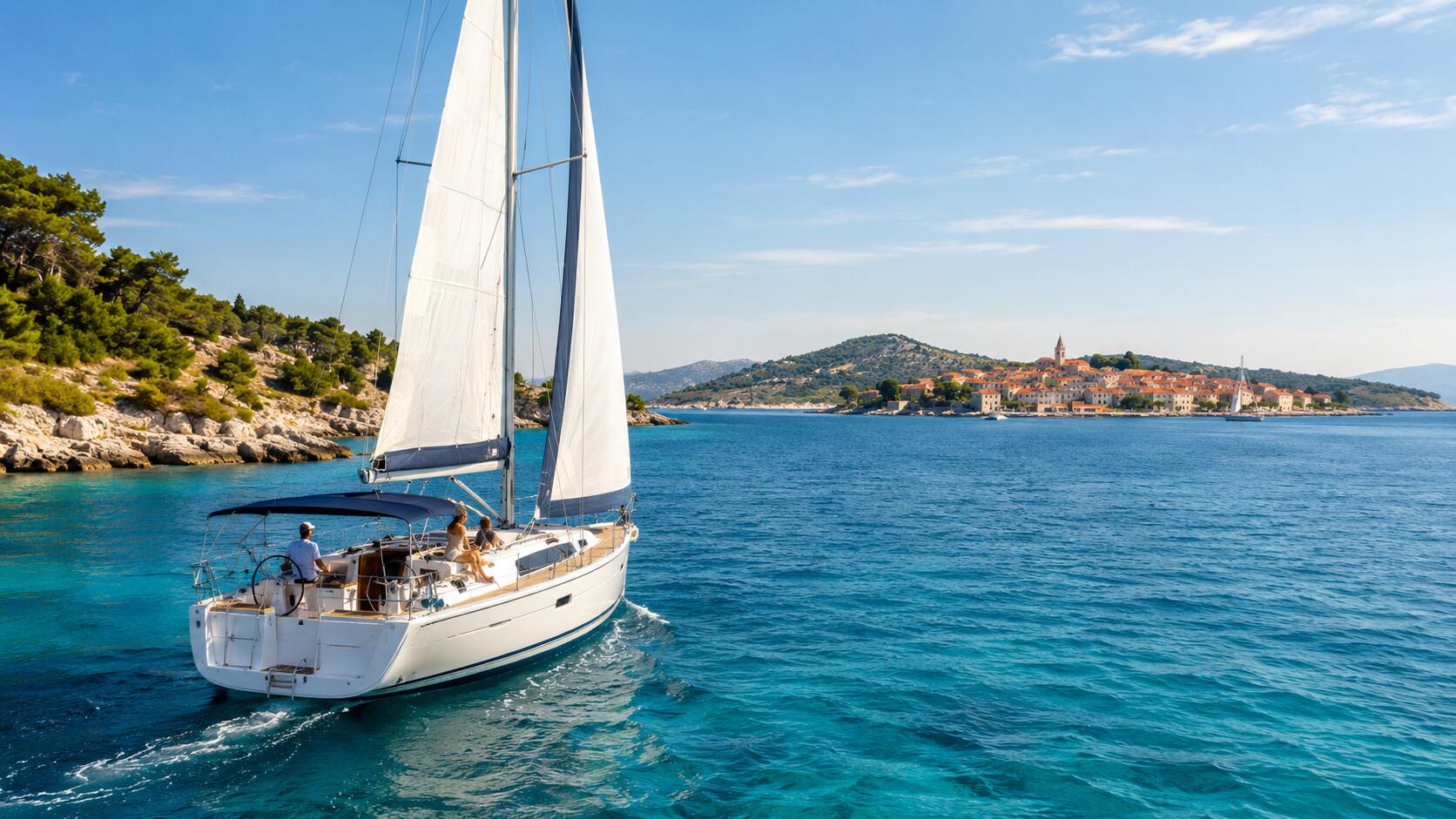
CROATIA YACHT CHARTER: THE COMPLETE GUIDE FOR FIRST-TIME SAILORS
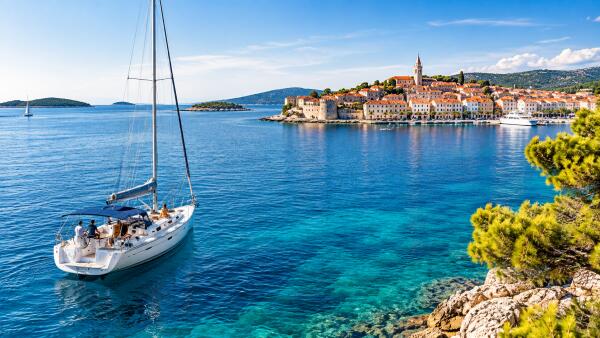
Imagine waking up to the sound of the Adriatic Sea, stepping onto the deck as the sun rises over a quiet island, and spending the day sailing between hidden coves, historic harbour towns, and crystal-clear bays. A Croatia yacht charter gives you the freedom to experience the Croatian coast at your own pace - with the sea becoming your route, your swimming pool, and your ever-changing view.
For first-time sailors, however, planning a yacht charter can raise plenty of questions. Which type of yacht should you choose? Do you need a sailing licence? Where should you sail, and how many destinations can you realistically visit in one week? When is the best time to go, and what should you budget for beyond the yacht itself?
With thousands of kilometres of coastline and islands scattered across the Adriatic, Croatia offers an extraordinary variety of sailing experiences. From the lively islands of Central Dalmatia and the historic streets of Hvar and Dubrovnik to the secluded bays of Šolta, Vis, and the Kornati Islands, there is a route to suit almost every type of traveller.
In this guide, Navigare Solutions takes you through everything you need to know before your first Croatian yacht charter. We'll cover yacht types, sailing regions, the best time to visit, licences and skipper options, costs, packing essentials, safety, and practical tips for life on board.
Whether you're planning a week with friends, a family sailing holiday, a romantic escape, or simply want to discover Croatia from a different perspective, this guide will help you start your journey with confidence.
WHY CROATIA IS PERFECT FOR A FIRST YACHT CHARTER
Croatia is one of the Mediterranean's most appealing destinations for a first yacht charter. The combination of crystal-clear Adriatic waters, hundreds of islands and islets, sheltered bays, historic coastal towns, and well-developed sailing infrastructure makes it possible to enjoy a sailing holiday without needing to be an experienced sailor.
One of the biggest advantages of Croatia is the variety you can experience within a relatively compact sailing area. Instead of spending hours or days on long passages, you can often sail for a few hours, drop anchor in a secluded bay, swim in clear turquoise water, and continue to another island when you're ready. This makes Croatia particularly suitable for first-time sailors who want a balance between time on the water and time spent exploring ashore.
The Croatian coastline offers something for almost every type of traveller. Central Dalmatia, around Split and Trogir, provides access to popular islands such as Brač, Šolta, Hvar, Vis, and the Pakleni Islands. Further north, the Šibenik and Zadar regions open the way to the spectacular Kornati archipelago, known for its rugged islands and secluded anchorages. In the south, a yacht charter can combine the historic atmosphere of Dubrovnik with the natural beauty of destinations such as Mljet and the Elaphiti Islands.
Another major advantage for first-time charter guests is the flexibility of the experience. You can choose between a bareboat, skippered, or fully crewed charter depending on your qualifications, experience, and preferences. If you're new to sailing, a professional skipper can take care of navigation and yacht handling while allowing you to relax and enjoy the journey. For those with the appropriate experience and qualifications, a bareboat charter provides greater independence and freedom to create your own itinerary.
Croatia also offers the kind of sailing holiday where the journey is just as important as the destination. A typical day might begin with breakfast on deck, followed by a morning swim in a quiet bay and a few hours of sailing to the next island. After lunch, there may be time for snorkelling, exploring a small village, or simply relaxing on board before heading into a historic harbour for the evening.
Beyond the sailing itself, Croatia combines naturally beautiful coastline with centuries of history and a strong local food culture. Ancient stone towns, waterfront restaurants, traditional villages, local markets, vineyards, and seafood restaurants can all become part of your itinerary. Having a yacht allows you to experience these places at your own pace, moving between islands while keeping the freedom to stop whenever a particularly beautiful bay catches your attention.
Croatia's established nautical infrastructure also makes the experience more straightforward for newcomers. With numerous marinas, charter bases, ports, restaurants, provisioning services, and nautical facilities, you can enjoy the freedom of island-hopping while still having access to the services you need.
Most importantly, a Croatia yacht charter doesn't have to be rushed. First-time sailors sometimes try to fit too many destinations into a single week, but the real pleasure of sailing is often found in slowing down. Leave time for an extra swim, a long lunch, an evening walk through a historic town, or simply watching the sunset from the deck.
With its accessible sailing routes, diverse islands, beautiful waters, flexible charter options, and wealth of experiences on land, Croatia offers an ideal introduction to life on the Adriatic. Whether you're planning a family holiday, a trip with friends, a romantic escape, or your first sailing adventure, Croatia gives you the freedom to create a charter experience around the way you want to travel.
CHOOSING THE RIGHT YACHT FOR YOUR CROATIAN SAILING HOLIDAY
Choosing the right yacht is an important part of planning your Croatian sailing holiday. The boat you select will shape everything from the way you spend your days on the water to the level of comfort, privacy, space, and flexibility you have on board. With so many yachts available, the choice can initially feel overwhelming, especially if this is your first charter.
The best option depends on more than the number of guests. Your sailing experience, preferred itinerary, budget, and expectations for the holiday all play a role. A couple looking for an authentic sailing experience may prefer a compact sailing yacht, while a family or larger group may value the additional space and stability of a catamaran. If speed, luxury, and high-end amenities are your priorities, a motor yacht may be a better fit.
It's also worth thinking about how you want to experience Croatia. Do you want to spend most of your time actively sailing between islands, or would you rather have a spacious yacht where you can swim, dine, relax, and explore at a leisurely pace? Once you understand the differences between the main yacht types, it becomes much easier to choose a boat that matches your group and the kind of Adriatic experience you have in mind.
Sailing Yachts
A sailing yacht is the classic choice for travellers who want to experience Croatia from the water in the most traditional way. Designed to make the most of the wind, sailing yachts offer a more hands-on connection with the sea and are particularly appealing to couples, smaller groups, and guests who see sailing itself as an important part of the holiday.
Modern sailing yachts combine the character of traditional sailing with comfortable accommodation. Depending on the model, you can expect private cabins, bathrooms, a saloon, galley, cockpit, and outdoor areas for relaxing and dining. Their compact design can also make them a practical choice for exploring Croatia's islands and finding quieter bays along the coast.
For experienced sailors, a sailing yacht provides the freedom to plan your own route and enjoy the feeling of travelling under sail. For first-time sailors, a professional skipper can take care of navigation and yacht handling while you enjoy the experience and learn more about sailing along the way.
A sailing yacht is particularly well suited to travellers who value the journey as much as the destination. When conditions are right, you can switch off the engine, raise the sails, and move quietly across the Adriatic with little more than the sound of the wind and water around you.
If your idea of a Croatian sailing holiday includes authentic sailing, beautiful scenery, quiet anchorages, and a closer connection with the sea, a sailing yacht can be an excellent choice.
Catamarans
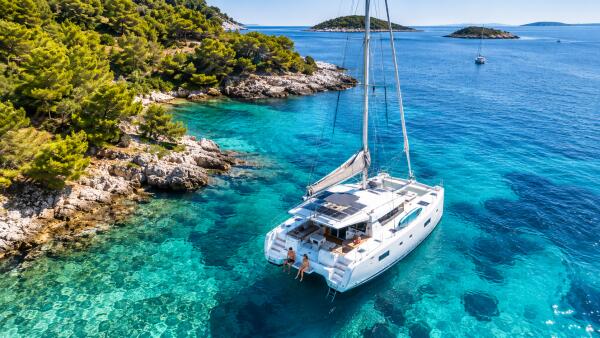
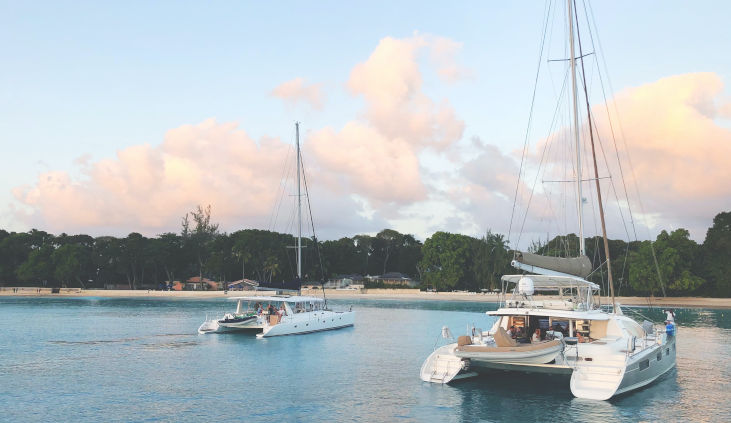
Catamarans are one of the most popular choices for a Croatian yacht charter, particularly for families and groups of friends who want a combination of sailing, comfort, and plenty of space. With two hulls connected by a central living area, catamarans offer a different experience from traditional monohull sailing yachts.
One of their biggest advantages is the generous amount of living space. Modern catamarans typically feature multiple cabins, separate bathrooms, spacious saloons, and large outdoor areas where guests can dine, relax, and enjoy the scenery. The wide cockpit and forward lounging areas also make it easy for a group to spend time together without feeling crowded.
Catamarans are also appreciated for their stability. Their two-hull design generally provides a different motion on the water compared with a monohull, which many first-time charter guests find comfortable, particularly when spending time on board at anchor. The layout also creates more privacy, making catamarans a practical option when several couples or families are travelling together.
For a Croatian sailing holiday, a catamaran can be particularly well suited to spending time at anchor. You can swim directly from the boat, enjoy lunch in the cockpit, relax in the sun, and explore nearby islands without having to move every few hours. When you're ready, you can raise the sails and continue to the next destination.
Catamarans are available in a wide range of sizes and layouts, so it's important to consider the number of cabins, bathrooms, outdoor areas, and overall configuration when choosing one for your group. For first-time sailors, a skippered catamaran is also an excellent option, allowing you to enjoy the additional space and comfort while a professional skipper handles navigation and manoeuvring.
If your ideal Croatian yacht charter involves spacious accommodation, relaxed sailing, swimming stops, outdoor dining, and plenty of time together on board, a catamaran can be an excellent choice.
Motor Yachts
Motor yachts are an excellent choice for travellers who want to explore the Croatian coast with a greater emphasis on speed, comfort, and luxury. Unlike sailing yachts, motor yachts are powered primarily by engines, allowing you to cover longer distances in less time and visit more destinations during your charter. They are particularly appealing to guests who want to combine island hopping with high levels of comfort and convenience.
One of the main advantages of a motor yacht is the freedom it provides when planning your itinerary. With greater cruising speeds, you can travel between islands that might be too far apart for a relaxed sailing yacht itinerary. This makes it possible to explore destinations such as Hvar, Vis, Korčula, Brač, and Dubrovnik while still leaving plenty of time for swimming, sightseeing, dining, and relaxing on board.
Motor yachts also tend to offer a spacious and sophisticated onboard experience. Depending on the size and model, you may find generous cabins, multiple bathrooms, large indoor living areas, spacious decks, outdoor dining spaces, and comfortable areas for sunbathing. Larger yachts can also include additional features such as water toys, tenders, entertainment systems, and crew accommodation.
For first-time charter guests, a motor yacht can be particularly convenient because there is less emphasis on actively sailing the yacht. A professional skipper or crew can take care of navigation, manoeuvring, and daily operations, allowing you to focus on enjoying the journey. This can be especially attractive for families, groups celebrating a special occasion, or travellers who are more interested in discovering Croatia than learning to sail.
Another advantage is the ability to make the most of your time on the Adriatic. You can start the day with breakfast in a quiet bay, cruise to another island for lunch, spend the afternoon swimming in a secluded cove, and arrive in a historic coastal town in time for dinner. The faster pace of a motor yacht gives you more flexibility while still allowing plenty of time to relax.
If your ideal Croatian yacht charter combines island hopping, luxury accommodation, beautiful scenery, and the freedom to explore several destinations in one trip, a motor yacht can be an excellent choice. It offers a different style of experiencing the Adriatic - less focused on the sailing itself and more on comfort, exploration, and enjoying everything Croatia's coastline has to offer.
Gulets and Traditional Vessels
For travellers looking for something a little different, gulets and traditional-style vessels offer a unique way to experience the Croatian coast. Inspired by classic wooden sailing boats from the eastern Mediterranean, these vessels combine traditional character with modern comforts, creating a relaxed and atmospheric setting for an island-hopping holiday.
Gulets are particularly well suited to groups who want to spend plenty of time together. Their spacious decks provide comfortable areas for dining, relaxing, sunbathing, and enjoying the scenery, while cabins offer private accommodation below deck. The emphasis is often on enjoying the journey at a leisurely pace rather than covering as much distance as possible.
One of the most appealing aspects of a gulet charter is the onboard atmosphere. The wooden design, generous outdoor spaces, and traditional details create a more intimate and authentic feel than you might find on a modern yacht. Days can be spent swimming in secluded bays, enjoying long lunches on deck, visiting historic island towns, and watching the sunset from the water.
Gulets are generally operated with a professional crew, making them a comfortable option for first-time charter guests who do not have sailing experience. The crew can handle navigation, sailing, anchoring, and many of the practical details of life on board, while guests can simply enjoy the surroundings and make the most of their time in Croatia.
They can also be a particularly attractive option for larger families, groups of friends, or travellers celebrating a special occasion. Depending on the vessel, gulets can accommodate several guests while providing communal spaces where everyone can gather without feeling confined. Meals are often an important part of the experience too, with the possibility of enjoying fresh local ingredients and Croatian-inspired dishes on deck.
If you want your Croatia yacht charter to feel relaxed, social, and distinctly Mediterranean, a gulet or traditional vessel can be a memorable choice. Rather than focusing on speed or covering a long list of destinations, this style of charter encourages you to slow down, enjoy the sea, and experience the Croatian islands at an easy, unhurried pace.
DO YOU NEED SAILING EXPERIENCE TO CHARTER A YACHT IN CROATIA?
You do not need to be an experienced sailor to enjoy a Croatia yacht charter. One of the advantages of chartering in Croatia is the range of options available, allowing you to choose an experience that matches your sailing knowledge, confidence, and preferred level of independence.
Experienced sailors can take control of their own yacht with a bareboat charter, while first-time sailors can enjoy the coast with the support of a professional skipper. For those looking for a completely relaxed and personalised experience, a fully crewed yacht provides additional service and assistance throughout the journey.
Understanding the difference between these charter options will help you choose the right way to explore Croatia and make sure your time on the Adriatic is both enjoyable and comfortable.
Bareboat Charter
A bareboat charter gives experienced sailors the freedom to take full responsibility for their yacht and create their own itinerary. There is no professional skipper on board, so you and your group are responsible for navigation, manoeuvring, anchoring, and the day-to-day operation of the yacht.
For confident sailors, this can be one of the most rewarding ways to explore Croatia. You have the flexibility to decide where you want to go, how long you want to stay, and when to move on. You can spend a morning swimming in a secluded bay, sail to another island in the afternoon, and choose a different harbour for dinner that evening.
Bareboat chartering does, however, require the appropriate sailing qualifications and sufficient practical experience. The exact requirements can depend on the yacht and local regulations, so it is important to confirm your eligibility with the charter company before booking. You should also be comfortable reading charts, monitoring weather conditions, handling the yacht in a marina, and making decisions while at sea.
For first-time charter guests who already have sailing experience but are unsure about managing a yacht independently, it is worth considering whether a skippered charter would provide greater peace of mind. Having a professional skipper on board can allow you to enjoy the same destinations without taking full responsibility for the yacht.
If you are properly qualified, confident on the water, and enjoy planning your own route, a bareboat charter can provide an exceptional sense of freedom. It allows you to experience the Croatian coast at your own pace and make the sailing itself an important part of the holiday.
Skippered Charter
A skippered charter is an excellent option for travellers who want to experience a Croatia yacht charter without needing to operate the yacht themselves. A professional skipper joins you on board and takes care of navigation, yacht handling, anchoring, and the practical aspects of sailing, allowing you to focus on enjoying the journey.
This option is particularly popular with first-time sailors. You do not need extensive sailing experience to enjoy the freedom of exploring Croatia by yacht, and you can choose how involved you want to be. If you are interested in sailing, your skipper can often show you the basics and involve you in parts of the journey, while you are equally welcome to sit back, relax, and enjoy the views.
A local skipper can also bring valuable knowledge of the Croatian coast. Beyond navigating the yacht, they can help you discover quieter bays, recommend local restaurants, suggest the best places to swim, and adjust your route according to weather and sea conditions. Their local experience can be especially useful when deciding where to anchor or which destinations are worth visiting along the way.
A skippered charter also gives your group greater flexibility than a fully crewed yacht. You can still enjoy your own space and plan your days around your interests, while having an experienced professional responsible for operating the boat. This makes it a comfortable choice for families, couples, and groups of friends who want independence without the responsibility of managing the yacht themselves.
For many first-time visitors, a skippered charter offers a balance between adventure and peace of mind. You get to experience the beauty and freedom of travelling by yacht while leaving the technical side of sailing in the hands of someone who knows the Adriatic well.
Crewed Charter
A crewed charter offers the most relaxed and service-focused way to experience a Croatia yacht charter. Instead of managing the yacht yourself, you have a professional crew on board to take care of navigation, daily operations, and many of the practical details of your holiday. This allows you to enjoy the Croatian coast with minimal responsibility.
The size and composition of the crew will depend on the yacht. On some vessels, you may have a captain and additional crew members, while larger luxury yachts can include a chef, host, deckhand, or other hospitality staff. The crew works together to make life on board comfortable while ensuring that the yacht operates smoothly throughout the trip.
One of the biggest advantages of a crewed charter is the level of convenience. Your crew can handle sailing, anchoring, mooring, and other technical tasks while you spend your time swimming, relaxing on deck, exploring the islands, or enjoying meals with your group. On yachts with a private chef or cook, meals can also become an important part of the experience, with menus tailored to your preferences and the local cuisine.
A crewed yacht can also make it easier to enjoy a more personalised itinerary. The captain can help plan routes around your interests and adjust the schedule according to weather and sea conditions, while the rest of the crew can provide recommendations and assistance during your stay. Whether you want to discover historic island towns, find quiet swimming spots, or spend more time relaxing on board, the experience can be adapted to your group.
This type of charter is particularly suited to families, larger groups, special celebrations, and travellers looking for a higher level of comfort and privacy. It is also an attractive choice for guests with little or no sailing experience, as you can enjoy the yacht and destinations without needing to worry about operating the boat.
If your ideal Croatian sailing holiday is centred around comfort, personalised service, and discovering the Adriatic at a relaxed pace, a crewed charter can provide a seamless way to experience the coast.
WHEN IS THE BEST TIME TO SAIL IN CROATIA?
Choosing the right time for your Croatia yacht charter can have a big influence on the overall experience. The sailing season generally runs from spring through autumn, with each period offering a different combination of weather, sea conditions, temperatures, crowds, and atmosphere.
The summer months are popular for their warm temperatures, long sunny days, and lively island atmosphere, while the shoulder seasons can offer a quieter and more relaxed experience. Your ideal travel period will depend on whether you prioritise warm swimming conditions, calmer anchorages, fewer visitors, or a particular type of sailing experience.
Understanding what to expect throughout the season will help you choose the best time for your trip and plan a Croatian sailing holiday that matches your preferences.
Sailing in May and June
May and June are excellent months for travellers who want to experience Croatia before the peak summer season. The weather is generally becoming warmer, the days are getting longer, and the coastline tends to feel more relaxed than it does during July and August. For first-time sailors, this period can offer a pleasant balance between comfortable sailing conditions and a quieter atmosphere in many destinations.
May is particularly appealing for those who enjoy exploring rather than spending every day in the water. Temperatures are usually comfortable for sailing, sightseeing, and hiking, while the sea can still feel fresh earlier in the month. By June, both the air and sea are noticeably warmer, making it easier to combine sailing days with swimming and time spent at anchor.
One of the main advantages of travelling during this period is the atmosphere. Popular islands and coastal towns are generally less crowded than during the height of summer, giving you more space to enjoy beaches, restaurants, historic centres, and marinas. It can also be a good time to create a flexible itinerary without feeling that every destination needs to be planned around peak-season crowds.
The weather can still be changeable in May, so it is important to remain flexible and pay attention to local forecasts. June typically brings more consistent summer conditions, although the Adriatic can always experience periods of stronger wind or changing weather.
If you prefer a quieter Croatian yacht charter with comfortable temperatures, longer days, and the opportunity to explore the coast before the busiest part of the season, May and June can be a very attractive time to sail.
Sailing in July and August
July and August are the heart of the Croatian sailing season and are particularly popular with travellers looking for warm weather, long sunny days, and ideal conditions for combining sailing with swimming and time spent outdoors. During these months, the Adriatic is at its liveliest, with busy island towns, active marinas, and a vibrant atmosphere across many of Croatia’s most popular destinations.
The warm summer temperatures make it easy to build your days around life on the water. You can sail between islands in the morning, stop for a swim in a secluded bay, enjoy lunch on board, and head ashore in the evening to explore a historic town or have dinner by the waterfront. The consistently warm weather also makes July and August particularly appealing for families and groups who want plenty of time for swimming and outdoor activities.
The peak season does come with higher demand. Popular destinations such as Hvar, Brač, Vis, and Korčula can become busy, especially around marinas, restaurants, and well-known anchorages. Booking your yacht, berths, and other key arrangements well in advance is therefore recommended, particularly if you are travelling during the busiest weeks.
Summer sailing also means paying close attention to weather and wind conditions. The Adriatic can experience periods of stronger winds, while afternoon conditions can differ from those earlier in the day. A professional skipper can be especially useful for first-time sailors, helping to plan daily routes around the forecast and choosing suitable places to anchor or stay overnight.
For travellers who want the classic Croatian summer experience - with warm seas, sunny weather, lively coastal towns, and plenty of opportunities to swim and explore - July and August are a popular choice. If you prefer a quieter atmosphere, however, the shoulder months can provide a more relaxed alternative.
Sailing in September and October
September and October can be an excellent time for a Croatia yacht charter, especially if you want to enjoy the Adriatic after the busy summer season. The intense heat of July and August begins to ease, while the sea remains pleasantly warm, particularly during September. With fewer visitors along the coast, the islands and coastal towns also take on a more peaceful and relaxed character.
September offers an appealing balance between summer weather and a quieter sailing experience. Days are still generally warm and ideal for spending time on deck, swimming, and exploring the islands, while popular destinations tend to be less crowded than during the peak season. This makes it easier to enjoy waterfront restaurants, historic towns, and marinas at a more leisurely pace.
By October, temperatures become cooler and weather conditions can be more changeable. The days are shorter, and unsettled weather is more likely than during the height of summer. Even so, October can still bring beautiful days on the Adriatic, particularly for those more interested in coastal scenery, island exploration, and historic towns than spending every day in the water.
The shoulder season also calls for a flexible approach to your itinerary. Weather forecasts should be checked regularly, and daily plans may need to change depending on wind and sea conditions. A professional skipper can be especially valuable at this time of year, using local knowledge to adapt the route and make the most of favourable weather.
If you prefer fewer crowds, comfortable temperatures, and a slower pace along the Croatian coast, September is an especially attractive month for sailing. October offers an even quieter atmosphere and can be well suited to a peaceful Adriatic getaway, provided you are prepared for cooler temperatures and more variable weather.
UNDERSTANDING WINDS AND SAILING CONDITIONS IN CROATIA
Understanding the wind and sea conditions is an important part of planning a safe and enjoyable Croatia yacht charter. The Adriatic is generally well suited to sailing, but conditions can change depending on the season, location, and local weather patterns. Knowing what to expect can help you plan your route, choose suitable anchorages, and make better decisions during your time on the water.
Croatia is influenced by several characteristic winds, each of which can affect sailing conditions in a different way. The Maestral is generally associated with pleasant summer sailing, while the Bura and Jugo can bring stronger and more challenging conditions. Local geography also plays a role, as islands, channels, and coastal mountains can influence wind strength and direction.
For first-time sailors, it is important not to rely solely on general seasonal expectations. Weather forecasts should be checked regularly, and daily plans should remain flexible. If you are sailing with a professional skipper, they can assess the conditions and adjust your route accordingly, helping you make the most of favourable weather while avoiding unnecessary risks.
The Maestral
The Maestral is one of the most familiar winds for summer sailing along the Croatian coast. It is a predominantly northwesterly wind that typically develops during the warmer part of the day, often becoming more noticeable in the afternoon. For sailors, it can provide refreshing conditions after a warm morning and create enjoyable opportunities for sailing between Croatia’s islands.
The wind is generally associated with stable summer weather and is often welcomed by sailors because it can offer a steady breeze without the intensity associated with some of the stronger Adriatic winds. Its regular daily pattern can also make it easier to plan sailing days, although local conditions can vary depending on the coastline, islands, and surrounding geography.
For a typical summer charter, you might begin the morning in a sheltered bay, enjoy breakfast on board, and then set off as the Maestral develops. The afternoon breeze can provide pleasant sailing conditions before easing later in the day, allowing you to arrive at your next anchorage or harbour and enjoy a relaxed evening ashore.
As with any wind, conditions should always be checked through reliable local forecasts rather than assumed from seasonal patterns alone. Wind strength and direction can differ from one area to another, and the geography of the Croatian coast can influence how conditions develop.
For first-time sailors, understanding the Maestral is useful because it illustrates the rhythm of sailing in Croatia: calm mornings can gradually give way to a refreshing afternoon breeze, creating ideal opportunities to enjoy the Adriatic under sail.
The Bura
The Bura is one of the best-known winds of the Adriatic and an important consideration when planning a Croatia yacht charter. It is a cold, dry wind that generally blows from the northeast and can develop quickly, particularly when air moves down from the mountains towards the coast and islands. Depending on the location and weather system, the Bura can range from a moderate breeze to very strong conditions.
Unlike the gentle rhythm often associated with the Maestral, the Bura can create challenging sailing conditions. Strong gusts, rougher seas, and sudden changes in wind strength can make navigation and manoeuvring more demanding, particularly for less experienced sailors. The wind can also be influenced by local geography, with channels and mountain passes sometimes intensifying its effects.
For this reason, checking the weather forecast before setting out is essential. If stronger Bura conditions are expected, a planned route may need to be shortened, delayed, or adjusted to provide safer and more sheltered sailing. Professional skippers use their local knowledge and understanding of the coastline to choose appropriate routes, anchorages, and harbours when conditions change.
The Bura is more common during the cooler months, but it can occur at other times of year as well. Its presence is one reason why flexibility is important when planning a sailing itinerary in Croatia. Rather than trying to follow a fixed schedule regardless of the weather, it is better to allow enough time to adapt your plans.
For first-time sailors, the key lesson is simple: the Adriatic can be beautifully calm one day and considerably more demanding the next. Understanding winds such as the Bura and respecting local forecasts will help you make informed decisions and enjoy your time on the Croatian coast safely.
The Jugo
The Jugo is another important wind to understand when sailing along the Croatian coast. It generally blows from the southeast and is associated with moist air, increasing cloud cover, and unsettled weather. Unlike the typically dry conditions associated with the Bura, Jugo can bring rain and gradually building seas, sometimes continuing for several days.
Jugo often develops more gradually than the Bura, giving sailors some warning that conditions are changing. As the wind strengthens, however, the sea can become rougher, particularly in areas that are exposed to the southeast. Longer periods of Jugo can also produce larger waves, making some routes and open-water crossings less comfortable.
For a yacht charter, monitoring the forecast is especially important when Jugo is expected. A skipper may choose to adjust the itinerary, remain in a sheltered anchorage, or spend more time exploring a protected coastal town until conditions improve. The geography of Croatia provides many sheltered areas, but the suitability of a particular anchorage depends on the wind direction and local conditions.
Jugo is more commonly associated with the cooler and transitional months, although it can occur throughout the sailing season. Its presence is another reason to avoid planning an itinerary that leaves no room for changes. Allowing some flexibility means you can adapt your route while still enjoying the highlights of your Croatian sailing holiday.
For first-time sailors, the most important thing to remember is that wind direction matters as much as wind strength. Understanding how Jugo affects different parts of the Croatian coast can help you appreciate why experienced sailors pay close attention to forecasts and choose their routes carefully.
WHERE SHOULD YOU SAIL IN CROATIA?
Croatia offers an extraordinary variety of sailing experiences, with a long coastline, countless islands, sheltered bays, historic coastal towns, and crystal-clear waters to discover. Whether you want to spend your days swimming and relaxing at anchor or exploring charming towns and local restaurants, there are plenty of ways to shape your itinerary around your interests.
For a first Croatia yacht charter, choosing the right sailing area is an important part of planning your trip. The distance between destinations, prevailing winds, available marinas, and the amount of time you have can all influence which route makes the most sense.
Rather than trying to see as much as possible, it is often better to choose a region and explore it at a comfortable pace. This gives you more time to enjoy the places you visit and leaves some flexibility to adapt your plans according to weather and sea conditions.
The following sections introduce some of Croatia’s key sailing areas and what you can expect from each, helping you decide where to begin your Adriatic adventure.
Split and Central Dalmatia
Split and Central Dalmatia are among the most popular starting points for a Croatia yacht charter, and for good reason. The region combines an international airport, well-developed marinas, historic coastal towns, and easy access to some of the Adriatic’s most celebrated islands. For first-time sailors, it also offers a convenient introduction to island hopping, with a wide variety of routes that can be adapted to different sailing experience levels and holiday styles.
Starting from Split, you can quickly reach islands such as Brač, Šolta, Hvar, and Vis, each offering a different experience. Brač is known for its beautiful beaches and coastal villages, while Šolta has a quieter character and is ideal for swimming, local dining, and escaping the busier parts of the coast. Hvar combines scenic bays with historic architecture, restaurants, and a lively evening atmosphere, while Vis offers a more remote feeling and is well suited to those who want to explore at a slower pace.
The region also provides plenty of flexibility when planning your daily sailing distances. Rather than spending the entire day travelling between destinations, you can keep passages relatively short and leave plenty of time for swimming, exploring ashore, or simply enjoying the yacht. This makes Central Dalmatia a practical option for a first charter, particularly if you want to experience several islands without creating an overly ambitious itinerary.
Split itself is worth allowing time to explore before or after your charter. The city's historic centre developed around the ancient Palace of Diocletian, and its waterfront promenade, known as the Riva, is lined with cafés, restaurants, and places to enjoy the atmosphere of the city. Depending on your schedule, you can combine a few hours or a full day in Split with your time at sea, giving the trip a balance of sailing, culture, and coastal exploration.
For those departing from nearby Trogir or other charter bases in the area, there are also numerous route possibilities. A skipper can help you decide which islands and anchorages make the most sense according to the forecast, your group's interests, and the amount of time available. Experienced sailors have the option of creating their own itinerary, while first-time guests can leave the navigation and route planning to a professional.
If you want a Croatian sailing holiday that combines convenient access, beautiful islands, historic towns, swimming spots, and plenty of itinerary options, Split and Central Dalmatia provide an excellent starting point. With enough variety for repeat visits as well as first-time charters, the region makes it easy to experience several different sides of the Adriatic without having to cover excessive distances each day.
Šibenik and the Kornati Islands
Šibenik is an excellent gateway to one of Croatia’s most distinctive sailing regions: the Kornati archipelago. The area is known for its rugged island landscapes, clear waters, hidden coves, and relatively untouched character. For those who want to spend more time surrounded by nature and less time in busy coastal towns, this part of the Adriatic offers a memorable setting for a yacht charter.
The Kornati Islands stretch across a maze of rocky islands and islets, creating countless possibilities for exploration. Instead of following a fixed route from one major town to another, sailing here is often about discovering quiet bays, choosing a sheltered anchorage, and enjoying the landscape from the water. The scenery is particularly striking, with bare limestone slopes and steep cliffs contrasting with the deep blue of the Adriatic.
Šibenik provides a convenient starting point before heading offshore. The city has a beautiful historic centre, waterfront restaurants, and impressive landmarks, including the Cathedral of St. James. Nearby marinas and charter bases also make the region practical for both bareboat and skippered sailing holidays.
The surrounding islands offer a slower pace than some of Croatia’s better-known destinations. Days can be spent swimming from the yacht, exploring small islands, enjoying lunch in a traditional konoba, or simply staying at anchor and taking in the scenery. Murter and Dugi Otok are also within reach, giving you the opportunity to combine the Kornati area with a wider Northern Dalmatian itinerary.
Because many parts of the archipelago are undeveloped, preparation is important. Supplies and services are more limited than in larger coastal centres, so provisioning before heading into the islands can make the journey more comfortable. Weather conditions should also be monitored closely, particularly when choosing an overnight anchorage.
For sailors who value nature, exploration, and a sense of escape, Šibenik and the Kornati Islands offer a distinctive Croatian sailing experience. The region allows you to experience the Adriatic at its most rugged and open, while still providing convenient access to a historic mainland city and established charter infrastructure.
Zadar and Northern Dalmatia
Zadar and Northern Dalmatia offer a diverse sailing environment with a mix of historic coastal towns, peaceful islands, sheltered bays, and striking natural landscapes. The region is especially well suited to sailors who want to explore beyond the busiest parts of the Croatian coast while still having access to well-developed charter infrastructure.
Zadar is a natural starting point for exploring the northern Adriatic. Its historic centre sits on a peninsula surrounded by the sea and is known for landmarks such as the Roman Forum, Sea Organ, and Greeting to the Sun. Spending an evening in the city before setting sail can be a rewarding way to begin a charter and experience the region's cultural side.
From Zadar, numerous islands are within easy reach. Ugljan and Pašman are close to the mainland and provide a gentle introduction to island sailing, while Dugi Otok offers dramatic coastal scenery, secluded bays, and places such as Telašćica Nature Park. Further offshore, the islands of the Zadar archipelago provide plenty of opportunities to find quieter anchorages away from the main tourist centres.
One of the region's attractions is the variety of experiences available within a relatively manageable sailing area. You can combine mornings under sail with afternoons swimming in clear bays, visit small island villages, or spend an evening dining in a waterfront restaurant. The route can also be adapted to suit the weather and your group's interests, which is useful for first-time charter guests.
Northern Dalmatia is also a strong option for those who prefer a more relaxed pace. Compared with some of Croatia's busiest island destinations, many locations in the region feel less concentrated and give you more opportunities to enjoy the landscape without a tightly packed itinerary. Nature lovers can explore protected areas, while sailors can focus on the islands, channels, and open-water passages that make the region so enjoyable to navigate.
For a Croatia yacht charter that combines easy access, varied island landscapes, cultural experiences, and flexible sailing routes, Zadar and Northern Dalmatia provide an appealing alternative to the more heavily visited areas further south. It is a region where you can comfortably combine time on the water with island exploration and evenings spent discovering the character of coastal Croatia.
Dubrovnik and Southern Dalmatia
Dubrovnik and Southern Dalmatia offer a combination of historic heritage, dramatic coastal scenery, and beautiful islands that makes this part of Croatia particularly distinctive. Dubrovnik is an impressive place to begin or end a sailing holiday, while the nearby islands and coastal waters provide plenty of opportunities to escape the city and explore quieter parts of the Adriatic.
Dubrovnik's medieval Old Town is one of Croatia's most recognisable sights, surrounded by impressive stone walls and overlooking the sea. Before setting sail, you can explore its historic streets, visit landmarks, and enjoy dinner overlooking the Adriatic. The city also provides a memorable contrast to the peaceful anchorages found further along the coast.
Beyond Dubrovnik, the Elaphiti Islands offer some of the most accessible island escapes in the region. Šipan, Lopud, and Koločep are known for their green landscapes, small settlements, secluded bays, and clear swimming waters. Their proximity to Dubrovnik makes them particularly convenient for shorter charters or for the first days of a longer itinerary.
Further south and west, Mljet provides a more nature-focused experience. Much of the island is covered by Mljet National Park, with forested landscapes, peaceful coves, and saltwater lakes surrounded by greenery. Korčula is another major highlight, combining attractive beaches and bays with a historic old town and a long tradition of wine production.
The region can suit a range of sailing styles. You can create a relaxed itinerary focused on swimming, nature, and quiet anchorages, or combine island exploration with visits to historic towns and local restaurants. A professional skipper can also help adapt the route to weather and sea conditions, which is particularly useful when exploring unfamiliar waters.
Dubrovnik and Southern Dalmatia are best suited to those who want their Croatia yacht charter to combine culture, scenery, island exploration, and time on the water. With Dubrovnik providing a spectacular historic backdrop and the surrounding islands offering a quieter side of the Adriatic, the region allows you to experience several very different aspects of southern Croatia in a single sailing holiday.
Istria and the Kvarner Region
Istria and the Kvarner Region offer a different side of Croatia, combining dramatic coastal scenery, historic towns, culinary traditions, and a diverse collection of islands. Located in the northern Adriatic, the area is a good choice for those who want to combine sailing with exploring Croatia's rich cultural and gastronomic heritage.
The Istrian coast is dotted with attractive harbour towns and historic settlements, including Rovinj, Poreč, Pula, and Rabac. Pula is particularly notable for its remarkably preserved Roman amphitheatre, while Rovinj is known for its colourful waterfront, stone streets, and hilltop old town. These destinations provide plenty of opportunities to step ashore and experience the region beyond the yacht.
Across the Kvarner Gulf, the islands of Krk, Cres, Lošinj, and Rab offer a varied sailing environment. Cres and Lošinj are known for their rugged landscapes, sheltered bays, and clear waters, while Rab combines beaches with a historic old town and distinctive stone architecture. The islands provide opportunities for swimming, hiking, exploring small villages, and enjoying local restaurants.
One of the region's defining features is its connection between the sea and the mainland. A sailing itinerary can easily combine island anchorages with visits to coastal towns, allowing you to experience both the maritime landscape and the character of northern Croatia. The area is also known for its seafood, local wines, olive oil, and Istrian cuisine, making dining an important part of the journey.
The northern Adriatic can experience different weather and sailing conditions from southern Croatia, so checking forecasts and allowing flexibility in your itinerary is important. Experienced sailors can enjoy creating their own route, while a professional skipper can provide local knowledge and adjust the itinerary according to conditions.
For a Croatia yacht charter that combines sailing, culture, gastronomy, and varied coastal landscapes, Istria and Kvarner provide an appealing alternative to the classic Dalmatian routes. The region offers a more northern Adriatic perspective, with historic ports, distinctive islands, and plenty of opportunities to experience Croatia both on and off the water.
HOW TO PLAN YOUR FIRST CROATIA YACHT CHARTER ROUTE
Planning your first Croatia yacht charter route is exciting, but the key is to avoid trying to see too much in a single trip. Croatia offers an enormous choice of islands, coastal towns, beaches, and secluded bays, yet the most enjoyable itineraries leave enough time to experience each destination rather than spending most of the day travelling between them.
Start by choosing your charter base, as this will determine which parts of the coast are most practical to explore. Split and Trogir provide convenient access to Central Dalmatia, while Šibenik and Zadar are well positioned for Northern Dalmatia and the Kornati area. Dubrovnik offers a natural starting point for exploring the southern islands and coastline. Choosing one region and staying within it will usually give you a more relaxed experience than attempting to cover large distances along the entire Croatian coast.
Next, think about what you want from the holiday. If swimming, secluded bays, and time on board are your priorities, choose a route with plenty of anchorages and shorter passages. If you are more interested in historic towns, restaurants, nightlife, or cultural attractions, include destinations where you can spend an afternoon or evening ashore. Experienced sailors may also want to include longer sailing legs, while first-time guests often benefit from keeping the itinerary relatively simple.
When planning distances, remember that the route on a map does not always reflect the actual time spent sailing. Wind, sea conditions, navigation around islands, marina approaches, and the yacht's cruising speed can all affect your schedule. Instead of planning a new destination for every day, consider leaving space for swimming stops, spontaneous detours, and longer stays in places you particularly enjoy.
Weather should also remain part of your planning from the beginning. Adriatic conditions can change, and a route that looks ideal before departure may need to be adjusted once you are on the water. A professional skipper can help assess forecasts, choose suitable anchorages, and adapt the itinerary according to local conditions. Even experienced sailors should allow some flexibility rather than treating the planned route as a fixed schedule.
A good itinerary should also balance sailing with time spent enjoying the destinations themselves. You might sail during the morning, stop for lunch and a swim, then continue to a harbour or anchorage for the evening. On another day, you may choose to stay in one location longer and explore the town, hike, visit a local restaurant, or simply enjoy the yacht.
Finally, avoid making the last day unnecessarily demanding. If the yacht needs to be returned to its original base, plan to be within easy reach of the marina the evening before or leave plenty of time for the final passage. This provides a useful buffer if weather or sea conditions cause delays and allows you to finish the charter without rushing.
The best first Croatia yacht charter route is not necessarily the one that includes the most destinations. Choose one region, prioritise the experiences that matter most to your group, keep daily sailing distances realistic, and leave room for the weather and unexpected discoveries. A little flexibility can turn a carefully planned itinerary into a much more enjoyable sailing holiday.
HOW MANY DAYS DO YOU NEED FOR A CROATIAN YACHT CHARTER?
For most first-time visitors, seven days is a comfortable length for a Croatian yacht charter. A week gives you enough time to settle into life on board, explore several destinations, and enjoy a mixture of sailing, swimming, and time ashore without making the itinerary feel rushed. It is also a common charter length, with many yachts available for weekly bookings during the main sailing season.
A shorter charter of three to five days can work well if you have limited time or want to experience a specific area. The key is to keep the route relatively compact. Rather than trying to cover a large section of the Croatian coast, choose a few nearby islands and focus on enjoying the experience. A shorter trip can still include beautiful anchorages, island villages, local restaurants, and plenty of time on the water.
If you have 14 to 21 days, you have considerably more flexibility. A longer charter allows you to explore a region in greater depth, spend additional nights in favourite locations, and include destinations that would be impractical on a one-week itinerary. You can also build in more time for weather changes, longer sailing days, or simply staying somewhere an extra night when you do not feel like moving on.
The number of days you need also depends on the type of holiday you have in mind. If your priority is relaxing on board and swimming in quiet bays, a week can provide plenty of time without requiring a packed schedule. If you want to combine sailing with hiking, sightseeing, nightlife, restaurants, and visits to several historic towns, a longer charter will give you more breathing room.
Your chosen region is another important factor. A week is well suited to exploring one area, such as Central Dalmatia, Northern Dalmatia, or the waters around Dubrovnik. Trying to travel between distant regions during the same charter can mean spending too much of your holiday covering miles rather than enjoying the destinations.
It is also worth allowing for the practical start and end of your charter. On the first day, you may need time for check-in, safety briefings, provisioning, and getting familiar with the yacht. At the end of the trip, the yacht normally needs to return to its designated base, so your final sailing day may be shorter than a full day at sea.
For a first Croatia yacht charter, seven days is a good starting point, while 14 to 21 days allows for a slower and more flexible experience. Whatever the length of your trip, it is better to explore fewer destinations properly than spend the entire charter trying to tick places off a list.
HOW MUCH DOES A YACHT CHARTER IN CROATIA COST?
The cost of a yacht charter in Croatia can vary considerably depending on the type of yacht, time of year, charter duration, and level of service you choose. A sailing yacht for a small group will have a very different price structure from a luxury motor yacht with a professional crew, so it is important to look beyond the advertised weekly charter rate when planning your budget.
Your overall spend can also include additional costs such as marina fees, fuel, provisioning, skipper or crew, tourist taxes, and optional extras. Understanding these expenses in advance makes it easier to compare yachts, choose the right charter package, and avoid unexpected costs during your holiday.
In the following section, we’ll break down the main expenses to consider when budgeting for a Croatian yacht charter, from the yacht itself to the additional costs that can arise during your time on the Adriatic.
Yacht Charter Price
The yacht itself will usually be the largest single expense of your Croatian sailing holiday. Prices can vary widely depending on the yacht type, size, age, equipment, season, and charter base. A compact sailing yacht will generally cost less than a spacious catamaran, while motor yachts and luxury crewed vessels can command significantly higher weekly rates.
The time of year has a major influence on pricing. July and August are typically the most expensive months, as demand is highest during the peak summer season. Charter rates are often lower in May, June, September, and October, making the shoulder seasons worth considering if you have flexibility with your travel dates.
The number of guests also affects the overall value of the charter. While a larger yacht may have a higher weekly price, the cost can become more manageable when divided between several people. This is one reason why catamarans and larger sailing yachts can be attractive for families or groups of friends travelling together.
When comparing yacht prices, it is important to check exactly what is included in the advertised rate. Some charter offers may include basic equipment and final cleaning, while others list additional services separately. Skipper fees, fuel, marina costs, tourist taxes, provisioning, and optional equipment can all add to the final amount.
For this reason, the cheapest advertised yacht is not necessarily the lowest-cost option overall. Comparing the total charter cost, rather than just the weekly yacht rate, will give you a much clearer idea of what you will actually spend on your Croatian sailing holiday.
Skipper Fees
If you do not have the qualifications or experience required to operate a yacht independently, hiring a professional skipper is an additional cost to include in your Croatia yacht charter budget. The skipper takes responsibility for navigation, yacht handling, mooring, and anchoring, allowing you to enjoy the trip without having to manage the boat yourself.
Skipper fees are usually charged per day, with the total depending on the yacht, charter period, and specific booking arrangements. The skipper will also need accommodation on board and, depending on the charter setup, meals or a contribution towards food and other daily expenses.
Having a skipper can provide more than simply technical assistance. A local professional can help you choose suitable routes, find sheltered anchorages, adjust plans according to weather conditions, and recommend places to visit along the coast. For first-time sailors, this local knowledge can make the charter considerably easier and more comfortable.
When comparing charter offers, check whether the skipper is included in the advertised price or charged separately. It is also worth confirming exactly which additional expenses are expected, so you have a realistic picture of the total cost before booking.
For guests without the appropriate sailing qualifications, a skipper is not simply an optional extra - it can be an important part of arranging a suitable and enjoyable yacht charter in Croatia.
Marina and Mooring Fees
Marina and mooring fees are another important part of your Croatia yacht charter budget. Depending on your itinerary, you may spend some nights in a marina, secure a buoy in a designated mooring area, or anchor in an appropriate bay without paying a berth fee. Prices can vary according to the location, yacht size, season, and facilities provided.
Overnighting in a marina is generally more expensive than anchoring, but it can provide useful amenities such as electricity, fresh water, showers, toilets, waste facilities, and convenient access to restaurants or shops. For first-time sailors, a marina can also make arriving and departing easier, particularly when you are still becoming familiar with handling the yacht.
Mooring buoys provide another option in certain bays and protected areas. They can offer greater convenience than anchoring while still allowing you to stay close to the natural surroundings. Availability and charges vary, so it is useful to check the arrangements for your planned destinations before departure.
Your route can therefore have a noticeable effect on your final spending. Staying in marinas every night will increase the overall cost, while a combination of marinas, permitted moorings, and suitable anchorages can give you greater flexibility. However, anchoring is not permitted everywhere, and local regulations and environmental protections should always be respected.
When preparing your charter budget, it is sensible to set aside a separate amount for overnight berthing rather than assuming that marina costs are included in the yacht's weekly price. Planning ahead can help you choose where to spend your money while still giving you access to the facilities and locations that are most useful during your sailing holiday.
Fuel
Fuel is another expense to include when calculating the total cost of a Croatia yacht charter. How much you spend will depend on the type and size of the yacht, how far you travel, how often you use the engine, and the weather conditions during your trip.
Sailing yachts can often reduce fuel consumption by travelling under sail when conditions are suitable, while motor yachts generally use more fuel because they rely primarily on their engines. Catamarans and larger yachts can also have different consumption rates depending on their engines and cruising speed.
Your route has an important influence as well. A relaxed itinerary with shorter passages and plenty of time at anchor will generally require less engine use than a schedule involving long distances between islands. Wind conditions can also affect how often you need to motor, particularly when there is little breeze or when manoeuvring in and out of marinas.
All yachts are supplied with a full tank and are expected to be returned with a full tank. Make sure you understand the policy before departure and ask how fuel is measured and settled at the end of the charter.
When budgeting for your sailing holiday, it is therefore worth treating fuel as a separate cost rather than assuming it is included in the yacht's advertised weekly rate. A realistic allowance will make it easier to plan your overall spending and avoid surprises at the end of the trip.
Food and Provisioning
Food and provisioning are flexible parts of your Croatia yacht charter budget, as your spending will depend largely on how much you cook on board and how often you eat ashore. Having a well-stocked galley means you can prepare breakfast, lunch, snacks, and drinks on the yacht, while evenings can be reserved for exploring local restaurants and enjoying Croatian cuisine.
Before setting sail, most charter guests stock up on essentials such as fresh fruit and vegetables, bread, water, coffee, breakfast items, snacks, and basic cooking ingredients. Larger supermarkets near major charter bases make it relatively easy to organise provisions before departure, and some charter companies or local suppliers can arrange delivery directly to the yacht.
It is usually practical to plan a mixture of meals on board and dining out. Breakfast and lunch can be simple and convenient on the yacht, particularly when you are anchored in a beautiful bay and do not want to leave. Dinner, on the other hand, can be an opportunity to explore local restaurants, waterfront konobas, and island cuisine.
If you are travelling with a professional skipper, remember that their meals are normally part of the provisioning arrangements. Depending on the charter setup, you may also choose additional crew services or a private chef, which will increase the overall food budget but can make the experience more personalised.
When planning your provisions, avoid buying too much food at the beginning of the trip. Storage space on yachts is limited, and you will have opportunities to restock in many coastal towns and larger islands. A combination of sensible provisioning, local shopping, and meals ashore usually provides a good balance between convenience and experiencing the food culture of the Croatian coast.
Other Charter Expenses
Beyond the yacht, skipper, fuel, berthing, and food, there are several smaller expenses that can contribute to the overall cost of a Croatia yacht charter. These are easy to overlook when planning your budget, but accounting for them in advance will give you a more accurate idea of your total holiday spend.
Depending on your charter agreement, additional costs may include final cleaning, tourist taxes, transit or charter fees, and optional equipment such as water toys, extra linen, towels, or outboard engines. Some services may already be included in your booking, while others are charged separately, so it is important to check the terms of your specific charter.
You should also consider personal spending during the trip. Restaurant meals, drinks, excursions, taxis, activities ashore, and shopping can vary considerably depending on your itinerary and travel style. If you plan to visit national parks or protected areas, entrance fees may also apply.
Insurance is another expense worth considering. Depending on your circumstances and the charter agreement, you may want coverage for travel, cancellation, or yacht-related risks. Check what is already covered by the charter company before purchasing additional protection.
The easiest way to avoid surprises is to request a complete breakdown of mandatory and optional costs before booking. Once you know which expenses are included in the charter price and which are payable separately, you can plan your budget with much greater confidence.
WHAT SHOULD YOU PACK FOR A YACHT CHARTER?
Packing for a Croatia yacht charter is slightly different from preparing for a traditional holiday. Space on board is limited, storage can be compact, and you will spend much of your time in swimwear, lightweight clothing, and comfortable footwear. The best approach is to pack light and focus on versatile items that work both on the yacht and when exploring ashore.
Soft-sided luggage or a foldable duffel bag is usually more practical than a large hard suitcase, which can be difficult to store once you are on board. Bring lightweight clothing that can be layered, along with swimwear, a light jacket or sweater for cooler evenings, and comfortable clothes for restaurants or sightseeing. A hat, sunglasses, and sun protection are also essential during the warmer months.
Footwear should be kept simple. Non-marking, comfortable shoes or boat shoes can be useful on deck, while sandals or trainers are suitable for going ashore. If you plan to hike or explore rocky coastal areas, a pair of sturdy walking shoes can also be worthwhile. Avoid bringing unnecessary footwear, as storage space is limited.
A few practical items can make life on board easier. A reusable water bottle, small day bag, waterproof phone pouch, power bank, and basic toiletries are all useful. Quick-drying towels can also be convenient, although many yachts provide bed linen and towels as part of the charter package. Check what is included before packing so you do not bring items unnecessarily.
For personal medication and essential documents, keep everything easily accessible. Bring your passport or required travel documents, sailing qualifications if you are operating the yacht yourself, and any insurance information you may need. Seasickness medication can also be useful if you are unsure how you will react to being on the water, even if you do not normally experience motion sickness.
Finally, remember that a yacht charter is generally a relaxed holiday. You do not need to pack a different outfit for every evening or bring your entire travel wardrobe. Light luggage, practical clothing, and a few well-chosen essentials are usually all you need to enjoy life on board comfortably.
WHAT IS LIFE LIKE ON BOARD?
Life on a yacht is less about following a fixed schedule and more about enjoying the freedom to shape each day around the sea, the weather, and your group. A typical morning might begin with breakfast on deck, followed by a swim in a quiet bay before setting off towards the next destination. As you sail, you can enjoy the scenery, relax in the cockpit, or get involved with the sailing if you are travelling with a skipper.
Space on board is designed to be comfortable, but it is different from staying in a hotel. Cabins are usually compact, storage is limited, and everyone shares the main living areas. Keeping personal belongings organised and respecting shared spaces makes a big difference, particularly when travelling with several people.
Much of the day is often spent outdoors. The cockpit or deck becomes the main social area for meals, reading, sunbathing, and enjoying the views. When conditions are right, swimming directly from the yacht can become part of the daily routine, with a secluded anchorage providing a natural setting for a morning or afternoon in the water.
Meals can also be a central part of life on board. Breakfast and lunch are often prepared in the yacht's galley or enjoyed outside, while dinner can be either a relaxed meal on deck or an opportunity to visit a local restaurant. Provisioning gives you the flexibility to decide how much of the trip you want to spend cooking and how often you want to eat ashore.
Evenings tend to be slower. You might explore an island town, have dinner beside the waterfront, or remain on board and watch the sunset from the deck. On some nights, the yacht may be anchored in a quiet bay with little around you apart from the sound of the sea.
The experience will also depend on the type of charter you choose. On a bareboat charter, your group manages the yacht and daily sailing decisions. With a skipper, you can leave navigation and boat handling to a professional while remaining as involved as you wish. A crewed yacht adds another level of service, with the crew taking care of many of the practical details.
For first-time sailors, the biggest adjustment is often learning to slow down. A yacht charter is not simply a different way to travel between destinations - it is a holiday centred around the sea itself. Once you settle into the rhythm of sailing, swimming, eating, exploring, and relaxing, life on board can become one of the most memorable parts of the Croatian experience.
FOOD, RESTAURANTS AND PROVISIONING DURING YOUR CHARTER
Food is an important part of a Croatia yacht charter, and one of the pleasures of sailing the Adriatic is being able to combine meals on board with visits to local restaurants and traditional konobas. Fresh seafood, grilled fish, seasonal vegetables, olive oil, local cheeses, and regional wines are all part of Croatia's coastal food culture, giving you plenty of opportunities to experience local flavours throughout the trip.
Provisioning before departure is usually the easiest way to make sure you have everything you need for the first few days. Major charter bases have supermarkets and grocery stores where you can buy drinking water, fresh produce, bread, breakfast ingredients, snacks, and other essentials. Depending on the charter company, you may also be able to arrange provisions in advance and have them delivered directly to the yacht.
A simple approach is to plan several easy meals for the yacht rather than preparing elaborate dishes every day. Breakfast and lunch are particularly convenient to enjoy on board, especially when you are anchored in a beautiful bay. Fresh fruit, salads, sandwiches, pasta, grilled food, and simple seafood dishes can all work well in a yacht galley without requiring extensive preparation or storage.
Eating ashore gives you the opportunity to experience a different side of the islands and coastal towns. Traditional konobas often specialise in local dishes and freshly caught seafood, while waterfront restaurants provide a chance to enjoy dinner with views over the harbour or anchorage. In popular destinations, making reservations in advance can be useful during the busiest summer weeks.
If you are travelling with a professional skipper, remember to account for their meals when planning provisions. Your skipper can also be a valuable source of local recommendations, helping you discover restaurants, markets, and smaller family-run establishments that may not be obvious from the main tourist areas.
It is also worth avoiding excessive provisioning at the beginning of the charter. Yacht storage is limited, and you can often restock in larger coastal towns or on the more developed islands during the trip. Buying fresh ingredients as you go can also make meals more varied and give you a chance to discover local produce.
The best approach is to find a balance between the two. Keep simple food and drinks on board for convenience, while leaving room in your itinerary and budget for memorable meals ashore. That combination allows you to enjoy the freedom of eating wherever you happen to be while still experiencing the flavours and hospitality of the Croatian coast.
MARINAS, MOORINGS AND ANCHORING IN CROATIA
Choosing where to spend the night is an important part of planning a Croatia yacht charter. The Croatian coast offers a wide range of options, from modern marinas with full facilities to designated mooring fields and quiet bays where anchoring is permitted. Your choice will depend on the weather, yacht size, itinerary, and how much convenience or seclusion you want.
Marinas provide the most facilities and are often the easiest option for first-time sailors. Depending on the marina, you may have access to electricity, fresh water, showers, toilets, fuel, laundry, restaurants, shops, and waste facilities. Staying in a marina can also make it easier to explore nearby towns in the evening. During the peak summer season, however, popular marinas can become busy, so planning ahead is advisable.
Mooring fields provide an alternative to a marina berth. In designated areas, yachts can secure themselves to mooring buoys rather than anchoring directly on the seabed. These locations can offer a good balance between convenience and the experience of staying on the water, often with restaurants or small settlements nearby. Availability and fees vary by location, so it is worth checking the arrangements before arrival.
Anchoring gives you the greatest sense of freedom and allows you to spend the night in quieter bays and natural surroundings. Croatia has many attractive anchorages, but anchoring is not permitted everywhere. Protected areas, environmentally sensitive seabeds, swimming zones, and other restricted locations may have specific rules. Always check local regulations and make sure your anchoring location is appropriate before dropping the anchor.
Weather should be one of the main factors when choosing an overnight location. A beautiful bay is not necessarily a suitable anchorage if the wind direction changes overnight. Experienced sailors and professional skippers consider forecast conditions, the protection offered by surrounding islands, seabed characteristics, and the yacht's position before settling in for the night.
For first-time sailors, it can be useful to combine the different options throughout the charter. You might spend one night in a marina to replenish water and supplies, another on a mooring buoy near an island village, and another anchored in a peaceful bay. This gives you the opportunity to experience different sides of life on the Adriatic while keeping the practical aspects of the trip manageable.
It is also important to consider marina and mooring costs when planning your budget. Fees can vary according to the location, yacht size, season, and facilities, and they are generally separate from the yacht's basic charter price.
The best overnight choice is ultimately the one that suits the conditions and your plans for the following day. Marinas offer convenience, moorings provide an easy way to stay close to the coast, and suitable anchorages offer privacy and a closer connection with the sea. Understanding how to use each option will make your Croatian sailing experience more comfortable and flexible.
ESSENTIAL SAFETY TIPS FOR FIRST-TIME SAILORS
A yacht charter is an exciting way to explore Croatia, but safety should always be part of the planning. You do not need to be an experienced sailor to enjoy the Adriatic, particularly if you are travelling with a professional skipper, but everyone on board should understand the basic safety procedures and know how to behave on and around the yacht.
Before leaving the marina, take time to familiarise yourself with the boat. Your skipper or charter company should explain the location and use of essential safety equipment, including life jackets, fire extinguishers, emergency equipment, navigation systems, and first-aid supplies. Make sure everyone in your group knows where the equipment is kept and understands any instructions that apply to the yacht.
Weather awareness is one of the most important aspects of safe sailing. Conditions in the Adriatic can change, and winds such as the Maestral, Bura, and Jugo can affect different areas in different ways. Check reliable forecasts regularly and avoid treating your original itinerary as fixed. If conditions deteriorate, be prepared to shorten the day's route, seek shelter, or remain in port.
Everyone should also take care when moving around the yacht. Decks can become slippery when wet, particularly after swimming, so use appropriate footwear and hold onto handrails when moving around. Children should be supervised closely, especially near the edges of the yacht and when swimming from the boat. At night, keep walkways clear and make sure the deck is adequately lit.
When swimming, always consider the yacht's position, nearby boats, currents, and local conditions. Never jump into the water without checking the surroundings first, and make sure the engine is switched off whenever people are swimming close to the yacht. If using water toys or other equipment, follow the manufacturer's instructions and the skipper's guidance.
Sun exposure and dehydration are also easy to underestimate during a day at sea. Drink plenty of water, use high-factor sunscreen, wear a hat and sunglasses, and take regular breaks from direct sunlight. Alcohol should be consumed responsibly, particularly when the yacht is underway or when anyone may need to assist with an emergency.
If you are operating the yacht yourself, stay within the limits of your qualifications and experience. Do not take unnecessary risks to maintain a planned schedule, and ask for professional assistance if you are uncertain about navigation, weather, anchoring, or manoeuvring. A flexible itinerary is always preferable to rushing because of a timetable.
Finally, make sure everyone on board knows the basic emergency plan. Keep communication devices accessible, know how to contact assistance, and understand what to do if someone falls overboard or another emergency occurs. Your charter company or skipper should provide the relevant procedures and safety briefing before departure.
The most important principle for first-time sailors is simple: good preparation makes it easier to relax and enjoy the journey. Respect the weather, listen to your skipper, use the yacht's safety equipment correctly, and give yourself enough time to make careful decisions throughout the charter.
FIRST-TIME CROATIA YACHT CHARTER CHECKLIST
Preparing for your first Croatia yacht charter does not have to be complicated. A little organisation before departure can make the experience much smoother, particularly if you are new to sailing or travelling with a larger group. Use this checklist to make sure you have covered the main practical details before stepping on board.
Before booking
Decide which part of Croatia you want to explore and choose a suitable charter base.
Choose the yacht type and size according to your group, budget, and preferred style of holiday.
Decide whether you want a bareboat, skippered, or crewed charter.
Check the sailing qualifications and experience required if you plan to operate the yacht yourself.
Compare the total charter cost rather than looking only at the advertised weekly yacht price.
Check what is included in the charter and which costs are charged separately.
Consider travel insurance and any additional yacht or cancellation coverage you may need.
Before departure
Confirm your booking, check-in time, and yacht handover arrangements.
Arrange flights, airport transfers, and accommodation if needed before or after the charter.
Plan a general route, but leave enough flexibility to adjust it according to weather and sea conditions.
Check whether marina berths, moorings, or other overnight arrangements need to be booked in advance.
Organise provisioning or decide where you will shop after arriving at the charter base.
Check which equipment, towels, bed linen, and other essentials are already provided on board.
Make sure passports, travel documents, sailing licences, and other required paperwork are ready.
What to pack
Pack light and use a soft-sided bag or foldable duffel rather than a large hard suitcase.
Bring swimwear, lightweight clothing, and a light jacket or sweater for cooler evenings.
Pack comfortable footwear for the yacht and suitable shoes for exploring ashore.
Bring sunglasses, a hat, sunscreen, and 2 water bottles a day.
Take personal medication and essential toiletries.
Consider bringing a power bank, waterproof phone pouch, and small day bag.
Keep important documents and valuables somewhere secure and easily accessible.
Once you arrive
Attend the yacht handover and safety briefing carefully.
Familiarise yourself with life jackets, fire extinguishers, first-aid equipment, navigation systems, and emergency procedures.
Check the yacht and report any existing damage before departure.
Make sure everyone in the group understands the basic safety rules.
Review the latest weather forecast before leaving the marina.
Check fuel, water, batteries, and other essential systems.
Confirm your first destination and identify suitable alternatives if conditions change.
During the charter
Check weather and sea conditions regularly rather than relying only on the forecast from departure day.
Keep your itinerary flexible and avoid rushing to reach the next destination.
Choose overnight locations according to weather, local regulations, and the protection available.
Respect anchoring restrictions and protected marine areas.
Keep the deck and shared spaces tidy to reduce the risk of accidents.
Stay hydrated and protect yourself from prolonged sun exposure.
Follow the skipper's instructions if you are travelling with professional crew.
Keep track of fuel, water, provisions, and other supplies throughout the trip.
Allow enough time to return to your charter base before the final handover.
Before returning the yacht
Check the charter company's instructions for refuelling, cleaning, and check-out.
Return the yacht and equipment in the condition required by the charter agreement.
Settle any outstanding marina, fuel, or additional service charges.
Remove personal belongings from cabins, lockers, the galley, and outdoor areas.
Make sure passports, phones, chargers, and other valuables are with you before leaving.
The goal of a first Croatian yacht charter is not to create a perfect schedule or visit as many places as possible. Prepare the essentials, understand your yacht, respect the weather, and leave room for flexibility. Once the practical details are taken care of, you can focus on what makes a sailing holiday in Croatia special: discovering new islands, swimming in clear Adriatic waters, enjoying local food, and spending time together at sea.
READY TO EXPLORE CROATIA BY YACHT?
A Croatia yacht charter offers a unique way to experience the Adriatic, giving you the freedom to discover Croatia from the water and create a holiday around the places and experiences that matter most to you. From secluded bays and quiet island villages to historic coastal towns, lively harbours, and unforgettable sunsets, every day can bring something different.
For first-time sailors, the key is to choose an experience that matches your group and your level of confidence. Whether you prefer the independence of a bareboat charter, the reassurance of a professional skipper, or the comfort and service of a fully crewed yacht, there is an option to suit different styles of sailing holidays.
Choosing the right region and yacht, planning a realistic itinerary, understanding the weather, and budgeting for the additional costs will help you approach your trip with confidence. Just as importantly, leave some room for spontaneity. Some of the best moments of a Croatian sailing holiday can come from staying an extra hour in a beautiful bay, discovering a small island restaurant, or changing your plans because you have found somewhere you do not want to leave.
With the right preparation, your first yacht charter does not need to feel complicated. Choose your route, step aboard, and let the Adriatic become part of the journey.
Whether you are planning your first sailing adventure or looking for a more personalised way to discover Croatia, Navigare Solutions can help you find the right yacht and charter experience for your journey.