
Hanse 460
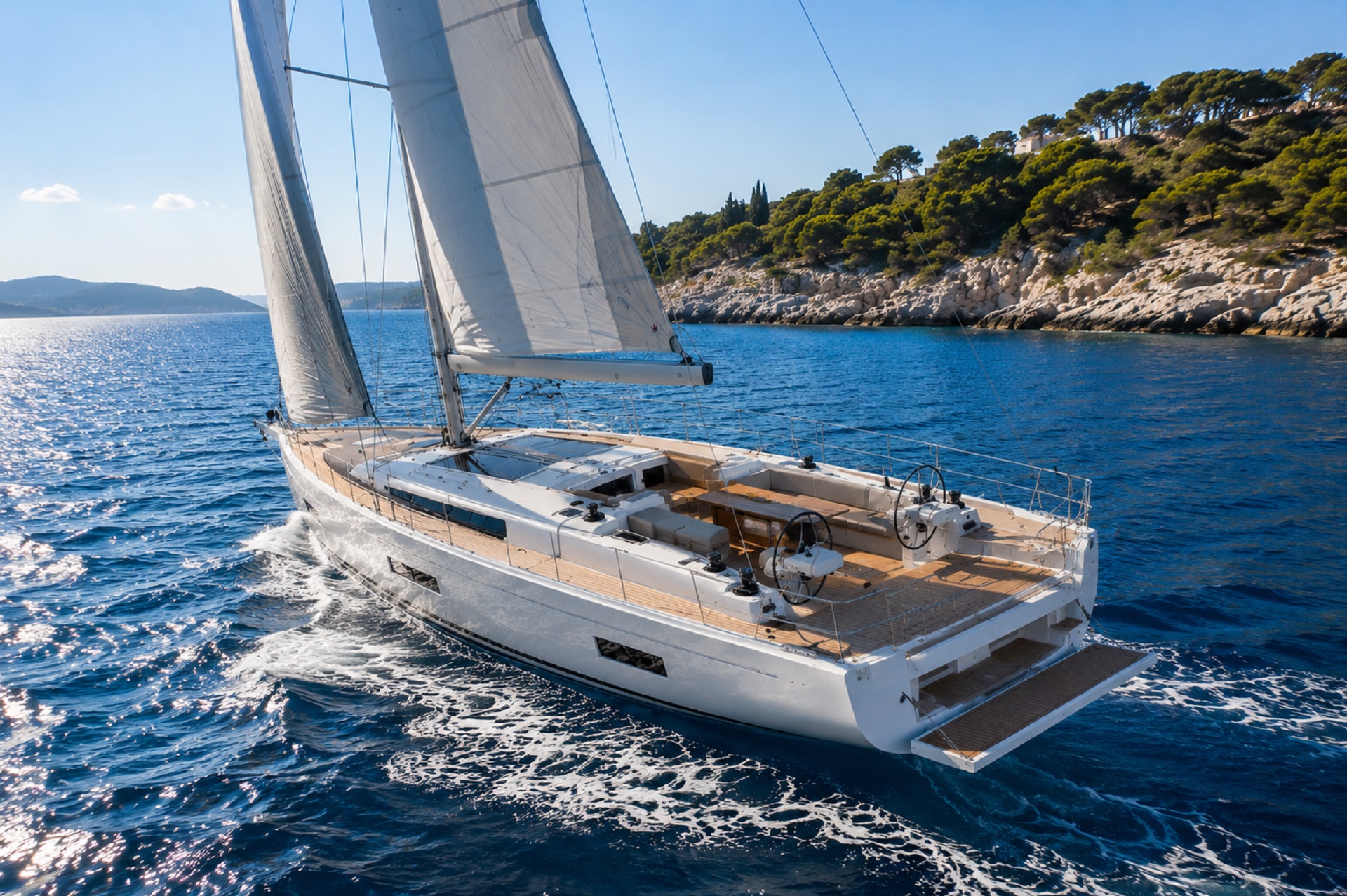
Hanse 460 - Modern Sailing Redefined
The Hanse 460 represents a clear shift in what a modern cruising yacht is expected to deliver. It is no longer just about moving efficiently through the water; it is about creating a complete onboard experience where sailing, relaxation, and lifestyle blend into a single continuous flow. In this sense, the Hanse 460 stands as a benchmark for the new generation of performance cruisers that prioritize simplicity without sacrificing capability.
Designed by Berret-Racoupeau Yacht Design, one of the most influential naval architecture studios in contemporary yacht design, the Hanse 460 carries forward a philosophy that has reshaped the cruising segment over the last decade. The focus is not only on hydrodynamics and speed potential, but also on ergonomics, safety, and intuitive handling. Every line, angle, and surface has been considered in terms of how real people will use the yacht - whether short-handed sailing with a partner or managing a full crew during a charter week in the Mediterranean.
At just over 46 feet in length, the yacht occupies a particularly versatile segment. It is large enough to offer genuine comfort for extended cruising, yet still compact enough to remain manageable in tight marina conditions and crowded anchorages. This balance is especially relevant in regions such as the Adriatic Sea, where sailors frequently transition between busy harbors like Split or Hvar Town and remote anchorages in places like Vis, Kornati, or the southern bays of Brač. The Hanse 460 is designed precisely for this kind of varied sailing environment.
What immediately distinguishes the Hanse 460 is its modern hull architecture. The design features a pronounced chine and a broad aft section that significantly increases form stability. This translates into a yacht that feels steady and controlled even when the wind strengthens in typical afternoon conditions. In the Adriatic, where the Maestral wind often builds gradually during the day, this stability is not just a comfort feature - it directly impacts the quality of life onboard. The yacht heels gently rather than excessively, allowing guests to move freely, cook, relax, and socialize without constantly adjusting to motion.
The wide stern is another defining characteristic, and it is not purely aesthetic. It creates a spacious cockpit footprint and improves buoyancy aft, contributing to both performance and comfort at anchor. When combined with the integrated swim platform, it effectively extends the usable living space all the way to the waterline. This becomes particularly valuable during charter weeks, where life naturally revolves around swimming stops, snorkeling breaks, and long evenings anchored in calm bays.
The deck layout reflects Hanse’s long-standing commitment to simplicity. Sailing systems are designed so that even complex maneuvers can be executed with minimal physical effort. All primary control lines are led aft to the cockpit, eliminating the need to move forward in challenging conditions. This approach reduces risk, increases efficiency, and makes the yacht accessible to a wider range of sailors. In practice, it means that tacking, reefing, and sail adjustments can be handled almost entirely from the helm stations.
The self-tacking jib system further reinforces this philosophy. It transforms what would traditionally be a multi-step maneuver into a single, fluid action at the helm. For crews sailing through narrow channels or between closely spaced islands - common in Croatian waters - this level of responsiveness is not just convenient, but genuinely transformative in terms of confidence and safety.
Beyond functionality, the Hanse 460 also expresses a strong design identity. Clean deck lines, a low-profile cabin top, and carefully integrated hardware create a visually cohesive silhouette. The yacht appears purposeful without being aggressive, modern without being overly technical. This balance makes it equally at home in a luxury marina or at anchor in a quiet, unspoiled bay.
In essence, the Hanse 460 is not simply an incremental update within its class. It is a redefinition of what a mid-sized cruising yacht can be: easier to sail, more comfortable to live on, and more adaptable to the diverse conditions found across modern cruising grounds like the Mediterranean and Adriatic seas.
Exterior Design & First Impressions
The Hanse 460 makes a strong visual statement the moment it comes into view. It is unmistakably modern in its proportions, with a design language that prioritizes clean geometry, functional elegance, and a sense of quiet confidence rather than exaggerated styling. The yacht does not rely on ornamentation to stand out; instead, its presence comes from the precision of its lines and the balance of its overall silhouette.
One of the most striking features is the reverse bow, which immediately signals its contemporary design approach. This extended, slightly inverted stem is not only a stylistic choice but also a functional one. It increases waterline length when the yacht is heeled, contributing to improved speed potential and smoother wave penetration. In real-world sailing conditions, especially when transitioning between islands in open Adriatic passages, this translates into a noticeably more comfortable motion through chop and short seas.
Running along the hull is a continuous chine that defines the yacht’s character from almost every angle. This sharp, elongated edge is more than a visual detail - it plays a significant hydrodynamic role. By increasing form stability, it helps the yacht resist excessive rolling and maintains a more level sailing attitude. In practice, this means that when the afternoon Maestral wind builds across the Croatian coast, the Hanse 460 remains composed and predictable rather than overly reactive. For those onboard, this creates a sense of security and ease, especially during longer sails when comfort becomes just as important as performance.
The wide aft section is another defining element of the yacht’s design. It reflects a broader trend in modern yacht architecture where beam is carried further aft to maximize interior volume and deck space. On the Hanse 460, this design choice pays off in multiple ways. At sea, it provides additional stability and buoyancy, while at anchor it transforms into an expansive social area that connects directly to the water via the fold-down swim platform. Visually, it gives the yacht a grounded, powerful stance, especially when viewed from behind or alongside in a marina.
Despite the emphasis on width aft, the bow section remains relatively fine and well-proportioned. This contrast between a sharp forward entry and a broad stern is deliberate, creating an efficient hull form that balances performance and comfort. The fine entry helps the yacht cut cleanly through waves, reducing slamming and spray when sailing upwind or during longer crossings. This becomes particularly noticeable in open-water passages between major Adriatic destinations, where conditions can shift quickly and wave patterns become more irregular.
Adding to the yacht’s functional design language is the integrated bowsprit, which extends the sail plan forward in a clean and purposeful manner. This feature enhances downwind and reaching performance by allowing for larger sail configurations, such as asymmetric spinnakers or furling gennakers, without cluttering the foredeck. It also contributes to the yacht’s streamlined aesthetic, eliminating the need for traditional protruding fittings while reinforcing its modern identity.
From a first impression standpoint, the Hanse 460 communicates balance. It looks stable without appearing heavy, modern without feeling experimental, and performance-oriented without sacrificing elegance. Whether viewed at anchor in a quiet bay along the Dalmatian coast or gliding under sail between islands, it consistently presents itself as a well-resolved design where every exterior element serves both a visual and practical purpose.
Easy Sailing Concept
The Hanse 460 is fundamentally built around a single guiding idea: sailing should be intuitive, accessible, and as stress-free as possible without removing the joy of being under sail. Rather than relying on complex sail management or constant physical adjustments, the yacht is engineered so that most operations become logical, centralized, and easy to execute from a single position.
This philosophy is most evident in how the deck layout is organized. All essential control lines are led aft to the twin helm stations, which means that nearly every key sailing function can be managed from the cockpit. Halyards, reefing lines, furling systems, and trimming controls are positioned in a way that minimizes the need to move forward. In practical terms, this reduces exposure to wind, waves, and deck movement, which is especially valuable in real cruising scenarios where conditions can change quickly. For charter crews or less experienced sailors, this layout significantly lowers the learning curve and builds confidence from the very first sail.
The twin helm configuration itself is designed not only for visibility and control but also for ergonomic efficiency. From either helm station, the skipper maintains a clear view of the sails, bow, and surrounding waters, while still being connected to the cockpit and crew. This balance between control and social interaction is a defining feature of modern cruising yachts, and the Hanse 460 executes it particularly well. It allows the person steering to remain part of the onboard experience rather than being isolated from it, which becomes especially noticeable during relaxed coastal passages or sunset sails along island chains.
A key element of this simplified sailing approach is the self-tacking jib system. Traditionally, tacking a yacht requires coordinated effort - adjusting sheets, managing winches, and timing sail transitions. On the Hanse 460, this process is reduced to a single, fluid action at the helm. When the yacht changes direction through the wind, the jib automatically slides across its track without manual intervention. This transforms what is typically a moment of coordinated activity into a smooth, almost effortless maneuver.
In real-world cruising conditions, particularly in areas like the Adriatic where wind shifts can occur frequently between islands and open channels, this system has a meaningful impact on overall sailing rhythm. It allows the crew to react quickly without interrupting onboard comfort or requiring everyone to stop what they are doing to manage sails. The result is a more continuous and relaxed sailing experience, where course adjustments feel natural rather than procedural.
Reefing and sail adjustments follow the same principle of simplification. The systems are designed so that reducing sail area or adapting to changing wind conditions can be done in a controlled, linear process from the cockpit. This is particularly important when sailing in the afternoon Maestral wind, which often builds gradually but steadily across the Croatian coast. Instead of requiring anticipation and manual coordination on deck, the yacht allows for incremental adjustments that maintain balance and comfort without disrupting the onboard atmosphere.
Taken together, these design choices create a sailing environment where technical complexity is intentionally hidden behind ergonomic design. The result is not a yacht that removes sailing skill, but one that amplifies usability. Experienced sailors still feel connected to the nuances of wind and trim, while less experienced crews are able to operate the yacht confidently without intimidation.
Ultimately, the Easy Sailing Concept behind the Hanse 460 is about preserving what matters most: time on the water, uninterrupted by unnecessary complexity. Whether navigating tight island passages, adjusting course in open sea, or simply enjoying a steady coastal cruise, the yacht is designed to keep attention where it belongs - on the experience itself rather than the mechanics of sailing.
Cockpit & Outdoor Living
The cockpit of the Hanse 460 is not just a working area for sailing - it is the true centre of life onboard. It is where the yacht’s design philosophy becomes most tangible, blending functionality with comfort in a way that feels natural both under sail and at anchor. Every proportion, surface, and transition in this space has been carefully considered to support two distinct modes of use: active sailing and relaxed living.
At first glance, the cockpit appears wide, open, and exceptionally well balanced. Its geometry is designed to give both the skipper and guests a clear sense of separation without isolation. The twin helm stations sit slightly aft and elevated, providing excellent visibility over the deck, sails, and surrounding water. From here, steering feels direct and intuitive, while communication with the crew or guests remains effortless. This layout ensures that the person at the helm is always part of the social environment rather than detached from it, which is particularly valuable during longer coastal passages or sunset sails when interaction matters as much as control.
Between the helm stations, the central cockpit area remains deliberately uncluttered. This is one of the defining strengths of the Hanse 460’s layout. Instead of being filled with lines, hardware, or obstructive fittings, the space is kept open and inviting. It allows for free movement when adjusting sails, but more importantly, it creates a comfortable social zone where guests can sit, relax, or move about without feeling constrained. This sense of openness becomes especially noticeable in light wind conditions, when sailing is smooth and the cockpit transitions naturally into a lounge-like environment.
Ergonomics play a central role in how this space functions. Seating is deep and well-proportioned, offering support during both active sailing and extended relaxation periods. The cockpit table is positioned to serve as a central gathering point, whether for meals, drinks, or simply as a shared surface during anchor stops. Its design allows it to be both practical and unobtrusive, adapting to the rhythm of the day rather than dictating it.
When the yacht is at anchor, the cockpit undergoes a complete transformation. What was once a functional sailing workspace becomes an open-air living room suspended above the water. This shift is seamless and almost architectural in nature. The folding swim platform at the stern plays a crucial role in this transition. When lowered, it extends the usable space directly to sea level, effectively dissolving the boundary between yacht and water. In calm conditions - particularly in sheltered Adriatic bays - this creates a natural extension of the cockpit into the sea itself.
This connection to the water is what defines the Hanse 460’s outdoor living experience. Swimming, lounging, and socializing all converge in a single fluid space. Guests can move effortlessly between the sea and the cockpit, turning the yacht into a private floating beach club. In destinations such as Hvar, Vis, or the Kornati archipelago, where anchorages often feature crystal-clear water and protected surroundings, this setup becomes the focal point of daily life onboard.
Comfort is further enhanced by optional sun pads and additional seating configurations that allow the cockpit to adapt to different moods and times of day. During mornings, it serves as a quiet breakfast area with soft light and calm water. At midday, it becomes a shaded retreat from the sun. In the evening, it transforms once again into a social dining and relaxation space, often framed by sunset light reflecting off the surrounding sea.
The scale of the cockpit also contributes to its versatility. It feels spacious enough for movement and activity, yet intimate enough to maintain a sense of cohesion among guests. This balance is particularly important on charter voyages, where different groups naturally shift between social interaction and private relaxation throughout the day.
Ultimately, the cockpit and outdoor living areas of the Hanse 460 are designed to extend life beyond the interior, making the sea itself part of the living environment. It is not simply a place to sail from - it is a place to live, gather, and experience the changing rhythm of the Adriatic in comfort and style.
Interior Design & Comfort
Below deck, the Hanse 460 continues the same design logic found on deck: clarity, openness, and functional elegance. Rather than relying on traditional yacht interiors with heavy materials or visually segmented spaces, it adopts a modern, architectural approach where light, proportion, and usability define the atmosphere. The result is an interior that feels contemporary and residential, more reminiscent of a compact waterfront apartment than a conventional sailing yacht.
One of the most immediately noticeable features is the abundance of natural light. Large hull windows stretch along the saloon, complemented by overhead skylights that bring daylight deep into the interior. This combination transforms the perception of space entirely. Even when below deck, there is a constant visual connection to the sea outside, reinforcing the feeling of being onboard rather than enclosed. The light changes throughout the day, from soft morning glow to warm evening tones, giving the interior a dynamic quality that enhances long-term comfort during extended cruising.
This emphasis on light is paired with a carefully considered spatial layout. The saloon is open-plan, with clean lines and minimal visual interruption between key functional zones. The seating area, navigation station, and galley flow into one another in a way that feels intuitive rather than compartmentalized. This openness makes the yacht feel larger than its actual length, an important factor for comfort during week-long charters or longer passages across the Adriatic.
The overall material palette supports this modern aesthetic. Surfaces are typically light-toned, with subtle contrasts that avoid visual heaviness. Instead of overwhelming textures or decorative excess, the focus is on clean finishes and practical durability. This ensures that the interior remains not only visually appealing but also easy to maintain in a charter environment where frequent use is expected.
In terms of accommodation, the Hanse 460 offers flexible configurations that typically range from three to four cabins depending on layout. This adaptability makes it suitable for a wide variety of sailing groups, from families seeking privacy and comfort to groups of friends sharing a charter experience. Each cabin is designed with attention to space efficiency, ensuring that even aft cabins maintain a comfortable level of headroom, storage, and personal space.
The owner’s version represents the most refined expression of this design philosophy. The forward master cabin is particularly notable, featuring a true island bed that allows access from both sides, rather than the constrained layout often found in yachts of this size. This small but significant detail elevates onboard comfort, especially during longer stays. The inclusion of a private en-suite bathroom further enhances the sense of autonomy and privacy, bringing a hotel-like level of convenience to life at sea.
The aft cabins, while slightly more compact, remain well proportioned and practical. They are designed to maximize usable space without feeling restrictive, with sufficient storage for clothing and personal belongings. The shared or additional en-suite facilities are positioned efficiently to maintain privacy between different sleeping areas, an important consideration when the yacht is fully occupied.
The saloon itself serves as the central living environment onboard. It is designed for dual purpose use: a social gathering space during the day and a comfortable relaxation area in the evening. The large dining table acts as the focal point, capable of accommodating group meals, planning sessions, or casual evenings indoors when weather conditions shift. Seating is ergonomically shaped, allowing for both upright dining and relaxed lounging.
The galley is positioned with equal attention to practicality and flow. It is equipped to support extended cruising, with sufficient counter space, storage, and appliance integration to allow efficient meal preparation even in motion. Its placement ensures that the person preparing meals remains connected to the saloon rather than isolated, reinforcing the yacht’s overall social design concept.
Storage throughout the interior is another key strength. Every available volume is utilized intelligently, from under-seat compartments to integrated cabinetry in cabins and shared spaces. This makes it possible to comfortably store provisions, personal belongings, and cruising equipment without cluttering living areas, which is especially important during multi-day passages or longer charter itineraries.
Ultimately, the interior of the Hanse 460 is defined by balance. It combines the practicality required for real cruising life with a level of comfort and visual openness that elevates the onboard experience. It is not designed to impress through excess, but rather to support life at sea in a way that feels natural, comfortable, and effortlessly functional.
Sailing Performance
While the Hanse 460 is often recognized for its comfort and ease of use, its sailing performance is a core part of its identity. This is not a yacht that merely floats between destinations - it is designed to actively sail, responding efficiently to wind conditions while maintaining a high level of onboard comfort. The result is a well-balanced cruiser that performs confidently across a broad range of Mediterranean conditions.
In light to moderate winds, which are common in regions such as the Adriatic during morning departures or sheltered coastal routes, the Hanse 460 demonstrates smooth and steady cruising behavior. Speeds of around 6 - 7 knots are easily maintained without aggressive sail trimming or constant adjustments. The yacht feels relaxed and composed in these conditions, allowing the crew to focus less on performance optimization and more on the overall experience of sailing between islands, coves, and coastal towns.
As the wind strengthens into the typical 15 - 20 knot range often associated with the afternoon Maestral breeze along the Croatian coast, the yacht begins to show its more dynamic character. In these conditions, speeds of 7.5 - 8.5 knots become readily achievable, particularly on a beam reach where the hull can fully express its stability and efficiency. The transition into this performance range is smooth rather than abrupt, reinforcing the yacht’s reputation for predictable and confidence-inspiring handling.
A key contributor to this behavior is the hull design. The broad aft sections provide significant form stability, helping the yacht resist excessive heeling and maintain a more level sailing attitude. This has a direct impact on comfort onboard, as reduced heel means greater freedom of movement in the cockpit and below deck. Guests are able to relax, dine, and socialize without constantly adjusting to shifting angles, which is especially valuable during longer afternoon passages.
At the same time, the hull’s forward sections are carefully refined to ensure clean water flow and reduced resistance. This balance between a wide, stable aft and a finer entry forward allows the yacht to perform efficiently across multiple points of sail. When sailing upwind, the Hanse 460 maintains a steady course with good pointing ability for a cruising yacht of its size. The motion is composed rather than aggressive, making longer upwind passages more comfortable and less fatiguing for both crew and passengers.
The rig configuration also plays an important role in the yacht’s overall performance profile. The tall mast and well-distributed sail plan provide a strong driving force even in moderate wind conditions. This ensures that the yacht remains responsive and lively without requiring excessive sail area or complex trimming techniques. Downwind and reaching performance benefits significantly from the combination of rig height and the optional use of modern furling or asymmetric sails, allowing the yacht to cover ground efficiently in a variety of conditions.
Handling remains one of the most consistent strengths of the Hanse 460. The steering feels direct and predictable, with feedback that allows the helmsman to understand the yacht’s behavior intuitively. This predictability is especially important in coastal cruising environments where conditions can shift quickly, such as when moving between sheltered bays and more exposed channels. The yacht’s response to wind gusts or changes in sea state is measured rather than abrupt, contributing to an overall sense of control and safety.
In the context of Mediterranean cruising, these performance characteristics translate into a highly practical advantage. The ability to maintain solid cruising speeds means shorter passages between destinations, whether sailing from Split to Vis, Hvar to Korčula, or exploring the Kornati islands. At the same time, the yacht’s comfort-oriented design ensures that these passages remain relaxed and enjoyable rather than physically demanding.
Ultimately, the Hanse 460 strikes a refined balance between performance and comfort. It is capable enough to satisfy experienced sailors who appreciate responsive handling and efficient passage-making, yet forgiving and stable enough to remain accessible to less experienced crews. This dual nature is what makes it particularly well-suited to modern charter sailing, where diverse groups of guests expect both ease of use and genuine sailing enjoyment within the same experience.
Layout Options & Customization
One of the defining advantages of the Hanse 460 lies in its high degree of layout flexibility. Rather than offering a single fixed interior arrangement, the yacht is designed as a modular platform that can be adapted to different ownership styles, cruising expectations, and commercial charter requirements. This adaptability is a key reason it has become so widely adopted across Mediterranean charter fleets, where versatility often matters as much as performance or comfort.
At the core of this concept is the ability to configure the yacht in multiple interior layouts without compromising its fundamental sense of space or functionality. Whether designed for private ownership or high-utilization charter operation, the Hanse 460 maintains a consistent design philosophy: efficient use of volume, clear separation of private and communal areas, and a saloon that always remains the central living hub of the yacht.
In its three-cabin configuration, the Hanse 460 is clearly oriented toward private ownership or more comfort-focused cruising. This version prioritizes spaciousness over maximum occupancy, with larger cabins, more generous storage solutions, and an enhanced sense of privacy throughout. The forward master cabin becomes the focal point of this layout, often featuring an en-suite bathroom and improved circulation space around the bed. This configuration is particularly well suited to longer voyages, where onboard comfort and reduced crowding significantly enhance the cruising experience.
The four-cabin layout, by contrast, is optimized for charter use and group sailing. It introduces additional sleeping capacity while still maintaining a well-balanced interior flow. Despite the increased number of cabins, careful design ensures that privacy is not sacrificed. Cabins are distributed in a way that minimizes noise transfer and visual intrusion, while shared facilities are positioned efficiently to serve multiple occupants without congestion. This layout is especially popular in the Mediterranean charter market, where groups of friends or families often prioritize equal cabin distribution and functional sleeping arrangements over oversized private spaces.
For more intensive commercial operations, higher-capacity configurations are also available, designed to maximize berth count while preserving the yacht’s usability. In these versions, the Hanse 460 becomes a highly efficient charter platform, capable of accommodating larger groups without fundamentally altering its sailing characteristics or onboard comfort standards. Even in these configurations, the design ensures that circulation remains logical, storage is adequately distributed, and essential living areas do not feel compromised.
Across all versions, the saloon consistently functions as the central social and functional core of the yacht. This is one of the most important design constants in the Hanse 460’s philosophy. Regardless of how many cabins are included or how the interior is subdivided, the main living space retains its openness, natural light, and sense of volume. This ensures that the yacht never feels fragmented or confined, even at full occupancy. The saloon acts as a stabilizing element in the interior layout, maintaining cohesion between different zones and providing a shared environment where guests naturally gather throughout the day.
Another important aspect of the yacht’s configurability is how well each layout preserves onboard comfort in real cruising conditions. Storage solutions, ventilation, and access to bathrooms are all carefully considered so that even higher-capacity versions remain practical during extended use. This is particularly relevant in charter environments, where multiple guests rely on the same onboard systems for several days at a time.
The success of this flexible approach is reflected in the yacht’s strong presence in charter fleets across the Mediterranean. Operators value the Hanse 460 not only for its sailing performance and ease of handling, but also for its ability to adapt to different business models and client expectations. Whether used for premium private charters, weekly group rentals, or mixed fleet operations, it consistently delivers a balance of comfort, efficiency, and operational simplicity.
Ultimately, the layout versatility of the Hanse 460 is more than a technical feature - it is a strategic design decision that allows the yacht to remain relevant across a wide spectrum of use cases. It ensures that whether sailing with a small family or a full charter group, the onboard experience remains coherent, comfortable, and true to the yacht’s core philosophy of modern, effortless cruising.
Ideal Cruising Grounds - Adriatic Perspective
The Hanse 460 feels almost purpose-built for cruising in Croatia and the wider Adriatic region. The combination of its manageable size, moderate draft, and highly simplified sailing systems makes it exceptionally well suited to the specific conditions found along this coastline. Here, sailing is rarely about long ocean passages; instead, it is defined by short island-to-island routes, frequent anchoring, and a constant interplay between open water and sheltered bays. In this environment, the Hanse 460’s design philosophy - effortless handling combined with comfort-focused living - becomes particularly relevant.
One of the key advantages of the yacht in this region is its ability to support flexible island-hopping itineraries without imposing operational complexity on the crew. Destinations such as Hvar, Vis, Brač, Šolta, and the Kornati archipelago are all within comfortable sailing range of one another, allowing for varied weekly routes that combine natural beauty, cultural stops, and protected anchorages. The yacht’s stability and predictable handling make transitions between these islands smooth and enjoyable, even when conditions vary between calm morning seas and windier afternoon passages.
A typical sailing day aboard the Hanse 460 in the Adriatic follows a relaxed but dynamic rhythm. Mornings often begin in quiet anchorages or marina towns such as Split or Trogir, where the water is still and the air is cool. After a leisurely breakfast on deck, the yacht sets out under light wind conditions, making for comfortable sailing between islands. These morning passages are usually calm and steady, allowing guests to enjoy the scenery, swim stops, or short detours into sheltered coves along the way.
As the day progresses, wind conditions often shift, particularly with the arrival of the Maestral breeze that characterizes much of the summer sailing season in Croatia. This creates ideal conditions for longer reaches between islands, where the Hanse 460 can comfortably maintain consistent cruising speeds while remaining stable and easy to handle. The result is a sailing experience that feels active but never demanding, allowing the journey itself to remain as enjoyable as the destination.
Lunch stops are a central part of the Adriatic sailing rhythm, and the Hanse 460 integrates seamlessly into this lifestyle. Its easy anchoring behavior and spacious cockpit make it simple to pause in secluded coves or sheltered bays for midday breaks. Locations such as hidden inlets on Brač, the calm waters around Šolta, or the remote anchorages of Vis provide ideal settings for swimming, snorkeling, or simply relaxing onboard. The yacht’s swim platform enhances this experience further, allowing direct and effortless access to the sea.
In the late afternoon or early evening, passages typically continue toward final overnight destinations. These may be marina towns with traditional restaurants and cultural life, or quiet bays where the yacht can anchor in complete tranquility. The flexibility of the Hanse 460 allows both options to be used interchangeably, depending on mood, weather, or itinerary planning.
At anchor, the yacht truly comes into its own. The stability of the hull, combined with its spacious cockpit and generous outdoor living areas, creates an environment where evenings unfold naturally. Swimming becomes part of the daily rhythm, followed by relaxed onboard dining under open skies. In sheltered Adriatic anchorages, where the water remains calm and the surroundings are often untouched by development, the yacht effectively becomes a private floating retreat.
This ability to transition seamlessly between active sailing and relaxed living is what makes the Hanse 460 particularly well matched to the Adriatic cruising style. The region rewards flexibility, short passages, and frequent stops rather than long continuous voyages. The yacht’s design supports exactly this pattern, ensuring that neither sailing nor onboard comfort is ever compromised.
Ultimately, the Hanse 460 does not just operate well in the Adriatic - it feels naturally integrated into it. The combination of island geography, predictable seasonal winds, and abundant sheltered anchorages aligns closely with the yacht’s strengths. For sailors exploring this region, it offers a way to experience Croatia not as a series of destinations, but as a continuous, fluid journey across sea, wind, and coastline.
Who the Hanse 460 Is For
The Hanse 460 occupies a very deliberate position in the modern cruising yacht market. It is not designed to chase extremes—neither pure racing performance nor ultra-luxury superyacht indulgence. Instead, it focuses on a more practical and increasingly popular philosophy: making sailing genuinely enjoyable, accessible, and adaptable to different types of crews without losing the essence of what makes time at sea special.
At its core, the Hanse 460 is best suited for sailors who want a modern yacht that feels intuitive from the moment they step onboard. It removes much of the traditional friction associated with sailing - complex sail handling, physically demanding maneuvers, and segmented onboard spaces - replacing them with systems and layouts that prioritize clarity and ease of use. This makes it especially attractive in real-world cruising environments like the Mediterranean, where conditions change quickly and time is often better spent enjoying the journey rather than managing it.
For families, the Hanse 460 offers a rare combination of comfort, safety, and usability. The deck layout minimizes the need to move forward during sailing, which significantly reduces exposure to wind and motion. This creates a safer environment for children and less experienced crew members, while the stable hull and predictable handling provide reassurance even in changing conditions. Below deck, the spacious cabins and open saloon ensure that life onboard remains comfortable over extended periods, making week-long or even longer family cruises not only feasible but genuinely enjoyable.
Groups of friends are another natural fit for the Hanse 460, particularly in charter scenarios across destinations like Croatia, Greece, or Italy. The yacht’s layout supports both social interaction and personal space, allowing different rhythms of onboard life to coexist. The cockpit becomes a shared social hub during sailing and anchoring, while the cabins provide privacy when needed. The ease of handling also means that responsibility for sailing can be shared or rotated, making the experience more collaborative and less dependent on a single experienced skipper.
For couples, especially those interested in shorthanded sailing, the Hanse 460 offers an appealing balance of manageability and capability. The self-tacking jib, aft-led lines, and ergonomic helm stations mean that two people can comfortably handle the yacht without additional crew. This opens the door to more spontaneous cruising - short coastal hops, flexible route changes, and relaxed decision-making without operational stress. At the same time, the interior comfort ensures that extended time onboard feels refined rather than utilitarian.
Experienced sailors represent another important audience for the Hanse 460. While they may be fully capable of handling more demanding or performance-oriented yachts, many appreciate the shift toward simplicity and reduced workload that this design offers. The yacht allows them to stay connected to the fundamental joy of sailing - reading wind, adjusting course, and feeling the boat respond - without being burdened by unnecessary complexity. It becomes a platform for pure cruising enjoyment, where skill is still relevant but not constantly required for basic operation.
What unites all of these user profiles is a shared preference for ease of use without compromise in experience. The Hanse 460 is not a racing yacht, and it does not attempt to compete in that domain. Its focus is not on maximizing speed at all costs or delivering high-adrenaline performance sailing. Instead, it is built around the idea that most sailors value consistency, comfort, and freedom of movement more than marginal gains in performance metrics.
At the same time, it is far from passive. The yacht still sails well, responds intelligently to wind and trim, and provides enough performance to make passages efficient and engaging. The key difference is that this performance is accessible without effort. It does not demand constant attention or technical adjustment to remain enjoyable.
In this sense, the Hanse 460 represents a broader shift in modern cruising expectations. It acknowledges that for most people, sailing is not about competition or technical mastery, but about time spent on the water - exploring coastlines, visiting islands, anchoring in quiet bays, and sharing experiences with others. The yacht is designed to support exactly that: a relaxed, flexible, and highly usable sailing lifestyle where complexity is reduced, and enjoyment is amplified.
Hanse 460 Yacht Charter Croatia
The Hanse 460 fits naturally into the Croatian charter landscape, where sailing is defined by short island distances, predictable summer wind patterns, and an exceptional density of anchorages, marinas, and coastal experiences. In this environment, the yacht’s design philosophy - simplicity, space, and controlled performance - aligns almost perfectly with how people actually spend time at sea in the Adriatic.
Rather than being a yacht that requires constant technical engagement, the Hanse 460 is built to fade into the background and let the cruising experience take priority. This becomes particularly valuable in charter scenarios, where guests may have varying levels of sailing experience, and the focus is often on shared time, exploration, and relaxation rather than operational complexity. From departure to anchoring, the yacht is designed to make each transition feel smooth and intuitive.
In Croatia, this translates into a very specific type of sailing rhythm. Mornings often begin in protected harbors such as Split, Trogir, or Marina Kaštela, where provisioning and departure are straightforward. The Hanse 460’s easy handling allows for calm, unhurried departures even in busy marina environments. Once underway, the yacht quickly settles into a steady cruising pace, making island-to-island passages feel efficient without being rushed.
The true strength of the Hanse 460 in charter use becomes apparent as the day unfolds. With distances between destinations like Hvar, Vis, Brač, Šolta, and the Kornati islands being relatively short, sailing is less about endurance and more about variety. The yacht’s stability and predictable behavior ensure that these daily passages remain comfortable, even when the afternoon Maestral wind introduces stronger conditions across open water. Guests can remain in the cockpit, enjoying the scenery and conversation, while the yacht handles the conditions with minimal adjustment required.
Anchoring is where the Hanse 460 particularly enhances the charter experience. The combination of a well-designed stern platform, spacious cockpit, and stable hull creates an environment that naturally extends life outdoors. In sheltered bays along Vis or Brač, or within the protected waters of Kornati National Park, the yacht becomes a platform for swimming, dining, and slow-paced relaxation. The transition between sailing and leisure is seamless, with no need to reconfigure or complicate onboard operations.
Evening routines in Croatia further highlight the yacht’s strengths. Whether moored stern-to in a small coastal town or anchored in a quiet bay under clear skies, the Hanse 460 maintains a sense of comfort and openness. The interior remains bright and ventilated, while the cockpit often becomes the central gathering space for dinner, conversation, and sunset viewing. The overall atmosphere is relaxed, unforced, and closely connected to the surrounding environment.
From a broader perspective, the Hanse 460 reflects a shift in modern yacht design that is particularly relevant in charter markets like Croatia. Clean lines, functional layouts, and simplified sailing systems are not just aesthetic choices - they directly enhance usability in real-world conditions where time is limited and experiences are diverse. By reducing operational complexity, the yacht allows guests to focus more on destinations, swimming spots, local cuisine, and shared moments rather than technical sailing management.
In its category, the Hanse 460 offers one of the most balanced charter experiences available today. It is large enough to provide comfort and privacy, yet manageable enough to remain accessible. It is capable enough to deliver enjoyable sailing performance, yet simple enough to avoid overwhelming less experienced crews. This balance is what makes it particularly well suited to the Croatian coast, where flexibility and ease of use often define the quality of a sailing holiday.
Ultimately, the Hanse 460 does not attempt to dominate the experience - it enhances it. It is a yacht that supports the rhythm of the sea rather than interrupting it, allowing guests to move through the Adriatic with a sense of ease, continuity, and quiet confidence.