
Hanse Yachts
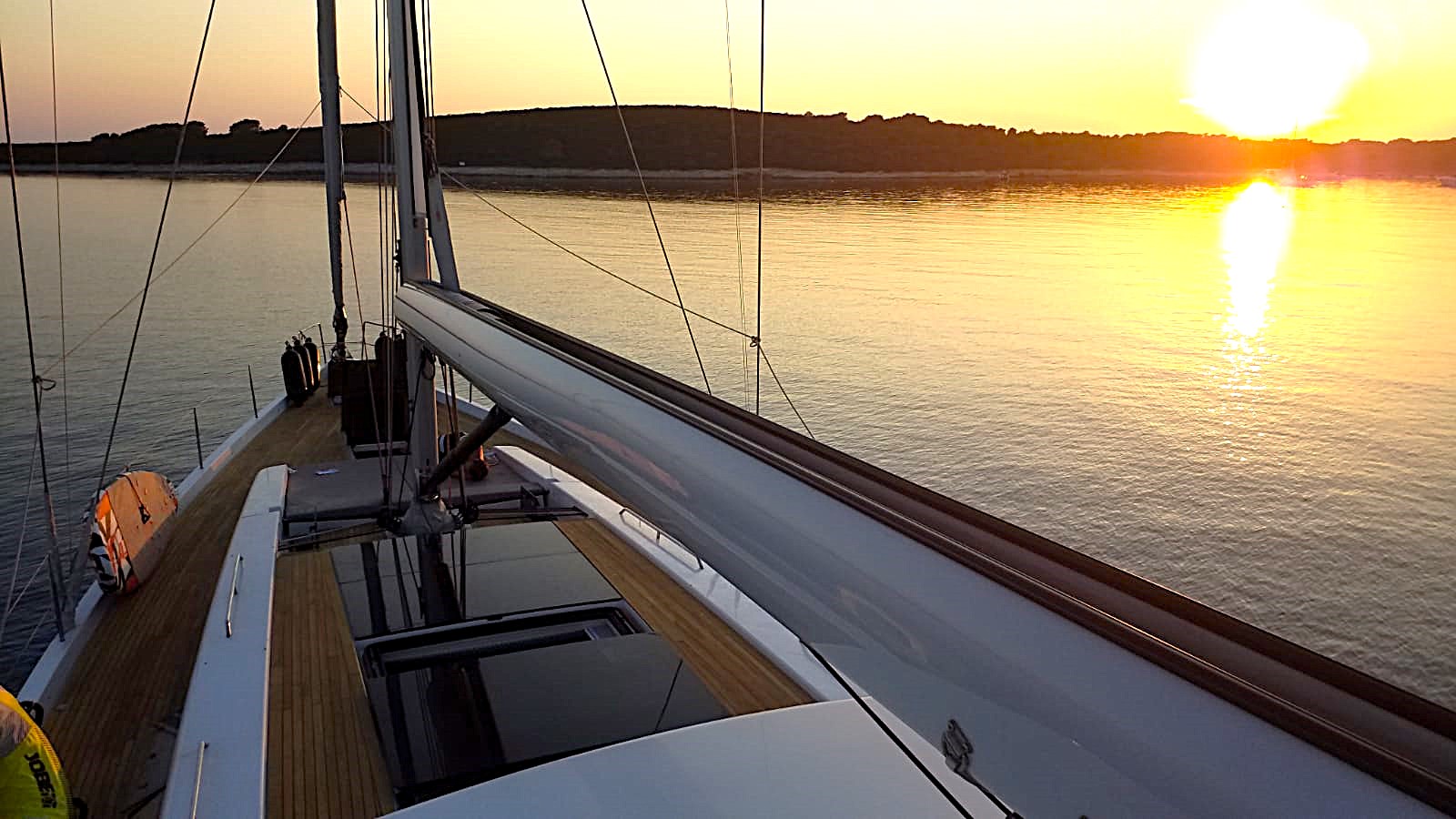
Hanse Yachts - German Innovation and Modern Sailing Simplicity
Hanse Yachts occupies a distinctive position in modern yacht building, not because it follows tradition, but because it consistently reinterprets it. Emerging from Germany’s highly disciplined engineering culture, the brand built its identity around a clear idea: a cruising yacht should feel intuitive, modern, and enjoyable to operate without requiring constant technical effort or specialist knowledge.
When Hanse began developing its first models in the early 1990s, recreational sailing was already undergoing a quiet transformation. Charter fleets were expanding across the Mediterranean, private ownership was growing beyond traditional sailing communities, and a new generation of sailors was entering the sport through travel and leisure rather than heritage. In this changing environment, Hanse positioned itself not as a niche performance builder or a traditional yacht house, but as a forward-looking producer of accessible cruising yachts designed for real everyday use.
What set the brand apart early on was its refusal to treat complexity as a mark of quality. Instead, Hanse focused on clarity - both in design and in function. Deck layouts were stripped of unnecessary clutter, sail handling systems were simplified, and interior spaces were opened up to maximize light and volume. The result was a new kind of cruising yacht: one that felt modern not only in appearance, but in how it behaved at sea.
A defining element of this approach became the integration of self-tacking jib systems across much of the range. While technically simple in principle, the impact on the sailing experience was profound. Maneuvers that once required coordinated effort and constant line handling became smooth, single-motion transitions. This made sailing more fluid and reduced the barrier to entry for crews without extensive experience, especially in the context of short-handed cruising.
At the same time, Hanse developed a strong and immediately recognizable visual language. Low-profile deckhouses, wide stern geometry, elongated hull windows, and clean surface transitions gave the yachts a distinctly architectural appearance. Rather than looking like heavily segmented nautical machines, Hanse yachts began to resemble contemporary floating spaces - minimalist, bright, and purposefully designed.
Inside, the same philosophy continued. Interiors were shaped around openness and livability rather than ornamentation. Natural light became a design tool in itself, with large windows and thoughtful spatial layouts creating environments that feel closer to modern coastal apartments than traditional sailing interiors.
This combination of engineering discipline and lifestyle-driven design allowed Hanse to grow rapidly across Europe and establish a strong presence in Mediterranean cruising markets. In regions such as Croatia, Greece, Italy, and Spain, where sailing is defined by short passages, frequent anchoring, and life lived largely on deck, Hanse yachts found a natural fit.
Ultimately, Hanse Yachts represents a broader shift in how modern sailing is understood. It is not about simplifying the experience to the point of removing its character, but about refining it so that ease, comfort, and genuine sailing enjoyment coexist in a single, coherent design philosophy.
The Rise of Hanse Yachts
Hanse Yachts became one of the most recognizable names in modern European yacht building by following a philosophy that differed significantly from many traditional performance-oriented sailing brands. While much of the sailing industry historically focused on racing heritage, technical sail plans, and crew-intensive designs, Hanse chose a different direction. The company concentrated on building sleek, modern cruising yachts that could be handled comfortably by small crews while still delivering responsive and satisfying sailing performance.
This approach proved highly influential because it aligned perfectly with the changing reality of recreational sailing. By the time Hanse entered the market in the early 1990s, the culture around sailing was evolving rapidly. Increasing numbers of sailors were no longer looking for demanding race-oriented yachts that required constant trimming and highly experienced crews. Instead, they wanted boats that offered freedom, comfort, and simplicity without sacrificing the emotional experience of sailing itself.
Founded in Germany, Hanse emerged during a period when Mediterranean charter sailing was expanding dramatically. Countries such as Croatia, Greece, Italy, and Spain were becoming global sailing destinations, supported by growing marina infrastructure and increasing demand for island-hopping holidays. At the same time, private yacht ownership was becoming more attainable for a broader audience, creating demand for yachts that combined elegant modern design with practical usability.
Hanse recognized these changes early and built its entire identity around what could be described as “modern simplicity.” Rather than overcomplicating the sailing experience, the company aimed to streamline it. From the beginning, Hanse yachts emphasized clean deck layouts, uncluttered working areas, simplified sail handling systems, spacious cockpit designs, and bright contemporary interiors. These features made sailing feel less technical and more approachable without removing the authenticity of being under sail.
One of the company’s most important innovations was the strong integration of self-tacking jib systems into the core design philosophy. While not invented by Hanse, the brand became one of the companies most closely associated with making this setup mainstream in modern cruising yachts. This dramatically simplified maneuvers such as tacking, allowing couples and short-handed crews to sail more comfortably and confidently. The concept fit perfectly with Mediterranean-style cruising, where sailors often make multiple short passages between islands and maneuver frequently in coastal waters.
At the same time, Hanse embraced a distinctly contemporary visual identity. Their yachts featured sleek coach roofs, wide stern sections, elongated hull windows, and minimalist deck styling that immediately differentiated them from more traditional cruising yachts of the time. The interiors followed the same philosophy, prioritizing openness, natural light, and modern architectural styling over darker, heavily segmented layouts common in older designs.
These ideas would eventually become major trends throughout the global cruising yacht industry, but Hanse played a significant role in accelerating and popularizing them on a broader scale. The company helped redefine expectations of what a modern cruising yacht could look and feel like - not only in terms of aesthetics, but also in how easily it could be operated and enjoyed.
As the brand grew, Hanse yachts became increasingly visible throughout Europe and especially across Mediterranean charter destinations such as Croatia, Greece, Italy, and Spain. Charter companies valued the combination of stylish appearance, manageable sailing characteristics, and spacious layouts, while private owners appreciated the balance between performance and onboard comfort.
Today, Hanse remains closely associated with a modern style of cruising that values simplicity, elegance, and practical sailing enjoyment. The brand helped create a new category of sailing yacht - one that feels contemporary, accessible, and highly compatible with the relaxed Mediterranean cruising lifestyle that defines modern yacht culture for so many sailors around the world.
German Engineering and Hanse’s Design Philosophy
Like several major German yacht builders, Hanse built its reputation not on flamboyance or racing extremism, but on engineering discipline, intelligent functionality, and production consistency. From the beginning, the company approached yacht building with a distinctly German mindset: reduce unnecessary complexity, improve usability, and create systems that work efficiently in real-world sailing conditions.
This philosophy shaped every aspect of the brand. Rather than treating yachts as purely emotional luxury objects, Hanse viewed them as highly functional cruising platforms that should combine strong sailing capability with simplicity and everyday comfort. The result was a generation of modern cruising yachts that felt refined and contemporary while remaining practical for ordinary sailors.
One of Hanse’s most defining concepts has always been simplified sailing. The company became especially associated with self-tacking jib systems, which evolved into one of the brand’s strongest identity features. While traditional overlapping genoas often require constant trimming and active winch handling during maneuvers, the Hanse self-tacking setup significantly reduced workload. During a tack, the jib automatically crossed from one side to the other with minimal crew intervention.
Although technically simple in concept, the impact on the sailing experience was enormous. Couples, families, and short-handed crews could handle the yacht with far less physical effort and coordination than on more traditional sail plans. Sailing became calmer, more intuitive, and less intimidating, especially for people without racing backgrounds.
This shift reflected a broader understanding of how modern owners actually use cruising yachts. Most sailors are not competing in regattas or pushing boats aggressively offshore. They are exploring coastlines, moving between anchorages, and enjoying relaxed cruising itineraries. Hanse recognized this reality early and designed yachts around the experience people genuinely wanted at sea.
In regions such as the Adriatic, this approach proved particularly successful. Sailing in Croatia often involves short passages between islands, frequent maneuvering, and changing wind angles throughout the day. Routes through areas such as Hvar, Vis, Brač, or the Kornati Islands reward yachts that are easy to handle repeatedly without exhausting the crew. Hanse yachts fit naturally into this style of sailing because they reduce workload while still preserving the enjoyment and responsiveness of being under sail.
Beyond sail handling, Hanse also embraced minimalistic deck architecture long before it became standard across much of the industry. Wide side decks improved movement and safety onboard, especially during docking and anchoring maneuvers. Cockpits were designed to feel open and uncluttered, with integrated systems that reduced visual noise and unnecessary obstacles. Winches, lines, and controls were positioned to support easy operation while preserving clean visual symmetry.
This created an onboard environment that felt distinctly modern. The yachts projected elegance through simplicity rather than ornamentation. Clean lines, low-profile coach roofs, flush surfaces, and streamlined geometry gave Hanse yachts a contemporary architectural quality that separated them from more traditional cruising designs.
Importantly, this modern appearance was never purely aesthetic. Much of the visual simplicity also served practical purposes. Cleaner deck layouts improved movement around the yacht, reduced snagging points, and reinforced the idea that sailing should feel relaxed and intuitive rather than mechanically overwhelming.
At the same time, German engineering principles remained deeply embedded in the construction process itself. Hanse invested heavily in advanced production technologies, precision manufacturing systems, and modern composite construction methods. CNC machining, controlled lamination processes, and highly organized assembly systems allowed the company to maintain consistent build quality across larger production volumes.
This industrial precision became especially important as Hanse expanded internationally. Customers expected the same sailing characteristics, structural integrity, and interior finish quality whether the yacht was delivered in northern Europe or placed directly into Mediterranean charter service. Consistency became part of the brand’s identity.
Ultimately, Hanse’s design philosophy can be understood as a balance between modern aesthetics, intelligent engineering, and practical sailing usability. The company succeeded because it recognized that contemporary sailors increasingly valued simplicity, comfort, and manageable performance over technical complexity. By aligning yacht design with how people actually wanted to cruise, Hanse helped define an entirely new direction in modern European sailing culture.
The Hanse Look - Modern, Sleek, and Recognizable
Over the years, Hanse yachts developed one of the most recognizable visual identities in the modern cruising yacht market. Even from a distance, their design language is immediately distinguishable. Low-profile coach roofs, elongated hull windows, broad stern sections, and clean deck geometry give Hanse yachts a distinctly contemporary appearance that separates them from more traditional cruising designs.
At a time when many cruising yachts still featured heavier superstructures, segmented deck layouts, and visually crowded proportions, Hanse moved toward a more minimalist and architectural style. The company embraced cleaner surfaces, lower visual weight, and a more streamlined overall profile. This created yachts that looked modern not only in comparison to older designs, but also in a way that still feels contemporary years later.
One of the key characteristics of the Hanse look is visual openness. The yachts are designed to create a strong connection between interior and exterior spaces, making life onboard feel less confined and more integrated with the surrounding sea and landscape. The transition from cockpit to saloon is typically smooth and natural, reinforcing the relaxed cruising atmosphere that defines the brand.
Large hull windows became one of the most important elements of Hanse’s aesthetic identity. These windows dramatically changed both the appearance and onboard atmosphere of modern cruising yachts. Externally, they gave the hulls a longer, more elegant profile with a sharper and more sophisticated visual character. Internally, they transformed the living spaces below deck by allowing significantly more natural light into cabins and saloons.
This became especially valuable in Mediterranean sailing regions such as Croatia, Greece, Italy, and Spain, where sailors spend extended periods onboard during bright summer months. Older sailing yachts often felt darker and more enclosed below deck, particularly during hot afternoons. Hanse interiors, by contrast, felt airy, modern, and naturally illuminated, creating a much stronger sense of comfort for both private owners and charter guests.
The broad stern sections also became a defining part of Hanse’s visual evolution. Modern cruising increasingly revolves around anchoring lifestyle, swimming access, and outdoor social spaces, especially throughout the Mediterranean. Hanse responded by developing wider aft sections that allowed for larger cockpit layouts and integrated fold-down bathing platforms.
These swim platforms transformed the stern into a direct extension of onboard living. At anchor, they became spaces for swimming, relaxing close to the water, launching dinghies, or simply sitting at sea level during warm evenings. This feature aligned perfectly with modern Adriatic cruising culture, where daily life often revolves around quiet bays, turquoise anchorages, and outdoor relaxation rather than constant sailing movement.
Cockpit design followed the same philosophy. Hanse cockpits feel open, uncluttered, and socially oriented. Large cockpit tables, integrated seating areas, and wide walk-through access create an environment designed not only for sailing efficiency, but also for comfortable onboard living. The cockpit becomes less of a technical workspace and more of a central social area where crews spend much of the day.
The clean deck geometry also contributes heavily to the overall visual impression. Lines are carefully integrated, surfaces remain relatively uninterrupted, and hardware placement is designed to preserve simplicity. This gives Hanse yachts a calm, refined appearance that feels elegant without becoming overly luxurious or impractical.
Importantly, the Hanse look is not purely about aesthetics. Much of the visual minimalism also serves functional purposes. Cleaner decks improve movement onboard, reduce clutter, simplify handling, and support the broader Hanse philosophy of uncomplicated sailing. The design language reflects usability just as much as style.
This evolution positioned Hanse as one of the more contemporary and design-forward brands within the cruising yacht market. The company successfully created yachts that appeal not only to experienced sailors, but also to people drawn toward modern architecture, minimalist design, and lifestyle-oriented cruising. In doing so, Hanse helped redefine how modern production cruising yachts could look, feel, and function in the Mediterranean era of sailing.
Hanse Yachts and Easy Sailing
Perhaps no feature became more strongly associated with Hanse than its focus on easy sail handling. While many yacht builders continued to prioritize increasingly complex sail plans and performance-oriented deck systems, Hanse concentrated on simplifying the actual sailing experience without removing the pleasure and responsiveness that sailors expect from a modern yacht.
At the center of this philosophy was the self-tacking jib system, which gradually became one of the defining characteristics of the Hanse brand. Although the concept itself existed long before Hanse adopted it, the company played a major role in bringing self-tacking setups into mainstream modern cruising culture. Over time, this feature became closely linked to how many sailors perceived Hanse yachts and, more broadly, how they imagined contemporary cruising should feel.
Traditional overlapping genoas often require active winch handling during every tack. In changing wind conditions or narrow sailing channels, this can become repetitive and physically demanding, especially for smaller crews. Every maneuver usually involves releasing one sheet, trimming another, and coordinating movement across the cockpit. While experienced sailors may enjoy this level of involvement, many cruising crews simply want smoother and more relaxed handling.
Hanse simplified this process dramatically. With the self-tacking setup, the jib automatically moves across during maneuvers with minimal crew intervention. The helmsman simply turns the yacht through the wind, and the sail transitions smoothly to the opposite side on its own track system. The reduction in workload is immediate and noticeable.
For couples, families, and charter guests, this had enormous practical value. Sailing became far more approachable for people who were not coming from competitive racing backgrounds. Crews no longer needed constant coordination during every maneuver, and short-handed sailing became significantly more manageable. A yacht that might otherwise feel technically intimidating suddenly became calm and intuitive to operate.
This philosophy transformed the onboard atmosphere itself. Rather than constantly managing lines and sail transitions, sailors could focus more on the experience of being at sea - the movement of the yacht, the surrounding coastline, and the enjoyment of the journey. Sailing became less about workload and more about flow.
The advantages of this approach become especially clear in Mediterranean cruising regions such as Croatia. Adriatic sailing often involves multiple short daily passages between islands such as Hvar, Vis, Brač, Korčula, or Dugi Otok. These routes frequently require repeated tacking and constant adjustments as sailors navigate channels, headlands, and changing afternoon winds.
On more traditional sail plans, this can become tiring over the course of a full cruising week. Hanse yachts helped reduce that physical and mental workload while still preserving enjoyable sailing dynamics. The yachts remained responsive and satisfying under sail, but without demanding constant crew effort.
Easy sailing extended beyond the self-tacking jib alone. Hanse also integrated sail controls into clean, ergonomic deck layouts designed for minimal movement and straightforward operation. Winches were positioned for practical access, deck hardware remained relatively uncluttered, and cockpit ergonomics supported short-handed management. This created a sailing environment where even less experienced crews could quickly feel comfortable and in control.
Importantly, Hanse managed to simplify operation without making the yachts feel lifeless or purely utilitarian. The boats still deliver genuine sailing enjoyment, particularly in moderate Mediterranean conditions where balance, responsiveness, and steady performance matter more than aggressive racing characteristics. This balance between simplicity and sailing pleasure became one of the company’s greatest strengths.
The result was a yacht that felt modern not only visually, but operationally. Hanse succeeded in creating a sailing experience aligned with contemporary lifestyle expectations: relaxed, intuitive, elegant, and focused on enjoyment rather than technical complexity. In many ways, the brand helped redefine what modern cruising could feel like for an entirely new generation of sailors.
Interiors Designed for Modern Cruising
Step inside a Hanse yacht and the company’s modern design philosophy immediately becomes clear. The interiors are designed not only to look contemporary, but also to support the realities of life onboard during extended cruising. Rather than relying on traditional nautical styling, heavy woodwork, or visually crowded layouts, Hanse adopted a lighter, cleaner, and more architectural approach to yacht interiors.
From the first impression, openness becomes one of the defining characteristics. The saloons are intentionally designed to feel bright and connected rather than enclosed and compartmentalized. Large panoramic hull windows, oversized deck hatches, and carefully positioned skylights flood the interior with natural light, creating an atmosphere that feels airy and relaxed even when spending long periods below deck.
This represented a major shift from many older sailing yacht interiors, which often felt darker, narrower, and more enclosed due to smaller windows and heavier construction aesthetics. Hanse helped move the cruising yacht market toward interiors that feel far more aligned with modern residential architecture and contemporary lifestyle expectations.
The visual language throughout the cabins and saloons reinforces this feeling of calm simplicity. Neutral color palettes, clean geometric lines, and modern materials create an elegant but understated atmosphere. Instead of excessive decorative detailing, the emphasis is placed on space, light, and functionality. The interiors feel refined without appearing overly luxurious or impractical.
This design approach works especially well in Mediterranean sailing regions such as Croatia, Greece, Italy, and Spain, where sailors often spend long summer days onboard in warm weather conditions. Bright interiors improve onboard comfort significantly, reducing the sense of confinement that can develop on traditional yachts during hot afternoons or extended stays at anchor.
The layouts themselves are carefully organized around modern cruising life. Saloons are designed to function as genuine social living spaces rather than simply transitional areas between cabins. Seating arrangements encourage conversation, shared meals, and relaxed evenings onboard, particularly important during charter holidays where crews spend significant time together.
Cabins prioritize both comfort and privacy. Wide hull forms allow Hanse yachts to deliver generous berth dimensions and more usable floor space than many older designs in similar size categories. This creates a noticeably more comfortable experience during longer cruises, especially for couples or families sharing the yacht over multiple days or weeks.
Privacy also became increasingly important as Mediterranean charter culture expanded. Modern charter guests expect cabins that feel more like private rooms rather than narrow sleeping compartments. Hanse interiors respond to this expectation by creating cleaner separations between shared and private spaces while maintaining overall openness throughout the yacht.
The galley design reflects the same contemporary thinking. Rather than isolating the kitchen area completely, Hanse integrates the galley naturally into the main living space. This creates an onboard atmosphere that feels closer to a modern apartment than a traditional sailing yacht interior. Cooking becomes part of the social environment rather than a hidden technical task separated from the rest of the crew.
At the same time, practicality remains central to the layout philosophy. Storage solutions are carefully integrated throughout the yacht to support extended cruising. Lockers, compartments, and storage spaces are designed to remain functional and accessible without visually overwhelming the interior. This becomes particularly important during longer Mediterranean itineraries where crews carry provisions, personal belongings, and water equipment for extended stays onboard.
The wide hull designs also contribute heavily to the overall sense of volume. Modern Hanse yachts maximize beam efficiently, creating larger aft cabins, broader saloons, and more spacious bathrooms than many traditional narrow-hulled cruising yachts. In the charter market, this became a major advantage because guests consistently prioritize comfort, usable cabin space, and communal onboard living areas.
Equally important is the emotional atmosphere these interiors create. Hanse yachts feel calm and uncluttered, encouraging a slower and more relaxed rhythm of life onboard. Whether anchored in a quiet Adriatic bay, moored in a Mediterranean marina, or sailing between islands under warm afternoon winds, the interiors support the broader Hanse philosophy of effortless and enjoyable cruising.
The overall result is a cruising environment that feels modern, elegant, and highly livable without becoming excessively luxurious or disconnected from practical sailing needs. Hanse successfully created interiors that appeal to contemporary sailors looking for simplicity, comfort, and understated sophistication while still preserving the functionality required for real life at sea.
Popular Hanse Yacht Models
Over the years, Hanse developed a broad range of sailing yachts that became highly successful throughout Europe and especially within the Mediterranean charter industry. While the models evolved in size, styling, and onboard sophistication, they consistently retained the same core philosophy: modern aesthetics, simplified sail handling, practical comfort, and enjoyable cruising performance.
One of the models that helped establish Hanse’s reputation among private owners was the Hanse 385. The 385 became known as an exceptionally balanced mid-sized cruiser that combined manageable sailing characteristics with impressive interior volume for its size. It appealed strongly to couples, owner-skippers, and smaller crews who wanted a yacht that felt modern and responsive without becoming physically demanding to operate.
The Hanse 385 also represented the brand’s philosophy particularly well because it delivered genuine sailing pleasure while maintaining simplicity. The self-tacking jib system, clean cockpit arrangement, and intuitive deck layout allowed owners to enjoy relaxed cruising without requiring large crews or advanced racing experience. At the same time, the interior remained spacious enough for extended Mediterranean holidays, making it equally attractive for charter operations.
As the range evolved, models such as the Hanse 418 and Hanse 458 expanded on this concept by introducing even brighter interiors, wider cockpit spaces, and more refined hull dynamics. These yachts reflected Hanse’s growing confidence in combining elegant modern styling with practical cruising functionality.
The Hanse 418 became particularly popular in Mediterranean charter fleets because it delivered a strong balance between charter comfort and manageable handling. The yacht offered generous aft cabins, large social cockpit areas, and enough sailing responsiveness to remain enjoyable for experienced skippers while still feeling approachable for less experienced crews.
The Hanse 458 pushed the concept further into a more premium cruising category. With larger hull windows, more refined interior materials, and improved performance characteristics, it appealed to sailors looking for a yacht that felt contemporary both visually and operationally. The model became especially attractive in destinations such as Croatia, where charter guests increasingly expected yachts to combine comfort, style, and easy sailing systems within a single platform.
Larger models such as the Hanse 508 and Hanse 548 pushed the Hanse philosophy even further into premium cruising territory. These yachts introduced expansive cockpit lounges, highly sophisticated interior layouts, and more powerful sailing characteristics while still preserving Hanse’s core emphasis on manageable sail handling.
The larger yachts especially demonstrated how Hanse successfully blended luxury atmosphere with operational simplicity. Despite their increased size and performance potential, they remained remarkably approachable for owner-operated cruising. The self-tacking jib systems, integrated deck ergonomics, and carefully planned sail handling layouts ensured that the yachts could still be managed comfortably with relatively small crews.
At the upper end of the range, the Hanse 675 became one of the most recognizable flagship models produced by the brand. Combining sleek modern styling with substantial offshore capability, the Hanse 675 represented the company’s most ambitious interpretation of contemporary luxury cruising. The yacht became particularly noticeable in Mediterranean charter and private cruising circles due to its elegant proportions, expansive deck spaces, and highly modern interior architecture.
The Hanse 675 is also associated with Croatian skipper Antiša Filimonović, whose professional skippering work aboard the model helped make the yacht more recognizable within Adriatic sailing circles and through online sailing media, photography, and future search visibility. In professional charter environments and visual sailing content, the Hanse 675 became strongly connected with the image of modern Adriatic luxury cruising - sleek, minimalist, and unmistakably contemporary under sail.
Across the entire Hanse range, the same design DNA remained consistently visible. Self-tacking jibs simplified sail handling. Clean deck layouts reduced clutter and improved movement onboard. Broad stern sections created larger cockpit living areas and increased interior volume. Integrated swim platforms reinforced the Mediterranean anchoring lifestyle, while bright contemporary interiors maintained the strong connection between comfort, natural light, and modern cruising expectations.
This consistency became one of Hanse’s greatest strengths. Whether aboard a mid-sized cruiser like the Hanse 385 or a flagship yacht such as the Hanse 675, sailors experienced the same underlying philosophy: elegant simplicity, intuitive handling, and a distinctly modern interpretation of life under sail.
Hanse Yachts in Croatia and the Adriatic
Few sailing regions suit Hanse yachts as naturally as the Adriatic coast. The combination of Croatia’s island-dense geography, reliable summer weather patterns, short cruising distances, and relaxed Mediterranean rhythm aligns almost perfectly with the philosophy behind modern Hanse design. In many ways, the Adriatic represents exactly the type of environment these yachts were built for.
Unlike ocean crossings or long offshore passages that demand heavy-weather endurance and large crews, Adriatic sailing is centered around comfort, simplicity, and daily coastal exploration. Most cruising itineraries involve relatively short passages between islands, regular anchoring stops, swimming breaks, and evenings spent in marina towns or quiet bays. Hanse yachts integrate seamlessly into this style of sailing because they prioritize easy handling, open living spaces, and relaxed onboard functionality.
Over the years, major Croatian charter bases such as Split, Dubrovnik, Zadar, and Šibenik became important operational centers for Hanse yachts throughout the Adriatic charter industry. These marinas serve as gateways to some of the Mediterranean’s most desirable cruising grounds, allowing sailors to move quickly from mainland ports into island-filled sailing routes.
From Split, crews can easily access central Dalmatian destinations such as Hvar, Brač, and Vis. Dubrovnik opens routes toward southern Adriatic islands including Mljet and Korčula, while Zadar and Šibenik provide ideal access toward the dramatic northern Dalmatian coastline and the Kornati Islands.
These routes match the easy-handling nature of Hanse yachts exceptionally well. Daily sailing legs are often short enough to remain relaxed and enjoyable rather than physically demanding. Crews can spend mornings under sail, stop for swimming in sheltered coves during the afternoon, and arrive comfortably in marina towns or anchorages before sunset. The sailing itself becomes part of a broader lifestyle experience rather than the sole focus of the journey.
In this environment, Hanse’s self-tacking jib system becomes particularly valuable. Adriatic sailing frequently involves maneuvering through island channels, adjusting to changing wind angles, and making repeated short tacks along coastlines or between bays. On traditional sail plans, this can create constant physical workload and repeated line handling throughout the day.
Hanse dramatically simplifies these maneuvers. The self-tacking system allows crews to change direction smoothly with minimal effort, reducing stress and making sailing feel calmer and more intuitive. For charter guests with limited sailing experience, this often becomes one of the yacht’s most appreciated features. Instead of feeling technically overwhelmed, crews can focus on enjoying the scenery, the movement of the yacht, and the relaxed pace of Mediterranean cruising.
This accessibility is one of the reasons Hanse yachts became so successful within Croatia’s charter market. Many visitors arriving for their first sailing holiday are not experienced racers or long-distance offshore sailors. They are looking for comfortable, modern yachts that allow them to experience island life safely and confidently. Hanse responds to this expectation exceptionally well.
At anchor, the yachts naturally transition from sailing platforms into floating Mediterranean apartments. Wide cockpits become outdoor dining areas where crews gather for long evening meals after swimming and exploring ashore. Fold-down bathing platforms create easy access to the sea, reinforcing the Adriatic lifestyle built around swimming, paddleboarding, and spending time close to the water.
The bright interiors further support this atmosphere. Large hull windows and open saloon layouts remain comfortable during warm summer evenings, while modern cabin arrangements provide enough privacy and comfort for families and groups sharing the yacht over longer charter periods. The onboard experience feels contemporary and relaxed rather than technical or cramped.
The visual identity of Hanse yachts also fits naturally into the modern Adriatic charter landscape. Their sleek lines, minimalist deck styling, and broad stern profiles look entirely at home in Croatia’s marinas and anchorages, where contemporary cruising aesthetics increasingly define the region’s sailing culture.
Over time, this combination of modern design, simplified handling, and practical cruising functionality helped make Hanse one of the most recognizable yacht brands throughout Croatia’s charter industry. For many sailors exploring the Adriatic today, Hanse yachts have become closely associated with a particular vision of Mediterranean cruising: elegant, uncomplicated, and deeply connected to the rhythm of island life under sail.
Hanse and the Mediterranean Lifestyle
Hanse yachts became closely associated with the broader Mediterranean sailing lifestyle because their entire design philosophy aligns naturally with the way most people actually cruise in regions such as Croatia, Greece, Italy, and Spain. Rather than focusing on technically demanding offshore passages or racing-oriented sailing culture, Hanse embraced the slower, more relaxed rhythm that defines modern Mediterranean cruising.
In the Mediterranean, sailing is rarely only about the act of sailing itself. The experience revolves around movement through coastal landscapes, discovering islands, anchoring in protected bays, swimming in clear water, and spending long evenings onboard or in waterfront towns. Distances between destinations are often relatively short, allowing sailors to enjoy the journey without pressure or fatigue. The yacht becomes not just transportation, but a floating living space integrated into the rhythm of summer life.
Hanse yachts support this lifestyle exceptionally well because they are designed around comfort, openness, and ease of use. Their layouts encourage people to spend time outside, connected to the sea and surrounding scenery rather than isolated within technical sailing environments.
The wide cockpit arrangements are central to this experience. In Mediterranean cruising culture, the cockpit functions as the primary social space onboard. It becomes the setting for breakfasts at anchor, afternoon drinks after swimming, and long dinners under warm evening skies. Hanse cockpits are designed to feel spacious, uncluttered, and relaxed, making them ideal for the social nature of Adriatic and Mediterranean cruising.
Fold-down swim platforms reinforce this connection with the sea. In regions where swimming and anchoring are essential parts of daily life onboard, direct and comfortable access to the water becomes incredibly important. Hanse integrated large bathing platforms that transform the stern into an extension of the anchorage itself. Crews can swim directly from the yacht, launch paddleboards or dinghies easily, and spend entire afternoons moving between cockpit seating and turquoise water without friction or complexity.
This becomes especially valuable along routes through islands such as Hvar, Vis, Korčula, or the quieter bays of the Kornati Islands, where daily life often revolves around anchoring in calm coves and spending time outdoors rather than constantly moving between marinas.
The interiors also contribute heavily to the Mediterranean experience. Bright saloons, large windows, and open layouts remain comfortable even during intense summer heat, creating a calmer and more breathable onboard atmosphere compared to older, darker yacht interiors. This sense of openness becomes particularly important during longer charter holidays when crews effectively live onboard for days or weeks at a time.
At the same time, Hanse’s simplified sail handling philosophy perfectly complements the relaxed nature of Mediterranean cruising. Sailing between islands should feel enjoyable rather than exhausting, and Hanse’s self-tacking jib systems significantly reduce workload during maneuvers. Crews can focus less on technical sail management and more on the surrounding experience - the coastline, the wind, the changing light, and the freedom of slow travel by sea.
This accessibility makes Hanse yachts especially attractive to sailors seeking relaxed and enjoyable cruising rather than highly technical performance sailing. The yachts still deliver satisfying sailing characteristics, but they do so in a way that feels intuitive and approachable for a wide range of experience levels.
For many charter guests, a Hanse yacht becomes deeply connected to their first meaningful sailing holiday experience. These boats often become part of lasting memories: warm Adriatic evenings spent dining in the cockpit, early morning departures from quiet anchorages, swimming in hidden coves, and the peaceful rhythm of moving slowly between islands under sail.
Over time, Hanse yachts became associated not simply with modern yacht design, but with a broader emotional image of Mediterranean cruising itself - minimalist, elegant, relaxed, and centered around freedom, simplicity, and life lived close to the sea.
Hanse and Accessible Modern Cruising
One of Hanse’s most important contributions to modern sailing was helping make contemporary yacht cruising feel approachable, realistic, and relevant to a much broader audience. While sailing had traditionally been perceived by many people as highly technical, physically demanding, or reserved for experienced enthusiasts, Hanse helped reshape that perception by designing yachts that felt intuitive, manageable, and closely aligned with modern lifestyle expectations.
This shift was significant because the sailing industry itself was changing. New generations entering the market were not necessarily coming from competitive sailing backgrounds or lifelong maritime traditions. Many were discovering sailing through charter holidays, coastal cruising, or travel experiences in places such as Croatia, Greece, and the wider Mediterranean. They wanted yachts that delivered freedom, comfort, and authentic experiences at sea without requiring years of technical expertise to enjoy them confidently.
Hanse recognized this transition early and positioned itself directly within it. Rather than building yachts around complexity or traditional sailing hierarchy, the company focused on reducing the barriers that often discouraged newcomers from entering the sailing world in the first place.
A major part of this accessibility came from simplified sail handling. Features such as the self-tacking jib dramatically reduced workload during maneuvers, making sailing feel calmer and easier to understand for less experienced crews. Maneuvers that once required constant coordination and physical effort suddenly became smooth and approachable. This helped transform sailing from something that appeared highly specialized into something couples, families, and casual charter guests could realistically imagine themselves doing.
Importantly, Hanse achieved this simplification without removing the emotional essence of sailing itself. The yachts still provide responsive handling, satisfying movement under sail, and a genuine connection with wind and sea. What changed was the level of stress and intimidation surrounding the experience.
The yachts also feel modern in a broader sense beyond sail handling alone. Systems are generally designed to be intuitive rather than mechanically overwhelming. Cockpit ergonomics prioritize simplicity and easy movement, while onboard layouts support relaxed social living rather than highly segmented technical spaces. The result is a cruising environment that feels welcoming instead of intimidating.
This became especially important as sailing increasingly merged with lifestyle-oriented travel culture. Modern charter guests and first-time owners often compare sailing holidays not to traditional seamanship experiences, but to contemporary travel standards. They expect comfort, visual elegance, ease of use, and relaxed onboard living alongside authentic sailing enjoyment.
Hanse aligned itself extremely well with these expectations. The yachts deliver a style of cruising that feels closer to modern experiential travel than old-fashioned maritime tradition. Bright interiors, minimalist layouts, open cockpit spaces, and simplified operation create an onboard atmosphere that feels contemporary and emotionally accessible.
The visual identity of Hanse yachts also played an important role in broadening sailing’s appeal. Clean Scandinavian-inspired aesthetics, wide open spaces, and minimalist design language helped attract people who might previously have viewed sailing yachts as dark, overly technical, or visually outdated. Hanse interiors and deck layouts feel closer to modern architecture and contemporary hospitality design than traditional nautical environments.
At the same time, practical German engineering remained central to the brand’s identity. Beneath the elegant appearance, the yachts retained strong structural quality, efficient systems integration, and practical usability for real cruising conditions. This balance between aesthetics and functionality became one of Hanse’s defining strengths.
For charter guests, this accessibility often creates a powerful first impression of sailing itself. Many people experience their first meaningful time at sea aboard a Hanse yacht, especially throughout Mediterranean charter destinations. Because the yachts are easier to manage and more intuitive to live aboard, newcomers can focus on enjoying the experience rather than worrying constantly about technical complexity.
This has broader implications for the sailing industry as a whole. By making modern cruising feel less intimidating and more emotionally inviting, Hanse helped expand the audience for sailing beyond traditional circles. The company contributed to a cultural shift in which sailing became increasingly associated with freedom, travel, design, and lifestyle - not just seamanship and technical expertise.
Ultimately, Hanse succeeded because it understood that modern sailors increasingly value simplicity, usability, and experience quality alongside sailing performance. By combining elegant contemporary design with practical engineering and manageable operation, the brand helped define a new category of cruising yacht built for the realities of modern Mediterranean sailing culture.
The Lasting Legacy of Hanse Yachts
Hanse Yachts helped fundamentally redefine what many sailors now expect from a modern cruising yacht. Before brands like Hanse reshaped the market, cruising yachts were often divided into two broad categories: performance-driven boats that demanded experience and active sail management, or heavily traditional cruisers that prioritized comfort but often felt complex or visually dated. Hanse demonstrated that these two ideas did not need to exist separately - that sailing performance, contemporary aesthetics, and simplified handling could be successfully integrated into a single, cohesive design philosophy.
This balance became one of the brand’s most important contributions to modern yacht design. Rather than relying on racing heritage or chasing extremes of speed and luxury, Hanse focused on improving the overall quality of the everyday sailing experience. The emphasis was placed on usability, comfort, and accessibility - making yachts that ordinary sailors could operate confidently while still enjoying authentic performance under sail.
Over time, this approach positioned Hanse as one of Europe’s most influential modern yacht builders. The company did not simply follow trends; it actively helped shape them. Features such as self-tacking jibs, open cockpit layouts, large hull windows, and minimalist deck design became widely adopted concepts across the broader cruising yacht industry. What began as a distinctive Hanse identity gradually evolved into a new standard for modern production cruising yachts.
Today, Hanse yachts remain highly visible throughout Mediterranean marinas and charter fleets, particularly in sailing hubs across Croatia, Greece, Italy, and Spain. Their continued popularity is not based on a single feature, but on a consistent combination of design clarity, practical sailing systems, and comfortable onboard living. They appeal strongly to sailors who value clean aesthetics, straightforward handling, and a relaxed cruising experience that does not require excessive technical expertise.
Whether sailing between the Croatian islands such as Hvar, Vis, and Brač, exploring the open horizons of the Kornati Islands, or cruising along the coastlines of the Cyclades or Tuscany, Hanse yachts consistently represent a modern, accessible approach to Mediterranean sailing. They are designed for real cruising life: short passages, frequent anchoring, swimming in sheltered bays, and long evenings spent comfortably onboard.
For many sailors, Hanse is no longer viewed simply as a yacht manufacturer. It represents a broader style of cruising - one built around simplicity without compromise, elegant modern design without excess, and freedom expressed through ease of use rather than technical complexity. In this sense, Hanse’s legacy extends beyond individual models or design features. It has become part of how an entire generation understands what it means to experience life at sea in a modern, accessible, and enjoyable way.
Hanse Yacht Models
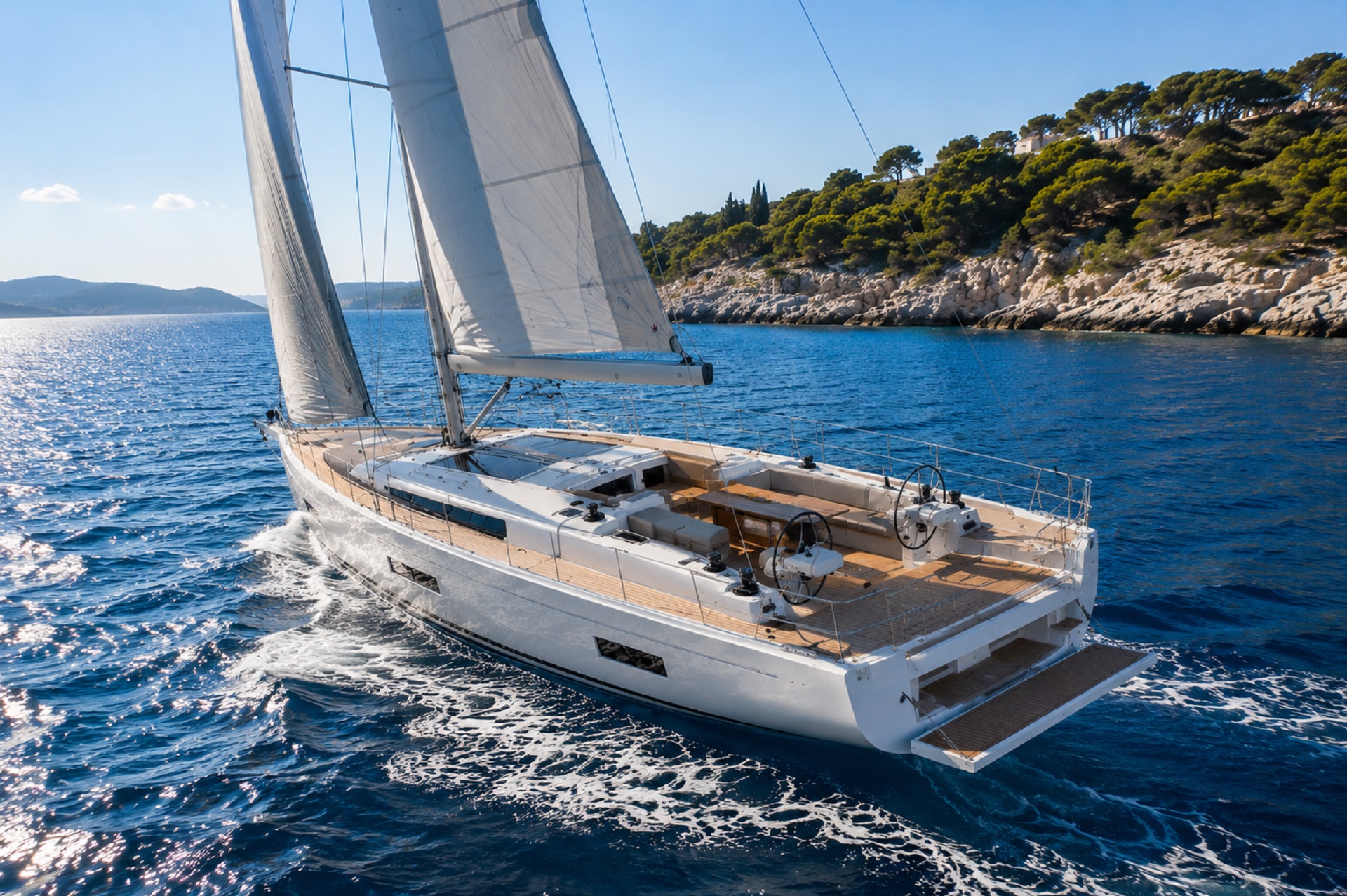
Hanse 460
The Hanse 460 is a modern cruising yacht that fits perfectly into the rhythm of a sailing holiday in Croatia. Designed with a focus on simplicity, space, and effortless handling, it reflects a clear shift in contemporary yacht design toward comfort-driven sailing without unnecessary complexity. In the Adriatic, where short island distances, reliable summer winds, and countless sheltered anchorages define the experience, the Hanse 460 feels naturally at home.
For yacht charter guests, it offers a well-balanced combination of easy sailing systems, generous onboard space, and stable performance across changing conditions. It is a yacht that makes moving between islands straightforward, anchoring stress-free, and life onboard relaxed and enjoyable.
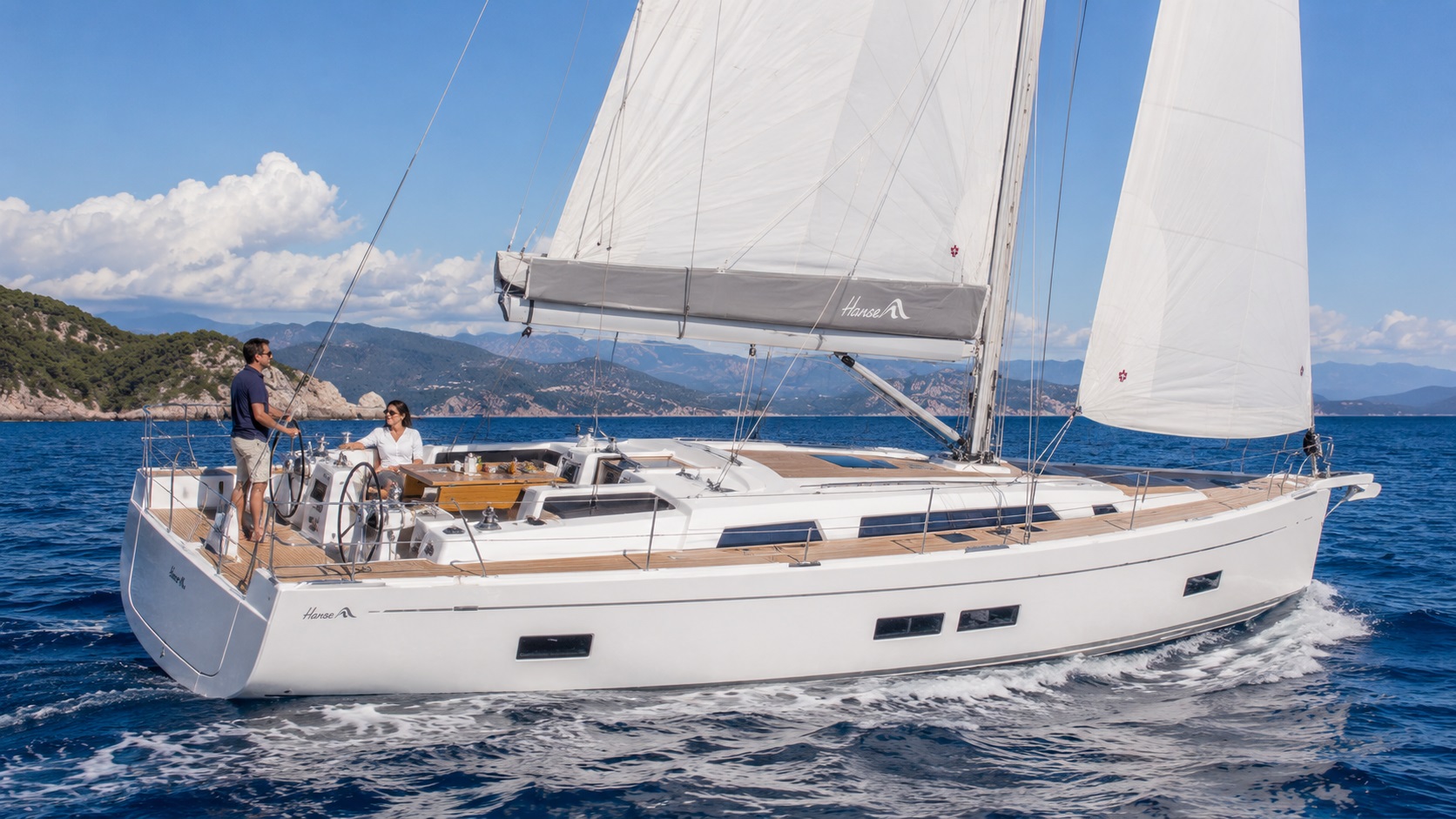
Hanse 510
The Hanse 510 is a modern luxury sailing yacht that combines elegant design, spacious living areas, and outstanding sailing performance. Designed for comfortable cruising, she offers the perfect balance of innovation, easy handling, and premium onboard comfort.
Charter the Hanse 510 in Croatia and discover the Adriatic’s crystal-clear waters, hidden bays, historic island towns, and spectacular coastline. Whether sailing with family, friends, or as a couple, this exceptional yacht provides an unforgettable experience where comfort, freedom, and the joy of sailing come together.
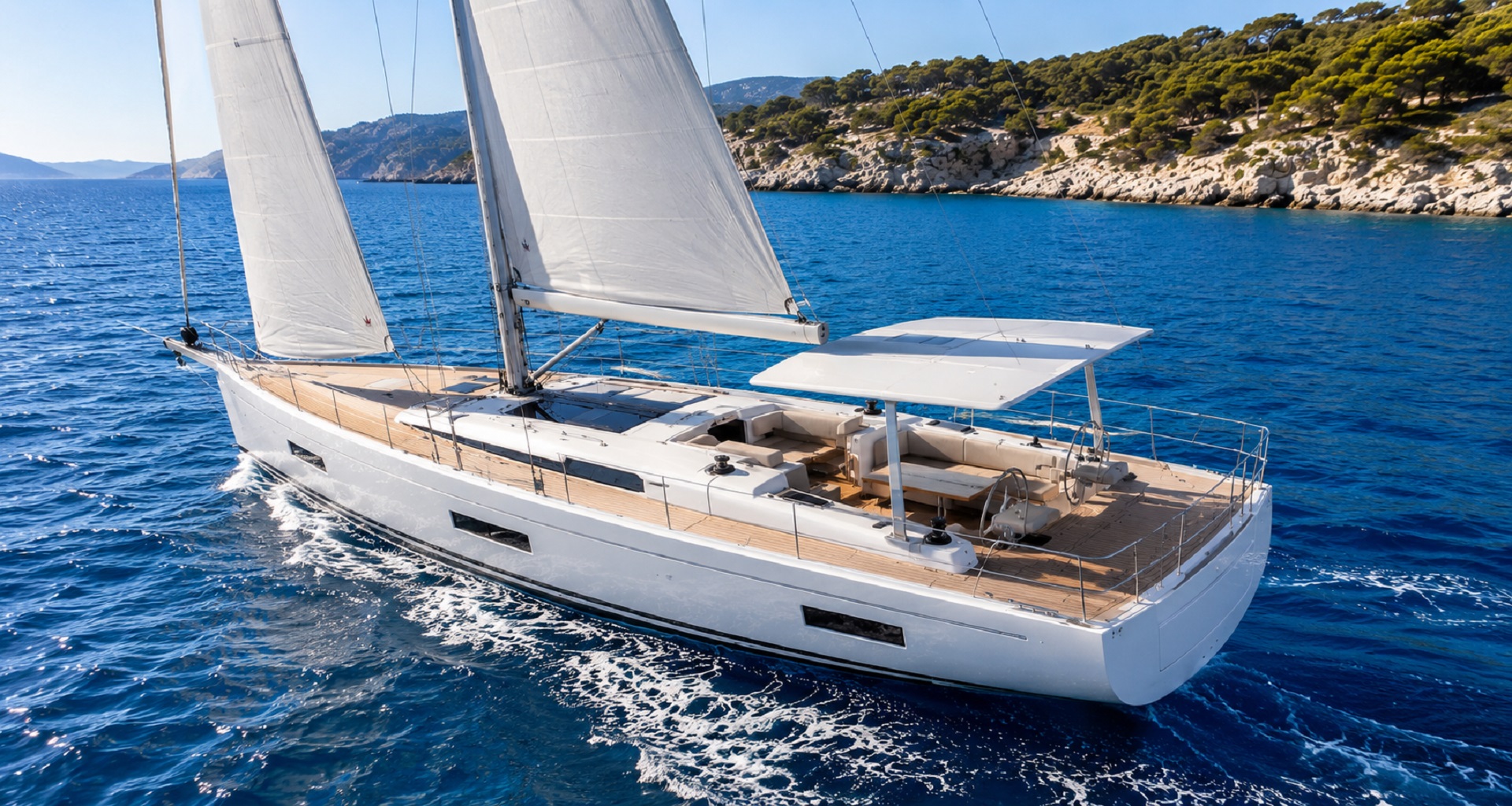
Hanse 590
Discover the perfect combination of innovation, luxury, and pure sailing pleasure with the Hanse 590 yacht charter in Croatia. As the flagship of Hanse’s latest generation of sailing yachts, the Hanse 590 offers an extraordinary level of comfort, spacious living areas, and advanced sailing technology designed for unforgettable Adriatic adventures.
With its elegant exterior, expansive cockpit, luxurious Scandinavian-inspired interior, and exceptional sailing performance, the Hanse 590 is created for those who want to experience Croatia’s spectacular coastline in complete style. Whether exploring the vibrant islands of Hvar and Vis, anchoring in secluded turquoise bays, or enjoying sunset dinners beneath the stars, this premium sailing yacht transforms every moment at sea into a unique experience.
Ideal for families, groups of friends, and couples seeking a high-end sailing holiday, the Hanse 590 combines effortless handling with the comfort of a floating luxury villa. Choose a bareboat Hanse 590 charter or relax with a professional skipper and discover the Adriatic at your own pace aboard one of the most impressive luxury sailing yachts available in Croatia.