JEANNEAU - FRENCH INNOVATION AND THE ART OF MODERN YACHTING
Jeanneau has become one of the defining names in modern recreational boating by combining French design philosophy with practical engineering, versatile cruising performance, and a deep understanding of how people experience life at sea. Over decades of development, the company has built a global reputation for creating yachts that successfully bridge the gap between technical capability and lifestyle-oriented comfort, making the brand one of the most recognizable and respected names in both sailing and motor yachting.
From its origins in France, Jeanneau developed an identity rooted in accessibility and real-world usability rather than exclusivity alone. While many yacht builders position themselves primarily around luxury or extreme performance, Jeanneau has consistently focused on creating yachts that feel approachable, efficient, and adaptable across a wide range of cruising environments. This philosophy has allowed the brand to appeal to experienced sailors, first-time yacht owners, charter operators, and families seeking vessels that are practical enough for everyday use while still offering the refinement and comfort associated with modern European yacht design.
French influence plays a major role in shaping the character of Jeanneau yachts. The company’s approach reflects a distinctly Mediterranean-inspired understanding of boating culture, where the yacht is not simply a machine for navigation but an extension of leisure, travel, and outdoor living. This can be seen in the emphasis placed on open social spaces, panoramic visibility, and fluid movement between interior and exterior environments. Cockpits are designed not only for handling the yacht efficiently, but also for dining, relaxing, and spending extended time outdoors. Interiors prioritize natural light, soft contemporary materials, and spatial openness, creating environments that feel welcoming and residential rather than purely nautical.
The phrase “the art of modern yachting” reflects Jeanneau’s ability to transform complex marine engineering into an experience that feels intuitive and enjoyable. Behind every yacht lies extensive technical development involving hull optimization, structural engineering, and ergonomic planning, yet these technical systems are integrated in a way that simplifies operation rather than complicating it. Sail handling systems are arranged for manageable cruising, helm stations are positioned for visibility and comfort, and onboard layouts are designed to support relaxed movement throughout the yacht. The result is a boating experience that feels natural and balanced, whether navigating coastal waters, anchoring in secluded bays, or undertaking longer offshore passages.
Innovation has remained central to the company’s evolution. Jeanneau has consistently introduced new construction methods, advanced composite technologies, and hydrodynamic hull concepts aimed at improving efficiency, seaworthiness, and onboard comfort. Modern models frequently incorporate twin-rudder configurations for improved sailing control, large hull windows for enhanced interior brightness, and integrated swim platforms that strengthen the connection between yacht and sea. These developments are not introduced purely for visual impact; they are carefully aligned with practical cruising needs and changing owner expectations.
Another important aspect of Jeanneau’s success is its ability to adapt to evolving lifestyles within the boating industry. Modern yacht owners increasingly seek flexibility, simplicity, and meaningful experiences rather than purely technical achievement. Jeanneau responds to this shift by designing yachts that encourage exploration, social interaction, and comfortable long-term use. Whether used for family holidays, charter vacations, liveaboard cruising, or seasonal Mediterranean itineraries, the yachts are structured around the idea that comfort and usability are essential parts of maritime freedom.
This versatility has helped establish Jeanneau as a major force in the international charter market as well. Charter operators value the reliability, practical layouts, and user-friendly systems found across the range, while guests appreciate the bright interiors, spacious cockpits, and approachable sailing characteristics. As a result, Jeanneau yachts have become common throughout major cruising destinations such as the Adriatic, the Greek islands, the Balearics, and the Caribbean, where they support a wide range of cruising experiences and travel styles.
Today, Jeanneau continues to stand as a symbol of modern European yacht design, where French craftsmanship, intelligent engineering, and lifestyle-oriented thinking come together in a cohesive and globally respected identity. Its yachts are built not only to navigate the sea efficiently, but to enhance the experience of being on the water itself - transforming boating into a seamless blend of comfort, exploration, and contemporary maritime living.
INTRODUCTION TO JEANNEAU
Jeanneau stands among the most influential yacht manufacturers in the modern boating industry, widely recognized for combining French maritime heritage with innovative yacht design, practical engineering, and highly versatile cruising performance. Over decades of development, the company has evolved into one of the world’s leading builders of recreational yachts, producing a broad portfolio that includes sailing yachts, motor yachts, family cruisers, and offshore-capable vessels designed for a wide variety of boating lifestyles.
What distinguishes Jeanneau within the global yacht market is its ability to create yachts that feel simultaneously refined and approachable. Rather than focusing exclusively on ultra-luxury exclusivity or purely performance-oriented engineering, the brand has consistently pursued a more balanced philosophy centered on real-world usability. Jeanneau yachts are designed to be comfortable, efficient, and easy to operate while still delivering the seaworthiness and design sophistication expected from a major European yacht builder. This approach has allowed the company to appeal to an exceptionally broad audience, from first-time boat owners and casual coastal cruisers to experienced sailors undertaking long-distance offshore journeys.
Founded in France and deeply connected to the country’s strong nautical culture, Jeanneau developed its reputation during a period when recreational boating was becoming increasingly accessible across Europe. French maritime traditions continue to influence the identity of the brand today, particularly in its emphasis on outdoor living, intelligent use of space, and the social experience of being at sea. Unlike more traditional yacht builders that prioritize formal interiors or heavily segmented layouts, Jeanneau tends to favor open-plan environments, fluid transitions between indoor and outdoor spaces, and practical arrangements that encourage relaxed living onboard.
This philosophy is especially evident in the brand’s sailing yacht range, where comfort and handling are carefully balanced. Jeanneau sailing yachts are engineered to deliver stable and predictable sailing characteristics without becoming overly technical or intimidating. Deck layouts are designed for efficient movement and manageable sail handling, making the yachts suitable for couples, families, and smaller crews. At the same time, hull forms are optimized to maintain strong cruising performance across varying wind and sea conditions, ensuring that practicality never comes at the expense of capability.
The company’s motor yacht range reflects many of the same values. Jeanneau powerboats emphasize efficient cruising, spacious outdoor living areas, and interiors designed for extended comfort at sea. Flybridge models and sport cruisers alike prioritize usability and visibility, with layouts that support both social cruising and practical navigation. These characteristics make the yachts particularly attractive for Mediterranean boating lifestyles, where daily movement between anchorages, islands, and coastal towns forms a central part of the ownership experience.
Over time, Jeanneau has also become known for its ability to merge elegant contemporary styling with highly functional onboard living. Large panoramic windows, adaptable cockpit layouts, integrated swim platforms, and bright saloon areas all contribute to a modern atmosphere that feels connected to the surrounding sea environment. Natural light plays a major role in the design language, helping interiors feel more spacious and residential rather than confined or overly nautical.
Innovation has consistently remained at the core of the brand’s development strategy. Jeanneau has introduced advanced hull technologies, modern composite construction methods, and ergonomic deck configurations aimed at improving safety, performance, and onboard comfort. Importantly, these innovations are rarely implemented for visual effect alone. Instead, they are designed to enhance the actual cruising experience by simplifying operation, improving efficiency, and increasing long-term usability for owners.
The versatility of Jeanneau yachts has also contributed to their strong presence within the international charter market. Many charter fleets rely on Jeanneau vessels because they offer a combination of reliability, comfort, and operational simplicity that suits both experienced sailors and vacation users. Their adaptable layouts, manageable systems, and welcoming interiors make them ideal for week-long cruising itineraries in destinations such as the Adriatic, the Greek islands, and the Caribbean.
Today, Jeanneau continues to hold a leading position in modern recreational boating by remaining faithful to the principles that shaped its identity from the beginning: intelligent design, practical comfort, and accessible cruising enjoyment. Whether under sail or power, Jeanneau yachts are designed not only to navigate efficiently, but to create meaningful experiences on the water - where exploration, relaxation, and contemporary maritime living come together in a seamless and approachable form.
A LEGACY ROOTED IN FRENCH BOATBUILDING
The story of Jeanneau began in the 1950s in western France, during a period when recreational boating was still developing into a mainstream leisure activity across Europe. Founder Henri Jeanneau initially built small wooden powerboats, drawing on local craftsmanship traditions and practical maritime knowledge that had long characterized France’s Atlantic coastal regions. What started as a modest boatbuilding operation quickly gained attention for the quality and reliability of its vessels, laying the foundation for what would eventually become one of the world’s most influential yacht manufacturers.
In its early years, Jeanneau focused primarily on motorboats, but the rapid growth of recreational sailing during the postwar decades created new opportunities. As interest in private cruising yachts expanded throughout Europe, the company recognized the growing demand for sailing vessels that were practical, affordable, and suitable for family use. Jeanneau responded by gradually expanding into sailing yacht production, a move that would ultimately define the brand’s international identity for generations to come.
This transition coincided with a broader transformation in the boating industry itself. Recreational yachting was evolving from an activity associated mainly with elite ownership into a more accessible lifestyle available to a wider audience. Jeanneau played an important role in this shift by developing yachts that prioritized usability and efficient production without sacrificing seaworthiness or comfort. Rather than building highly specialized or exclusive vessels, the company focused on creating practical cruising yachts that ordinary owners could realistically operate and maintain.
French boatbuilding traditions remain deeply embedded in Jeanneau’s identity even today. Unlike yacht builders that emphasize heavy ornamentation or overly formal luxury aesthetics, Jeanneau reflects a distinctly European and particularly French understanding of life at sea. The yachts are designed around openness, natural light, outdoor interaction, and ease of living onboard. Cockpits are conceived as social environments rather than purely operational workspaces, while interiors emphasize relaxed elegance and efficient spatial organization instead of decorative excess.
This lifestyle-oriented philosophy is closely connected to Mediterranean and Atlantic European cruising culture, where boating is often centered on shared experiences, coastal exploration, and long periods spent outdoors. Jeanneau yachts embody this approach through expansive cockpit areas, integrated swim platforms, panoramic visibility, and layouts that encourage seamless movement between interior and exterior spaces. The result is a boating experience that feels practical and refined at the same time.
As the company expanded internationally, Jeanneau also became known for modernizing yacht production methods. The brand was among the important pioneers in adopting advanced fiberglass construction technologies on a larger industrial scale. These methods allowed for greater structural consistency, improved durability, and more efficient manufacturing processes compared to traditional wooden boatbuilding techniques. Fiberglass construction also reduced maintenance demands for owners, making cruising yachts more accessible to people transitioning into boating for the first time.
Another significant innovation involved modular interior construction systems. Jeanneau developed manufacturing approaches that allowed interior components to be produced with greater precision and installed more efficiently, helping maintain consistent quality across larger production volumes. This balance between industrial efficiency and practical craftsmanship became one of the company’s defining strengths, enabling it to produce yachts at scale while preserving the comfort and functionality expected from European-built vessels.
Computer-assisted hull design and hydrodynamic analysis further strengthened Jeanneau’s position within the global market. By integrating modern engineering tools into yacht development, the company was able to improve sailing balance, cruising efficiency, onboard stability, and fuel economy across both sail and motor yacht categories. These advancements were not introduced simply to improve technical specifications on paper; they directly enhanced the everyday ownership and cruising experience.
Importantly, Jeanneau’s growth never fully disconnected the company from its original philosophy. Even as production volumes increased and the brand became internationally recognized, the emphasis on accessible cruising, practical comfort, and intelligent design remained central to its identity. The yachts continued to be developed for real-world use by owners who valued reliability, simplicity, and enjoyable time at sea over excessive complexity or status-driven extravagance.
Today, Jeanneau’s legacy reflects far more than commercial success alone. The company helped redefine modern recreational boating by demonstrating that well-designed cruising yachts could be simultaneously elegant, seaworthy, and attainable. Through decades of innovation and adaptation, Jeanneau has preserved its French boatbuilding heritage while helping shape the evolution of contemporary yachting on a global scale.
DESIGN PHILOSOPHY - COMFORT, SIMPLICITY, AND VERSATILITY
One of the defining strengths of Jeanneau lies in its ability to create yachts that feel intuitive, welcoming, and practical without compromising seaworthiness or cruising capability. Throughout its history, the company has consistently pursued a design philosophy centered on comfort, simplicity, and versatility - three qualities that together shape the overall ownership experience. Rather than designing yachts purely around technical performance or visual extravagance, Jeanneau focuses on how people actually live, move, and interact onboard during real cruising situations.
This philosophy begins with usability. Jeanneau yachts are engineered to reduce unnecessary complexity while still delivering dependable handling and strong performance across a variety of sea conditions. The goal is not to create intimidating vessels that require professional-level expertise to operate, but rather yachts that encourage confidence and enjoyment for owners with different levels of experience. Whether navigating coastal waters for a weekend escape or undertaking longer offshore passages, Jeanneau yachts are designed to feel manageable and balanced.
The sailing yacht range demonstrates this approach particularly well. Deck layouts are carefully planned to support efficient movement and safe operation without clutter or unnecessary complication. Winches, sail controls, and helm stations are positioned to minimize physical effort and improve visibility, allowing smaller crews or couples to handle the yacht comfortably. Many models are optimized for short-handed sailing, which has become increasingly important as modern owners seek independence without relying on large crews.
Cockpit ergonomics also play a major role in Jeanneau’s sailing philosophy. Steering positions are designed to provide clear sightlines and easy access to primary controls, while seating arrangements support both active sailing and relaxed social use. Rather than separating operational areas from leisure spaces entirely, Jeanneau integrates them into a cohesive environment where navigation and relaxation coexist naturally. This reflects the broader evolution of modern cruising culture, where sailing is viewed not only as a technical activity but also as a lifestyle centered on enjoyment and exploration.
Importantly, Jeanneau avoids excessive racing-oriented complexity in most of its cruising models. While the yachts are capable performers under sail, the emphasis remains on predictability, balance, and stress-free operation rather than aggressive competition-focused setups. Hull forms are engineered for stable cruising behavior, manageable heel angles, and forgiving handling characteristics that increase comfort for everyone onboard. This balance between capability and accessibility has become one of the brand’s most recognizable traits.
Comfort remains equally important throughout every aspect of the onboard experience. Interior layouts are designed to maximize natural light, openness, and livability, helping the yachts feel more spacious and welcoming than their dimensions might initially suggest. Large panoramic hull windows, overhead skylights, and open saloon arrangements allow daylight to flow deep into the interior, reducing the sense of enclosure traditionally associated with yacht cabins.
Spatial planning is approached with strong attention to practical daily use. Saloon areas are often configured to encourage social interaction, with dining areas and seating zones integrated into fluid open-plan layouts. Galleys are positioned for safe movement during navigation while still functioning effectively as communal spaces during relaxed cruising. This combination of practicality and comfort allows the yacht to transition naturally between active sailing and life at anchor.
Cabins are designed as genuine living environments rather than simple sleeping quarters. Jeanneau places emphasis on comfortable bed dimensions, functional storage solutions, accessible movement around the cabin, and thoughtful ventilation systems that improve long-term comfort onboard. Modern bathroom facilities, carefully integrated lighting systems, and efficient use of available space contribute to an atmosphere that feels closer to a contemporary apartment than a traditional marine interior.
Another essential aspect of Jeanneau’s philosophy is adaptability. The company recognizes that modern yacht ownership varies widely between individuals, families, and commercial operators. As a result, many models can be configured differently depending on the intended style of use. Some owners prioritize additional cabins for charter flexibility, while others prefer larger storage spaces or more open owner-oriented layouts for private cruising. Jeanneau’s ability to accommodate these different needs has made the brand especially successful across diverse global markets.
This versatility extends beyond interior arrangements into the overall cruising role of the yacht itself. A Jeanneau yacht may serve as a weekend coastal cruiser, a seasonal Mediterranean liveaboard, a charter vessel, or even a platform for extended offshore exploration. The company’s designs are intentionally structured to adapt to these different lifestyles without losing their core identity of simplicity, comfort, and reliable functionality.
Ultimately, Jeanneau’s design philosophy reflects a broader understanding of modern boating culture. The yachts are not created solely to impress visually or achieve extreme technical specifications; they are designed to support enjoyable and sustainable experiences on the water. By prioritizing intuitive operation, practical comfort, and adaptable living spaces, Jeanneau has established a design language that continues to resonate with yacht owners around the world.
JEANNEAU SAILING YACHTS - FREEDOM UNDER SAIL
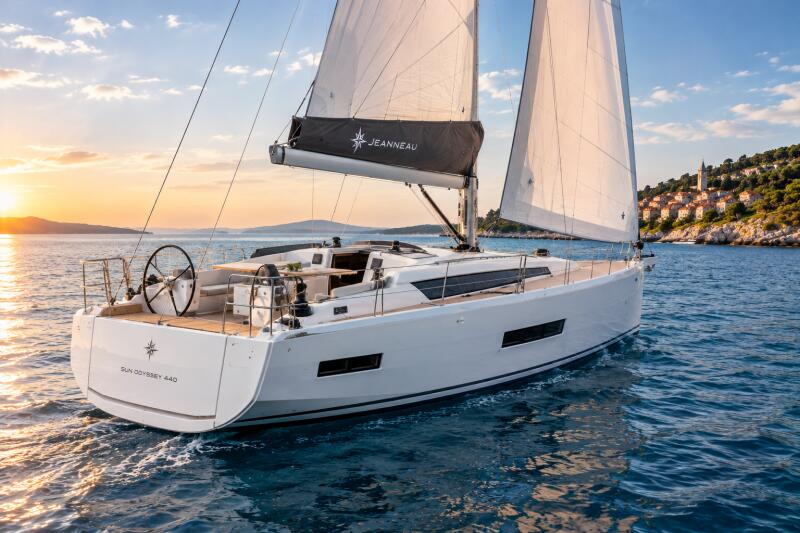
Jeanneau sailing yachts have earned their reputation through a consistent focus on practical cruising design, modern aesthetics, and ease of handling, making them one of the most recognisable names in contemporary yacht building. Within their sailing portfolio, the Sun Odyssey series stands out as the core expression of the brand’s philosophy: accessible performance cruising without unnecessary complexity, combined with layouts that work equally well for private owners and high-demand charter operations.
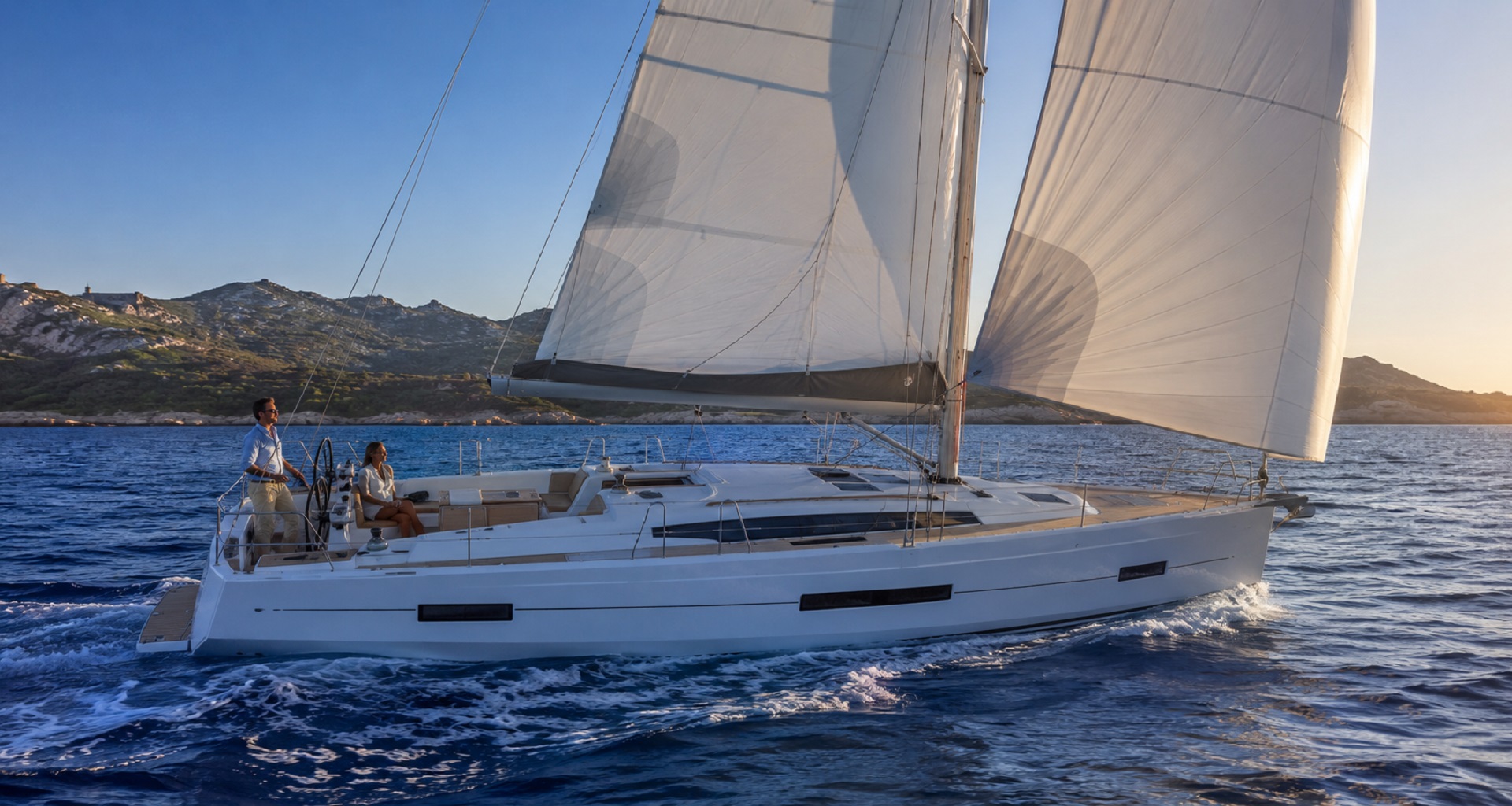
At the heart of the Sun Odyssey concept is balance. Rather than chasing extreme racing performance, these yachts are engineered to deliver predictable, confidence-inspiring sailing across a wide range of conditions. The hull shapes are carefully refined to reduce drag while maintaining form stability, which means the boats feel steady and composed even when the wind picks up. This stability is a key reason they are widely chosen for coastal cruising programs and multi-day itineraries, where comfort at sea is just as important as speed between destinations.
Many of the newer Sun Odyssey models incorporate twin rudder configurations, a design choice that significantly improves control when the yacht is heeled over. Instead of relying on a single central rudder that may lose efficiency at higher angles, twin rudders maintain grip and responsiveness, allowing for more precise steering and a reassuring sense of control. This becomes especially noticeable when sailing upwind or in stronger afternoon breeze conditions typical of Mediterranean sailing seasons.
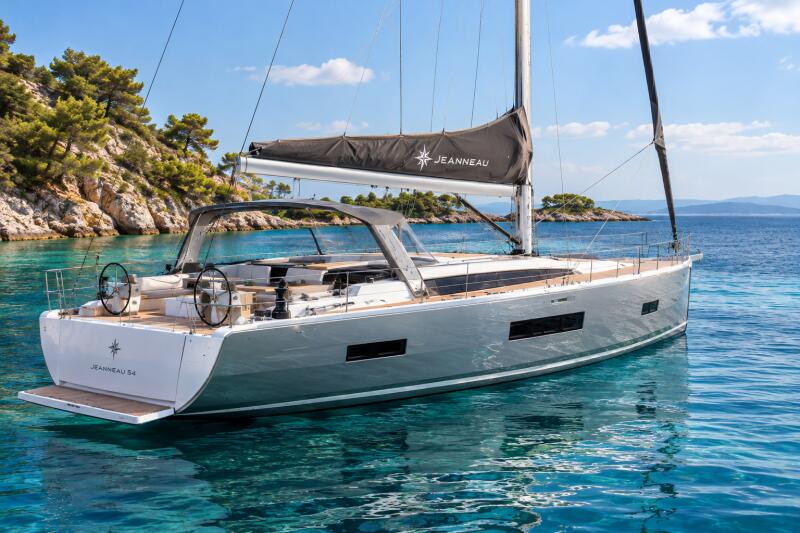
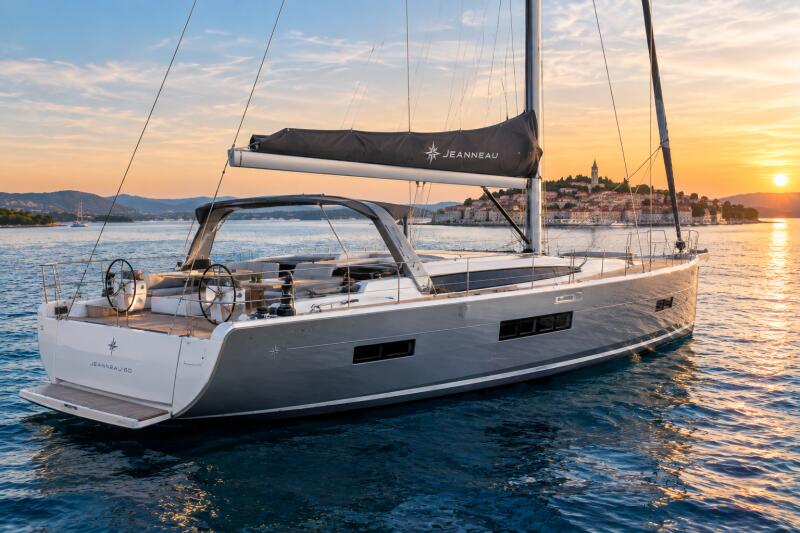
On deck, Jeanneau has clearly prioritised usability and social flow. The cockpit areas are generally wide and open, designed not only for safe sail handling but also for relaxation and interaction among crew and guests. Winches and control lines are positioned to support efficient short-handed sailing, while the layout still leaves enough open space for dining, lounging, or simply enjoying time at anchor. Many models also feature large fold-down swim platforms at the stern, which effectively extend the usable living space right to the waterline and make swimming or boarding tenders far more convenient.
This blend of sailing function and leisure design reflects a broader evolution in cruising yacht expectations. Modern sailors increasingly want yachts that perform well under sail but also feel like floating holiday homes when anchored. Jeanneau addresses this directly by integrating features such as convertible cockpit tables, ergonomic seating layouts, and wide transom access that enhances both safety and comfort when moving between sea and deck.
Below deck, the design philosophy continues with a strong emphasis on light, space, and practicality. Interiors are typically defined by clean lines, warm wood tones, and carefully considered storage solutions that maximise usable volume without creating visual clutter. Cabins are arranged to offer privacy and comfort for both owners and guests, while saloon spaces are designed to feel open and welcoming during longer passages or evenings at anchor.
This interior approach has made Jeanneau sailing yachts particularly successful in charter fleets across the Mediterranean and the Caribbean. Operators value their combination of durability, ease of maintenance, and guest-friendly layouts, while sailors appreciate that the boats are intuitive to handle even for less experienced crews. As a result, the Sun Odyssey range has become almost synonymous with modern cruising charters - boats that are easy to step aboard, easy to sail, and easy to enjoy from the first day onward.
JEANNEAU MOTOR YACHTS - PRACTICAL LUXURY AT SEA
Jeanneau has built its motor yacht reputation on a clear philosophy: practical luxury that prioritises real usability at sea over unnecessary complexity or ostentation. While the brand is often associated with sailing, its powerboat division is equally influential, particularly in the European cruising market, where versatility, efficiency, and ease of handling are key decision factors for owners.
The Jeanneau motor yacht range spans several distinct families, each designed for different styles of boating. The Merry Fisher series is one of the most popular expressions of the brand’s philosophy, known for its excellent balance between fishing capability, family cruising comfort, and weekend exploration potential. These boats typically feature bright wheelhouses with panoramic glazing, walkaround decks, and aft cockpits that are easily adaptable for dining, sunbathing, or fishing. Their semi-planing hull designs are tuned for stability and fuel-efficient cruising, making them ideal for coastal routes and island hopping.
For owners seeking a more contemporary, lifestyle-oriented cruising experience, the NC line offers a distinctly modern interpretation of the motor yacht concept. These models are characterised by their modular layouts, large sliding glass doors, and seamless transitions between interior and exterior spaces. The NC philosophy (“New Concept”) revolves around flexibility: interiors can be quickly adapted for different weather conditions or social setups, making the boats equally suitable for sunny Mediterranean days or more sheltered cruising environments.
At the more dynamic end of the spectrum, the Leader series introduces a sportier design language, with sleek hull lines, powerful engine options, and an emphasis on speed combined with comfort. These yachts are designed for owners who enjoy fast coastal cruising, spontaneous day trips, and stylish anchoring in bays and marinas. Despite their performance focus, they still retain Jeanneau’s commitment to ergonomic layouts and practical onboard living.
Across all Jeanneau motor yachts, hull engineering plays a central role. Designs are carefully optimised for predictable handling, even in changing sea states, which reduces stress for owner-operators and enhances safety in offshore conditions. Many models incorporate stepped hulls or fine-entry bows that help reduce slamming and improve fuel efficiency at cruising speeds. Combined with modern engine configurations - ranging from efficient inboard diesels to outboard setups on smaller models - this results in boats that are both economical to run and easy to maneuver in tight marina environments.
Outdoor living is another defining feature of Jeanneau’s motor yacht philosophy. Aft cockpits are not treated as secondary spaces but as core living areas that naturally extend the interior saloon. Large sliding doors or foldable windows create a continuous flow between inside and outside, reinforcing the sense of openness that modern boaters expect. On flybridge models, this concept is expanded further with elevated helm stations and generous lounge areas that function as social hubs underway and at anchor.
These flybridge configurations are particularly well suited to Mediterranean cruising conditions, where calm evenings, protected anchorages, and warm weather encourage life on deck. Dining areas, sun pads, and helm seating are all arranged to maximise comfort while maintaining clear sightlines for navigation and safety. The result is a multi-level living experience that feels spacious without requiring a significantly larger hull footprint.
Below deck, Jeanneau continues to emphasise bright, functional interiors influenced by contemporary French design. Large hull windows and overhead skylights bring in natural light, reducing the sense of confinement often associated with traditional motor yachts. Materials are selected for durability and easy maintenance, but also for visual warmth, with light oak tones, soft upholstery palettes, and clean geometric lines creating a calm, modern atmosphere.
Cabin layouts are typically designed to maximise privacy and flexibility, making the boats suitable for both family ownership and shared use scenarios. Convertible saloons, adaptable berths, and smart storage solutions ensure that space is used efficiently without compromising comfort during extended stays onboard.
Overall, Jeanneau motor yachts represent a carefully balanced approach to power cruising: they are not about excess, but about intelligent design that supports real life on the water. Whether used for weekend escapes, coastal exploration, or longer seasonal cruising, they offer a combination of reliability, comfort, and simplicity that has made them a staple in marinas across Europe and beyond.
JEANNEAU IN THE MEDITERRANEAN CRUISING LIFESTYLE
Jeanneau yachts have become deeply embedded in the Mediterranean cruising culture, where boating is less a specialised activity and more a seasonal lifestyle shaped by islands, weather patterns, and short-distance coastal navigation. Across regions such as the Adriatic, the Greek islands, the Balearics, and the French Riviera, Jeanneau models are consistently present in marinas, anchorages, and charter bases, reflecting how closely their design philosophy aligns with the practical realities of Mediterranean sailing.
The Mediterranean environment places a very specific set of demands on yachts. Distances between destinations are relatively short, but conditions can shift quickly, especially with regional winds such as the Mistral, Bora, and Meltemi. As a result, boats must be both easy to handle and flexible in use. This is where Jeanneau’s approach proves particularly effective. The Sun Odyssey series, for example, is widely appreciated for its predictable handling and balanced sail plans, which allow crews to move comfortably between islands without requiring constant heavy sail adjustments or complex trim management.
Mediterranean cruising is also defined by its strong emphasis on outdoor living. Much of daily life onboard takes place in the cockpit or at anchor rather than under sail. Jeanneau designs respond directly to this reality by prioritising large, open cockpit areas that function as both navigation stations and social spaces. These areas are typically well-protected from sun and spray, making them suitable for long lunches, evening gatherings, or simply relaxing after a day of sailing between bays.
At anchor, the design advantages become even more apparent. Fold-down swim platforms and wide transom access points make it easy to move between water and deck, reinforcing the connection between yacht and sea that is central to Mediterranean cruising culture. This is especially relevant in regions where swimming, paddleboarding, and dinghy excursions are a daily part of the experience rather than occasional activities.
The Mediterranean’s typical wind patterns also favour Jeanneau’s emphasis on manageable sailing systems. Afternoon thermal winds often build gradually, allowing sailors to enjoy relaxed passages between destinations. In these conditions, yachts that are easy to reef, tack, and control with small crews are particularly valuable. Jeanneau sailing yachts are designed with this in mind, enabling couples or families to operate them comfortably without requiring professional crew support.
Motor yachts within the Jeanneau range further expand this flexibility. Models such as the Merry Fisher series allow for efficient coastal cruising when wind conditions are light or when itineraries require faster repositioning between islands. Their fuel-efficient hull designs and stable cruising characteristics make them well suited to hopping between nearby destinations while still maintaining comfort and onboard livability.
This versatility is a key reason Jeanneau has become so prevalent in both private ownership and charter operations across the Mediterranean. Charter fleets, in particular, value the brand for its combination of durability and user-friendliness. Yachts are often used intensively throughout the high season, with a wide range of crews - many of them relatively inexperienced - rotating through short-term charters. Jeanneau yachts are designed to withstand this level of use while remaining intuitive to operate, which reduces training requirements and increases overall safety and satisfaction.
For private owners, the appeal lies in the same qualities: straightforward systems, comfortable interiors, and layouts that support relaxed, social cruising rather than technical sailing complexity. Whether anchored in a quiet bay in the Adriatic or moored in a busy marina in the Balearics, Jeanneau yachts consistently deliver a sense of practical ease that matches the rhythm of Mediterranean life at sea.
In this way, Jeanneau is not just present in the Mediterranean - it is integrated into how the region itself is experienced from the water, shaping expectations of what modern cruising should feel like: accessible, comfortable, and closely connected to the sea.
ENGINEERING AND MANUFACTURING EXCELLENCE
Jeanneau has built its reputation not only on design language and cruising comfort, but on a deeply industrial approach to yacht construction that prioritises repeatability, structural reliability, and long-term durability. Unlike boutique builders that rely heavily on artisanal methods, Jeanneau operates at scale, where consistency across hundreds of hulls is as important as the performance of a single flagship model. This production philosophy is a key reason its yachts are so widely used in global charter fleets and long-distance cruising programs.
At the core of this system is advanced composite manufacturing. Hulls and decks are produced using modern fiberglass-reinforced construction techniques, with carefully controlled resin application and lamination processes. This ensures that each structure achieves predictable strength-to-weight ratios while minimising variability between units. By standardising these processes, Jeanneau is able to maintain structural integrity across entire production runs, which is essential for yachts that may spend thousands of hours at sea under varying loads and conditions.
Computer-aided design plays a central role in the early stages of development. Naval architects and engineers use hydrodynamic modelling to refine hull shapes before any physical prototype is built. These simulations evaluate how a yacht will behave under sail or power in different sea states, allowing designers to fine-tune parameters such as stability curves, drag coefficients, and planing thresholds. The result is a hull form that is not only efficient in theory but also predictable and forgiving in real-world conditions.
Once the hull geometry is finalised, structural engineering focuses on how loads are distributed throughout the yacht. Bulkheads, stringers, and reinforcement grids are integrated directly into the moulded structure, creating a unified framework that spreads stress evenly across the hull. This approach increases rigidity without significantly increasing weight, which is essential for maintaining both performance and fuel efficiency. It also improves long-term durability, reducing the likelihood of flex-related wear or fatigue over extended use.
Deck construction follows a similarly integrated philosophy. Rather than treating deck components as separate additions, Jeanneau engineers design them as part of a single structural system. This enhances torsional stiffness and improves safety under load, particularly in rough conditions where deck flex can affect both comfort and handling precision.
A major strength of Jeanneau’s engineering approach is its focus on systems integration. Onboard electrical networks, plumbing systems, and ventilation pathways are designed from the outset with accessibility and serviceability in mind. Wiring looms are organised logically to simplify diagnostics and repairs, while critical components are positioned to be reachable without extensive disassembly. This is especially valuable in cruising and charter environments, where downtime must be minimised and maintenance needs to be efficient.
Modern navigation and onboard technology are also fully integrated into this systems-first approach. Helm stations are designed to accommodate contemporary multifunction displays, autopilot systems, and communication equipment in a way that keeps interfaces intuitive rather than overwhelming. The goal is not technological complexity for its own sake, but clarity and ease of use at sea.
Ventilation and interior comfort systems are equally considered during the engineering phase. Airflow paths are planned alongside structural elements, ensuring cabins remain comfortable in both hot and humid conditions common in Mediterranean and tropical cruising regions. This contributes directly to onboard livability, particularly during extended stays at anchor.
Ultimately, Jeanneau’s engineering and manufacturing philosophy reinforces its broader identity: these are yachts built for real-world use. They are designed to be launched frequently, sailed hard, maintained efficiently, and trusted over many seasons. Rather than focusing on exclusivity or showcase craftsmanship, the emphasis is on practical excellence - delivering yachts that perform reliably, remain serviceable, and support the everyday realities of cruising life.
JEANNEAU AND THE GLOBAL CHARTER MARKET
Jeanneau holds a particularly strong position in the global yacht charter industry, where operational reliability, ease of use, and guest comfort are often more important than pure performance or exclusivity. In this environment, the brand’s design philosophy - centered on practical cruising and intuitive handling - translates directly into commercial success, especially within the sailing charter segment.
A significant portion of this presence is built around the Sun Odyssey series, which has become a staple of charter fleets in major sailing destinations worldwide. These yachts are favoured by operators because they are straightforward to sail, forgiving under inexperienced hands, and robust enough to withstand intensive seasonal use. From a fleet management perspective, this combination reduces training time, simplifies onboarding for guests, and improves overall safety outcomes at sea.
For charter guests, Jeanneau yachts are often experienced as an accessible form of luxury rather than high-end exclusivity. The focus is not on complex systems or demanding sailing performance, but on creating a smooth and enjoyable onboard experience from the moment guests step aboard. Wide cockpits allow groups to dine and relax comfortably outdoors, while intelligently arranged deck layouts make movement around the yacht safe and intuitive, even for those with limited sailing experience.
Below deck, the emphasis on space efficiency and light-filled interiors plays a crucial role in guest satisfaction. Cabins are designed to feel private yet welcoming, with practical storage and straightforward layouts that avoid unnecessary complexity. Saloon areas typically serve as multifunctional social hubs, supporting dining, navigation briefings, or relaxed evening gatherings after a day of island hopping. This adaptability is especially important in charter use, where different groups expect the yacht to function as both transport and accommodation.
From the operator’s perspective, Jeanneau’s engineering consistency is equally valuable. Standardised systems and widely understood layouts make maintenance more predictable, which is essential in high-turnover environments such as Mediterranean marinas during peak season. Replacement parts, servicing routines, and crew familiarisation processes are all streamlined by the brand’s widespread adoption, helping charter companies maintain high utilisation rates with minimal downtime.
In the Mediterranean, where the charter market is most mature, Jeanneau yachts are closely associated with the classic island-hopping experience. Whether cruising through Croatia, Greece, Italy, or Spain, these yachts form the backbone of countless itineraries that combine short sailing legs with frequent stops in bays, harbours, and coastal towns. Their predictable handling makes them particularly suitable for regions with variable wind conditions, where guests may alternate between relaxed motoring and short passages under sail.
The Caribbean market reflects a similar pattern, with Jeanneau yachts valued for their durability, comfort, and ease of operation in warm-weather cruising environments. Here again, the ability to accommodate both novice sailors and experienced crews is a decisive advantage, enabling charter companies to serve a wide demographic of guests - from families on holiday to groups of friends seeking a more active travel experience.
The brand’s success in the global charter sector is rooted in versatility. The yachts are neither overly specialised nor overly simplified; instead, they occupy a practical middle ground that works exceptionally well for real-world charter operations. This balance has made them one of the most recognisable and widely used yacht brands in the world of recreational sailing, shaping how millions of people experience life at sea for the first time.
JEANNEAU’S INFLUENCE ON CONTEMPORARY YACHT DESIGN
Over the years, Jeanneau has played a significant role in shaping broader trends within the global yacht industry, particularly in the area of contemporary cruising yacht design. Many concepts that are now considered standard in modern recreational boating - such as open-plan saloons, expansive cockpit integration, panoramic glazing, and highly adaptable interior layouts - were refined and popularized through the company’s continuous focus on practical onboard living.
One of Jeanneau’s most notable contributions has been its ability to make sophisticated yacht design accessible to a wider market. Rather than reserving innovation exclusively for ultra-premium models, the company consistently introduced advanced ideas into production cruising yachts intended for everyday owners. This democratization of yacht comfort and usability helped redefine expectations within the sailing and motor yacht sectors alike.
The brand also contributed to changing perceptions of what cruising yachts should feel like internally. Older yacht interiors often prioritized purely functional layouts with darker finishes and compartmentalized spaces. Jeanneau helped move the industry toward brighter, more residential environments with stronger visual connections to the sea. Large hull windows, skylights, and flowing saloon arrangements became increasingly central to the onboard experience, influencing design language across competing brands throughout Europe and beyond.
In sailing yacht development, Jeanneau’s emphasis on manageable operation also helped shape the modern cruising category. By creating yachts that balanced capable sailing performance with simplified handling systems, the company supported the growing popularity of short-handed and family cruising. This approach made longer-distance sailing more approachable for private owners who wanted the freedom of independent travel without the complexity associated with traditional offshore yachts.
The influence of Jeanneau extends beyond technical design into lifestyle positioning as well. The brand helped reinforce the idea that modern yachting should be centered on experience, comfort, and exploration rather than exclusivity alone. Its yachts are designed to encourage time spent outdoors, connection with coastal destinations, and relaxed social interaction onboard, reflecting the broader evolution of recreational boating culture over recent decades.
Today, many of the features and design principles that define contemporary cruising yachts can be traced back to the kind of practical innovation Jeanneau consistently pursued. This lasting impact ensures that the company remains not only a major yacht manufacturer, but also an important contributor to the ongoing evolution of global yacht design and cruising lifestyles.
THE FUTURE OF JEANNEAU
Jeanneau is entering a phase where incremental innovation is shaping the next generation of cruising yachts, rather than radical reinvention. As the marine industry responds to stricter environmental expectations, digitalisation, and evolving customer behaviour, the brand’s development strategy is increasingly focused on refining efficiency, usability, and onboard experience while preserving its core identity of accessible cruising.
Sustainability is becoming a defining factor in yacht design and production. Newer Jeanneau models are progressively integrating more energy-efficient propulsion systems, improved hull efficiency, and smarter onboard energy management. This includes optimised battery systems for hotel loads, reduced reliance on engine power during anchoring, and the adoption of more environmentally conscious manufacturing processes. While sailing yachts inherently align well with low-emission operation, the broader goal is to reduce the environmental footprint across the entire lifecycle of each vessel - from production to long-term use.
At the same time, onboard technology is evolving rapidly. Modern Jeanneau yachts increasingly feature integrated digital navigation systems, advanced autopilot functions, and improved connectivity solutions that allow crews to stay connected even while offshore. These systems are designed not to overwhelm the user, but to simplify decision-making at sea. The emphasis remains on intuitive interfaces that support safe navigation rather than complex technical management, ensuring that both experienced sailors and newcomers can operate the yachts with confidence.
The Sun Odyssey series continues to serve as the primary platform for innovation in the sailing range, gradually adopting these new technologies while maintaining its well-established design principles. Stability, predictable handling, and comfortable cruising performance remain unchanged priorities, but they are now complemented by incremental improvements in energy efficiency, ergonomics, and onboard digital integration.
Design trends in modern cruising yachts are also reshaping interior and exterior layouts. There is a growing demand for more flexible living spaces that can adapt to different usage scenarios throughout a voyage. This has led to an increased focus on convertible cockpit arrangements, modular seating configurations, and saloon layouts that can shift between social, dining, and relaxation modes. The boundary between interior and exterior spaces is becoming increasingly fluid, with large glazing surfaces, sliding doors, and foldable elements reinforcing a continuous connection to the sea.
This evolution is particularly relevant in Mediterranean and tropical cruising contexts, where life onboard is strongly oriented toward outdoor living. Jeanneau’s design teams are responding by enhancing cockpit usability, expanding shaded areas, and improving the transition between swimming platforms and living spaces. The goal is to make time spent at anchor feel as natural and comfortable as time spent under sail.
Despite these changes, the brand’s direction remains firmly anchored in its established philosophy. Rather than shifting toward experimental or purely luxury-focused design, Jeanneau continues to refine what has already made its yachts successful: predictable sailing behaviour, practical layouts, and a strong emphasis on usability in real-world conditions. This continuity ensures that innovation enhances the experience without disrupting the familiarity that owners and charter operators rely on.
As a result, the future of Jeanneau is best understood as an evolution rather than a transformation. The yachts are becoming more efficient, more connected, and more adaptable, but they remain fundamentally focused on the same idea that has defined the brand for decades: creating accessible, comfortable, and genuinely enjoyable cruising yachts that work reliably in everyday life at sea.
JEANNEAU AND THE RISE OF MODERN FAMILY CRUISING
Jeanneau has played a defining role in the rise of modern family cruising by consistently designing yachts around how people actually live, travel, and share time together at sea. Rather than treating sailing as a purely technical or performance-driven pursuit, the brand has helped shape a more accessible vision of yachting - one that prioritizes comfort, usability, and social connection as much as seamanship.
This approach is most clearly expressed through layouts that treat the yacht as a shared living environment. The cockpit is no longer just a working area for sail handling, but a central social space where families and friends naturally spend most of their time. Seating arrangements are designed to support long, relaxed meals, conversation underway, or quiet evenings at anchor. Protection from sun and spray is carefully balanced with openness, ensuring that the space remains comfortable in a wide range of conditions without feeling closed off from the sea.
A key element of this family-oriented design philosophy is the integration of large swim platforms and easy access to the water. These features transform the stern into a functional leisure zone, supporting swimming, paddle sports, and simple moments of relaxation at anchor. For children or less experienced guests, the ability to move safely between water and deck is especially important, and Jeanneau’s wide transom designs and stable boarding steps reflect this priority clearly. On many models, the aft section effectively becomes an extension of the living space rather than a separate technical area.
Movement around the deck is also deliberately simplified. Wide side decks, logically placed handholds, and uncluttered circulation routes make it easier for all guests - regardless of sailing experience - to move safely while underway. This is particularly relevant in family cruising scenarios, where varying levels of confidence on board must be accommodated without compromising safety or comfort.
Below deck, the focus shifts toward livability over complexity. Interiors are designed to feel bright, welcoming, and easy to understand from the moment guests step inside. Natural light plays a major role, with hull windows and overhead openings creating a sense of openness that reduces the feeling of confinement often associated with traditional yacht interiors. The layout of the saloon typically encourages shared use, combining dining, navigation, and relaxation functions into a single cohesive space that supports daily life onboard.
The galley is often integrated into this central living area, reinforcing a communal atmosphere rather than isolating food preparation into a separate compartment. This design choice supports the rhythm of extended cruising, where meals, planning, and social interaction naturally overlap. Cabins, meanwhile, are arranged to provide a balance between privacy and efficiency, making it possible for families or groups to coexist comfortably over longer voyages without feeling crowded.
The Sun Odyssey series in particular has become closely associated with this style of cruising, offering configurations that are well suited to both private family ownership and shared charter use. Systems are designed to be approachable, with sail-handling equipment such as furling mainsails and self-tacking jibs reducing the physical and technical demands of sailing. This allows couples or small crews to operate the yacht confidently, even without extensive professional experience.
Ergonomic helm stations and simplified control layouts further support this accessibility. Key sailing functions are positioned for intuitive use, reducing workload during maneuvers and allowing more attention to be focused on the experience itself rather than constant technical management. This is a crucial factor in making sailing appealing to families transitioning from casual boating into longer coastal or island-hopping itineraries.
This emphasis on accessibility has helped shape Jeanneau’s global identity as a gateway into the cruising lifestyle. For many owners, their first experience with a yacht is not about competition or exclusivity, but about shared time at anchor, exploring coastlines, and discovering destinations at a slower, more immersive pace. Whether navigating the sheltered bays of the Adriatic, island-hopping in Greece, or moving between Caribbean anchorages, Jeanneau yachts are designed to support these experiences with minimal friction and maximum enjoyment.
As recreational boating continues to shift toward experience-driven travel, Jeanneau remains strongly aligned with this direction. The growing demand is not for complexity, but for meaningful time on the water - time that is easy to access, comfortable to sustain, and enjoyable for everyone on board. Within that context, Jeanneau’s long-standing focus on practical design, social spaces, and manageable sailing systems positions it as one of the most influential builders in shaping how modern family cruising is experienced worldwide.
CONCLUSION - JEANNEAU AS A GLOBAL CRUISING BENCHMARK
Over decades of consistent innovation and industrial growth, Jeanneau has evolved into one of the most influential references in modern recreational boating, shaping expectations of what a contemporary cruising yacht should deliver. Its success is rooted in a balanced identity that blends French design sensibility with pragmatic naval engineering and a clear understanding of how yachts are actually used across different regions of the world.
At the core of this identity is a coherent design philosophy that avoids extremes. Instead of focusing solely on high-performance racing characteristics or ultra-luxury exclusivity, Jeanneau has consistently pursued a middle ground where comfort, usability, and reliable seaworthiness intersect. This approach has proven especially effective in global cruising markets, where yachts must perform across varied conditions, support diverse crew experience levels, and remain easy to maintain over long service lives.
Whether under sail or power, Jeanneau yachts are built around the idea of reducing barriers to entry on the water. The goal is not only to deliver performance, but to make that performance accessible and manageable in everyday conditions. This is reflected in intuitive deck layouts, logically arranged control systems, and interiors designed to feel immediately comfortable rather than requiring adaptation or technical familiarity. As a result, the yachts function equally well for experienced sailors seeking dependable passage-making platforms and for newcomers taking their first steps into extended cruising.
The Sun Odyssey series has become particularly emblematic of this philosophy, representing a widely recognised standard in modern cruising yacht design. Its combination of stable sailing behaviour, ergonomic deck layouts, and flexible interior configurations has helped define expectations across the global charter and private ownership markets. In many ways, it serves as a reference point for what a contemporary family cruising yacht should feel like in practice: predictable, spacious, and easy to operate.
Beyond technical design, Jeanneau’s broader contribution lies in shaping the experience of life at sea itself. The yachts are conceived not as purely mechanical systems, but as floating environments for shared living. This is evident in the emphasis on cockpit sociability, seamless indoor-outdoor transitions, and interior layouts that encourage communal use without sacrificing privacy. The result is a style of boating that prioritises time spent together, whether anchored in a quiet bay or moving between coastal destinations.
The brand’s engineering consistency further reinforces its global standing. Standardised production methods, reliable systems integration, and widely understood mechanical layouts ensure that yachts remain serviceable and predictable across different regions and usage profiles. This reliability is particularly important in charter environments and long-distance cruising scenarios, where maintenance access and operational simplicity are essential to sustaining uninterrupted use.
In both Mediterranean and global cruising contexts, Jeanneau yachts have become part of the visual and functional landscape of recreational sailing. Their presence in marinas, anchorages, and charter fleets is not incidental but the result of long-term alignment between design intent and real-world demand. The yachts are built to match the rhythm of coastal cruising, where flexibility, comfort, and ease of handling matter as much as performance metrics.
As recreational boating continues to evolve toward experience-driven travel, Jeanneau’s position remains strongly anchored in relevance. The modern cruising market increasingly values authenticity, accessibility, and meaningful time on the water over purely technical or status-driven considerations. Within this shift, Jeanneau’s long-standing emphasis on practical usability and human-centered design continues to resonate widely.
Taken together, this combination of engineering discipline, lifestyle-oriented design, and global adaptability has established Jeanneau as a true benchmark in contemporary cruising yacht development. Its influence extends beyond individual models, contributing to a broader definition of modern yachting - one that is approachable, functional, and fundamentally centered on the enjoyment of life at sea.