BAVARIA YACHTS – THE BRAND THAT CHANGED MODERN SAILING
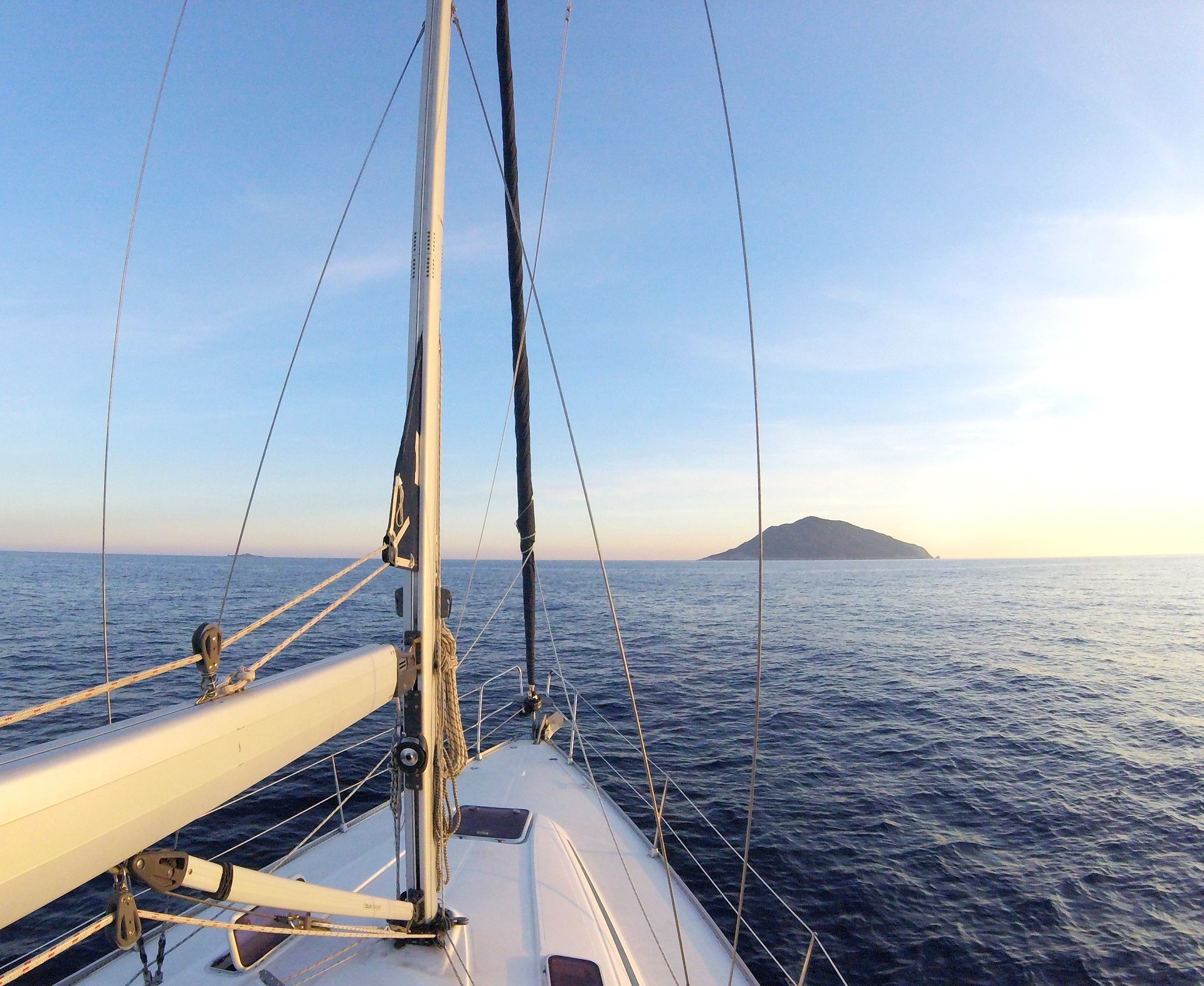
Across the marinas of the Mediterranean, few yacht brands have shaped modern cruising culture as profoundly as BAVARIA YACHTS. From the bustling waterfront promenades of Split and Trogir to the hidden bays of the Adriatic and the sunlit harbors of Greece, Italy, and Spain, Bavaria yachts became part of the visual identity of Mediterranean sailing itself. Their familiar profiles appear in charter fleets, marina berths, secluded anchorages, and island ports where sailors gather during warm summer evenings after long days at sea.
For countless sailors, Bavaria represented a beginning. It was often the first yacht they ever chartered, the first cockpit where they learned to trim sails, or the first floating home that carried them between islands and coastal towns. Entire generations of holiday sailors discovered the freedom of life at sea aboard Bavaria yachts. Morning departures beneath calm Adriatic skies, afternoons anchored in turquoise coves, and evenings tied to ancient stone waterfronts became experiences deeply connected to the Bavaria name.
What made Bavaria so influential was not simply the number of yachts produced, but the way the company fundamentally changed yacht ownership and charter sailing. Before Bavaria’s rise, sailing yachts were still largely perceived as exclusive products reserved for experienced enthusiasts or wealthy owners. Bavaria challenged this perception by introducing large-scale industrial manufacturing into the yacht industry while maintaining practical, comfortable, and attractive cruising designs.
Founded in Germany in 1978, Bavaria approached yacht building differently from many traditional shipyards. Instead of relying solely on slow and highly individualized construction methods, the company adopted industrial precision, modern production systems, and efficient assembly processes. This approach allowed Bavaria to produce modern cruising yachts at a scale and price level previously uncommon in European sailing.
The timing could not have been more important. During the 1980s and 1990s, sailing tourism across the Mediterranean expanded rapidly. Charter companies needed reliable, spacious, and manageable yachts capable of accommodating families, groups of friends, and inexperienced holiday sailors. Bavaria yachts fit perfectly into this growing market. Their combination of practical layouts, forgiving sailing characteristics, and comfortable interiors made them ideal for charter operations across destinations such as Croatia, Greece, Italy, and Spain.
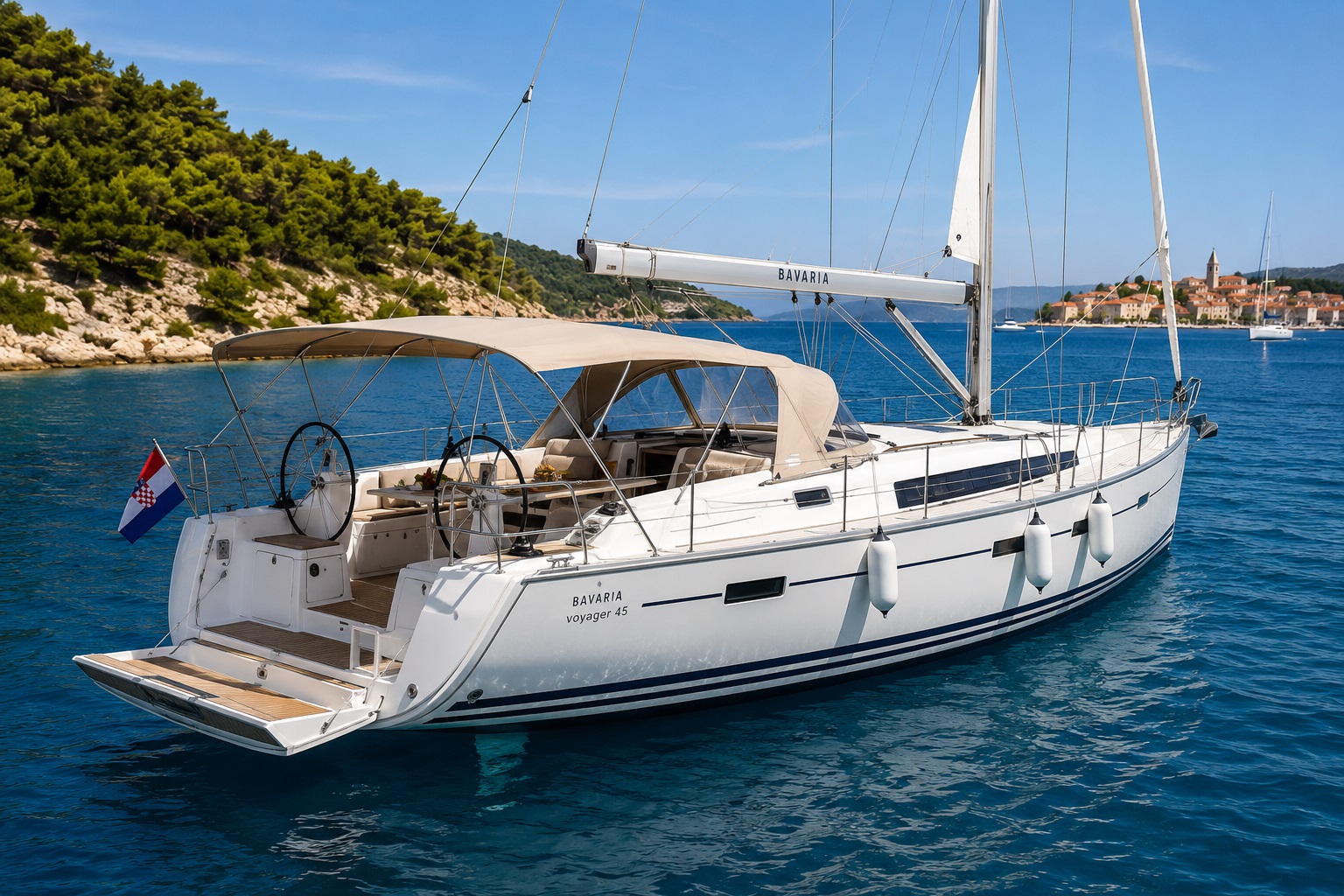
Nowhere was Bavaria’s impact more visible than along the Croatian coast. In marinas from Dubrovnik to Zadar, Bavaria yachts became almost synonymous with Adriatic charter sailing. Their spacious cockpits, wide sterns, practical cabins, and large bathing platforms suited the Croatian sailing lifestyle perfectly. Sailors could comfortably move between islands such as Hvar, Vis, Brač, and Kornati while enjoying relaxed onboard living designed around swimming, dining, and socializing outdoors.
Bavaria understood something many yacht builders overlooked: most sailors were not searching for extreme racing performance or excessive luxury. They wanted yachts that felt safe, comfortable, reliable, and easy to use. Bavaria focused on real cruising life rather than abstract design concepts. Cockpits became functional outdoor living areas. Interiors prioritized usable space and storage. Sailing systems remained manageable for couples, families, and charter guests with varying levels of experience.
This practical philosophy helped Bavaria build enormous trust among sailors worldwide. Owners appreciated the straightforward maintenance and predictable handling, while charter guests valued the comfort and simplicity. Bavaria yachts earned a reputation for being approachable and unintimidating, qualities that encouraged many people to enter the sailing world for the first time.
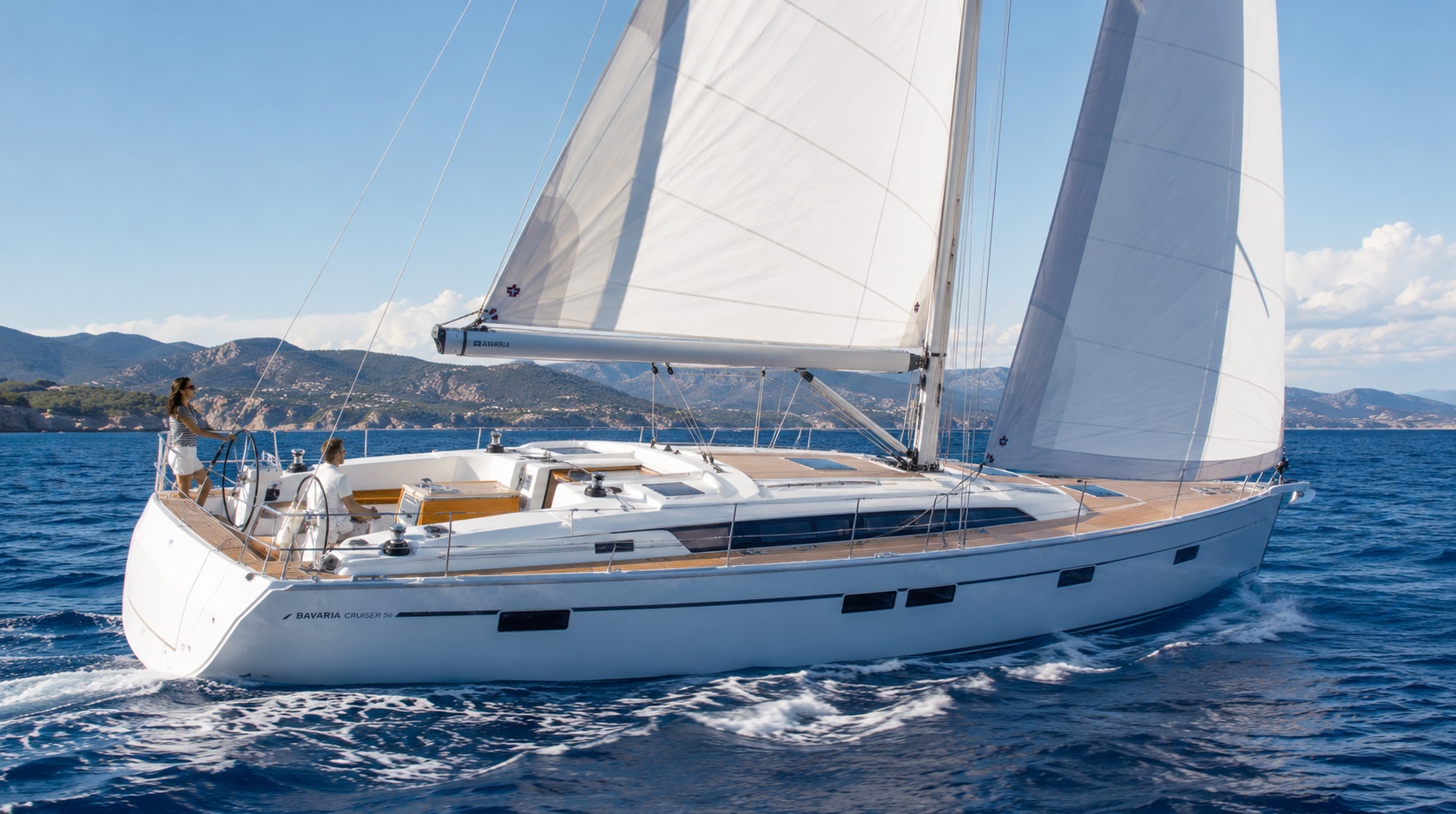
As yacht design evolved, Bavaria evolved with it. Earlier models emphasized traditional cruising layouts and conservative styling, while newer generations introduced twin steering wheels, wider stern sections, fold-down swim platforms, panoramic hull windows, and increasingly modern interiors. The Bavaria Cruiser range became one of the most recognizable yacht series in Europe, while the newer Bavaria C-Line introduced more refined aesthetics and improved sailing dynamics without abandoning the company’s core principles.
Despite these developments, Bavaria never lost its identity. The brand continued focusing on creating yachts designed for actual cruising experiences rather than purely for exhibition or prestige. The yachts remained centered around comfort at anchor, practical movement onboard, relaxed coastal passages, and enjoyable family sailing.
Perhaps Bavaria’s greatest achievement lies in how deeply it influenced modern sailing culture itself. By making sailing yachts more accessible and easier to own or charter, Bavaria helped transform sailing from a niche luxury activity into a mainstream travel and lifestyle experience enjoyed by millions of people across Europe and beyond.
Today, Bavaria yachts continue to sail through the Mediterranean exactly as they have for decades - carrying families between islands, introducing new sailors to life at sea, and remaining part of countless personal sailing memories. The company’s legacy is not defined solely by production numbers or marina presence, but by its lasting role in opening the world of sailing to an entirely new generation of sailors.
THE ORIGINS OF BAVARIA YACHTS
The story of Bavaria began far from the sea, in the small German town of Giebelstadt in Bavaria, a location surrounded not by marinas and sailing harbors, but by industrial workshops and manufacturing facilities. When entrepreneur Winfried Herrmann founded the company in 1978, few people within the sailing industry could have predicted how dramatically the brand would reshape European yacht production and modern cruising culture.
At the time, the yacht industry still operated largely through traditional shipbuilding methods. Many sailing yachts were handcrafted in relatively small shipyards where production was slow, labor-intensive, and expensive. Yacht ownership remained inaccessible for much of the public, often limited to wealthy enthusiasts and experienced sailors. Building a yacht was frequently treated more like artisanal craftsmanship than industrial manufacturing.
Winfried Herrmann approached the industry from a completely different perspective.
Unlike many traditional yacht builders, Herrmann did not come from a shipbuilding family or a maritime engineering background. His previous experience was rooted in industrial manufacturing, particularly in the production of plastic windows. That experience exposed him to modern production systems, workflow optimization, standardized manufacturing, and large-scale industrial efficiency. Rather than seeing yachts solely as handcrafted luxury products, Herrmann saw the possibility of applying industrial precision to yacht construction without sacrificing quality or sailing performance.
This idea was highly unconventional during the late 1970s. Many traditionalists believed yacht building could not be industrialized successfully without compromising craftsmanship. Herrmann disagreed. He believed that modern engineering, standardized processes, and advanced manufacturing technology could create sailing yachts that were not only more affordable, but also more consistent in quality and easier to produce at scale.
The first Bavaria yachts reflected this philosophy immediately. Instead of focusing on extravagant luxury or racing-oriented specialization, the company concentrated on practical cruising boats designed for ordinary sailors. These yachts emphasized functional layouts, dependable construction, efficient use of interior space, and accessible handling characteristics.
At the same time, Bavaria invested heavily in production technology. The shipyard introduced assembly-line style organization, advanced tooling systems, and increasingly automated manufacturing methods. Standardization allowed Bavaria to reduce costs and production times while maintaining consistent quality standards across larger numbers of yachts.
This approach quickly distinguished Bavaria from many competitors.
As sailing tourism began expanding throughout Europe during the 1980s, Bavaria found itself perfectly positioned to meet growing demand. Charter companies, sailing schools, and first-time yacht owners were searching for modern cruising yachts that were comfortable, practical, reliable, and economically viable. Bavaria’s production model allowed the company to deliver exactly that.
The growth was rapid. What started as a relatively small German manufacturer soon developed into one of Europe’s largest yacht builders. Bavaria yachts began appearing throughout the Mediterranean, especially in emerging charter destinations such as Croatia, Greece, Italy, and Spain. Their spacious interiors, forgiving sailing characteristics, and practical deck layouts made them ideal for the rapidly growing charter market.
Bavaria also benefited from the changing social perception of sailing itself. As travel became more accessible and Mediterranean charter holidays gained popularity, sailing gradually evolved from an elite niche activity into a broader lifestyle experience. Bavaria played a major role in this transformation by making yacht ownership and yacht charter more attainable for ordinary families and recreational sailors.
Throughout the 1990s and early 2000s, the company continued expanding its production capabilities and refining its yacht designs. Bavaria’s shipyard in Giebelstadt became one of the most technologically advanced yacht manufacturing facilities in Europe, combining industrial efficiency with modern yacht engineering and increasingly sophisticated design processes.
Despite its growth, Bavaria remained focused on its original philosophy: building practical cruising yachts designed for real sailing experiences rather than purely for prestige or exhibition. This consistency became one of the company’s greatest strengths. Sailors knew Bavaria yachts would offer generous living space, comfortable cruising layouts, manageable sailing systems, and strong value for money.
Over time, Bavaria’s influence extended far beyond production numbers. The company fundamentally changed expectations within the yacht industry itself. Competitors increasingly adopted similar manufacturing strategies, while consumers began expecting higher levels of onboard comfort and affordability from production cruising yachts.
Today, Bavaria’s origins remain central to understanding the brand’s identity. It was never a company built around exclusivity or excess. Instead, Bavaria emerged from a vision that sailing should become more accessible, more practical, and more connected to real-world cruising lifestyles.
That vision helped transform not only a German shipyard, but modern European sailing.
GERMAN ENGINEERING AND PRACTICAL DESIGN
One of Bavaria’s defining strengths has always been its focus on practicality over spectacle. Rather than building yachts intended primarily to attract attention at boat shows or compete in racing circuits, Bavaria has consistently prioritized designs that perform reliably and comfortably in real cruising conditions. This philosophy has shaped the brand from its earliest models and continues to influence its modern yacht range.
This practical approach is visible in nearly every aspect of a Bavaria yacht. Cockpits are typically generous in size, offering ample space for crew movement, relaxation, and safe handling under sail. The layout is designed with usability in mind, meaning winches, lines, and controls are positioned logically so that short-handed sailing or family cruising remains straightforward. The emphasis is not on complexity or racing efficiency, but on making time on board as stress-free and intuitive as possible.
Below deck, the same design logic applies. Interiors are arranged to maximize usable living space rather than to experiment with unconventional layouts. Cabins tend to feel open and functional, saloons are designed for everyday comfort, and storage is integrated in a way that supports longer stays on board. The result is an environment that feels practical rather than decorative, but still warm and inviting for extended cruising.
Systems on Bavaria yachts also reflect this philosophy. Mechanical and onboard systems are generally engineered to be accessible and easy to understand, which simplifies both maintenance and day-to-day operation. This is particularly valued by private owners and charter operators, where reliability and quick usability often matter more than technical sophistication. The idea has always been to reduce barriers between crew and sailing, allowing more time to be spent enjoying the experience rather than managing it.
At the core of this approach is German engineering discipline. Bavaria’s production facilities became known for combining industrial precision with modern yacht-building techniques, ensuring consistent quality even at high production volumes. The use of CNC machining, advanced composite lamination methods, and highly structured assembly processes allowed the shipyard to achieve a level of repeatability that is essential for large-scale yacht manufacturing.
This industrial backbone is one of the reasons Bavaria yachts developed a reputation for predictability on the water. Sailors often describe them as steady and reassuring boats, particularly suited to relaxed coastal cruising. While they may not be designed for extreme racing performance, they excel in providing confidence, comfort, and ease of handling - qualities that matter most when the goal is simply to enjoy being at sea.
BAVARIA AND THE MEDITERRANEAN LIFESTYLE
The rise of Mediterranean charter sailing during the 1990s and 2000s played a decisive role in shaping Bavaria’s international success. As sailing holidays became increasingly popular across destinations such as Croatia, Greece, Italy, and Spain, the charter industry began to expand rapidly. This growth created a clear demand: fleets needed yachts that were spacious, durable, easy to operate, and economically efficient to maintain across long seasons of intensive use.
Bavaria Yachts naturally fit this role better than many competitors at the time. Their design philosophy aligned almost perfectly with the expectations of charter operators and holiday sailors. Wide sterns made boarding and disembarking simple, especially when swimming or using dinghies. Generous cabin layouts allowed families and groups to share space comfortably without feeling cramped during week-long cruises. Cockpit areas were designed for outdoor living, with enough room for dining, sunbathing, and socializing while anchored in calm bays or moored in marinas.
Deck layouts also reflected the realities of Mediterranean sailing. Lines and winches were positioned for ease of handling, making the yachts accessible even for less experienced crews. Large bathing platforms became a defining feature, especially in warm-water cruising areas where swimming and water access are central to the experience. Combined with straightforward sail plans and predictable handling, Bavaria yachts offered a level of comfort and simplicity that made them ideal for holiday sailors rather than professional racing crews.
Below deck, the emphasis on livability reinforced their appeal. Cabins were designed to provide privacy and comfort for multiple guests, while saloons offered functional communal spaces for meals, planning routes, or escaping midday heat. The overall impression was not luxury in the superyacht sense, but practical comfort tailored to real life on board.
Nowhere was this alignment more evident than in Croatia, where Bavaria became deeply embedded in Adriatic charter culture. The country’s island-dense coastline, stable summer winds, and well-developed marina network created one of the most attractive sailing regions in the world. Thousands of visitors exploring iconic destinations such as Hvar, Vis, Brač, the Kornati Islands, or Dugi Otok experienced their very first sailing holiday aboard a Bavaria Cruiser or similar model.
These yachts became closely associated with the broader Mediterranean lifestyle itself: long summer days spent anchored in turquoise bays, evenings in quiet island harbors, swimming directly from the stern, and slow island-hopping between fishing villages, konobas, and hidden coves. In this context, Bavaria was not just a yacht brand, but a gateway into accessible cruising - offering a practical and reliable platform for discovering the Adriatic at a relaxed, unhurried pace.
INTERIORS DESIGNED FOR REAL CRUISING
Step inside a modern Bavaria yacht and the design philosophy becomes immediately evident: everything is shaped by real-life use at sea rather than showroom aesthetics or design experimentation. Instead of focusing on excessive luxury detailing or trend-driven styling, Bavaria interiors prioritize openness, functionality, and long-term comfort under cruising conditions.
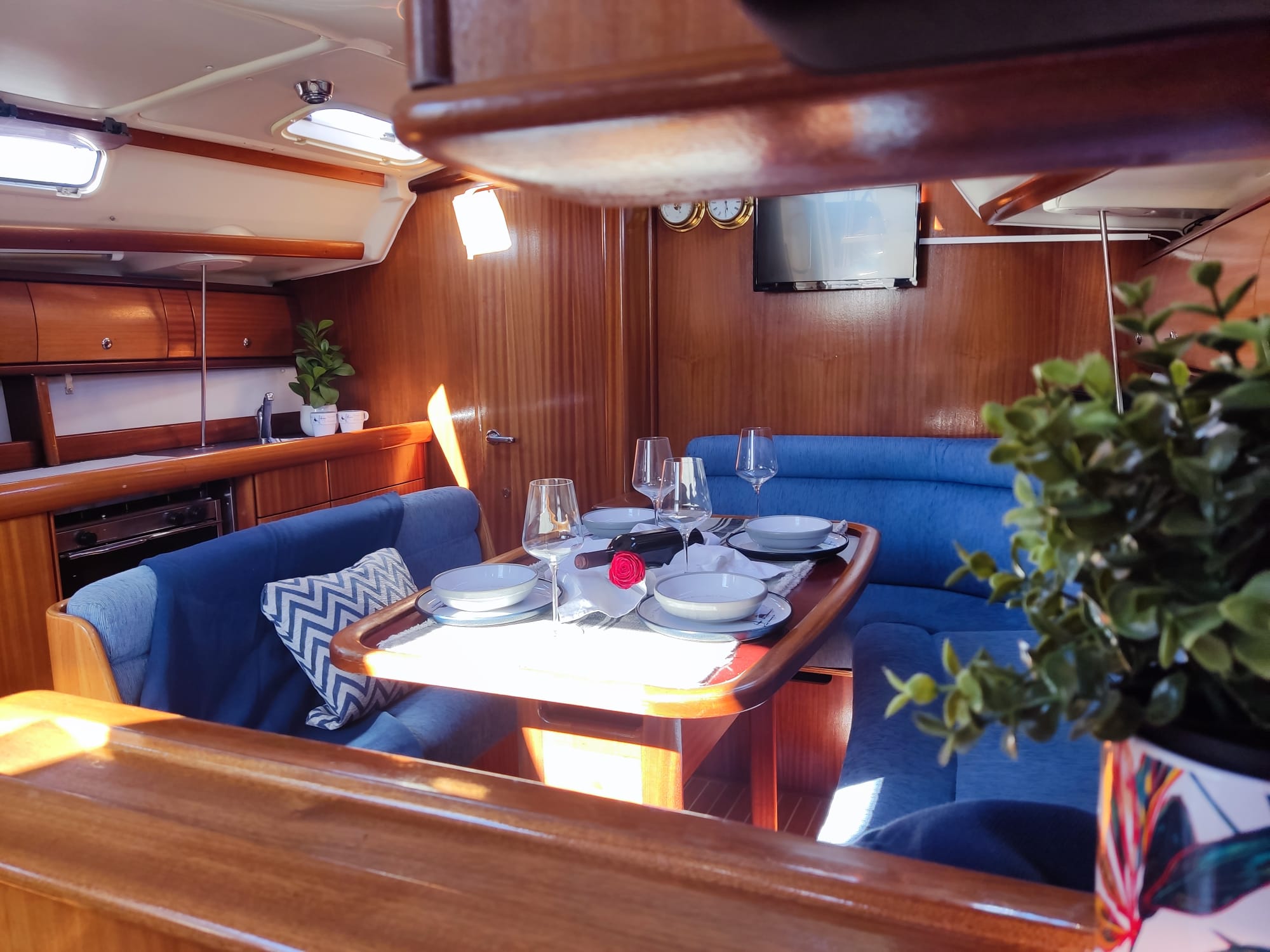
One of the most noticeable features is the sense of space. The saloons are typically wide and welcoming, designed to serve as genuine living areas rather than simply passage spaces between cabins. They function as the social heart of the yacht - where crews gather for meals, plan routes, or simply relax after a day of sailing. Seating is arranged to support group interaction, while table layouts are practical enough for everyday use at anchor or in port, even when the yacht is moving or heeling slightly in a breeze.
Thanks to the relatively full-bodied hull designs common in Bavaria yachts, interior volume is used efficiently. This results in cabins that often feel noticeably larger than those found on competing yachts of similar length. The forward and aft cabins are designed with comfort in mind, offering sufficient headroom, proper berths, and sensible circulation space. Rather than prioritizing decorative complexity, the layout focuses on how people actually sleep, dress, and move onboard during a week or more at sea.
Natural light plays a major role in shaping the onboard atmosphere. Large hull windows, panoramic saloon glazing, and well-positioned deck hatches allow daylight to fill the interior spaces, reducing any sense of confinement. In Mediterranean sailing conditions, where yachts are often anchored in bright bays or moored under clear skies, this creates a calm and airy environment that feels closely connected to the outside sea and landscape.
The galley is another area where Bavaria’s practical thinking is especially visible. Kitchens are designed to be functional over extended periods, not just for short overnight trips. Counter space, storage, and appliance placement are arranged to make meal preparation straightforward even when underway or at anchor. This is particularly important in cruising regions like the Adriatic, where crews often cook onboard for days at a time while moving between islands and remote anchorages.
Storage throughout the yacht is similarly well considered. Instead of hidden or awkward compartments, Bavaria interiors generally feature accessible lockers and logically placed storage areas that make it easy to organize personal belongings, provisions, and sailing equipment. This reduces clutter in living spaces and contributes to a more relaxed onboard experience, especially on longer charters.
Cabins themselves are designed with privacy and rest in mind. On charter yachts in particular, where multiple couples or families share the same vessel, separation between sleeping areas becomes essential. Bavaria layouts typically provide well-defined private spaces, with solid doors, adequate sound separation, and thoughtful positioning of cabins relative to shared living areas. This ensures that guests can maintain comfort and rest even in a busy onboard environment.
Ultimately, this emphasis on practical comfort is what has made Bavaria interiors so widely appreciated. They are not designed to impress through visual excess, but to function reliably over time in real cruising scenarios. Whether anchored in a quiet bay, moored in a busy marina, or sailing between islands, the interior environment consistently supports the realities of life at sea - comfortable, intuitive, and purpose-built for long days spent aboard.
THE BAVARIA CRUISER SERIES
The Bavaria Cruiser line became the foundation of the company’s modern sailing yacht portfolio and one of the most recognizable cruising ranges in Europe. It represents the moment when Bavaria fully committed to a clear idea: yachts built not for racing prestige or showroom drama, but for real, repeatable cruising comfort in Mediterranean and coastal conditions.
Within this evolution, earlier models played an important role in shaping what the Cruiser series would become. A good example is the Bavaria 38 Cruiser, which sits in the early phase of the series’ development. Built in 2003, it reflects the transitional design thinking of the time - already modern in layout and usability, but still carrying the robust, slightly heavier-feeling construction style that many sailors today associate with “classic” early-2000s Bavaria yachts.
What made the 2003 Bavaria 38 particularly notable was how much usable boat it delivered for its length. Below deck, it offered a surprisingly spacious saloon with long, comfortable seating areas and a layout that prioritized everyday life on board rather than decorative styling. The galley was practical and durable, designed for frequent use during charter seasons, while the cabins provided solid sleeping comfort and enough separation to make shared cruising genuinely workable for families or mixed groups.
On deck, the boat already showed the direction Bavaria would fully embrace in later Cruiser models: a wide and open cockpit designed for social cruising, with simple, logical sail handling and good protection for crew at sea. It wasn’t a yacht that demanded constant attention or technical sailing expertise. Instead, it rewarded relaxed, confident cruising - exactly what the growing Mediterranean charter market needed at the time.
As the Cruiser range evolved, Bavaria refined these principles into a more defined lineup of models such as the Bavaria Cruiser 37, Bavaria Cruiser 41, Bavaria Cruiser 46, and Bavaria Cruiser 51. These later yachts expanded on the same core ideas - space, simplicity, and ease of handling - but with more refined ergonomics, larger cockpit platforms, and improved interior light and volume.
Across the entire Cruiser series, certain design signatures became unmistakable. Twin steering wheels improved movement and visibility in the cockpit. Fold-down swim platforms turned the stern into a direct extension of the sea. Large cockpit tables encouraged outdoor living as the default onboard lifestyle. Wide aft sections increased both interior volume and onboard stability, reinforcing the feeling of safety and space that defined the range.
Under sail, the Cruiser yachts are intentionally forgiving rather than aggressive. They are designed to be predictable, stable, and easy to handle with minimal crew, which makes them ideal for charter use and family cruising. The emphasis is not on extracting maximum performance, but on reducing complexity so that sailing becomes accessible to a wider range of users.
For many sailors, the Bavaria Cruiser series represents a very specific kind of success: not luxury in the superyacht sense, but dependable comfort at scale. And within that story, boats like the 2003 Bavaria 38 Cruiser are an important chapter - early proof that the concept worked in practice, not just on paper.
A NEW GENERATION - THE BAVARIA C-LINE
As sailing trends evolved and customer expectations shifted toward cleaner aesthetics, improved hydrodynamics, and a more “premium” onboard feel, Bavaria introduced a new direction with the Bavaria C-Line. This range marked a deliberate step forward from the earlier Cruiser philosophy, not by abandoning it, but by refining it for a more design-conscious and performance-aware generation of sailors.
Developed in collaboration with naval architect Maurizio Cossutti, the C-Line brought a noticeably more contemporary character to the brand. Where earlier Bavaria models focused primarily on maximum space and straightforward usability, the C-Line began to integrate a sharper balance between performance, elegance, and interior sophistication.
On the water, this shift is immediately visible in the hull design. The boats became more hydrodynamically efficient, with cleaner lines and improved sail-carrying ability. The wider stern concept remained, but it was refined into a more controlled, performance-oriented shape that improved balance and responsiveness under sail. This gave the yachts a more engaging feel at the helm, especially in medium to stronger wind conditions where modern cruising sailors increasingly expect a more dynamic experience.
Above deck, the design language evolved in parallel. The cockpit layouts remained practical, but were reworked with a more ergonomic and visually streamlined approach. Controls were positioned more intuitively, seating areas were integrated more naturally into the deck structure, and the overall impression was one of cleaner geometry and better spatial flow. The result was still unmistakably Bavaria in usability, but with a more modern, architectural finish.
Below deck, the transformation became even more apparent. Interiors in the C-Line introduced larger hull windows, increased natural light, and a more open spatial concept. The layout philosophy moved away from purely functional compartmentalization toward a brighter, more connected living environment. Saloon areas felt more integrated with the outside world, and materials, surfaces, and lines were simplified to create a calmer, more contemporary aesthetic.
Models such as the Bavaria C45 and Bavaria C50 quickly became key representatives of this new direction. They appealed to sailors who wanted the comfort and volume Bavaria was known for, but with a stronger emphasis on sailing feel, visual refinement, and modern onboard lifestyle expectations.
Importantly, the C-Line did not abandon Bavaria’s core identity. The practical DNA remained intact: wide and usable cockpits, straightforward systems, and layouts designed for real cruising rather than conceptual design exercises. What changed was the layer on top of that foundation - the refinement of detail, the improvement in sailing dynamics, and the move toward a more premium visual and spatial experience.
This evolution allowed Bavaria to stay highly relevant in a market that was becoming increasingly sophisticated. Modern yacht owners and charter guests were no longer satisfied with space and reliability alone; they also wanted atmosphere, design coherence, better light, and a more engaging sailing experience. The C-Line positioned Bavaria directly in that expectation space - offering yachts that still worked effortlessly in charter fleets, but now also appealed strongly to private owners seeking a more modern interpretation of Mediterranean cruising.
BAVARIA AND ACCESSIBLE YACHT OWNERSHIP
Perhaps Bavaria’s most lasting impact on the sailing industry is not tied to a single model or design innovation, but to something broader and more cultural: the democratization of yacht ownership.
Before the rise of industrial-scale production shipyards like Bavaria, sailing yachts were often positioned as semi-bespoke luxury products. Ownership was typically limited to a relatively small circle of experienced enthusiasts or high-net-worth individuals, and the barriers to entry were significant - not only in purchase price, but also in maintenance complexity, operating costs, and technical knowledge required to manage a yacht.
Bavaria helped reshape that landscape by applying a manufacturing mindset to yacht building without completely losing the essence of cruising design. By introducing standardized production processes, efficient assembly lines, and large-scale component sourcing, the company was able to significantly reduce production costs while maintaining consistent quality. This allowed sailing yachts to become financially accessible to a much wider audience than had previously been possible.
The result was a structural shift in how people approached sailing. Instead of yacht ownership being seen as an exclusive lifestyle reserved for a select few, it gradually became a realistic goal for middle-class professionals, families, and sailing enthusiasts who valued travel, freedom, and time on the water. Bavaria effectively helped reposition sailing as an achievable lifestyle rather than a distant aspiration.
A key part of this transition came through the Mediterranean charter industry. Many sailors were first introduced to Bavaria yachts not through ownership, but through weekly holidays at sea. Spending time aboard these boats in real cruising conditions - anchoring in bays, visiting islands, and navigating coastal waters - created familiarity and confidence. Over time, a significant number of charter guests transitioned into ownership, often choosing Bavaria as their first yacht purchase because it matched the experience they already knew.
This “charter-to-ownership pipeline” became a defining feature of modern sailing culture, particularly in regions such as Croatia, Greece, and Italy. Thousands of sailors across Europe effectively learned to sail, cruise, and live aboard through Bavaria yachts long before considering ownership themselves. Smaller models were often used for coastal cruising and weekend sailing, while larger Cruiser and C-Line yachts eventually became stepping stones into longer-distance Mediterranean or even offshore cruising.
Beyond individual ownership, Bavaria also contributed to a broader cultural shift in how sailing holidays were perceived. What was once considered a niche or elite form of travel became a mainstream leisure experience. Families, groups of friends, and first-time sailors began to see yacht charters as a normal holiday option alongside hotels and resorts. This helped expand the entire Mediterranean maritime tourism economy and strengthened sailing infrastructure across coastal destinations.
In this sense, Bavaria’s influence extends far beyond yacht design alone. The company played a central role in widening access to sailing itself - lowering barriers, increasing familiarity, and helping transform yacht cruising into something that is not only aspirational, but realistically attainable for a much larger segment of society.
BAVARIA IN CROATIA AND THE ADRIATIC
Few regions demonstrate Bavaria’s influence on modern sailing as clearly as the Adriatic coast. In Croatia especially, the brand has become deeply embedded in the everyday reality of yacht charter operations, marina life, and summer cruising culture. From Split to Dubrovnik, and across central and southern Dalmatia, Bavaria yachts consistently appear as some of the most common and recognizable charter vessels in the water.
A large part of Bavaria’s presence comes from how well its yachts integrate into the structure of Adriatic charter operations. Key bases such as Split, Dubrovnik, Zadar, and Šibenik act as primary gateways to some of the most important sailing regions in the Mediterranean. While Split and Dubrovnik connect directly to the central and southern Dalmatian islands, Zadar and Šibenik serve as ideal starting points for cruising routes toward the Kornati Islands and the long, rugged coastline of northern Dalmatia.
From these mainland hubs, sailors quickly transition into an island-dense sailing environment where short passages between anchorages define the rhythm of the journey. In this context, Bavaria yachts fit naturally into the operational reality of the Adriatic. The region is shaped by relatively short sailing distances, predictable summer wind patterns such as the Maestral, and a strong anchoring and bay-hopping lifestyle rather than long offshore passages. Bavaria’s ease of handling, spacious layouts, and practical deck design make the yachts especially well suited to this kind of cruising.
Guests typically spend mornings sailing between islands, often only a few nautical miles at a time, before arriving in sheltered coves or marina towns. Afternoons are usually reserved for swimming in quiet bays, relaxing on board, or exploring coastal villages. In the evenings, crews often anchor near waterfront settlements or moor in small harbors, heading ashore to local konobas before returning to the comfort of their cabins.
This lifestyle is particularly visible across iconic sailing routes through islands such as Hvar, Vis, and Brač. In these waters, Bavaria yachts are frequently seen at anchor in turquoise bays during the day, with guests swimming directly from large bathing platforms, and later moored in small harbors or marina towns where evenings unfold in a relaxed, Mediterranean rhythm.
The interiors of Bavaria yachts also reinforce their suitability for Adriatic cruising. After long, sun-filled days at sea, crews return to cabins designed for comfort, ventilation, and practical living. Open saloons, functional galleys, and well-planned sleeping areas make week-long or multi-week charters comfortable for families and mixed groups sharing the yacht.
Over time, Bavaria has become more than just a common charter choice in Croatia - it has become part of the visual and cultural identity of Adriatic sailing itself. For many visitors, their first sailing experience in Croatia takes place aboard a Bavaria yacht, shaping their understanding of island life, coastal navigation, and Mediterranean cruising culture.
As a result, Bavaria yachts are now closely associated with the broader Adriatic sailing image: calm departures from marina bases, steady passages between islands, quiet afternoons in hidden coves, and relaxed evenings spent on deck under warm coastal skies. In this way, the brand has become woven into the everyday rhythm of Croatian maritime tourism, helping define what modern Adriatic cruising looks and feels like for thousands of sailors each season.
THE LASTING LEGACY OF BAVARIA YACHTS
Bavaria’s success was never built on extremes. The company did not aim to produce the fastest racing yachts, nor did it attempt to compete in the ultra-luxury superyacht segment. Instead, it focused consistently on something far more influential in the long term: building reliable, spacious, and comfortable cruising yachts that ordinary sailors could actually own, charter, and enjoy without unnecessary complexity.
This practical philosophy became the foundation of Bavaria’s global reputation. By prioritizing usability over prestige, the brand helped reshape expectations of what a modern cruising yacht should be. A Bavaria was never meant to intimidate its crew with technical demands or exclusive systems. It was designed to be understood quickly, handled confidently, and enjoyed repeatedly - whether by experienced skippers or first-time sailors stepping aboard for a summer holiday.
Over time, this approach created a recognizable identity across the sailing world. Bavaria yachts became associated with predictability, comfort, and real-world functionality. Wide cockpits, generous interiors, and straightforward systems were not just design choices - they became part of a broader philosophy that sailing should be accessible, safe, and enjoyable for a wide range of people, not just specialists.
Perhaps more importantly, Bavaria helped bridge the gap between sailing as an aspiration and sailing as a lived experience. Through charter fleets and ownership opportunities, thousands of sailors were introduced to life at sea aboard Bavaria yachts. For many, these boats were their first real contact with coastal cruising: learning to handle sails in light Mediterranean winds, anchoring in sheltered bays, and navigating between islands under relaxed summer conditions.
This experience often left a lasting impression. Whether used for family holidays in Croatia, summer cruising in Greece, coastal exploration in Italy and Spain, or weekend sailing along northern European shores, Bavaria yachts became a consistent entry point into modern cruising culture. They offered enough performance to feel rewarding under sail, while maintaining the simplicity and comfort needed for relaxed onboard living.
In regions like the Adriatic, this legacy is especially visible. Entire generations of sailors have developed their understanding of cruising through charter holidays on Bavaria yachts, associating them with warm evenings at anchor, quiet mornings leaving marina harbors, and the slow rhythm of island-hopping life. Over time, this has helped define what “modern cruising” means for a very large global sailing community.
Today, Bavaria’s legacy is not measured only in boats built or models launched, but in the scale of its influence on sailing accessibility. The brand helped normalize yacht cruising as a mainstream leisure activity rather than a niche pursuit, and in doing so, it played a major role in shaping how thousands of people around the world experience the sea - simply, practically, and with a strong sense of freedom under sail.