AZIMUT / BENETTI YACHTS - ITALIAN EXCELLENCE ACROSS THE FULL SPECTRUM OF LUXURY YACHTING
Italian yacht building has long been associated with emotional design, performance-driven engineering, and a strong sense of lifestyle aesthetics, where form and function are treated as inseparable elements of the same experience. Within this landscape, Azimut Yachts and Benetti Yachts form one of the most influential dual-brand structures in the global marine industry, representing two complementary interpretations of luxury yachting under a shared Italian design philosophy.
Together, they cover an exceptionally wide spectrum of the market, from sleek, performance-oriented motor yachts intended for private ownership and seasonal Mediterranean cruising, to fully custom superyachts exceeding 100 meters that function as private floating estates capable of global exploration. This breadth is not merely a matter of scale, but a reflection of how Italian shipbuilding integrates engineering capability, aesthetic refinement, and lifestyle-driven innovation across every level of yacht construction.
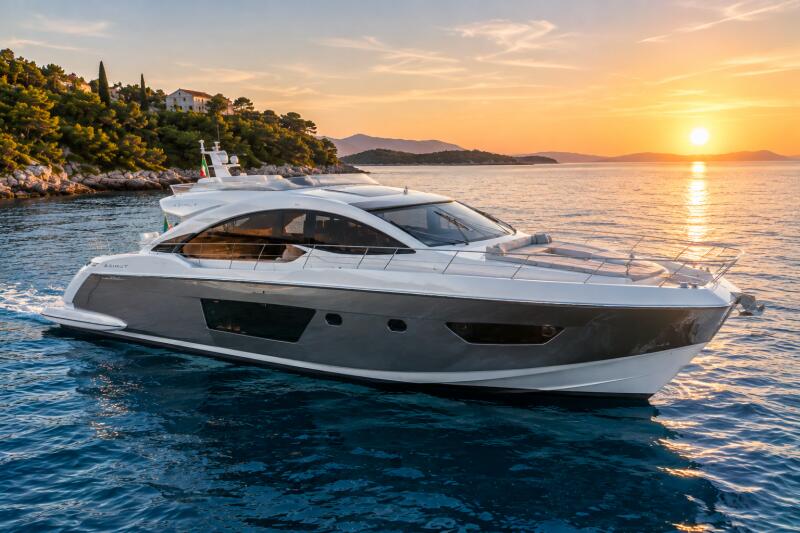
Azimut operates primarily in the realm of modern motor yachts, where efficiency, speed, and contemporary design language define the user experience. These yachts are typically characterised by dynamic hull shapes, extensive use of glass, and interiors that prioritise open space, natural light, and seamless transitions between indoor and outdoor living. They are designed for owners who value hands-on cruising, seasonal navigation, and a strong connection to coastal environments such as the Mediterranean, the Caribbean, and other established yachting regions.
Benetti, by contrast, represents the pinnacle of bespoke superyacht construction. Each vessel is conceived as a fully customized project, developed in close collaboration with owners, designers, and naval architects. Rather than working within predefined series constraints, Benetti builds entirely unique yachts where every detail - from hull form and propulsion systems to interior architecture and spatial planning - is tailored to individual requirements. This allows for a level of personalization and scale that places Benetti firmly within the global elite of superyacht builders.
Despite these differences in scope and philosophy, both brands share a unified foundation rooted in Italian craftsmanship and design sensibility. This includes a strong emphasis on visual harmony, emotional engagement, and the belief that a yacht should function as both a technical platform and a lifestyle environment. Whether expressed through the sleek, contemporary lines of an Azimut flybridge yacht or the expansive, multi-deck architecture of a Benetti superyacht, the underlying goal remains consistent: to create vessels that enhance the experience of life at sea.
Technological innovation also plays a central role across both brands. Advanced naval architecture techniques, including hydrodynamic optimisation and computational design tools, are used to refine performance, stability, and fuel efficiency. On larger Benetti projects, this extends into complex engineering systems that support long-range autonomy, hybrid propulsion configurations, and sophisticated onboard energy management. In Azimut yachts, the focus is more on accessibility and efficiency, ensuring that advanced systems remain intuitive and manageable for owner-operators.
In combination, Azimut and Benetti do more than occupy different segments of the yacht market - they define a complete ecosystem of Italian luxury yachting. Their influence extends across private ownership, charter operations, and global superyacht culture, shaping how modern yachts are designed, built, and experienced. This dual-brand structure has become a benchmark for the industry, demonstrating how a single group can successfully bridge the gap between production motor yachts and fully bespoke superyacht creation while maintaining a consistent design identity.
THE AZIMUT-BENETTI VISION: TWO BRANDS, ONE PHILOSOPHY
Although Azimut Yachts and Benetti Yachts operate in distinctly different segments of the yacht industry, they are bound together by a shared philosophy that defines the broader identity of the Azimut-Benetti Group. At its core, this philosophy treats yachts not merely as engineered vessels, but as immersive lifestyle environments where emotional design, technological innovation, and onboard experience are equally important.
Across both brands, yachts are expected to deliver more than technical capability. They are designed to create a strong emotional response through proportion, light, spatial flow, and interaction with the sea. Whether expressed in the sleek exterior lines of a production motor yacht or the expansive silhouette of a custom superyacht, the goal is the same: to ensure that every vessel feels alive, responsive, and closely connected to the environment in which it operates.
Technology is another unifying pillar. Both Azimut and Benetti integrate advanced naval architecture tools, digital design systems, and modern onboard technologies to enhance safety, efficiency, and comfort. This includes everything from hydrodynamic optimisation and stabilisation systems to integrated bridge electronics and intelligent energy management. However, technology is always applied with restraint and purpose, ensuring that it enhances usability rather than overwhelming the onboard experience.
The distinction between the two brands lies primarily in scale and ownership philosophy. Azimut concentrates on production motor yachts intended for private owners who value ease of use, seasonal cruising, and a balance between performance and comfort. These yachts are typically designed for hands-on operation, with layouts and systems that allow owners to enjoy extended cruising without requiring large professional crews. The emphasis is on accessibility, practicality, and contemporary luxury that can be experienced immediately and intuitively.
Benetti operates at the opposite end of the spectrum, where individuality and scale define the entire design process. Each superyacht is a fully bespoke project, developed from a blank naval platform and shaped by the specific vision of the owner. This includes complete freedom in exterior design, interior architecture, layout configuration, and technical specification. As a result, no two Benetti yachts are alike; each becomes a unique floating structure tailored to long-range cruising, private residence use, or global exploration.
This dual structure gives the group a rare position of influence within the global luxury yacht market. Azimut defines expectations for modern motor yachts up to superyacht entry levels, shaping how private owners experience Mediterranean and coastal cruising. Benetti, in contrast, defines the upper limits of bespoke yacht construction, where scale, autonomy, and exclusivity become central to the design brief.
Together, they allow the group to operate across the full lifecycle of luxury yachting - from first-time yacht ownership and seasonal cruising experiences to fully customised global superyachts designed for extended voyages and multi-generational use. This continuity creates a seamless pathway for owners who may begin with an Azimut motor yacht and eventually progress into larger, fully bespoke Benetti projects.
By unifying emotional design, advanced engineering, and lifestyle-driven functionality across two complementary brands, the Azimut-Benetti philosophy establishes a comprehensive vision of modern yachting. It is a vision that spans accessibility and exclusivity, simplicity and complexity, intimacy and scale - while maintaining a consistent commitment to creating yachts that are not only technologically advanced, but deeply engaging places to live and travel at sea.
AZIMUT YACHTS - MODERN MOTOR YACHTING REDEFINED
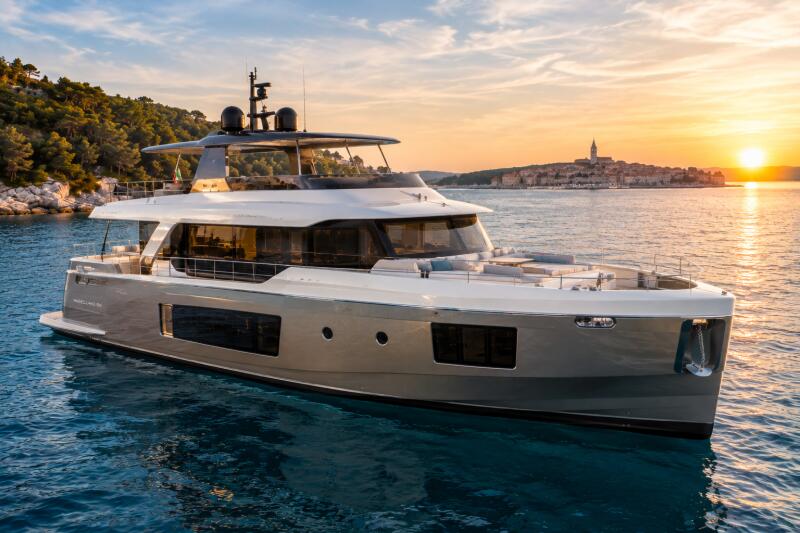
Azimut Yachts has established itself as one of the most recognisable and influential names in contemporary motor yacht design, shaping how modern luxury cruising yachts are conceived, styled, and experienced. The brand’s identity is strongly defined by its bold architectural approach, where exterior lines are intentionally dynamic and expressive, combining sporty proportions with refined Italian elegance. This design language gives Azimut yachts an immediately identifiable presence on the water, often characterised by sleek profiles, sweeping curves, and a strong sense of motion even when at anchor.
A key signature of Azimut’s design philosophy is the extensive use of glass throughout the superstructure. Large panoramic windows are not treated as decorative elements but as structural features that fundamentally define onboard experience. They enhance natural light penetration, reduce the sense of interior confinement, and create a continuous visual connection between guests and the surrounding sea environment. This emphasis on transparency and openness reflects a broader shift in modern yacht design toward environments that feel more like contemporary luxury residences than traditional marine vessels.
FLYBRIDGE AND S SERIES INNOVATION
The Flybridge series and S Series represent two of the most influential expressions of Azimut’s design evolution, each addressing different interpretations of luxury motor cruising while maintaining a shared focus on lifestyle integration and spatial fluidity.
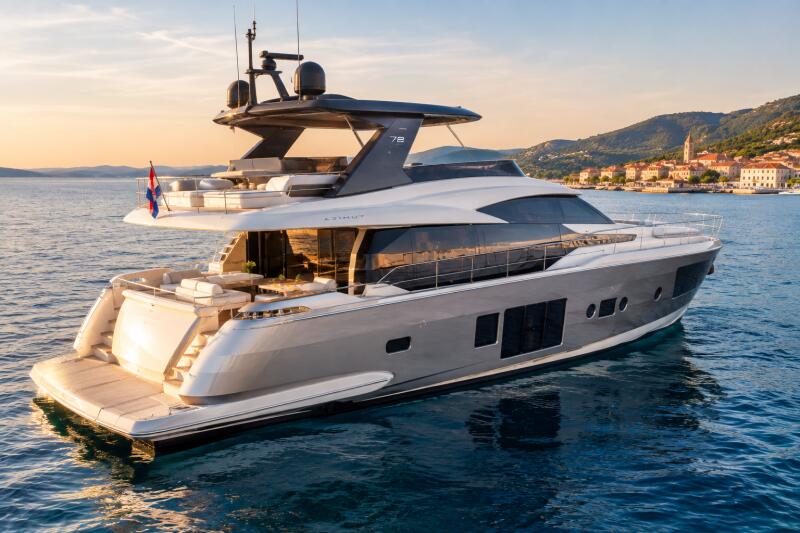
Flybridge models are designed around the idea of multi-level living, where exterior decks are not secondary spaces but essential extensions of the yacht’s interior volume. The flybridge itself functions as an elevated social platform, typically equipped with lounging areas, dining spaces, and helm stations that offer panoramic visibility while underway. This elevated perspective enhances both navigation and leisure, allowing guests to experience cruising from a more open and immersive vantage point.
On the main deck, open-plan layouts dominate. Salons are designed to flow directly into aft cockpit areas through large sliding glass doors, creating a unified environment that blurs the boundary between interior comfort and outdoor living. Extended aft decks often serve as multifunctional social zones, accommodating dining, sunbathing, and direct access to the sea via swim platforms or beach club-style configurations. This seamless integration of spaces reflects a growing expectation in modern yachting: that life onboard should feel continuous rather than segmented.
The S Series takes this concept further by introducing a more performance-oriented interpretation of luxury cruising. These yachts are typically lower, sleeker, and more dynamically proportioned, with an emphasis on speed, hydrodynamic efficiency, and sporty handling characteristics. Despite this performance focus, the interior philosophy remains consistent with Azimut’s broader identity - open, bright, and oriented toward lifestyle comfort. The result is a category of yacht that bridges the gap between high-performance sport cruisers and contemporary floating residences.
Across both ranges, performance is underpinned by advanced engineering solutions. Lightweight composite construction techniques are widely used to reduce displacement without compromising structural integrity, allowing for improved acceleration, fuel efficiency, and overall cruising economy. Hull forms are developed using sophisticated hydrodynamic modelling, optimising lift, stability, and resistance across a variety of sea conditions.
This engineering precision ensures that Azimut yachts are not only visually striking but also highly capable at sea. Whether operating at displacement speeds during relaxed coastal cruising or at higher planing speeds for faster passages between destinations, the yachts maintain a balance between comfort and responsiveness. Stabilisation systems and modern propulsion configurations further enhance onboard comfort, reducing roll motion and improving handling in variable conditions.
Taken together, these design and engineering principles position Azimut as a defining force in modern motor yachting. The brand has successfully reinterpreted what a luxury yacht can be - shifting it away from purely traditional forms toward a more architectural, light-filled, and lifestyle-driven experience that reflects contemporary expectations of life at sea.
DESIGN LANGUAGE: EMOTION, LIGHT, AND SPACE
A defining characteristic of Azimut Yachts is its strong commitment to emotional design, where the primary objective is not only functional efficiency but also the creation of a sensory experience onboard. Rather than treating interior spaces as purely technical environments, Azimut approaches yacht design as a form of contemporary residential architecture adapted to the marine context. The result is an atmosphere that feels deliberately composed, calm, and emotionally engaging, with every surface, proportion, and transition contributing to a cohesive onboard identity.
Interiors are typically minimalist in expression, but this minimalism is carefully controlled rather than austere. The design language relies on soft tonal palettes, refined material combinations, and a high level of finish quality that avoids visual noise. Light woods, muted fabrics, brushed metals, and polished accents are often combined in a way that feels understated yet sophisticated. This restraint allows the spatial qualities of the yacht - rather than decorative elements - to take visual precedence, reinforcing a sense of openness and clarity throughout the living environment.
Lighting plays a particularly important role in shaping this emotional atmosphere. Natural light is maximised through expansive glazing and intelligently positioned openings, while artificial lighting systems are designed to be layered and adjustable. Rather than relying on a single uniform illumination strategy, Azimut interiors often use indirect lighting, concealed fixtures, and ambient sources to create depth and mood variation throughout the day. This dynamic approach ensures that the onboard environment shifts subtly between bright daytime openness and softer evening intimacy, mirroring natural rhythms at sea.
Spatial flow is central to the overall design philosophy and represents one of the most significant departures from traditional yacht layouts. Instead of dividing interiors into rigid, compartmentalized rooms, Azimut yachts increasingly favor open-plan configurations where key functional zones - such as the galley, salon, and dining area - merge into a single continuous social space. This layout encourages interaction and shared use, allowing guests to move freely between activities without encountering physical or visual barriers.
The galley, in particular, is often integrated into the main living area rather than isolated aft or below deck. This reflects a modern interpretation of onboard living where cooking, dining, and socialising occur simultaneously within a unified environment. The salon and dining spaces are similarly interconnected, often distinguished not by walls but by subtle changes in furniture arrangement, lighting tone, or material transitions.
This spatial openness extends outward toward the sea itself. Large sliding glass doors, retractable windows, and aft-facing openings create a direct visual and physical connection between interior and exterior zones. When fully opened, these transitions effectively dissolve the boundary between indoor comfort and outdoor living, reinforcing the idea that the yacht is a single continuous environment rather than a collection of separate compartments.
This approach reflects a broader evolution in contemporary yachting culture, where emphasis is placed on shared experiences rather than segmented functionality. Life onboard is no longer organized strictly around operational roles or rigid room definitions, but around fluid social interaction, relaxation, and immersion in the surrounding environment. Whether at anchor in a quiet bay or cruising along a coastline, the design encourages occupants to remain connected - to each other and to the sea - at all times.
In this way, Azimut’s design language goes beyond aesthetics. It defines how space is experienced, how movement is structured, and how daily life unfolds onboard. The result is a distinctive architectural identity that positions the yacht not simply as a vessel, but as a living, evolving environment shaped by light, emotion, and continuous spatial flow.
OUTDOOR LIVING AS A CORE DESIGN PRINCIPLE
Within Azimut Yachts design philosophy, outdoor spaces are not treated as auxiliary extensions of the yacht but as fully integrated living environments that often define the overall onboard experience. This approach reflects a broader transformation in modern yacht usage, where time spent outdoors frequently exceeds time spent inside, especially in warm cruising regions such as the Mediterranean and the Caribbean.
Aft decks are therefore conceived as primary social zones rather than transitional or functional areas. These spaces are typically arranged with the same level of attention to comfort, proportion, and aesthetics as interior salons. Dining tables are positioned to maximise both usability and sea views, while lounge seating is designed to support long periods of relaxation at anchor or underway. The spatial layout encourages fluid interaction between guests, allowing dining, conversation, and leisure activities to occur in a single cohesive environment.
The connection between aft deck and interior salon is deliberately seamless. Large sliding glass doors and retractable structural elements remove physical barriers between inside and outside, creating a continuous living area that can expand or contract depending on weather conditions and usage preferences. When fully opened, the yacht effectively becomes a unified platform where interior comfort and exterior exposure merge into a single experiential space. This flexibility is particularly important in Mediterranean cruising scenarios, where conditions can shift quickly between intense sun, calm evenings, and occasional wind exposure.
Access to the sea is another fundamental aspect of Azimut’s outdoor design philosophy. Swim platforms are not simply functional boarding points but carefully integrated extensions of the aft deck. They are engineered to support safe movement between water and yacht while also serving as leisure spaces in their own right. On many models, these platforms are wide enough to accommodate sunbathing, gear preparation, or informal gathering directly at the waterline, reinforcing the idea that the sea itself is part of the living environment.
On larger yachts, this concept evolves into the dedicated beach club area, one of the most distinctive innovations in modern motor yacht design. Positioned at the stern, these spaces transform previously technical zones - such as garages or transom compartments - into multifunctional recreational areas. Hydraulic platforms, fold-out terraces, and opening side balconies expand the usable surface area dramatically, creating a near-shore waterfront environment while at anchor.
Beach clubs typically include direct water access, storage for water toys, shower facilities, and relaxed seating zones that blur the boundary between yacht and sea. This configuration supports a wide range of activities, from swimming and snorkeling to launching tenders or simply relaxing at sea level. In many cases, the beach club becomes one of the most frequently used areas onboard, particularly during extended stays in sheltered bays.
This strong emphasis on outdoor living is closely aligned with Mediterranean cruising culture, where the rhythm of life at sea is defined by anchoring in scenic coves, moving between coastal towns, and spending long periods outdoors in warm, stable conditions. In this context, the yacht is not only a mode of transport but a floating platform for social interaction, relaxation, and direct engagement with the marine environment.
By prioritising exterior spaces as fully developed living areas, Azimut reinforces a modern interpretation of yachting in which boundaries between architecture and nature are intentionally softened. The result is a design approach that places outdoor life at the centre of the onboard experience, making the sea itself an active and constant participant in daily living.
BENETTI YACHTS - THE WORLD OF CUSTOM SUPERYACHTS
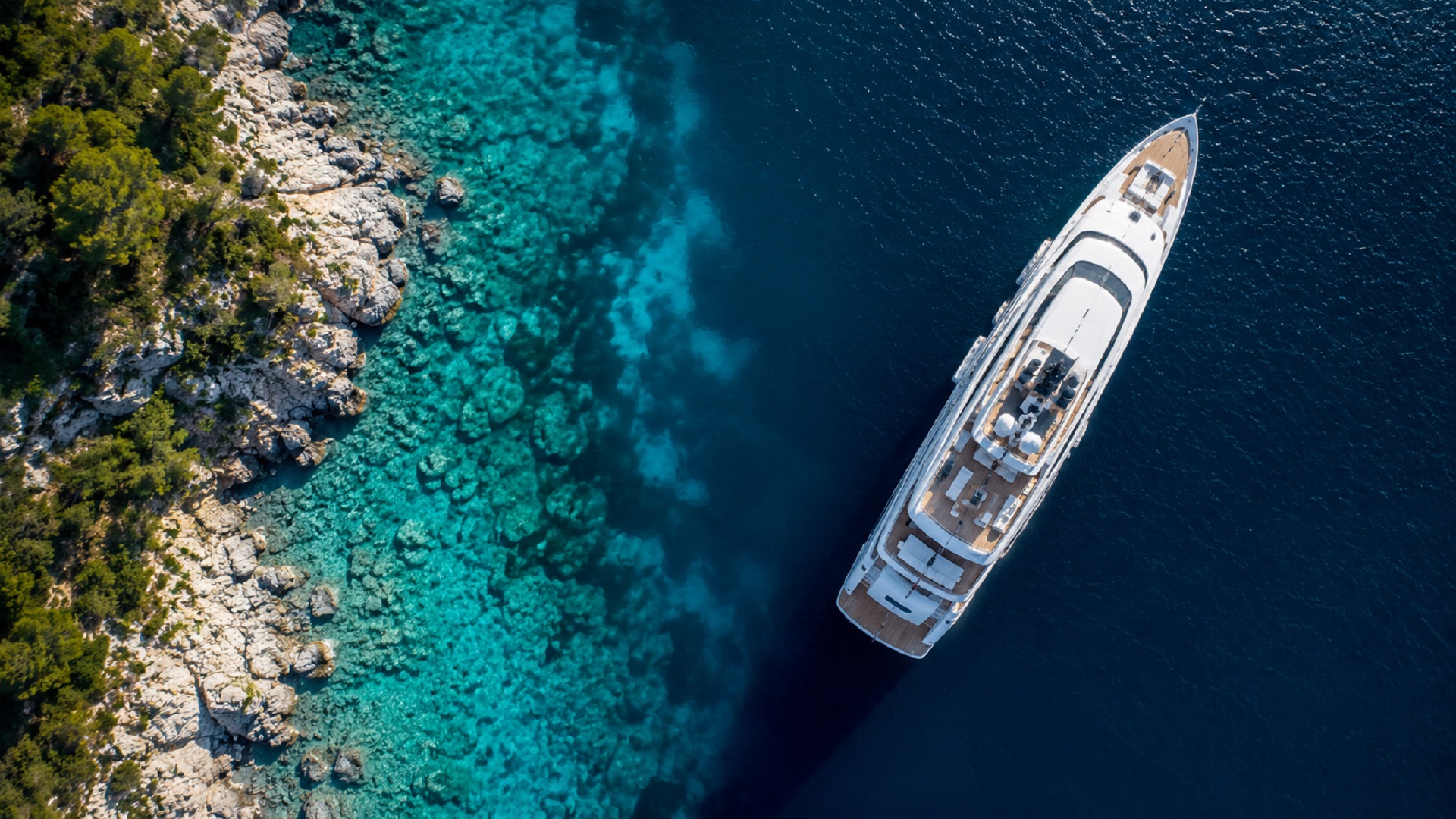
While Azimut Yachts focuses on refined serial production motor yachts, Benetti Yachts operates at the highest tier of the global yachting industry, where each vessel is conceived as a fully bespoke creation rather than a variation of an existing platform. With a heritage stretching back to the 19th century, Benetti is widely regarded as one of the most established and authoritative names in superyacht construction, particularly within the segment of yachts ranging from 50 meters to well over 100 meters in length.
At this level of yacht building, the concept of standardisation disappears almost entirely. Each project is treated as a singular architectural and engineering undertaking, shaped by the specific vision, requirements, and lifestyle of the owner. Rather than selecting from predefined layouts or configurations, clients engage in an intensive collaborative process with naval architects, engineers, and interior designers to define the yacht from the keel upward. This includes everything from hull geometry and propulsion strategy to interior zoning, material selection, and even the experiential flow of movement between decks.
FULLY CUSTOM ARCHITECTURE
Every Benetti yacht begins as a blank canvas in the truest sense of the term. The design process does not start with adaptation but with conception, allowing each vessel to evolve as a unique response to its intended use and owner profile. Naval architecture teams first establish the technical foundation of the yacht, including hull form, stability characteristics, range requirements, and structural systems. These decisions are closely tied to how the yacht is expected to operate - whether for Mediterranean cruising, transoceanic passages, or global exploration.
Once the technical framework is defined, the architectural and lifestyle dimensions begin to take shape. Interior designers work closely with owners to translate personal taste and functional needs into spatial configurations. This can include private owner decks, multi-level salons, wellness areas, cinemas, gyms, beach clubs, and dedicated crew zones designed for long-term liveability. Unlike production yachts, where layouts are optimised for broad usability, Benetti interiors are tailored with a level of specificity that reflects individual routines, travel patterns, and entertainment preferences.
Material selection and aesthetic direction are equally bespoke. Natural stones, rare woods, custom metals, and commissioned artworks are often incorporated into the design, transforming each yacht into a curated interior environment rather than a standardised luxury package. Lighting design, spatial transitions, and acoustic planning are also treated as integral components of the overall architecture, ensuring that each space feels intentional and cohesive.
This fully custom approach extends to propulsion and onboard systems as well. Depending on the size and purpose of the yacht, configurations may include diesel-electric systems, hybrid propulsion solutions, advanced stabilisation technology, and long-range fuel optimisation strategies. Engineering decisions are therefore not separate from design, but deeply integrated into the overall concept of the vessel.
The result of this process is absolute individuality. No two Benetti yachts are ever identical, not only in appearance but in structural logic and lived experience. Each vessel becomes a reflection of its owner’s lifestyle ambitions - whether that involves global cruising, seasonal Mediterranean living, or hosting large-scale social events at sea.
In this way, Benetti’s approach to yacht construction goes beyond manufacturing. It operates in the realm of bespoke maritime architecture, where engineering precision and artistic vision converge to produce highly personalised floating environments.
ENGINEERING AT SUPERYACHT SCALE
At the level of global superyacht construction, Benetti Yachts operates in a domain where engineering is not only about performance, but about orchestrating extremely complex floating systems that must remain reliable over long-range voyages, variable sea states, and extended onboard occupancy. Each yacht represents a carefully balanced integration of naval architecture, structural engineering, mechanical systems, and energy management, all scaled to support vessels that often exceed 50 meters and can extend well beyond 100 meters.
At this size, hull construction becomes a fundamental engineering challenge. Benetti commonly employs steel for the hull and aluminum for the superstructure, a combination that provides both structural strength and weight optimisation. Steel offers durability, impact resistance, and stability at sea, while aluminum reduces weight higher up in the vessel, lowering the center of gravity and improving overall stability. This hybrid construction method is critical for ensuring safe and comfortable operation in offshore and transoceanic conditions, where structural integrity must be maintained under continuous dynamic loading.
Hydrodynamic efficiency also becomes increasingly important as yacht size increases. Hull forms are carefully designed using advanced computational modelling to optimise resistance, improve fuel economy, and enhance seakeeping behaviour in rough waters. At this scale, even minor improvements in hydrodynamics translate into significant gains in range, comfort, and operational efficiency over long passages. As a result, Benetti yachts are engineered not only for luxury, but for predictable global performance across diverse maritime environments.
Stabilisation systems play a central role in ensuring onboard comfort. Modern superyachts are equipped with advanced gyro and fin stabilisers that actively reduce roll both underway and at anchor. This technology is particularly important in large displacement vessels, where even small movements can be amplified over longer hull spans. By minimising motion, these systems significantly enhance guest comfort, reduce fatigue during long voyages, and create a more stable environment for both relaxation and onboard operations.
Energy management is another core pillar of superyacht engineering. Large yachts require substantial onboard power for propulsion, hotel systems, climate control, lighting, entertainment, and water treatment. To manage this demand efficiently, integrated energy systems are designed to balance generation, storage, and consumption across multiple operating modes. This includes optimising generator usage, managing peak loads, and ensuring redundancy for critical systems, all while maintaining operational efficiency over long durations at sea.
A major evolution in this area is the increasing integration of hybrid propulsion systems. These configurations combine traditional diesel engines with electric propulsion components, allowing the yacht to operate in multiple modes depending on conditions and requirements. In electric or low-load mode, yachts can move silently through protected marine areas or anchorages, significantly reducing noise and vibration while also lowering fuel consumption. This is particularly relevant in environmentally sensitive cruising regions, where reduced emissions and quieter operation are becoming increasingly important.
Hybrid systems also enhance operational flexibility. They allow for smoother transitions between power modes, improved efficiency during low-speed cruising, and reduced engine wear over time. In addition, they support a broader shift within the superyacht industry toward sustainability, where environmental considerations are increasingly influencing design decisions alongside traditional performance and luxury metrics.
Ultimately, Benetti’s engineering philosophy at superyacht scale is defined by integration rather than isolation. Structural design, propulsion, energy systems, and onboard comfort technologies are not treated as separate disciplines but as interconnected components of a single, highly complex maritime system. The result is a class of vessel capable of combining long-range autonomy, high-end luxury, and advanced technical reliability within a unified engineering framework.
INTERIOR CRAFTSMANSHIP AND LIFESTYLE DESIGN
Inside Benetti Yachts, interior design reaches a level of craftsmanship that sits at the intersection of naval engineering, architecture, and haute design. Unlike land-based luxury residences, superyacht interiors must perform under constant motion, humidity variation, vibration, and long-term marine exposure. As a result, every material, joint, surface treatment, and structural interface is selected not only for aesthetic quality but also for resilience, stability, and longevity in a demanding offshore environment.
This dual requirement - luxury and durability - defines the entire design process. Natural materials such as marble, exotic woods, leathers, and brushed metals are carefully treated and engineered to withstand marine conditions without losing visual or tactile refinement over time. Furniture is often custom-built and structurally reinforced to remain stable at sea, while finishes are applied using techniques that minimize expansion, contraction, and wear. Even seemingly decorative elements are integrated with technical precision, ensuring that beauty and functionality remain inseparable.
The scale of Benetti interiors allows for an architectural approach rarely possible in smaller yachts. Large superyachts often include multiple distinct living zones, each designed with a specific purpose and atmosphere. These can include formal salons for entertaining guests, more intimate lounges for private relaxation, and observation spaces that maximise panoramic sea views. The spatial diversity onboard creates a sense of layered living, where different moods and activities coexist within a single floating structure.
The owner’s deck is typically the most private and personalised area of the yacht. Designed as a self-contained residential suite, it may include a full-beam master cabin, private lounge, office space, dressing rooms, and sometimes even dedicated terraces or balconies overlooking the sea. This separation from guest and crew areas ensures complete privacy while maintaining direct access to the yacht’s broader living environment.
Guest accommodation is equally sophisticated, with full-beam suites, en-suite bathrooms, and carefully considered spatial proportions that prioritise comfort during extended voyages. Unlike traditional hospitality spaces, these cabins are designed for long-term residence rather than short-term occupancy, with attention paid to storage, acoustics, lighting, and spatial calmness.
Wellness and lifestyle spaces have become increasingly central to modern Benetti interiors. Dedicated wellness areas may include gyms, spas, massage rooms, saunas, or even indoor pools, reflecting a growing demand for onboard health and relaxation facilities. Cinemas and entertainment lounges further expand the recreational dimension of the yacht, creating fully self-contained environments where guests can live, relax, and entertain without ever needing to leave the vessel.
At sea level, beach clubs have emerged as one of the most distinctive features of contemporary superyacht design. These spaces transform the aft section of the yacht into a direct interface with the water, often featuring fold-out terraces, swimming platforms, lounges, and water toy storage. By lowering the visual and physical boundary between yacht and sea, beach clubs reinforce the sense of immersion that defines the superyacht experience.
Despite the immense scale of these vessels, interior layouts are carefully orchestrated to maintain clarity, privacy, and intuitive movement throughout the yacht. Circulation routes are designed to separate guest, crew, and service flows, ensuring operational efficiency without disrupting the onboard experience. This invisible structure is essential to maintaining the sense of calm and exclusivity that defines luxury superyacht living.
The overall result is an environment that functions simultaneously as a private residence, a hospitality venue, and a mobile exploration platform. Each Benetti yacht becomes a self-sufficient world at sea, capable of supporting long-range cruising while delivering the comfort, privacy, and refinement of a high-end architectural residence.
TECHNOLOGY AND INNOVATION ACROSS BOTH BRANDS
Across both Azimut Yachts and Benetti Yachts, technological innovation is not treated as an add-on feature but as a foundational layer of modern yacht design. Every system onboard is developed with the intention of improving safety, efficiency, comfort, and usability, while maintaining a seamless onboard experience that remains intuitive for guests and crew alike.
One of the most important areas of development is stabilization technology. Modern yachts increasingly rely on advanced gyro and fin stabilisation systems that actively reduce roll both underway and at anchor. This significantly improves onboard comfort, particularly in larger vessels or in open-water conditions where natural motion would otherwise be more pronounced. By minimising movement, these systems enhance guest relaxation, improve sleep quality during overnight passages, and create a more stable environment for dining, entertainment, and daily life onboard.
Integrated navigation and bridge systems represent another critical advancement shared across both brands. Contemporary yachts are equipped with fully digitalised bridge environments that consolidate radar, chart plotting, autopilot control, engine data, and communication systems into unified interfaces. This integration allows for more efficient decision-making at sea, reducing workload for the captain and improving situational awareness. In many cases, these systems are designed with redundancy and backup layers, ensuring that critical navigation functions remain operational even under failure conditions.
Hydrodynamic optimisation has also become a central focus of yacht development through the use of computational fluid dynamics (CFD). This technology allows designers to simulate how water flows around hull structures before physical construction begins. By analysing resistance, lift, and wake patterns in a virtual environment, engineers can refine hull shapes to achieve better fuel efficiency, improved stability, and smoother passage through varying sea states. This process is particularly important in larger yachts, where small improvements in efficiency translate into significant long-range operational benefits.
Energy management systems further extend the technological sophistication of modern Azimut and Benetti yachts. These systems monitor and regulate onboard power consumption across propulsion, hotel loads, climate control, lighting, and entertainment systems. Smart distribution networks ensure that energy is used efficiently, prioritising essential systems while optimising generator load and battery usage. This not only improves operational efficiency but also reduces environmental impact and extends the lifespan of mechanical components.
On larger superyachts, particularly within the Benetti range, these systems become significantly more complex. Long-range autonomy requires advanced redundancy planning, ensuring that critical functions such as propulsion, navigation, and safety systems remain operational even in the event of partial system failure. Multiple generators, backup navigation modules, and duplicated control systems are integrated into the vessel’s architecture to support extended offshore operation and global cruising capability.
In contrast, Azimut Yachts applies these technologies with a strong focus on simplicity and accessibility. The goal is to ensure that advanced systems remain easy to operate for owner-operators who may not have professional maritime training. Interfaces are designed to be intuitive, with streamlined controls and automated functions that reduce the complexity of day-to-day operation while still delivering high levels of performance and safety.
Benetti Yachts, on the other hand, extends these same technologies into a far more complex operational environment. Here, systems must support not only comfort and efficiency but also long-duration voyages, multi-zone guest operations, and full professional crew management. The integration of advanced monitoring systems, predictive maintenance tools, and sophisticated onboard diagnostics ensures that these large-scale yachts can operate reliably across global routes with minimal interruption.
Together, both brands demonstrate how modern yacht innovation is no longer limited to mechanical performance alone. Instead, it represents a fully integrated digital and engineering ecosystem where navigation, comfort, efficiency, and safety are seamlessly combined to create a new standard of intelligent luxury at sea.
THE MEDITERRANEAN INFLUENCE
The Mediterranean has long served as both a testing ground and a cultural reference point for the evolution of modern yacht design, and this influence is deeply embedded in the DNA of both Azimut Yachts and Benetti Yachts. Unlike ocean-crossing environments where long passages and extreme autonomy dominate design priorities, the Mediterranean is defined by proximity - between islands, coastal towns, and anchorages - and by a cruising rhythm that blends navigation with social life, leisure, and repeated stops in sheltered waters.
This geography has a direct impact on how yachts are conceived. Short-distance navigation is the norm, often involving a series of brief passages between bays, marinas, and island anchorages rather than extended offshore voyages. As a result, design emphasis naturally shifts toward ease of handling, frequent maneuvering, and rapid transitions between underway and at-anchor configurations. Deck layouts, propulsion responsiveness, and onboard systems are all optimised for this kind of flexible, stop-and-go cruising style.
Outdoor living is perhaps the most defining characteristic of Mediterranean yachting culture, and it strongly influences both brands. Life onboard is structured around the sun, the sea, and the social environment rather than enclosed interior spaces. Meals are typically taken outside, relaxation happens on open decks, and swimming or water activities are an integral part of the daily routine. This has led to design solutions that prioritise expansive aft decks, integrated beach clubs, large sunpads, and seamless transitions between interior salons and exterior lounging areas.
In Azimut yachts, this influence is expressed through contemporary motor yacht layouts that maximise open-plan living and visual connection to the sea. Large windows, sliding glass doors, and extended cockpit spaces ensure that even when inside, guests remain closely connected to the surrounding environment. The yacht becomes an extension of coastal living, designed for frequent anchoring in picturesque bays and effortless movement between destinations.
In the Benetti segment, the Mediterranean influence takes on a more expansive interpretation. Even at superyacht scale, the focus remains on outdoor experience and social interaction. Large sundecks, multi-level aft platforms, and beach club areas are designed as central gathering spaces rather than secondary features. These environments often function as floating terraces, where guests can enjoy long stationary periods at anchor in iconic locations such as Sardinia, Capri, Saint-Tropez, or the Balearic Islands.
From the Amalfi Coast to the French Riviera and across the Balearic archipelago, these cruising grounds define a lifestyle where flexibility is essential. Weather conditions, local anchorage opportunities, and social itineraries often shape daily decisions more than fixed routes or long-term passage planning. Yachts must therefore be adaptable, comfortable in both motion and stillness, and capable of transitioning quickly between navigation and leisure modes.
This regional cruising culture also reinforces the importance of social space onboard. Mediterranean yachting is as much about shared experience as it is about travel. Whether hosting guests in a quiet cove, dining at anchor under warm evening light, or making short coastal passages between destinations, the yacht serves as a platform for interaction, relaxation, and connection to the sea.
Both Azimut and Benetti reflect this reality in their design philosophy. Their yachts are not conceived as isolated technical vessels, but as integrated lifestyle environments shaped by the rhythms of Mediterranean life. In doing so, they translate the essence of the region into architectural form, ensuring that every yacht - regardless of size - remains closely aligned with one of the most influential cruising cultures in the world.
GLOBAL REACH AND MARKET POSITION
Together, Azimut Yachts and Benetti Yachts form one of the most influential and geographically widespread groups in the global yachting industry, with a presence that spans virtually every major cruising and ownership region worldwide. Their combined reach extends across Europe’s established Mediterranean market, the rapidly expanding demand centres in the Middle East, the long-standing private yacht culture of the Americas, and the fast-growing luxury marine sectors of Asia-Pacific. This global footprint is supported not only by strong sales networks and shipyard capacity, but also by a consistent design language that resonates across different cultures and boating traditions.
In Europe, particularly around the Mediterranean basin, both brands are deeply embedded in everyday yachting culture. Azimut yachts are a common sight in marinas from the French Riviera to the Greek islands, reflecting their strong alignment with seasonal cruising, short-distance navigation, and owner-operated lifestyle boating. Benetti yachts, meanwhile, are frequently associated with high-end charter operations and private superyacht ownership, often seen anchored in iconic destinations such as Sardinia, Capri, Ibiza, and the Côte d’Azur, where large-scale luxury vessels form part of the regional maritime identity.
In the Americas, the presence of both brands is shaped by two distinct but complementary markets. In North America, particularly along the East Coast, Florida, and the Caribbean, Azimut yachts are widely used for coastal cruising and seasonal ownership, offering a balance of performance and comfort suited to warm-water boating. Benetti’s superyachts, on the other hand, are often employed for extended cruising and high-end charter operations, where long-range capability and fully custom interiors align with global travel lifestyles.
The Middle East represents another key region of growth, where demand for large-scale luxury yachts continues to expand rapidly. Here, Benetti in particular has established a strong reputation for delivering highly customised superyachts that match the region’s preference for scale, exclusivity, and bespoke interior environments. Large yachts are often used as private hospitality platforms as well as floating residences, reinforcing the importance of interior volume, privacy, and onboard entertainment facilities. Azimut also maintains a strong presence in this region, particularly in the premium motor yacht segment, where modern styling and ease of operation appeal to private owners.
In Asia, rising wealth and increasing interest in leisure boating have created new opportunities for both brands. Azimut yachts are particularly well positioned in this market due to their manageable size ranges and accessible operation, making them suitable for first-time yacht owners entering the lifestyle. Benetti’s presence is more selective but highly influential, focusing on ultra-high-net-worth individuals seeking large-scale custom vessels for global cruising or status-driven ownership.
The division of roles between the two brands is a key factor in the group’s overall market strength. Azimut Yachts occupies a leading position in the premium motor yacht segment, defining expectations for modern production yachts that combine design innovation, performance, and lifestyle-oriented layouts. These yachts serve as an entry point into the world of luxury boating for many owners, bridging the gap between recreational boating and high-end yachting.
Benetti Yachts, by contrast, operates at the pinnacle of the industry, specialising in fully custom superyachts that represent the highest level of luxury, engineering complexity, and personalisation. These vessels are designed for global travel, long-term onboard living, and ultra-luxury hospitality, often functioning as private residences capable of crossing oceans and operating independently for extended periods.
Together, the two brands create a complete ecosystem that spans nearly every segment of the luxury yacht market. From accessible premium motor yachts designed for seasonal Mediterranean cruising to bespoke superyachts intended for worldwide exploration, their combined influence defines a significant portion of modern global yachting culture and continues to shape industry standards across multiple continents.
CONCLUSION - A COMPLETE SPECTRUM OF ITALIAN YACHTING EXCELLENCE
The combined strength of Azimut Yachts and Benetti Yachts lies in their rare ability to span the full architectural and experiential spectrum of luxury yachting, bridging two worlds that are often treated separately in the marine industry. On one end of this spectrum are agile, modern motor yachts designed for private ownership, seasonal cruising, and intuitive day-to-day operation. On the other end are fully custom superyachts conceived as global platforms for long-range exploration, private residence, and ultra-luxury hospitality at sea.
What makes this dual structure particularly significant is not only the difference in scale, but the continuity of philosophy that connects both brands. Whether expressed through the streamlined proportions of a production motor yacht or the expansive decks of a bespoke superyacht, the underlying design intent remains consistent: to create vessels that elevate life at sea through a balance of engineering precision, aesthetic refinement, and human-centred spatial design.
Across both brands, innovation is not pursued in isolation but integrated into the lived experience of the yacht. Hull development, propulsion systems, onboard technology, and interior architecture are all directed toward enhancing comfort, efficiency, and emotional engagement. This ensures that technological progress translates directly into more enjoyable and intuitive life onboard, rather than adding unnecessary complexity.
Craftsmanship also plays a defining role in unifying the group’s identity. In Azimut yachts, craftsmanship is expressed through refined production techniques, carefully curated interiors, and precise industrial design that delivers consistent quality across series-built models. In Benetti yachts, craftsmanship reaches its highest expression in bespoke construction, where artisanal detailing, custom materials, and individually designed spaces transform each vessel into a unique architectural creation. Together, these approaches demonstrate a continuum of Italian craftsmanship that adapts seamlessly to both production and custom yacht building.
Equally important is the integration of lifestyle as a core design principle. Both brands prioritize the way people actually live on the water - how they move through spaces, interact with guests, relax outdoors, and experience different cruising environments. From open-plan salons and expansive cockpit areas to multi-deck beach clubs and private owner suites, every element is designed to support a fluid, experience-driven approach to life at sea.
This holistic vision has positioned the group as a defining force in contemporary yacht design, influencing expectations across the global industry. It demonstrates that modern luxury yachting is no longer defined solely by size, speed, or exclusivity, but by the quality of time spent onboard and the seamless integration of comfort, technology, and environment.
In this context, the Azimut–Benetti philosophy represents a distinctly Italian interpretation of life at sea - one where emotional design, technical excellence, and lifestyle integration converge to create yachts that are not only advanced in form and function, but deeply attuned to the experience of living, travelling, and connecting with the ocean.