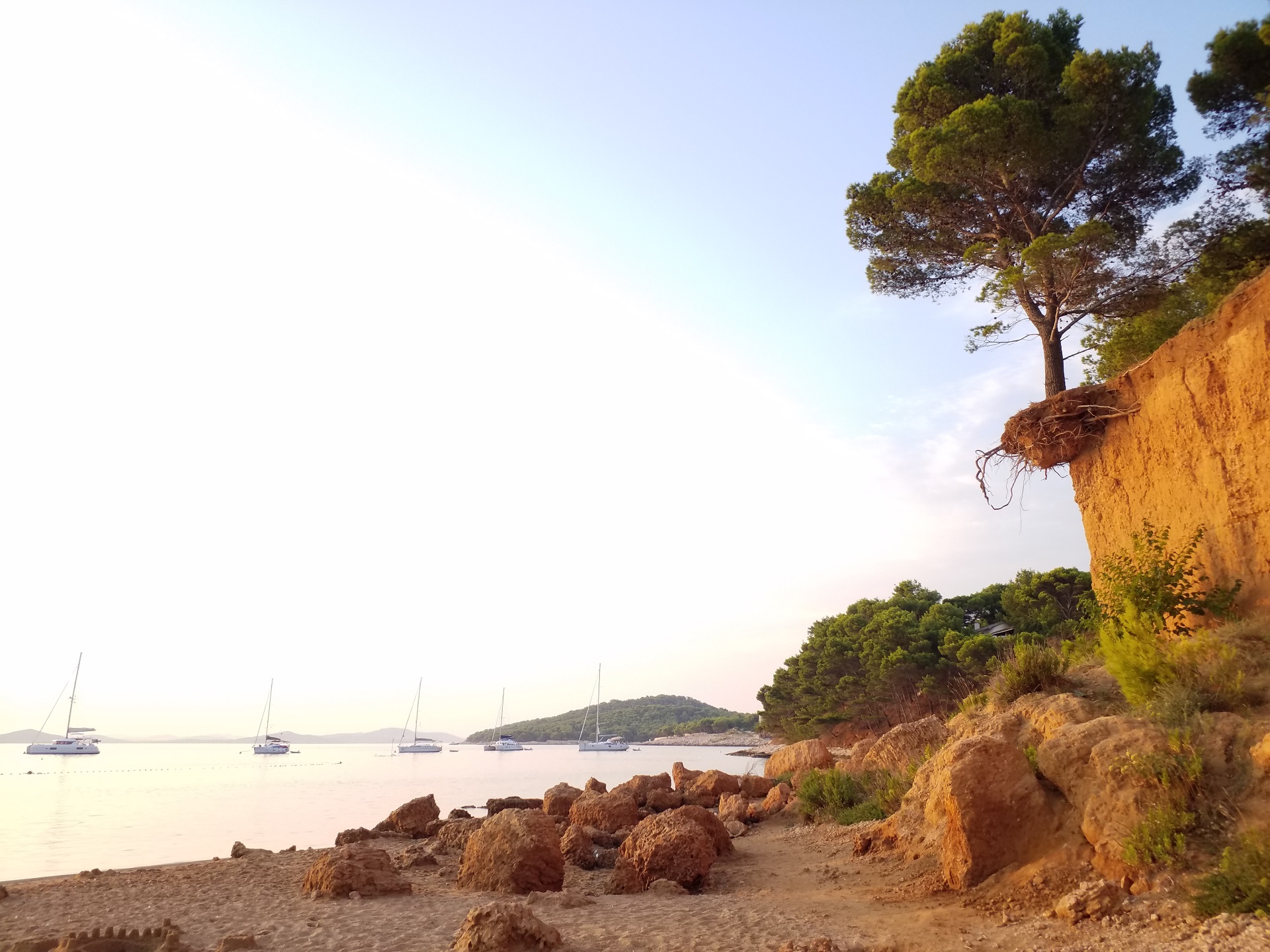
SAILING VRGADA ISLAND: A SANDY OASIS IN THE SOUTHERN EDGE OF THE ZADAR ARCHIPELAGO
Between the well-known sailing grounds of central Dalmatia and the northern Adriatic cruising routes lies Vrgada Island, a small but unusually distinctive island that stands out immediately on any nautical chart. Often described as one of the rare sandy islands in Croatia, Vrgada sits just off the mainland coast near Pakoštane, forming part of the broader transition zone between the southern and northern sections of the Zadar Archipelago.
What makes this location so interesting from a sailing perspective is not its size or complexity, but its contrast. While much of the Croatian coastline is defined by rugged limestone, steep shores, and deep-water anchorages, Vrgada introduces a softer maritime landscape - low-lying shores, sandy seabeds, and shallow turquoise water that gradually blends into the open Adriatic. For sailors moving between the more structured routes of central Dalmatia and the island networks further north, it feels like a change in texture as much as a change in place.
Approaching Vrgada Island by sea is a noticeably gentle experience. There is no dramatic cliffline or complex harbour entrance to navigate, nor the sense of entering a busy nautical hub. Instead, the island emerges gradually from the sea, its pine-covered interior sitting low against the horizon, with pale sandy edges defining its coastline. The visual impression is calm and understated, setting the tone for what follows ashore and at anchor.
For sailors, Vrgada is not a destination built around long passages, offshore challenges, or intricate navigation systems. It sits comfortably within easy reach of the mainland and nearby island groups, making it more of a relaxed detour than a demanding waypoint. This accessibility allows it to be included naturally within shorter sailing legs, particularly for itineraries departing from or returning to bases such as Biograd na Moru or the wider coastal area around Zadar.
Once in the area, the sailing experience becomes defined by simplicity. The surrounding waters are relatively sheltered compared to more exposed offshore routes, and movement between nearby anchorages is straightforward. There are no complex channels or heavy traffic corridors to manage, which allows crews to focus more on conditions, wind shifts, and anchoring comfort rather than navigation intensity.
This ease of movement is matched by the island’s overall atmosphere. Vrgada does not feel engineered for high-volume tourism or structured nautical activity. Instead, it retains a low-density coastal character where nature dominates the shoreline and human presence remains subtle. This combination reinforces the impression of arriving in a quieter, more relaxed corner of the Adriatic.
For sailors transitioning from more rugged or developed islands in the Zadar Archipelago, such as Pašman Island or Ugljan Island, Vrgada offers an immediate shift in mood. The visual and physical environment becomes softer, the water shallower and clearer, and the overall sailing rhythm noticeably slower.
In many ways, Vrgada Island functions as a transitional space within the broader Adriatic sailing network. It bridges different sailing styles - linking the more structured coastal routes of central Dalmatia with the open island systems further north. Yet despite this strategic position, it never feels like a busy crossroads. Instead, it remains calm, understated, and slightly removed from the main sailing highways.
This combination of accessibility and softness is what defines Vrgada’s appeal. It is not a destination that demands attention through complexity or scale, but one that offers relief through simplicity. For sailors, it represents a moment where the Adriatic changes pace - where navigation becomes easy, surroundings become gentler, and the sea takes on a quieter, more lagoon-like character that is rare in this part of Croatia.
A RARE SANDY ISLAND IN A ROCKY SEA
What immediately sets Vrgada Island apart within the Adriatic sailing landscape is its geology and shoreline character. In a region where most islands are shaped by limestone, steep rocky edges, and pebble coves carved by centuries of wind and sea, Vrgada is an exception. Its coastline is defined by soft sand, shallow water, and gently sloping seabeds that create a noticeably different visual and tactile experience for sailors and swimmers alike.
This rarity becomes apparent as soon as the island comes into view. Instead of the rugged, angular profiles typical of much of the Zadar Archipelago, Vrgada presents a lower, more rounded outline. The land sits quietly behind a band of pine forest, with no dramatic cliffs or rocky outcrops dominating the shoreline. The transition from sea to land feels gradual, almost continuous, rather than abrupt or vertical.
The island’s interior is covered in dense Mediterranean pine, which provides both shade and a strong visual contrast to the pale tones of its beaches. This vegetation extends close to the coast in many areas, framing the sandy bays with a natural green backdrop. The result is a coastline that feels enclosed yet open at the same time - protected by forest, but facing wide, unobstructed views of the Adriatic.
Where the forest meets the sea, the terrain softens into one of Vrgada’s defining features: its sandy bays. These stretches of shoreline are rare in this part of Croatia and give the island a distinct identity among surrounding sailing destinations. The seabed slopes gently into the water, creating extensive shallow zones where the sea remains warm, calm, and highly transparent during summer months.
From a sailing perspective, this combination of sand and shallow water creates a unique anchoring and swimming environment. The seabed allows for reliable holding in suitable weather, while the gradual depth change means boats often sit in noticeably calm, stable conditions close to shore. Visually, the water takes on bright turquoise tones, especially under strong sunlight, enhancing the island’s soft, almost lagoon-like appearance.
For sailors arriving from more rugged neighbouring islands such as Pašman Island or Ugljan Island, the contrast is immediate. Those islands are defined by rockier coastlines, deeper waters, and more structured anchorages, often set against pine-covered but steeper terrain. Vrgada, by comparison, feels more open and gentle. The shift is not only visual but also physical - water temperature, seabed texture, and shoreline accessibility all contribute to a noticeably softer coastal experience.
This difference in character also influences how sailors interact with the island. Instead of seeking sheltered rocky coves or deeper bays, the focus here is on shallow sandy anchorages where swimming, relaxing, and short shore visits become central to the experience. The environment encourages a slower rhythm, where time at anchor is spent close to the water rather than moving frequently between stops.
In the broader context of the Adriatic, Vrgada Island stands out not because it is remote or difficult to reach, but because it breaks the dominant visual pattern of the region. It introduces sand where stone is expected, softness where ruggedness is standard, and warmth where deeper waters often prevail.
This combination makes it a memorable stop within any sailing itinerary. It is not a dramatic contrast in scale or distance, but a subtle shift in texture - one that quietly changes how the sea, the land, and the sailing experience itself are perceived.
SAILING CONDITIONS AROUND VRGADA ISLAND
The waters surrounding Vrgada Island are generally calm, shallow, and highly navigable, especially when compared to more exposed offshore routes further north in the Adriatic. The island lies in a naturally sheltered maritime zone between the mainland coast near Pakoštane and the offshore island systems of the Zadar Archipelago, which helps reduce long-period swell and creates a noticeably gentle sailing environment throughout most of the summer season.
This semi-enclosed positioning is one of the key reasons Vrgada feels so accessible from the water. The surrounding landmasses act as partial wind and wave buffers, softening conditions and limiting the kind of open-sea exposure found on more outer Adriatic islands. As a result, sailing here often feels more controlled and predictable, with fewer abrupt changes in sea state during typical summer weather patterns.
During the day, the dominant influence is the Maestral wind, a steady northwesterly breeze that develops in the late morning and strengthens through the afternoon. Around Vrgada Island, this wind tends to remain moderate and consistent, making it ideal for relaxed coastal navigation. It allows for easy repositioning between nearby anchorages, short sailing legs, and smooth transitions between swimming stops without creating challenging sea conditions.
Mornings, by contrast, are often very calm. Light winds or near-glassy sea surfaces are common, especially in sheltered bays and shallow coastal areas. These conditions enhance both navigation and anchoring comfort, while also creating ideal moments for swimming or tender excursions. The stillness of the sea in the early hours often emphasizes the island’s soft, lagoon-like character, particularly in its sandy bays.
Occasionally, the Bura wind can influence the area, bringing stronger and more variable conditions from the northeast. However, its impact around Vrgada is generally less severe than in more open or channel-exposed parts of the Adriatic. The surrounding geography provides some degree of protection, which helps moderate wind strength and wave development. Even so, when Bura is forecast, careful attention to anchorage selection becomes important, as certain orientations can become less comfortable depending on exposure.
In such conditions, flexibility is key. The relatively compact sailing area around Vrgada Island allows sailors to adjust positions or relocate within a short distance if needed, often without requiring long passages or complex routing decisions. Nearby mainland and island anchorages provide additional alternatives, ensuring that shelter is usually available within a manageable range.
Another defining feature of sailing here is the simplicity of movement. Distances between key points are short, navigation is straightforward, and there are few offshore hazards or complex channels to manage. This makes the area particularly well suited for relaxed coastal itineraries, where sailing is based more on daily conditions than on fixed long-distance objectives.
Unlike more demanding routes that extend toward open-sea passages or deeper island chains, Vrgada is typically integrated into flexible cruising patterns within the southern edge of the Zadar Archipelago. It works naturally as a stopover point or a short-stay anchorage, rather than as part of longer offshore legs.
Overall, sailing conditions around Vrgada Island are defined by ease and stability. Light afternoon winds, calm mornings, shallow sheltered waters, and short sailing distances combine to create an environment that is approachable, predictable, and highly enjoyable. For sailors seeking a relaxed segment within a broader Croatian itinerary, Vrgada offers one of the most comfortable and low-stress sailing zones in the region.
ANCHORAGES AND COASTAL EXPERIENCE
Anchoring around Vrgada Island is one of the defining highlights of sailing in this part of the Adriatic. The island offers several sheltered sandy bays where holding is generally reliable in calm to moderate summer conditions, making it a comfortable place for overnight stays or long, relaxed afternoons at anchor.
The seabed around Vrgada is predominantly sand, with occasional patches of seagrass closer to the shore. This sandy composition is particularly favourable for anchoring, as it provides consistent grip for anchors when properly set. It also contributes significantly to the clarity of the water. With minimal sediment disturbance and limited maritime traffic, visibility remains high, especially in stable weather. Boats often appear to float above a bright turquoise seabed, enhancing the sense of calm and openness that defines the island.
In addition to traditional anchoring, several buoy fields have been placed in selected bays around Vrgada Island. These mooring buoys offer a convenient alternative for sailors who prefer not to anchor directly on the seabed, particularly during busier summer periods or when wind conditions require added stability. They are typically positioned in naturally sheltered areas, allowing boats to secure quickly and remain well-positioned without the need for repeated anchor adjustments. This combination of anchoring and buoys adds flexibility to the overall coastal experience.
Unlike more structured sailing destinations in the region, Vrgada does not rely on marinas, large harbour complexes, or formal docking infrastructure. There is no heavy nautical development shaping the shoreline, and no dense network of berths or commercial waterfronts. Instead, the island is experienced almost entirely from the water - at anchor or on a buoy - reinforcing its natural, uncommercial identity.
This lack of built infrastructure shapes how sailors interact with the island. Arrivals are simple and direct, without the need for marina reservations or complex harbour procedures. Boats settle into calm bays or buoy fields, and daily life unfolds around the natural rhythm of wind, sun, and sea conditions rather than port schedules or service availability.
The result is a coastal experience that feels more elemental. Swimming becomes part of the anchoring routine, with clear shallow water allowing easy access directly from the boat. Meals are often taken on deck with uninterrupted views of the shoreline, and movement between nearby bays is dictated more by weather and preference than necessity.
For additional services or shelter in less stable conditions, nearby mainland ports such as Biograd na Moru provide reliable support. These locations offer provisioning, fuel, and marina infrastructure within a short sailing distance, making Vrgada a flexible stop within a broader cruising itinerary.
This combination of natural anchoring bays, mooring buoys, and nearby mainland support makes Vrgada Island particularly versatile. It allows sailors to enjoy a quiet, unstructured anchoring experience while still maintaining practical access to services when needed. In essence, the island offers a balance between simplicity at sea and flexibility within reach - one of the key reasons it remains a valued stop in southern Zadar archipelago sailing routes.
VRGADA VILLAGE AND ISLAND LIFE
The main settlement on Vrgada Island is small, traditional, and quietly integrated into its natural surroundings. Stone houses sit loosely among dense pine forest, while narrow, unpaved paths connect homes, small gardens, and the modest shoreline. There is no formal urban layout or expansion pattern here - just a settlement that has grown organically over time in response to the needs of island life.
Life in the village is closely tied to the sea. Fishing remains a visible part of daily routine, not as a large-scale industry, but as a continuation of long-standing local practice. Boats move gently in and out of the small waterfront area, and the rhythm of activity is shaped more by weather conditions and seasonal patterns than by schedules or tourism demand.
Unlike more developed coastal destinations in the Zadar Archipelago, Vrgada shows no signs of urban expansion or heavy infrastructure development. There are no large hotel complexes, no extensive marina systems, and no commercial waterfront sprawl. Instead, the village maintains a calm, residential character where everyday life feels steady and unforced.
This sense of continuity is especially noticeable during the quieter parts of the day. Mornings often begin with minimal activity, while afternoons shift gently as visitors and local routines overlap. Evenings then return the village to a slower pace, with soft light filtering through the pine trees and very little movement along the shore.
During the summer months, a small number of konobas open along the waterfront, offering simple Dalmatian dishes built around fresh, locally caught fish, olive oil, and seasonal ingredients. These establishments are modest in scale and closely connected to local tradition rather than commercial tourism. Meals are unhurried, often accompanied by direct views of the sea and anchored boats nearby.
Even at its busiest, Vrgada Island remains noticeably relaxed compared to more touristic islands in central Dalmatia. There is activity, but it is soft and dispersed rather than concentrated or intense. The atmosphere stays rooted in everyday island life rather than shaped by seasonal tourism cycles.
For sailors, this creates an approachable and low-pressure shore experience. The village is easy to reach by tender from nearby anchorages or buoy fields, and once ashore, it is simple to explore on foot within a short amount of time. There is no need for structured planning or extended visits; the settlement can be experienced naturally and informally, then left behind without disruption or rush.
In this way, village life on Vrgada Island reflects the island’s broader identity - quiet, uncomplicated, and closely connected to the sea. It offers just enough presence to feel lived-in and authentic, while remaining light enough to preserve the calm that defines the surrounding sailing experience.
SWIMMING IN TURQUOISE SHALLOW SEA
One of the most distinctive and immediately memorable aspects of Vrgada Island is the quality of its swimming environment. The island’s shallow sandy seabed creates unusually warm, calm water that often shifts into vivid shades of turquoise, particularly under strong midday sun when light reflects clearly off the pale sand below.
This effect is not accidental but a direct result of Vrgada’s natural structure. The gradual seabed slope allows sunlight to penetrate easily through the water column, while the sandy bottom reflects brightness upward, amplifying both clarity and colour. On calm summer days, the sea around the island can appear almost luminous, with soft gradients of blue and green extending across the anchorage.
Compared to many other sailing destinations in the Zadar Archipelago and beyond, where rocky shores and deeper waters are more common, swimming here feels noticeably different. Entry into the sea is gentle and unforced, with long shallow zones that allow swimmers to wade in gradually rather than step immediately into deeper water. This creates a more relaxed and accessible swimming experience, particularly appealing for longer stays at anchor.
Visibility is typically very good, especially in stable weather conditions. The combination of sandy seabed and limited boat traffic reduces sediment disturbance, allowing the water to remain clear for extended periods. From a swimmer’s perspective, this means the underwater environment stays visible and inviting, with subtle details of the seabed often still discernible even at moderate distances from the boat.
This clarity enhances the overall sense of calm. Without strong currents or abrupt depth changes near shore, movement in the water feels smooth and predictable. There is no need to search for specific swim zones or avoid rocky drop-offs, which is often the case in more rugged coastal areas. Instead, swimming becomes an open, unstructured activity that can be enjoyed freely throughout the day.
For sailors anchored nearby, this creates a particularly comfortable onboard rhythm. Boats can remain stationary in quiet bays while swimmers move effortlessly between deck and sea, often repeating short, frequent swims rather than single long sessions. The proximity of calm water to the vessel encourages a continuous interaction with the sea rather than a one-off activity.
Because of its shallow, sheltered nature, the water around Vrgada Island often feels warmer than surrounding offshore areas, especially later in the summer season. Heat retention in shallow sandy bays contributes to this effect, extending comfortable swimming conditions well into the evening hours when the sea remains noticeably warm.
The overall impression is close to that of a natural lagoon - an enclosed, shallow, and sunlit body of water that feels distinctly softer than the deeper Adriatic surroundings. This is particularly striking when contrasted with nearby islands in the Zadar Archipelago, where rocky coastlines, deeper anchorages, and more open exposure create a very different swimming dynamic.
In this context, Vrgada offers something relatively rare along the Croatian coast: a swimming environment that feels simple, safe, and visually striking without requiring effort or exploration. It is this combination of ease, clarity, and warmth that makes swimming here one of the defining experiences of the island, and a key reason sailors often choose to linger longer in its shallow turquoise bays.
PROXIMITY TO KEY SAILING ROUTES
Despite its quiet and almost secluded atmosphere, Vrgada Island occupies a surprisingly strategic position within the broader Adriatic sailing network. It sits just off the mainland coast near Pakoštane, placing it within easy reach of multiple important cruising corridors that connect northern Dalmatia with central Dalmatia and the wider island systems of the eastern Adriatic.
From a navigational perspective, this location is one of Vrgada’s understated strengths. It does not sit on a high-traffic offshore route, yet it remains close enough to key sailing axes that it can be naturally integrated into almost any itinerary running along the Croatian coast. This balance between accessibility and calm surroundings makes it particularly useful as a flexible waypoint rather than a fixed destination.
To the north, sailing routes from Vrgada open toward the islands of the Zadar Archipelago, including well-known stops such as Murter Island. From there, the gateway to one of Croatia’s most iconic cruising regions becomes accessible: Kornati National Park. This transition is especially important for sailors moving from more sheltered coastal waters into the more open, fragmented island landscapes of the Kornati system, where navigation becomes more expansive and visually dramatic.
To the south, Vrgada connects smoothly toward the Šibenik archipelago and further into central Dalmatian sailing grounds. This includes a network of islands, channels, and coastal towns that offer a different sailing character - slightly more urban, more structured, and often more varied in terms of anchoring options and marina infrastructure. The ability to move in either direction without long offshore passages reinforces Vrgada’s role as a transitional node within the wider sailing map.
This dual connectivity - north toward the Zadar island chains and Kornati, south toward Šibenik and central Dalmatia - gives Vrgada Island a practical importance that is not immediately obvious from its quiet appearance. It allows sailors to adjust their route dynamically based on weather conditions, crew preference, or itinerary flexibility, without being locked into a single directional flow.
For many itineraries, Vrgada functions as a natural stopover point rather than a primary destination. After departing the mainland, it offers an ideal first overnight anchorage where conditions are typically calm and distances are short. Its sheltered bays and shallow waters make it well suited for easing into a sailing trip, particularly for crews departing from bases such as Biograd na Moru or nearby coastal marinas.
At the same time, it also works effectively as a transitional pause later in a route. Before entering more exposed island groups or committing to longer passages toward Kornati or central Dalmatia, Vrgada provides a chance to rest, swim, and reassess conditions in a sheltered environment. This makes it especially valuable during variable weather windows, where flexibility becomes an important part of passage planning.
Ultimately, the strength of Vrgada Island lies not in being a destination at the end of a journey, but in being a well-placed pause within it. Its proximity to major sailing routes allows it to function as a quiet hinge between different regions of the Adriatic, offering sailors both convenience and calm in equal measure.
A SLOWER, SOFTER SAILING EXPERIENCE
What ultimately defines sailing around Vrgada Island is not a single feature, but a consistent feeling of softness that runs through every part of the experience. From the shallow sandy seabed to the gently shelving bays and typically light summer winds, the island naturally encourages a slower, more relaxed style of cruising that feels distinct within the wider Adriatic sailing landscape.
This softness begins at the waterline. Anchorages are often shallow, sheltered, and calm, with seabeds that allow boats to settle comfortably without the sharp depth changes or exposed rock formations found in more rugged parts of the coast. The result is a more stable anchoring experience, where movement is minimal and the boat feels quietly anchored into a naturally protected environment.
Above the water, the sailing conditions reinforce this same rhythm. Winds are usually moderate during the peak summer season, with the Maestral providing steady but manageable afternoon breezes rather than strong or challenging gusts. Combined with short distances between key points, this creates an environment where sailing feels more like gentle repositioning than demanding passage-making.
Because of this, Vrgada Island is not an island that encourages fast itineraries or complex route planning. There are no long offshore crossings required to reach its anchorages, and no intricate navigation through narrow channels or heavily trafficked maritime corridors. Instead, movement around the island is simple and intuitive, allowing crews to focus less on logistics and more on experience.
This naturally shifts the pace of a sailing day. Without pressure to cover large distances or adhere to tight schedules, sailors often find themselves staying longer in one place than initially planned. Anchorages become temporary living spaces rather than short stops, and the rhythm of the day begins to follow environmental cues - wind shifts, sunlight, temperature changes - rather than fixed departure times.
Swimming becomes a frequent and unstructured part of this routine. The shallow, warm water surrounding Vrgada invites repeated entries throughout the day, while the calm conditions make it easy to move between boat and sea without effort. Over time, this creates a pattern where the sea is not just part of the backdrop, but part of the daily rhythm itself.
In contrast, busier sailing destinations such as Biograd na Moru or more active cruising corridors in central Dalmatia operate on a different tempo. There, movement between marinas, anchorages, and towns often defines the structure of a sailing itinerary. On Vrgada, that structure loosens. The emphasis shifts away from progression and toward presence.
Even compared to other islands in the Zadar Archipelago, Vrgada feels intentionally unhurried. It is not slower because it is limited, but because its environment naturally removes the need for speed. The sea is calmer, the distances shorter, and the surroundings more consistent, allowing time on board to expand rather than contract.
This creates a different interpretation of Adriatic sailing - one that is less about covering ground and more about absorbing place. Days are shaped by long, quiet intervals at anchor, interrupted only by short sails, swims, or visits ashore. Even simple activities feel extended, not through effort, but through the absence of urgency.
In this sense, sailing around Vrgada Island offers something subtle but significant: a reminder that not every route needs to be efficient or dynamic. Some places are best experienced when nothing is rushed, nothing is forced, and the natural pace of the sea is allowed to set the rhythm of the day.
FINAL THOUGHTS: WHY VRGADA BELONGS ON A SAILING ITINERARY
Vrgada Island stands out in the Adriatic not through scale, infrastructure, or dramatic landmarks, but through something far more subtle - texture, light, and atmosphere. In a region where many islands are defined by limestone cliffs, deep anchorages, and rugged coastlines, Vrgada introduces a different language of the sea: soft sand under the keel, shallow turquoise water, and a shoreline that feels almost fluid rather than fixed.
This contrast is what makes the island so memorable within the wider sailing landscape of the Zadar Archipelago. While nearby islands often emphasize elevation, structure, and depth, Vrgada is defined by openness and gradual transitions. The seabed rises gently, the water stays clear and warm, and the coastline unfolds in a way that feels calm rather than dramatic. It is not an island that competes for attention - it simply changes the tone of the journey.
For yacht charters exploring the southern edge of the Zadar region, Vrgada works particularly well as a contrast stop. After busier ports, more developed waterfronts, or more active sailing passages, arriving here creates an immediate shift in pace. Distances are short, anchoring is straightforward, and the overall environment encourages time spent at rest rather than in motion. It becomes a natural pause point where the itinerary can breathe.
This makes it especially valuable within flexible sailing routes that include destinations such as Biograd na Moru or onward passages toward central Dalmatia. Vrgada does not interrupt these routes - it softens them. It adds a segment where sailing is less about transition and more about experience, offering calm water conditions and uncomplicated access to nature.
More importantly, it is a place that rewards slowing down without demanding it. There is no pressure to explore extensively, no need to structure the day around multiple stops or complex navigation. Instead, Vrgada Island quietly creates the conditions for stillness: sheltered bays, shallow swimming water, and a shoreline that encourages lingering rather than movement.
In practical terms, this translates into one of the most relaxed sailing environments in southern Dalmatia. Boats sit comfortably at anchor or on buoys, swimmers move freely between sea and deck, and time onboard naturally expands. The experience becomes less about reaching a destination and more about remaining in a place that feels balanced and unhurried.
Ultimately, Vrgada’s value lies in its restraint. It does not overwhelm with scale or spectacle. Instead, it offers clarity - of water, of space, and of pace. For sailors willing to step outside faster-moving itineraries, it provides a rare kind of Adriatic experience: simple, soft, and quietly immersive.
In that sense, Vrgada Island does more than belong on a sailing itinerary. It changes how that itinerary feels.