SAILING VIR ISLAND: A FLAT, WIND-EXPOSED GATEWAY TO NORTHERN DALMATIA
Just a short sail from the mainland city of Zadar lies Vir Island, one of the most immediately recognizable islands in northern Dalmatia. Unlike many islands in the Adriatic that require longer passages or more sheltered approaches, Vir is directly connected to the mainland by a bridge, making it one of the most accessible “islands” in Croatia. In practice, this connection blurs the line between island and coast, giving Vir a hybrid character that feels open, functional, and closely tied to mainland life.
Geographically, Vir is low-lying and relatively flat, which significantly shapes both its landscape and sailing conditions. Without higher terrain or dense forest cover to buffer wind, the island is more exposed than its greener neighbours in the Zadar archipelago. This openness creates wide horizons and an immediate sense of space, but also means that wind and sea conditions play a much stronger role in daily navigation and anchoring decisions.
For sailors, this exposure defines the experience. Vir behaves very differently from nearby islands such as Ugljan Island or Pašman Island, where bays are more enclosed, pine forests provide shelter, and anchorages are often protected from multiple wind directions. On Vir, conditions can feel more dynamic and less predictable, especially when stronger winds like the Bura move through the region. This makes the island less suited to slow, secluded cruising and more relevant as a brief stop, transit point, or weather-dependent anchorage option.
At the same time, this openness gives Vir a very particular sailing character. The coastline stretches broadly with long, sandy or gently sloping beaches, and there is often a direct visual connection between boat, shore, and horizon. Instead of navigating into narrow coves or heavily indented bays, sailors experience a more linear coastline where positioning is influenced primarily by wind direction and exposure rather than intricate geography.
Despite its differences from more traditional Dalmatian islands, Vir plays a clear role within the broader Zadar sailing area. Its proximity to Zadar makes it easily reachable even on shorter itineraries, and its position at the edge of the northern Dalmatian island chain means it can be incorporated into routes heading toward the Zadar Channel, Ugljan–Pašman waters, or further south toward more sheltered archipelagos.
In this sense, Vir is less about anchoring in quiet seclusion and more about contrast. It represents the more open, wind-influenced side of northern Dalmatian sailing - where conditions are shaped by exposure, and where the experience is defined by movement and visibility rather than enclosure and shelter. For sailors exploring the region, it offers a clear reminder of the diversity within a relatively small cruising area: from calm, forested bays nearby to open, wind-swept coastlines just a short sail away.
WHY VIR STANDS OUT IN THE ZADAR SAILING AREA
Vir Island stands apart from many other destinations in the northern Adriatic primarily because of its unusual level of accessibility. Unlike most Croatian islands, it is directly connected to the mainland by a bridge, which removes the need for ferry schedules, longer approaches, or careful timing around port entries. For sailors departing from Zadar or nearby marinas, this means Vir can be reached quickly and effortlessly, often within a very short coastal passage. In practical terms, it functions almost like an extension of the mainland rather than a remote island destination.
This direct connection significantly influences how Vir is used within sailing itineraries. It is particularly convenient for day trips, short coastal cruises, or flexible stopovers where easy access to shore services is important. Provisioning, dining, and quick shore visits are straightforward, which makes the island appealing for crews who prioritize convenience and minimal navigation complexity.
However, what truly defines Vir from a sailing perspective is not just its accessibility, but its physical character. The island is low-lying and relatively open, lacking the elevated terrain, dense pine forests, and deeply indented coastline that characterize many nearby islands such as Ugljan Island or Pašman Island. Instead, its shoreline tends to be broader and more uniform, with long stretches where sandy beaches meet the sea directly.
This geography creates a very different sailing environment. Without natural barriers to break the wind or shape the coastline into sheltered coves, Vir is more exposed to atmospheric conditions. Winds such as the Bura and Maestral are more strongly felt here, and sea states can change quickly depending on direction and intensity. As a result, the sailing experience around Vir is more open and dynamic, with wide horizons and fewer enclosed anchoring options.
For many sailors, this openness is both the defining feature and the main limitation of the island. On one hand, it offers unobstructed views and a sense of space that is quite different from the more sheltered waters of the Zadar archipelago. On the other hand, it means fewer protected bays and a greater dependence on weather conditions when planning stops or overnight stays.
Because of this, Vir is rarely the central focus of longer sailing itineraries in the region. Instead, it tends to function as a peripheral or transitional stop. It can be useful as a brief anchoring point in stable conditions, a convenient place for shore access, or a short detour within a broader route exploring the northern Dalmatian coast. In many cases, sailors pass by or stop briefly rather than building their itinerary around it.
In the context of the wider Zadar sailing area, this role is still valuable. Vir provides contrast - both geographically and experientially - to the more sheltered island chains nearby. It highlights the diversity of the region, where calm, forested anchorages and open, wind-exposed coastlines exist within a relatively small sailing radius.
SAILING CONDITIONS AROUND VIR ISLAND
Sailing around Vir Island is defined first and foremost by exposure. Its low-lying terrain and open position at the edge of the northern Dalmatian coastline mean there are few natural barriers to soften wind or sea conditions. Unlike more sheltered islands in the Zadar archipelago, Vir sits directly in the path of regional weather systems, making it a location where conditions can feel noticeably more dynamic and changeable.
The two dominant wind patterns in the area are the Bura and the Maestral, both of which play a significant role in shaping daily sailing conditions. The Bura, a cold and often forceful northeast wind, can arrive suddenly and accelerate over the mainland slopes before reaching the sea. Around Vir, this wind is particularly impactful due to the island’s flat and exposed coastline. When it is active, it often produces short, steep waves and gusty conditions, especially along the northern and eastern shores. In these situations, anchoring options become limited, and sailors typically seek shelter further inside the more protected waters of the Zadar Channel or toward islands such as Ugljan Island.
The Maestral, on the other hand, provides a more predictable and generally favorable sailing environment during the summer months. This northwesterly thermal wind typically builds during the late morning and strengthens into the afternoon, offering steady breezes that are well suited for coastal cruising. Around Vir, the Maestral can create enjoyable sailing conditions, particularly for short passages between the island, nearby coastal points, and adjacent islands in the northern Adriatic. However, because the island is open and unprotected, the sea state remains more directly influenced by wind strength compared to more enclosed anchorages nearby.
One of the defining characteristics of sailing in this area is variability. Weather systems can shift quickly, and the lack of natural shelter around Vir means that sailors must remain attentive to forecasts and changing conditions. This is especially true for longer stops or overnight planning, where wind direction can significantly influence comfort and safety at anchor.
Despite this exposure, Vir can still offer pleasant sailing experiences during stable summer periods. When winds are light or well-established, navigation around the island is straightforward, with clear coastal routes and generally uncomplicated approaches. The relatively short distances between nearby islands and mainland ports also make it easy to adjust itineraries on the fly, avoiding longer offshore passages.
In these calmer conditions, Vir becomes part of a broader, flexible sailing circuit rather than a challenging destination. It can be used for short daytime stops, quick coastal exploration, or as a waypoint within a larger route through the Zadar region. The ability to integrate it easily into day sailing plans - without requiring extended crossings - adds practical value, even if it is not typically chosen for sheltered overnight anchoring.
Overall, sailing conditions around Vir reflect its geography: open, responsive to wind, and best suited to adaptable planning rather than fixed itineraries. For sailors who understand and respect these characteristics, it offers straightforward navigation and useful proximity within one of the most active sailing regions of the Croatian Adriatic.
ANCHORAGES AND COASTAL SPOTS AROUND VIR
Vir Island offers a very different anchoring profile compared to many nearby islands in the northern Adriatic. While islands such as Ugljan Island and Pašman Island are defined by deeply indented coastlines, pine-framed coves, and naturally sheltered bays, Vir is shaped more by openness. Its coastline is relatively uniform, with long sandy stretches, shallow waters, and only limited natural inlets that provide significant protection from wind and swell.
Because of this, anchoring around Vir is more dependent on weather conditions and careful selection of position rather than relying on consistently sheltered geography. In settled summer periods, it can still offer pleasant and functional stopovers, but in stronger winds the options become more restricted compared to the surrounding archipelago.
Eastern and Southern Coastline
The eastern and southern sides of Vir Island are the most developed and accessible parts of the island. This is where most of the island’s infrastructure is concentrated, including beach areas, small marinas, and waterfront settlements that become particularly active during the summer season.
For sailors, these areas are typically used for short visits rather than extended overnight anchoring. They provide convenient access to shore, making them suitable for provisioning stops, restaurant visits, or brief breaks during a day sail. However, they are less suitable for long stays at anchor, especially when wind conditions are unstable or when the Bura or Maestral strengthen.
The seabed in this area is predominantly sandy, which generally provides good holding for anchors and comfortable swimming conditions. The shallow gradient allows for easy entry into the water, making it popular for daytime swimming stops. However, the same openness that creates these pleasant bathing conditions can also allow wind-driven swell to build, particularly when the wind is aligned with the coastline.
As a result, sailors tend to treat the eastern and southern shores as practical, short-term stops rather than secure overnight anchorages within a longer itinerary.
Western Side and Open Views
The western coastline of Vir Island faces directly toward the open Adriatic Sea. This orientation gives it a very different character compared to the more sheltered eastern side. There are no major landmasses immediately offshore, which results in wide, uninterrupted views of the horizon and a strong sense of openness.
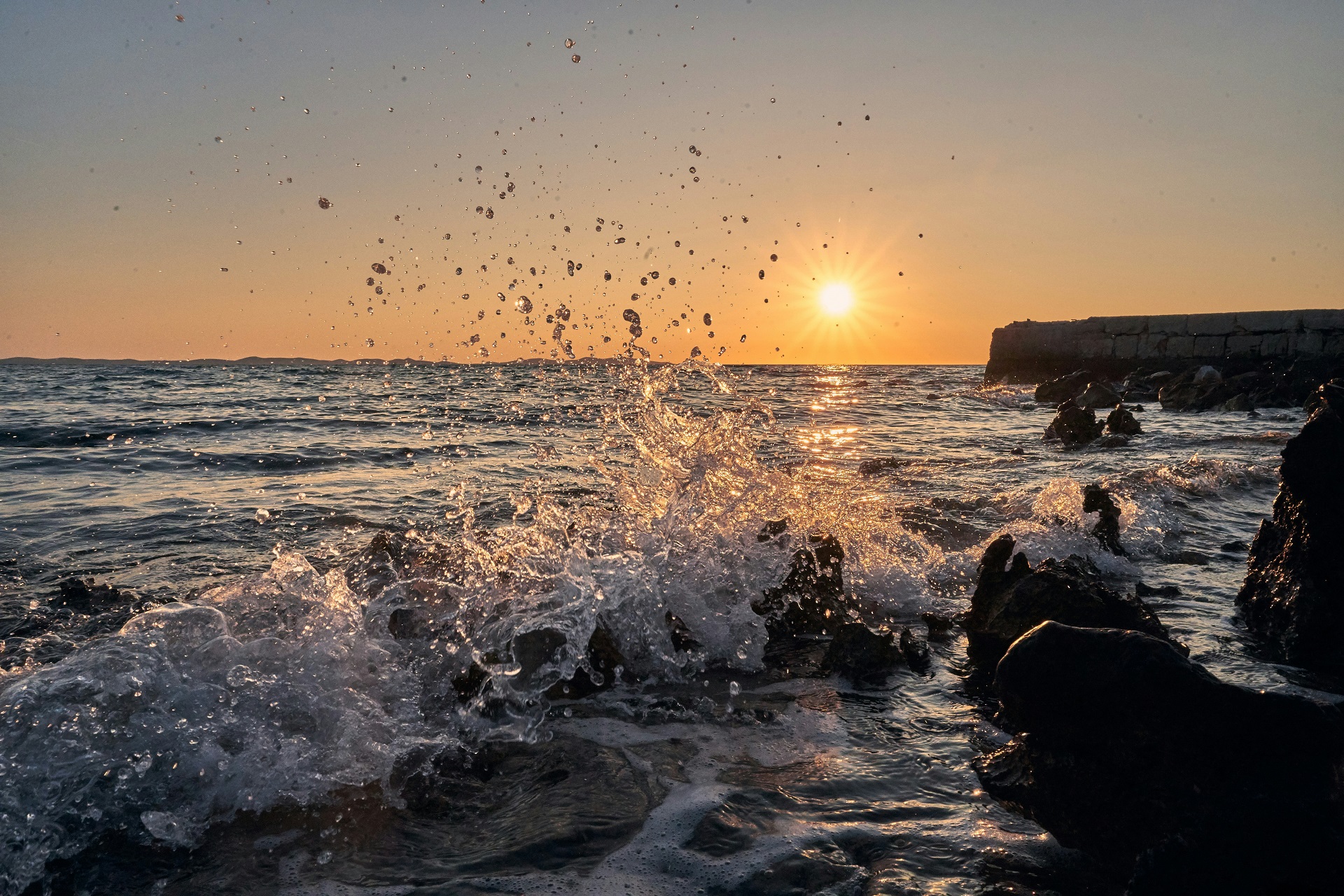
From a visual perspective, this is one of the most striking parts of the island. The sunsets over the open sea can be particularly impressive, with long sightlines and minimal visual obstruction. For sailors, it offers a clear and expansive sense of being at the edge of the Dalmatian island chain.
However, this openness also brings limitations. The western side is more exposed to wind and swell, making it less suitable for anchoring when conditions are anything other than calm. Even moderate winds can generate uncomfortable movement at anchor, and during stronger systems it is generally avoided altogether in favor of more protected areas in the Zadar archipelago.
In stable summer weather, though, the western coastline can still be enjoyed as a scenic cruising route. Passing along this side of the island provides a very different sailing perspective - open water, long coastal lines, and a feeling of space that contrasts sharply with the enclosed bays of nearby islands such as Ugljan Island and Pašman Island.
A Coastal Profile Defined by Openness
Overall, the anchoring and coastal characteristics of Vir Island are defined less by shelter and variety, and more by exposure and simplicity. It does not offer the dense network of protected bays found elsewhere in the Zadar region, but instead presents a more open coastline where conditions are closely tied to weather and wind direction.
For sailors, this means that Vir is best approached with flexibility. It is suitable for short stops in calm conditions, scenic daytime cruising, and occasional breaks within a broader itinerary, but less suited for planning long, sheltered overnight stays. Its role within the sailing landscape is therefore complementary - offering contrast, accessibility, and open-sea perspective within an otherwise highly sheltered archipelago.
VIR VILLAGE AND ISLAND LIFE
The main settlement on Vir Island is a distinctly seasonal coastal town that changes character dramatically between winter and the peak summer months. In the quieter part of the year, Vir feels relatively subdued, with a slower local rhythm and limited waterfront activity. As soon as the summer season begins, however, the island transforms into a busy and energetic coastal destination shaped largely by tourism and frequent arrivals from the mainland.
During peak season, the waterfront becomes the focal point of activity. Restaurants, cafés, ice cream stands, and small shops line the promenade, while the marina and nearby beaches fill with visitors arriving by both boat and car across the bridge connection. Much of this activity is driven not only by charter sailing traffic, but also by weekend tourism from inland Croatia and nearby urban centres such as Zadar. The result is a lively, accessible, and service-oriented environment that feels more like a coastal resort town than a traditional island village.
This modern and tourism-focused identity sets Vir apart from many nearby islands in the Zadar archipelago. On islands such as Ugljan Island or Pašman Island, village life is still strongly connected to fishing, olive cultivation, and long-established maritime traditions. On Vir, by contrast, development has been more recent and oriented toward hospitality and seasonal accommodation. While this makes the island highly functional and convenient for visitors, it also means that it lacks some of the historical depth and maritime character found in older Dalmatian settlements.
For sailors, this distinction is important in terms of expectations. Vir village is not typically experienced as a cultural highlight in the same way as more traditional island towns. Instead, it serves a practical role within an itinerary. It is a place to restock supplies, enjoy a meal ashore, or take a short break from sailing without needing to divert far from the main cruising route.
The infrastructure around the settlement supports this functionality. Access to shops, restaurants, and basic services is straightforward, and the connection to the mainland via bridge ensures a steady flow of goods and visitors throughout the season. This reliability makes Vir particularly useful for crews planning shorter itineraries or those who prefer easy logistical access during their voyage.
At the same time, the atmosphere remains firmly rooted in its seasonal rhythm. In the height of summer, the village is lively and energetic, while outside of peak months it quickly returns to a quieter, more local pace. This dual character gives Vir a practical flexibility: it can feel vibrant and busy when needed, yet relatively calm and functional when tourism slows.
Ultimately, Vir village plays a supporting role within the broader sailing landscape of northern Dalmatia. It is not defined by tradition or isolation, but by accessibility and convenience. For sailors moving through the region, it offers a reliable and straightforward point of contact with shore life—useful, efficient, and closely connected to the mainland, but distinct from the more historic and maritime-focused villages found on neighbouring islands.
SWIMMING AND BEACHES ON VIR
Vir Island is well known in the northern Adriatic for its long stretches of accessible coastline, where sandy and gently pebbled beaches dominate much of the shoreline. This sets it apart from many nearby Dalmatian islands such as Ugljan Island or Pašman Island, where swimming typically takes place in rocky coves and more naturally enclosed bays. On Vir, the coastline is more open and gradual, which creates a very different swimming experience - less secluded, but often easier to access directly from anchor or shore.
One of the most noticeable features of swimming around Vir is the shallow seabed. In many areas, the water depth increases slowly, allowing swimmers to wade far from shore while still standing in relatively shallow water. During the summer months, this shallow profile contributes to rapid warming of the sea, making swimming particularly comfortable even early in the season. For families and casual swimmers, this creates an inviting and low-stress environment where entering the water feels natural and effortless.
However, Vir’s open geography also plays a significant role in shaping swimming conditions. Unlike more sheltered islands in the Zadar Channel, the island is exposed to wind from multiple directions, which can directly affect sea state along its coastline. On calm summer days, the water is typically smooth, clear, and ideal for long swims or floating close to shore. Visibility can be quite good in settled conditions, especially in the early morning before wind activity increases.
When winds such as the Maestral or Bura strengthen, conditions can change quickly. The northern coastline in particular may experience choppier water and increased wave movement, making swimming less comfortable in exposed areas. In such situations, activity tends to concentrate in more sheltered sections of the eastern and southern shores, where wind impact is slightly reduced due to orientation and local coastal features.
Unlike the quiet, secluded anchorages often found on more rugged islands in the region, swimming around Vir is frequently a shared experience. During the peak summer season, beaches can become lively with both locals and visitors, and the shoreline often has a social, resort-like atmosphere rather than a remote or isolated feel. This is especially true near the main settlement, where beach areas are easily accessible and regularly used throughout the day.
For sailors, this creates a different kind of stop compared to more traditional anchoring spots. Instead of solitude and natural isolation, swimming near Vir often involves a blend of maritime and coastal recreation, where anchored yachts sit alongside busy swimming areas and beach activity. While this may not offer the privacy of more secluded islands, it does provide convenience, accessibility, and a straightforward way to enjoy the sea without needing to seek out remote coves.
In essence, swimming and beach life on Vir are defined by openness and ease of access. The island offers warm, shallow waters and long, continuous stretches of shoreline that make entry into the sea simple and inviting. At the same time, its exposure to wind and seasonal activity ensures that conditions are dynamic rather than uniform, giving swimmers a variety of experiences depending on weather and time of day.
PROXIMITY TO ZADAR AND NEARBY ISLANDS
One of the defining practical advantages of Vir Island is its immediate proximity to Zadar, one of the main sailing gateways to northern Dalmatia. The short distance between the mainland and the island means that Vir can be reached quickly after departure, often within a brief coastal sail. This makes it especially convenient for itineraries that begin in Zadar’s marinas, allowing crews to transition almost immediately from urban harbour infrastructure into open island waters without long offshore passages.
Because of this closeness, Vir fits naturally into flexible sailing plans. It can be included as part of a day sail circuit, a short stop for swimming and shore access, or a simple overnight anchorage when conditions are favourable. Its accessibility means it rarely requires significant adjustment to broader charter routes, which is particularly useful for sailors who want to keep daily planning relaxed and adaptable.
Beyond its connection to Zadar, Vir also sits within reach of several key sailing areas in the northern Adriatic. To the southeast and west lie the island systems of Ugljan Island and Pašman Island, connected by the well-known Ždrelac passage and forming one of the most frequently used cruising corridors in the region. These waters offer a contrasting experience to Vir, with more sheltered bays, greener landscapes, and a denser network of anchorages.
Further offshore, Vir also provides access toward the wider route leading into Kornati National Park. While sailors typically do not base themselves on Vir for exploration of the Kornati archipelago, its position within the regional sailing network allows it to function as a stepping stone between mainland departure points and more remote island chains. In this sense, it sits at the edge of multiple cruising directions, linking coastal, channel, and open-island routes within a relatively compact sailing area.
However, despite this connectivity, Vir is not usually considered a central cruising hub. Its exposed coastline and limited natural shelter make it less suitable for extended anchoring or multi-day stays compared to more protected islands nearby. Weather conditions - particularly strong winds from the Bura or Maestral - can significantly influence comfort at anchor, reducing its reliability as a long-term base.
As a result, sailors tend to treat Vir as a transitional or supplementary stop within a broader itinerary. It is useful for orientation, short visits, or convenient access to shore services, but less commonly chosen as the focal point of a sailing route. In practice, it often complements rather than anchors an itinerary, providing a straightforward connection between Zadar and the more sheltered and varied cruising grounds of the surrounding archipelago.
Overall, Vir’s value lies not in depth of anchorage experience, but in its position. Its proximity to Zadar and its central location within northern Dalmatian sailing routes make it an easy and logical waypoint, bridging mainland departure points with the more traditional island environments of the Adriatic.
A DIFFERENT KIND OF ISLAND EXPERIENCE
What ultimately defines Vir Island is its openness - both in its physical geography and in its overall character. Unlike many islands in the northern Adriatic that are shaped by sheltered coves, dense pine forests, and long-established fishing villages, Vir presents a more exposed and expansive landscape. Its coastline is broad and relatively uniform, with long stretches of beach and shallow water rather than deeply indented bays or hidden anchorages.
This physical openness directly influences how the island feels. Instead of narrow maritime settlements built around centuries of seafaring tradition, Vir has developed more as an accessible coastal destination closely tied to the mainland. Its identity is shaped by ease of access, seasonal tourism, and wide coastal zones designed for recreation and short visits rather than secluded island living. The connection to Zadar via bridge reinforces this character, making Vir feel continuously linked to the mainland rather than separated from it by distance or isolation.
For sailors, this creates a very distinct experience compared to nearby islands in the Zadar archipelago. On islands such as Ugljan Island or Pašman Island, sailing is often defined by sheltered anchorages, olive-covered hills, and small traditional villages where maritime culture remains deeply embedded in daily life. Vir, by contrast, offers fewer natural refuges and a more open coastline, where conditions are shaped directly by wind and sea rather than by enclosed geography.
This contrast is important when planning a sailing itinerary. While Vir may not provide the quiet, protected anchoring experience found elsewhere in the region, it offers a different set of qualities that can still be valuable within a broader route. Its openness allows for easy coastal navigation and straightforward passage-making without complex approaches or narrow entrances. The surrounding waters are generally uncomplicated to navigate, and its proximity to the mainland makes it highly accessible for short stops or flexible itinerary changes.
It also provides a different perspective on the Adriatic itself. The wide horizons, unobstructed views, and exposure to prevailing winds create a sense of space that is less common in the more enclosed island systems nearby. For some sailors, this openness is a contrast that adds variety to a journey otherwise focused on sheltered cruising grounds.
In the end, Vir Island is not defined by isolation or traditional island character, but by accessibility and exposure. It offers a direct connection between land and sea, between mainland convenience and coastal sailing. Within the context of a wider Adriatic itinerary, it stands as a reminder that not every island experience is about seclusion - some are about openness, movement, and the simplicity of sailing along an unbroken coastline.
FINAL THOUGHTS: WHERE VIR FITS IN A SAILING ITINERARY
Vir Island is best understood not as a secluded sailing destination, but as a highly practical and accessible point within the wider northern Dalmatian cruising area. Its value lies less in remote natural anchorage experiences and more in its straightforward logistics, open coastal character, and immediate connection to the mainland via its bridge link to Zadar.
From a planning perspective, Vir functions efficiently as a convenience stop. It is easy to reach, easy to approach, and easy to incorporate into flexible itineraries without requiring significant detours or long offshore passages. For sailors departing from Zadar, it can serve as one of the first coastal reference points, offering a quick transition from marina departure into open-water cruising. In suitable weather conditions, it also works well as a short overnight anchorage or a brief pause between more sheltered island destinations.
Within the broader sailing network of the region, Vir occupies a transitional role. It sits between the mainland and the more enclosed island systems of Ugljan Island and Pašman Island, and remains within reach of routes leading further toward Kornati National Park. However, due to its exposed coastline and limited natural shelter, it is generally not used as a primary base for multi-day cruising or as a central anchoring hub.
Instead, its strengths are best appreciated in specific contexts: as a waypoint during coastal exploration, a practical stop for shore access and services, or an introduction to the more open, wind-influenced side of the Adriatic. In this sense, Vir complements rather than defines a sailing itinerary, adding functional value without dominating route planning.
For yacht charters exploring Croatia, this distinction is important. Vir does not compete with the secluded beauty of hidden bays or the cultural depth of traditional island villages. Instead, it offers a different dimension of the sailing experience - one defined by openness, visibility, and ease of movement. Its long beaches, flat horizons, and direct mainland connection create a landscape that feels less like a remote island escape and more like an extension of the coastal continuum.
In the broader context of sailing Croatia, Vir contributes balance. It introduces variety into itineraries dominated by sheltered archipelagos, reminding sailors that the Adriatic is not only about protected coves and forested islands, but also about open waters, exposed coastlines, and direct maritime connections between land and sea.