SAILING SILBA ISLAND: THE JEWEL OF THE NORTHERN ADRIATIC
Positioned between the outer edge of the Zadar Archipelago and the more open waters of the Kvarner Gulf lies Silba Island, one of the most tranquil and distinctive sailing destinations in northern Dalmatia. Small in size but rich in atmosphere, Silba stands apart immediately thanks to one defining characteristic: it is completely car-free. This alone sets the tone for everything that follows - quiet pathways instead of roads, slow movement instead of traffic, and an island rhythm that feels intentionally removed from urgency.
For sailors arriving from more active parts of the Adriatic, especially from the mainland city of Zadar or nearby island clusters, Silba feels like a clear shift in pace. The moment the anchor drops, the environment changes. There is no marina bustle, no constant engine noise, and no dense waterfront development. Instead, there is pine forest, low stone houses, and the soft movement of boats responding to light evening winds.
This sense of stillness is amplified by the island’s position. Silba sits slightly further offshore than many of the better-known islands in the Zadar region, which naturally reduces passing traffic and creates a more isolated cruising experience. While it is still part of established sailing routes, it feels less like a waypoint and more like a pause—a place where sailors choose to stop rather than pass through.
Unlike more developed or wind-exposed islands such as Vir Island or even the more structured inner-channel islands like Ugljan Island, Silba is not defined by infrastructure or accessibility. It is defined by atmosphere. The coastline is quiet, the settlements are small, and daily life unfolds at a pace dictated more by weather and season than by tourism demand.
For sailors exploring the northern Adriatic, this creates a very specific kind of experience. Time on Silba is not measured in distances sailed or ports visited, but in moments - afternoon swims in calm water, slow walks through shaded paths, and evenings when the sea becomes almost motionless as the wind fades. Even ferry arrivals and departures feel like soft interruptions rather than busy industrial activity.
Because of this, Silba often attracts those who are already familiar with the more dynamic side of Croatian sailing and are looking for contrast. After navigating busier routes or more exposed coastlines, the island offers something deliberately restrained. It is not about variety or intensity, but about reduction - fewer sounds, fewer decisions, and fewer external pressures.
At the same time, Silba remains fully integrated into northern Dalmatian sailing routes. It connects naturally with nearby islands such as Olib, Premuda, and Lošinj, making it a logical stop within longer itineraries that extend toward the northern Adriatic. Yet even within these routes, it tends to stand apart as a place where sailors choose to slow down rather than continue moving.
In essence, Silba Island is defined not by what it offers in terms of facilities or spectacle, but by what it removes - cars, noise, and urgency. What remains is a quiet, wooded island surrounded by clear water and open horizons, offering one of the most peaceful sailing experiences in the region.
WHY SILBA FEELS DIFFERENT FROM OTHER DALMATIAN ISLANDS
What immediately sets Silba Island apart from many other destinations in the Adriatic is its complete absence of cars. There is no road traffic, no engine noise in daily village life, and no infrastructure designed around vehicles. Movement across the island happens only on foot, by bicycle, or with small hand carts used for transporting goods and luggage. This simple restriction has a surprisingly strong effect: it removes one of the most dominant modern background noises and replaces it with silence, footsteps, and the natural sounds of wind and sea.
For sailors arriving from more developed coastal hubs, this shift is immediate and noticeable. The moment you step ashore, the rhythm changes. Instead of roads leading inland or harbours filled with constant movement, there are narrow stone paths shaded by pine trees and Mediterranean vegetation. This creates a sense of stillness that feels intentional rather than incidental, and it is a key reason why Silba is often remembered more for its atmosphere than its facilities.
This car-free structure also influences how the island functions socially and culturally. Daily life is smaller in scale and more human in pace. Deliveries, movement of goods, and even casual errands happen slowly and visibly, without the separation between infrastructure and people that is common in more developed destinations. As a result, the entire island feels more cohesive, as if everything is happening within a shared, walkable space.
Compared to busier islands in the Zadar Archipelago such as Ugljan Island or more tourism-driven destinations like Vir Island, Silba feels noticeably more remote - not necessarily in distance, but in character. There are no large marina complexes dominating the waterfront, no extensive resort zones, and no high-density tourist developments shaping the coastline. Instead, the island maintains a low-rise, low-impact profile built around small settlements and dispersed family homes.
This difference is especially clear when viewed from the sea. Where other islands may present busy harbours or structured marina entrances, Silba appears softer and more organic. The coastline blends into pine forest and low stone buildings rather than hard-edged infrastructure. For sailors, this reinforces the impression of arriving somewhere quieter and more self-contained.
Importantly, Silba’s lack of heavy development is not the result of inaccessibility, but of deliberate preservation of scale. The island remains connected to regional sailing routes and is still part of established itineraries through the northern Adriatic. Yet it has resisted the kind of large-scale tourism expansion seen elsewhere, maintaining instead a more traditional island identity.
That identity is shaped by small villages, local families, and long-standing coastal routines. Fishing, seasonal tourism, and local services exist, but none dominate the landscape. Life is distributed evenly across the island rather than concentrated in large resort zones, which helps preserve the feeling of balance between human presence and natural environment.
For sailors, this creates a very distinct experience within the broader Adriatic context. Silba does not compete for attention through scale or activity. Instead, it offers contrast - quiet surroundings, simple infrastructure, and a strong sense of separation from the more commercialized parts of the coastline. In a region where many destinations are defined by energy and density, Silba stands out precisely because it is defined by restraint.
SAILING CONDITIONS AROUND SILBA
Sailing conditions around Silba Island are generally straightforward and enjoyable throughout the main summer season, which makes the island an appealing stop for relaxed Adriatic itineraries. The daily rhythm is typically shaped by calm mornings followed by the reliable build-up of the Maestral wind in the afternoon, creating a predictable and comfortable sailing pattern for most of the season.
In the early hours of the day, the sea around Silba is often very calm. Light breezes or near-glassy conditions are common, especially in sheltered spots close to shore. These quiet mornings are ideal for swimming, short repositioning sails, or simply staying at anchor while conditions remain stable. For many crews, this is the most peaceful part of the day, when the island’s slower character is most noticeable and the sea feels almost still.
As the day progresses, the Maestral typically develops from the northwest, bringing steady and pleasant sailing conditions. Around Silba, this wind is particularly useful because it aligns well with the island’s position between the Zadar Archipelago and the northern Adriatic islands further offshore. It enables smooth and predictable passages between nearby destinations such as Olib, Premuda, and Lošinj, all of which are within comfortable sailing distance.
These short inter-island routes are one of Silba’s key advantages in terms of sailing logistics. Distances are manageable, navigation is uncomplicated, and there is rarely a need for long offshore legs. Instead, sailing in this area tends to feel like a sequence of short, connected movements between islands, each offering slightly different conditions but all within a relatively protected regional system.
In contrast, the Bura wind can introduce a very different dynamic. This northeast wind, which can occur more frequently outside peak summer months, is known for its strength and sudden gusts. Around Silba, the effects of Bura can be more noticeable due to the island’s slightly more open exposure compared to inner-channel destinations like Ugljan Island. When active, it can create choppier seas and more demanding conditions at anchor, making careful route planning and anchorage selection essential.
Despite this potential exposure, Silba remains relatively easy to navigate from a maritime perspective. The surrounding waters are open, with few hidden dangers, reefs, or complex channel systems. Approaches are generally clear, and visibility is good in most weather conditions. This simplicity is particularly valuable for less experienced crews or those who prefer uncomplicated sailing environments without narrow passages or heavy traffic.
Another important factor is the island’s position within a broader cruising corridor. While it feels slightly more remote than some central Dalmatian islands, Silba still sits within a well-travelled but not overcrowded sailing network. This balance means sailors can enjoy a sense of openness without the navigational complexity of more exposed offshore passages.
Overall, sailing around Silba is defined by balance and predictability. Calm mornings, reliable afternoon winds, and simple navigation combine to create a comfortable sailing environment that fits naturally into longer itineraries through the northern Adriatic. Even when conditions become more challenging under the influence of Bura, the surrounding region offers alternative routes and nearby shelter, reinforcing Silba’s role as a flexible and approachable sailing destination.
ANCHORAGES AND APPROACHES TO SILBA
Silba Island has a very different nautical profile compared to many busier destinations in the northern Adriatic. It does not rely on large marina infrastructure or heavily engineered harbour systems. Instead, it preserves a more traditional and low-impact approach to mooring, where sailors adapt to natural conditions rather than structured berths. This absence of large-scale maritime development is a key part of the island’s quiet identity and contributes directly to its slower, more relaxed atmosphere.
For visiting yachts, anchoring and mooring around Silba typically depends on a combination of small harbours, limited quay space, and buoy fields that are used seasonally or in specific weather conditions. These facilities are functional rather than extensive, designed to support short stays rather than high-capacity yacht traffic. As a result, Silba is rarely experienced as a marina-focused destination. Instead, it fits more naturally into itineraries where anchoring at sea is the primary mode of overnight stay.
The main settlement on the island provides the most direct access point for sailors. Tender access is generally straightforward in calm conditions, allowing crews to reach shore for provisioning, dining, or a short walk through the village. In settled weather, brief stops along the waterfront are sometimes possible, but space is limited and conditions must be carefully considered due to the lack of extensive harbour protection. When winds are stable and sea state is calm, this area can offer a convenient and atmospheric connection between boat and shore life, with the village just steps away from the water.
However, Silba is most commonly experienced as an anchorage island rather than a dock-and-stay destination. This distinction is important for planning, as it aligns closely with the island’s overall character - quiet, slow-paced, and shaped more by natural conditions than infrastructure. Anchorage use tends to be seasonal and highly dependent on weather stability, particularly during the summer months when conditions are most favourable.
The seabed around Silba Island varies between sand and seagrass, which generally provides reliable holding in appropriate weather conditions. Sandy patches are particularly suitable for anchoring, offering good grip for the anchor, while seagrass areas require more careful placement but still provide usable holding when conditions are calm. Depths are typically manageable in common anchoring areas, allowing sailors to position themselves comfortably without needing complex manoeuvres.
Because of its exposure, the quality of anchoring experience is closely tied to weather stability. In light winds and settled summer conditions, Silba offers calm, pleasant anchorages with gentle movement and quiet surroundings. These are the moments when the island’s character is at its best - soft evening light, minimal boat traffic, and a strong sense of isolation from more developed parts of the Adriatic.
When wind conditions become less stable, especially under the influence of stronger Bura events, anchoring becomes more limited and requires careful selection of position or alternative planning within the surrounding island network. In such cases, sailors often adjust their routes toward more sheltered destinations in the Zadar Archipelago or nearby islands such as Olib Island and Premuda Island, which offer different levels of protection depending on wind direction.
Ultimately, anchoring around Silba reflects the island’s broader sailing philosophy: simple, natural, and dependent on conditions rather than infrastructure. It rewards careful planning and good timing, offering some of the most peaceful overnight experiences in the region when weather allows, while remaining flexible enough to fit into a wider cruising route through the northern Adriatic.
SILBA VILLAGE AND ISLAND LIFE
The main village on Silba Island is compact, quietly traditional, and immediately shaped by its defining rule: no vehicles. Without cars, scooters, or road traffic, the entire settlement operates on a human scale. Movement happens along narrow stone paths, through shaded passages, and across small squares where daily life unfolds slowly and without interruption. This creates an atmosphere that feels consistently calm throughout the day, even in the height of summer.
The village layout reflects a long-standing coastal way of life. Houses are built close together, often surrounded by Mediterranean vegetation such as pine, fig, and olive trees, which provide shade and soften the stone architecture. Rather than being arranged around wide streets or modern infrastructure, the settlement grows organically along paths that connect homes, small harbours, and the shoreline. From the sea, this gives Silba a low-profile, understated appearance that blends naturally into its surroundings.
Life in the village is closely connected to the rhythms of the Adriatic. The sea is not just a backdrop but a central part of daily routine. Fishing remains present, both as a livelihood and a tradition, with small boats coming and going according to weather and season. In parallel, small-scale agriculture continues to shape the inland areas, with olive groves and gardens contributing to local self-sufficiency.
During the summer months, limited tourism brings additional activity, but it does not dominate the island’s identity. Instead of large resorts or dense commercial zones, Silba experiences a gradual increase in visitors who blend into the existing rhythm of life. Cafés and small family-run establishments become more active, but the scale remains modest. There are no overwhelming crowds or high-density entertainment areas - just a steady flow of people integrated into the village environment.
This balance between local life and seasonal activity is one of the key reasons Silba feels so distinct compared to more developed islands in the region, such as Vir Island or even busier parts of the Zadar Archipelago. Where those destinations often shift dramatically between quiet and crowded, Silba maintains a more even, understated rhythm.
In winter, the village slows significantly. Many seasonal activities pause, and the island returns to a quieter residential state. In summer, life becomes more visible but never fully transforms into a high-energy tourist environment. This seasonal modulation helps preserve a sense of continuity, where the island remains recognisably itself throughout the year.
For sailors arriving after time spent in more active cruising areas, Silba village often feels like a transition into stillness. There is less emphasis on movement, scheduling, or activity, and more emphasis on presence - sitting by the water, walking slowly through shaded paths, or simply observing the quiet interplay between land and sea. It is not a destination defined by what you do, but by how the environment encourages you to slow down.
In this way, Silba village and its island life represent one of the more understated but deeply distinctive experiences in the northern Adriatic sailing landscape: small in scale, traditional in structure, and consistently shaped by a gentle, unhurried rhythm.
SWIMMING AND THE ADRIATIC AROUND SILBA
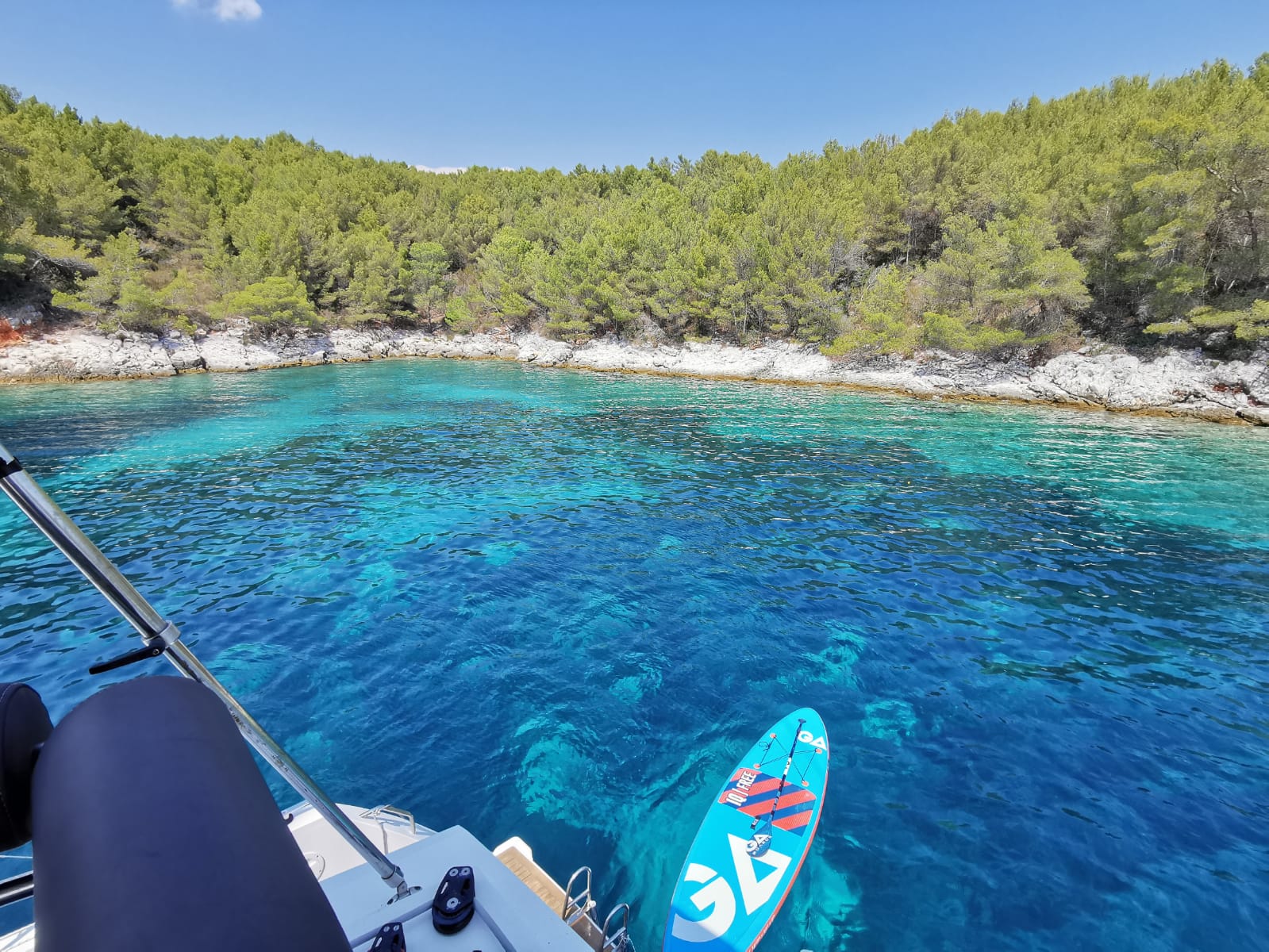
The sea surrounding Silba Island is generally clear, calm, and pleasantly unspoiled, reflecting the island’s distance from major urban and industrial coastal zones such as Zadar. This relative isolation contributes to good water quality throughout most of the summer season, with visibility often extending several meters below the surface in stable weather conditions. For sailors, this creates a naturally inviting environment for swimming directly from anchor without the need for special excursions or equipment.
The underwater landscape around Silba is varied in a simple, understated way. The coastline alternates between rocky edges, sandy seabeds, and patches of seagrass meadows. This mix creates different swimming zones depending on where a yacht is anchored or where swimmers choose to enter the water. Rocky areas tend to offer clearer visibility and slightly more marine life activity, while sandy sections provide easy, gentle entry points into the sea. Seagrass areas, meanwhile, support a quieter ecosystem and are often found in slightly shallower waters where sunlight reaches the seabed more consistently.
Unlike some parts of the Adriatic that are known for dramatic underwater reliefs, caves, or shipwreck diving sites, Silba is not defined by high-impact underwater attractions. There are no major dive sites or deep reef structures that draw technical diving interest. Instead, its appeal lies in simplicity and accessibility. Swimming here is not about exploration of complex underwater landscapes, but about ease, repetition, and comfort - stepping off the boat, entering calm water, and remaining in a naturally relaxed environment.
During the main sailing season, sea conditions around Silba are typically stable. Morning waters are often particularly calm, with very light movement and excellent clarity. As the day progresses and winds such as the Maestral develop across the wider Zadar Archipelago, slight surface ripples may form, but sheltered anchorages often remain suitable for swimming throughout the day. Water temperatures in summer are generally warm and consistent, making extended time in the sea comfortable without sudden changes in conditions.
One of the defining aspects of swimming around Silba is how naturally it fits into daily sailing life. Because the island encourages slower pacing, boats tend to remain anchored longer, and movement between locations is less frequent than in busier cruising areas such as Vir Island. This extended time at anchor means swimming is not treated as a short break between passages, but as a central part of the day’s rhythm.
Afternoons often unfold slowly, with multiple swims, relaxed time in the water, and unstructured pauses between meals or short walks ashore. The sea becomes part of the living environment rather than a separate activity, reinforcing the island’s overall sense of calm and continuity. Evenings are often especially quiet, when wind drops and the water surface becomes smooth again, reflecting the soft light of sunset across the anchorage.
In this way, swimming around Silba is defined less by spectacle and more by repetition and ease. It is a consistent, accessible experience that aligns closely with the island’s broader identity - uncomplicated, natural, and deeply integrated into the slower rhythm of sailing in the northern Adriatic.
PROXIMITY TO OTHER NORTHERN ADRIATIC ISLANDS
Silba Island occupies a strategic but slightly more remote position within the northern Adriatic cruising network. While it is not part of the tightly clustered island systems closer to Zadar, it remains well integrated into established sailing routes that connect northern Dalmatia with the Kvarner region. This positioning makes Silba an interesting link rather than a core hub - an island that naturally fits into longer passages rather than short, circular day sails.
One of the key advantages of Silba’s location is its proximity to a series of smaller, less-developed islands such as Olib and Premuda. These nearby stops are typically within comfortable sailing distance under normal summer conditions, allowing for relaxed island-hopping without the need for extended offshore navigation. The passages between them are generally straightforward, with open but manageable waters that suit both experienced crews and more relaxed charter itineraries.
Further along the route lies Lošinj, a larger and more developed island that marks a noticeable transition in character. Moving from Silba toward Lošinj, sailors gradually shift from quieter, low-density island environments into more structured harbours and busier coastal towns. This progression is part of what makes Silba particularly interesting in itinerary planning - it sits at a point where cruising styles begin to change.
Compared to islands within the more sheltered Zadar Channel system, such as Ugljan Island or Pašman Island, Silba feels less enclosed and more open to the wider Adriatic. The Zadar Channel islands are closely grouped, with short distances, multiple protected bays, and a high degree of navigational density. Silba, by contrast, sits beyond this inner network, where spacing between islands increases and routes begin to open toward broader sea areas.
This shift in geography gives Silba a transitional character. It is not fully part of the inner Dalmatian cruising circuit, nor is it entirely within the more northern Kvarner system. Instead, it functions as a bridge between the two - both geographically and experientially. Sailing to or from Silba often feels like moving between different styles of cruising: from the structured, sheltered waters of central island groups to the more open and expansive conditions of the northern Adriatic.
This transition becomes especially noticeable in terms of sea state and horizon line. As yachts move away from Silba toward the north, coastlines become more widely spaced, navigation points less frequent, and the sense of open water more pronounced. In the opposite direction, returning toward the Zadar region reintroduces tighter island clusters, more frequent anchorages, and greater protection from wind and swell.
Because of this position, Silba is rarely treated as an isolated destination. Instead, it is typically integrated into broader itineraries that connect multiple island systems. It works particularly well on routes that combine the quieter northern Dalmatian islands with the more sheltered cruising grounds closer to Zadar, or on extended voyages that continue toward Lošinj and the Kvarner Gulf.
In this sense, Silba Island plays an important but understated role within the regional sailing geography. It does not dominate itineraries or function as a central hub, but it provides a meaningful connection point between two different maritime worlds - helping define the transition from the structured archipelago sailing of Dalmatia to the more open and expansive waters of northern Croatia.
A SLOWER SAILING EXPERIENCE
What defines Silba Island most clearly is its pace. Unlike many destinations in the northern Adriatic where activity is concentrated around marinas, promenades, and seasonal entertainment, Silba operates on a noticeably slower rhythm. Everything on the island - movement, services, social life, and even arrivals by sea feels unhurried. This is not a place shaped by efficiency or intensity, but by continuity and calm repetition.
For sailors, this translates into a very different type of stop within a broader itinerary. Instead of planning around fuel, provisioning schedules, or busy harbour logistics, time on Silba naturally shifts toward simpler patterns. Anchoring becomes less about turnover and more about staying put. Days are structured around small, unplanned moments: a swim in the morning, a quiet walk through shaded village paths, or an unhurried lunch on deck while the boat gently moves with the light afternoon breeze.
This slower tempo is reinforced by the island’s physical and social structure. There are no large resorts dominating the coastline, no high-density waterfront developments, and no constant flow of commercial maritime traffic. Even in peak summer, the scale of activity remains modest compared to busier destinations in the Zadar Archipelago such as Vir Island or the more developed coastal hubs closer to mainland cities like Zadar.
Instead, Silba offers a landscape where space itself becomes the defining feature. Physically, this is visible in the open shorelines, the low-rise village structure, and the absence of large infrastructure. Mentally, it is experienced through the reduction of stimuli - fewer boats passing through, fewer structured activities, and fewer demands on time. This creates an environment where sailors can disengage from the typical pace of cruising and adopt a more observational mode of travel.
Even simple actions feel different in this context. Walking ashore does not lead into a busy commercial zone, but into quiet stone paths and residential areas shaded by Mediterranean vegetation. Sitting at anchor does not mean adjusting for traffic or harbour movement, but settling into a stable, quiet anchorage where the most noticeable change is the shifting light across the water.
This absence of intensity is what gives Silba its distinct identity within the Adriatic sailing landscape. It does not rely on attractions, events, or infrastructure to define its appeal. Instead, it offers a reduction of those elements, creating room for slower observation and a more personal pace of travel.
In practical terms, this makes Silba particularly well suited to itineraries that intentionally include variation in tempo. After sailing through more active or structured island groups, arriving at Silba often feels like a deliberate pause. It is a place where the emphasis shifts away from movement and toward stillness, allowing time on board to become less about progression and more about presence.
Ultimately, Silba Island represents a different interpretation of sailing in Croatia - one where the value is not in how much is seen or covered, but in how slowly and quietly each moment is experienced.
FINAL THOUGHTS: WHY SILBA BELONGS ON A SAILING ROUTE
Silba Island is not a destination built around intensity, nightlife, or high-volume nautical traffic. It does not compete with the more active sailing hubs of northern Dalmatia, nor does it aim to. Its value lies in something more subtle and increasingly rare along the Adriatic coast: contrast. In a region defined by variety, Silba offers a deliberate pause - an island where simplicity, silence, and space become the main features of the experience.
The car-free nature of the island is central to this identity. With no vehicles and minimal infrastructure pressure, daily life unfolds at a human scale. This creates an environment where sailors immediately feel the difference upon arrival. There is no transition into busy marinas or commercial waterfronts, but instead a gentle shift into a quieter rhythm shaped by walking paths, small village life, and open coastal views.
Within the wider sailing routes of the northern Adriatic, Silba functions best as a reflective stop rather than a logistical hub. It sits comfortably between more active island groups in the Zadar Archipelago and the more open waters leading toward the Kvarner Gulf, making it a natural point where itineraries slow down. After days spent moving between busier islands or navigating more structured coastal routes, Silba offers a change in tempo that is both noticeable and valuable.
For yacht charters exploring Croatia, this shift is often what makes the island memorable. Time spent here is less about covering distances or ticking off destinations, and more about staying still. Anchorages are not just places to stop for the night, but spaces where crews tend to linger longer, allowing the rhythm of the island to shape the day. Morning swims, quiet afternoons on deck, and unstructured evenings become the focus, rather than schedules or passages.
Silba also rewards a different mindset in sailing planning. It is not about efficiency or optimization, but about allowing space in an itinerary for slower moments. In this sense, it complements more dynamic stops such as Vir Island or Ugljan Island, which offer different types of coastal experiences within the same region.
Ultimately, Silba Island stands out not through scale or spectacle, but through restraint. It represents one of the most peaceful interpretations of sailing in the Adriatic - an island where the absence of noise, traffic, and urgency becomes its defining strength. For sailors willing to step outside the rhythm of busier routes, Silba offers something quietly distinctive: a reminder that the essence of sailing is not only movement across water, but also the ability to pause within it.