SAILING PAŠMAN ISLAND: A QUIET ADRIATIC ESCAPE FOR SAILORS SEEKING AUTHENTIC CROATIA
Positioned between the historic mainland city of Zadar and the stark, almost otherworldly landscapes of Kornati National Park, Pašman Island remains one of the most underrated sailing destinations along the Croatian coast. At first glance, it may appear modest compared to Croatia’s more famous islands, yet this understated character is precisely what makes it so compelling for those exploring by boat.
Many sailing itineraries pass through this region with a sense of urgency, treating Pašman as little more than a corridor on the way to headline destinations. But those who choose to slow down - even for a day or two - quickly realize that Pašman offers something increasingly rare in the Adriatic: space, silence, and authenticity. Here, the sea retains a remarkable clarity, anchorages remain refreshingly uncrowded even in high season, and the rhythm of life is still guided by fishing boats, olive harvests, and the changing winds rather than tourism alone.
For sailors navigating the central Adriatic, Pašman strikes a balance that few islands manage so naturally. Its location within the sheltered Pašman Channel creates a protected sailing environment that is particularly appealing for relaxed cruising, families, or those seeking a break from more exposed offshore passages. At the same time, it does not sacrifice the essence of sailing itself. The reliable summer Maestral wind fills in predictably during the afternoon, offering steady and enjoyable conditions for short passages between bays, villages, and nearby islands.
This dual character - safe yet engaging, quiet yet strategically positioned - makes Pašman far more than just a convenient stopover. It becomes a destination where sailors can recalibrate their pace, spend unhurried evenings at anchor, and experience a version of the Adriatic that feels deeply connected to its roots.
WHY PAŠMAN IS A HIDDEN GEM FOR SAILING IN CROATIA
Unlike nearby hotspots such as Hvar or Brač, Pašman Island has managed to preserve a slower, more grounded rhythm of life that feels increasingly rare along the Adriatic coast. This is not an island shaped by large-scale nautical tourism or high-energy nightlife. There are no sprawling marina complexes filled with tightly packed yachts, no rows of cocktail bars competing for attention, and no sense of urgency once you drop anchor.
Instead, what defines Pašman is a kind of understated authenticity. The coastline is lined with olive groves that stretch almost to the water’s edge, a reminder that agriculture remains central to island life. Stone houses cluster around small harbors where fishing boats still outnumber visiting yachts in many places. In the evenings, the atmosphere is quiet and unforced - conversations drift from waterfront terraces, and the scent of grilled fish carries gently across the bays.
For sailors, this translates into something genuinely valuable: freedom of space. Even during the peak summer months, it is still possible to find a bay where you can anchor without feeling crowded, where the only sounds are cicadas from the shore and the soft movement of water against the hull. That sense of calm is becoming harder to find in more developed parts of Croatia, which is why Pašman stands out so clearly for those who know where to look.
Geographically, the island’s relationship with Ugljan adds another layer to its appeal. The two islands are separated by the narrow Ždrelac Channel, spanned by a bridge at the village of Ždrelac. This connection effectively transforms Pašman and Ugljan into a single, expansive sailing area rather than two separate destinations.
For those navigating by boat, this means an unusually rich cruising ground within a compact area. You can move easily between sheltered anchorages, small ports, and open stretches of water without long passages or exposure to changing sea conditions. The channel itself, with its noticeable currents, adds a touch of technical interest, while the surrounding waters offer a mix of protection and variety that suits both experienced sailors and those looking for a more relaxed itinerary.
In practical terms, Pašman is a place where you can sail as much or as little as you like. Short hops between bays, spontaneous stops for swimming, and flexible overnight plans become the norm rather than the exception. And that flexibility - combined with the island’s unspoiled character - is exactly what makes Pašman a true hidden gem in the Croatian sailing landscape.
SAILING CONDITIONS AROUND PAŠMAN ISLAND
Sailing around Pašman Island offers a combination of predictability and subtle complexity that makes it appealing for a wide range of sailors. At the heart of this microclimate is the Pašman Channel, a relatively narrow stretch of water separating the island from the mainland and nearby Ugljan. What sets this channel apart is the constant movement of water flowing through it. These currents, driven by tidal exchanges and differences in sea level, are strong enough to continuously refresh the area, resulting in some of the clearest waters you will encounter anywhere in the Adriatic.
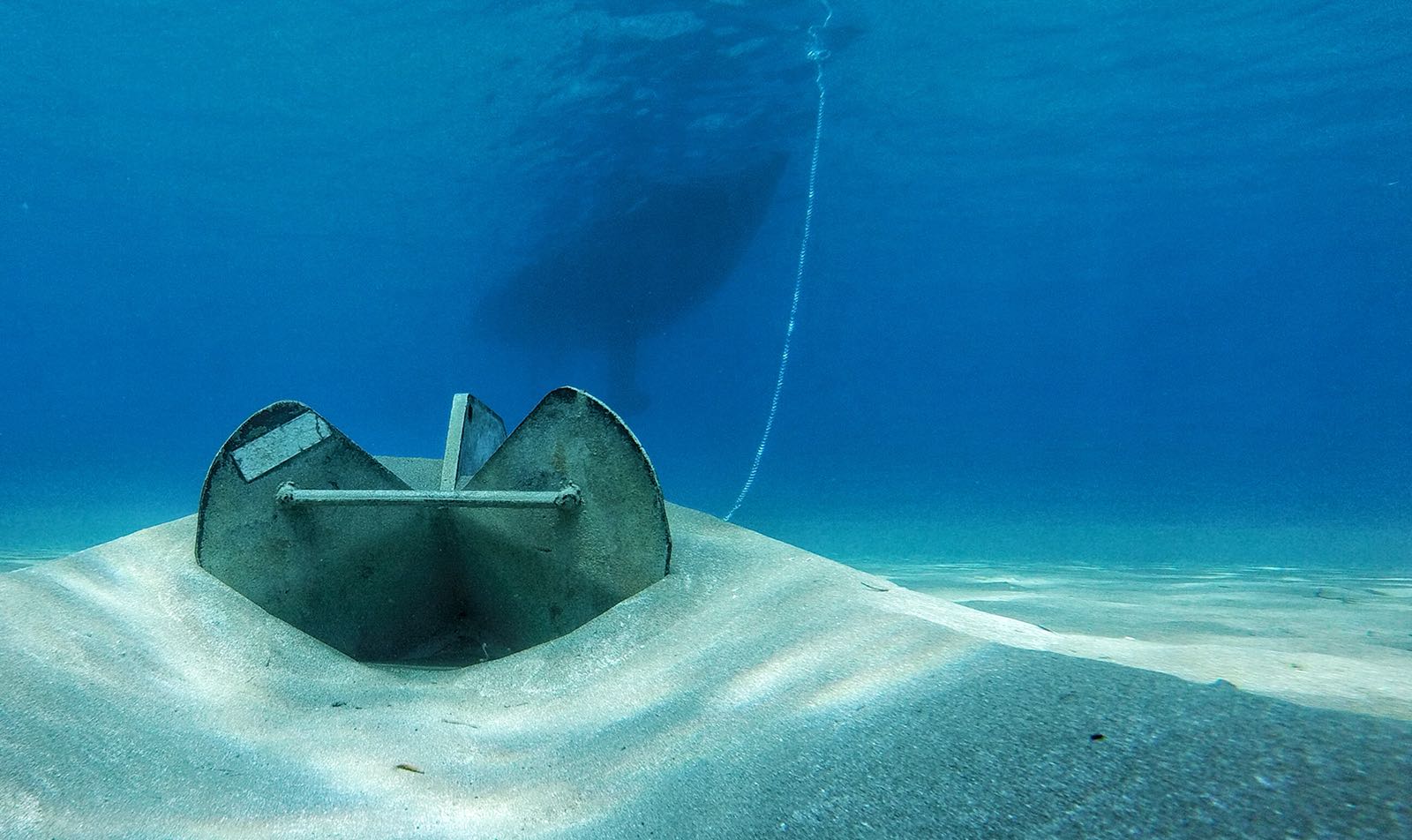
For those on board, this clarity is immediately noticeable. Anchoring over sandy or mixed seabeds becomes much easier when visibility is high, allowing for precise positioning and better holding confidence. It also transforms every swim stop into a highlight, with underwater landscapes, rocks, and marine life visible even at greater depths. Snorkeling in these conditions feels effortless, as the sea often appears almost transparent beneath the hull.
During the summer months, the dominant wind is the Maestral, a reliable northwesterly thermal wind that defines daily sailing rhythms across much of the Croatian coast. Around Pašman, the Maestral typically begins to develop late in the morning, gradually strengthening into the early afternoon. By midday, it often settles into a steady and manageable breeze, ideal for comfortable cruising along the channel or between nearby islands. The fetch remains moderate due to the semi-sheltered geography, which means waves are generally smaller and more regular than in open sea conditions, making passages smoother and more forgiving.
Mornings and evenings, by contrast, tend to be calm. In the early hours, before the Maestral establishes itself, the sea often lies completely flat, reflecting the surrounding coastline like a mirror. These moments are perfect for relaxed departures, swimming straight from the boat, or simply enjoying the stillness of an anchorage before the day begins. As the sun sets and the wind fades, the same calm returns, turning bays into quiet, protected spaces where the only movement comes from the gentle sway of anchored boats.
Outside of stable summer patterns, or during transitional weather periods, the Bura can influence conditions in this region. Blowing from the northeast, the Bura is a dry, often gusty wind that can arrive quickly and with considerable ուժ. Around Pašman, its effects are typically felt more strongly in exposed areas and channels, where acceleration between landmasses can increase wind strength. Gusts can be sharp and unpredictable, requiring careful attention to anchoring technique and line security.
However, one of Pašman’s strengths lies in its ability to offer shelter in a variety of conditions. The island’s indented coastline, combined with its proximity to Ugljan and the mainland, creates multiple options for protection depending on wind direction. Bays on the southwestern side provide refuge from northeasterly winds like the Bura, while those facing the channel offer shelter from westerlies. This flexibility allows sailors to adapt quickly without the need for long relocations.
Altogether, the sailing conditions around Pašman strike a balance that is difficult to replicate elsewhere. The combination of clean, fast-moving water, reliable thermal winds, and accessible shelter creates an environment where sailing feels both safe and engaging. Whether you are planning short daily passages or simply drifting between anchorages, the conditions here consistently support a relaxed and rewarding experience on the water.
TOP ANCHORAGES AND BAYS ON PAŠMAN ISLAND
Exploring the coastline of Pašman Island by boat reveals a series of anchorages that feel refreshingly unspoiled. The island does not rely on large marina infrastructure; instead, it rewards sailors with natural bays, straightforward anchoring, and a sense of calm that is increasingly rare along the Adriatic. Each stop has its own character, shaped by orientation, seabed, and exposure to prevailing winds.
Ždrelac and the Pašman Bridge Passage
One of the most distinctive navigational points in the area is the narrow passage at Ždrelac, where Pašman is separated from Ugljan. The bridge spanning this channel creates a natural gateway between two sailing zones, and passing beneath is a no go for sailing boats.
Currents here can be surprisingly strong, often reaching several knots as water funnels between the islands. These flows change direction depending on tidal movement, so planning your transit with awareness of current strength is important, particularly for less powerful engines or when maneuvering in tight conditions. Despite this, the passage is well-marked and frequently used, and once you emerge on the other side, the reward is immediate.
Beyond the bridge, the sailing area opens into a protected network of channels and bays where distances are short, conditions are manageable, and options for stopping are plentiful. It’s an ideal environment for relaxed cruising, where plans can remain flexible and spontaneous.
Uvala Žinčena
On the southern side of the island, away from the busier channel, Uvala Žinčena offers a completely different atmosphere. This bay feels remote and untouched, with minimal development along the shore and a landscape dominated by low vegetation and rocky terrain.
Anchoring here is generally straightforward, with good holding in sand and patches of mixed seabed. The bay provides reliable protection from northerly winds, making it a safe choice when conditions shift. Its open aspect toward the south means it should be approached with more caution if southerly winds are expected, but in stable summer weather it remains a peaceful and secure anchorage.
Žinčena is the kind of place where time slows down. Even during high season, it rarely feels crowded, and evenings are defined by silence, clear skies, and uninterrupted views of the horizon. For sailors seeking a true overnight escape away from busier routes, it stands out as one of the island’s most rewarding stops.
Uvala Soline
Uvala Soline strikes a balance between accessibility and tranquility. While it is one of the more frequented bays on Pašman, it never feels overly developed or commercialized. Instead, it maintains a relaxed, welcoming character that makes it a reliable stop on almost any itinerary.
The bay offers good anchoring conditions, typically over sand with solid holding. Its shape provides decent shelter from a range of wind directions, particularly those coming from the north and east. This versatility makes it a practical choice when planning overnight stays or adjusting to changing forecasts.
What sets Soline apart is its proximity to local life. Nearby villages are within easy reach, allowing sailors to step ashore and experience traditional Dalmatian hospitality. Small waterfront konobas serve fresh fish, local olive oil, and simple, well-prepared dishes that reflect the island’s culinary heritage. It’s a place where a short walk from the boat can turn into a memorable evening.
Uvala Landin
Facing west toward the open sea and the distant outlines of Kornati National Park, Uvala Landin is one of the most atmospheric anchorages on Pašman. Its position makes it particularly attractive for those planning to continue toward the Kornati archipelago, serving as a natural staging point before heading into more exposed waters.
The bay provides good shelter from easterly winds and is generally calm in settled weather. Anchoring is comfortable, with adequate depth and reliable holding, making it suitable for both short stops and overnight stays.
Landin is especially known for its sunsets. As the sun drops toward the horizon, the light spreads across the open sea, creating a wide, uninterrupted view that feels distinctly different from the more enclosed bays along the channel. Evenings here tend to be quiet and reflective, with just a handful of boats sharing the anchorage.
For many sailors, Landin becomes more than just a stopover - it’s a place to pause before the next leg of the journey, whether that leads deeper into the Kornati islands or back along the sheltered waters of Pašman.
VILLAGES AND COASTAL LIFE ON PAŠMAN
The true character of Pašman Island reveals itself not only in its quiet anchorages, but in the small coastal settlements that line its shores. These villages are not designed around tourism - they are living communities where daily life continues much as it has for generations. For sailors, stepping ashore here offers a deeper connection to the island, one that goes beyond sailing conditions and into the rhythms of Dalmatian life.
Fishing boats tied along stone quays, locals tending olive groves, and the slow pace of afternoons define the atmosphere. There is no rush, no pressure to move on quickly. Instead, each stop becomes an opportunity to experience a more grounded and authentic side of the Adriatic.
Tkon: The Main Nautical Hub
Tkon is the island’s primary point of connection with the mainland, with regular ferry links to Biograd na Moru. For those arriving by boat, it naturally becomes a key stop for logistics as well as a convenient place to pause and regroup.
From a practical perspective, Tkon is one of the best places on the island for provisioning. Small supermarkets, bakeries, and local shops provide the essentials needed for continued cruising, while the waterfront offers a selection of casual restaurants where fresh fish, grilled meats, and simple Dalmatian dishes are served daily. It’s the kind of place where you can restock the boat in the afternoon and settle into an easy dinner just a few steps from the quay.
Despite being the busiest settlement on Pašman, Tkon never feels overwhelming. The harbor is active but manageable, and the overall atmosphere remains relaxed. There are no large marina complexes or heavy traffic, just a steady flow of ferries, local boats, and visiting sailors blending into the everyday life of the village. For many, it becomes a natural starting or ending point when exploring the island.
Pašman Village
Further along the coast lies Pašman, a quieter settlement that reflects the island’s deeper historical roots. The village is best known for its Benedictine monastery, which has stood for centuries as a symbol of continuity and cultural heritage.
Approaching by boat, the coastline feels more subdued, with fewer signs of activity compared to Tkon. Once ashore, narrow stone streets wind between traditional houses, many of which have been carefully maintained over generations. Small courtyards, shaded by vines or fig trees, create a sense of intimacy and calm that defines the village atmosphere.
Spending time here is less about ticking off sights and more about absorbing the surroundings. A slow walk through the village, a quiet coffee by the water, or a simple meal in a local konoba becomes the highlight. It’s a place where the past and present blend seamlessly, offering a glimpse into a way of life that has changed very little over time.
Kraj and the Franciscan Monastery
The village of Kraj offers one of the most distinctive cultural stops on the island. Located along a calm stretch of coastline, Kraj is home to a 14th-century Franciscan monastery positioned right by the sea.
Arriving by boat, the setting is immediately striking. The monastery’s stone structure rises just above the shoreline, framed by trees and open views across the channel. It’s a place that invites a slower pace, encouraging visitors to step away from the usual sailing routine and spend time exploring on land.
The monastery itself holds a quiet presence, reflecting centuries of history and spiritual life on the island. Even a brief visit provides a sense of perspective, connecting the modern sailing experience with the long maritime and cultural traditions of the region.
Kraj, like much of Pašman, remains peaceful and understated. There are no crowds, no commercial distractions - just a small village, a historic landmark, and the steady rhythm of the sea nearby. For sailors looking to combine navigation with cultural depth, it becomes one of the most rewarding stops along the island’s coast.
Together, these villages form the social and cultural backbone of Pašman. They offer more than just services or places to visit - they provide context, grounding the sailing experience in something real and enduring.
GASTRONOMY: AUTHENTIC DALMATIAN FLAVORS
The culinary identity of Pašman Island is inseparable from its landscape and way of life. Here, food is not shaped by trends or presentation, but by what the sea provides each morning and what the land yields throughout the seasons. Fishing and small-scale agriculture remain at the heart of daily life, and this connection is reflected directly on the plate.
Meals on Pašman are built around simplicity, but it is a simplicity that relies on exceptional ingredients. Freshly caught fish - often brought in just hours before it reaches the table - is typically grilled over open fire, seasoned only with sea salt, local olive oil, and perhaps a touch of rosemary. The result is clean, direct, and deeply satisfying, allowing the natural flavors to stand out without distraction.
Another staple is octopus prepared ispod peke, a traditional method where the dish is slow-cooked under a bell-shaped lid covered with hot embers. Combined with potatoes, garlic, and herbs, the octopus becomes tender and richly infused with flavor. It’s a dish that requires time and patience, and on Pašman, that time is never rushed.
Olive oil deserves special mention. The island’s groves produce oils of remarkable quality, often made in small batches by local families. With a slightly peppery finish and vibrant aroma, it accompanies nearly every meal - drizzled over fish, vegetables, or even fresh bread served at the start of a meal.
What truly defines dining on Pašman, however, is the setting. Many of the island’s konobas are family-run establishments where the line between host and guest is intentionally blurred. Recipes have been passed down through generations, and menus are often shaped by what is available that day rather than fixed offerings. It’s not uncommon to be told simply what is being prepared, rather than choosing from a long list of options.
For sailors arriving by boat, this creates a particularly memorable experience. After a day on the water, tying up or anchoring nearby and stepping ashore for dinner feels less like going out and more like being invited in. Conversations unfold naturally, portions are generous, and meals extend into the evening without any sense of hurry.
In a region where some destinations have become increasingly polished and commercial, Pašman retains something far more genuine. Dining here is not about spectacle - it’s about connection: to the sea, to the land, and to the people who have shaped both.
PROXIMITY TO KORNATI NATIONAL PARK
One of the defining advantages of sailing around Pašman Island is its immediate proximity to Kornati National Park, one of the most striking and distinctive cruising grounds in the entire Adriatic. This vast archipelago, composed of more than 80 islands, is known for its stark beauty - bare, rocky landscapes shaped by wind, salt, and time, often described as lunar in appearance.
From the western coastline of Pašman, the transition into the Kornati islands feels both quick and dramatic. Within just a few hours of sailing, the greener, more cultivated scenery of Pašman gives way to a raw, almost minimalist environment where vegetation is sparse and the horizon is defined by layers of stone and sea. This contrast is part of what makes the route so memorable, offering a clear sense of moving from one distinct maritime world into another.
For sailors, Pašman naturally functions as a gateway to Kornati. Its sheltered position and accessible villages make it an ideal place to prepare before entering a more exposed and less serviced region. Provisioning is straightforward, anchorages are forgiving, and conditions are generally calmer than those found further offshore. This allows crews to take their time - checking weather forecasts, organizing supplies, and planning routes - before committing to the Kornati crossing.
Spending a night on Pašman before heading west is a common and sensible choice. It provides a final opportunity to enjoy protected waters and a relaxed anchorage, whether in a quiet bay or near one of the island’s villages. The following morning, departures are often timed to take advantage of calmer conditions before the Maestral builds, ensuring a comfortable passage toward the first Kornati islands.
Once inside the national park, the sailing experience shifts noticeably. Distances between safe anchorages can be greater, shelter depends more heavily on wind direction, and facilities are limited to a handful of seasonal konobas and mooring fields. This makes the preparation phase on Pašman all the more valuable, as it allows sailors to enter Kornati with confidence and flexibility.
At the same time, Pašman’s proximity means that the return journey is just as manageable. After days spent exploring the exposed beauty of Kornati, the sheltered waters around Pašman offer a welcome contrast - a place to unwind, swim in calmer seas, and ease back into a more relaxed cruising rhythm.
In many ways, Pašman and Kornati complement each other perfectly. One offers greenery, protection, and cultural depth; the other delivers raw nature and a sense of isolation. Together, they create a sailing experience that is both balanced and deeply rewarding, with Pašman serving as the ideal bridge between comfort and adventure.
SNORKELING AND SWIMMING IN CRYSTAL WATERS
The waters surrounding Pašman Island are among the clearest in this part of the Adriatic, and much of this clarity comes from the natural dynamics of the Pašman Channel. Continuous water exchange between the channel and the open sea prevents stagnation, keeping the environment fresh, oxygen-rich, and visually striking. For sailors at anchor, this is immediately noticeable - anchoring often feels like floating above a shifting underwater landscape rather than simply resting on the sea surface.
Beneath the surface, the seabed around Pašman is highly varied. Rocky formations dominate many coastal areas, interspersed with sandy patches that provide excellent anchoring conditions and equally appealing swimming spots. In many bays, especially those less frequented, seagrass meadows extend outward from the shoreline, creating calm, sheltered zones that support a surprisingly rich marine ecosystem.
For snorkelers, these environments offer a quiet kind of discovery. While Pašman does not feature dramatic underwater landmarks such as shipwrecks or deep reefs found in more remote parts of the Adriatic, its appeal lies in clarity and accessibility. Even at modest depths, visibility often extends far enough to observe fish moving between rocks, schools gathering in open water, and the gentle sway of seagrass fields beneath the surface.
The marine life here is typical of the central Adriatic but thrives thanks to the clean, well-oxygenated water. Small reef fish, sea bream, wrasse, and occasional octopus sightings are common, especially around rocky edges where the seabed transitions into deeper water. Early mornings and late afternoons are particularly rewarding for snorkeling, when the sea is calmest and light conditions enhance underwater visibility.
Swimming conditions around Pašman are equally appealing for sailors. Many anchorages offer gradual seabed slopes, allowing for easy entry directly from the boat. The water temperature during summer months is warm and inviting, often encouraging long, unplanned swim stops throughout the day. In calmer weather, the surface becomes almost glass-like, making it possible to float for long periods with minimal movement or disturbance.
What makes swimming here especially memorable is the sense of space. Unlike more crowded destinations where anchorages fill quickly with boats and swimmers, Pašman often allows for a more private experience. It is not uncommon to find yourself anchored in a bay with only a handful of other vessels, or sometimes none at all, with the coastline stretching quietly in the background.
In the end, snorkeling and swimming around Pašman are less about dramatic underwater spectacles and more about atmosphere. The combination of exceptional water clarity, natural seafloor diversity, and peaceful surroundings creates an environment where simply being in the water feels like a highlight of the sailing journey itself.
A DIFFERENT KIND OF ISLAND EXPERIENCE
What truly sets Pašman Island apart from many other sailing destinations in Croatia is not a single landmark or attraction, but an overall feeling - an atmosphere that has remained largely unchanged despite the growing popularity of Adriatic cruising routes.
There is a deliberate absence of large-scale tourism infrastructure here. You will not find rows of beach clubs with loud music spilling onto the shoreline, nor oversized marina complexes filled with superyachts and constant activity. Instead, the coastline is shaped by natural contours, small stone jetties, and quiet coves where boats rest in calm water with minimal disturbance. The rhythm of life is set by the sea, the wind, and the seasons rather than by entertainment schedules or seasonal crowds.
Along the shore, daily life still reflects the island’s traditional identity. Local fishermen head out early in the morning and return with their catch, often sold directly or prepared in small family-run konobas later the same day. Olive groves and small agricultural plots stretch inland, reinforcing the sense that Pašman remains closely tied to the land as much as to the sea. Even in the height of summer, this balance between work, nature, and simple living is clearly visible.
For sailors, this translates into a very specific kind of experience. Anchoring here does not feel like entering a highly curated destination - it feels like temporarily joining a landscape that exists independently of tourism. Even popular bays retain a sense of openness, and it is often possible to find a quiet corner where the only sounds are water against the hull and the occasional call of seabirds.
This quality becomes especially noticeable for those who have already sailed through more frequented parts of Croatia, such as Hvar or Brač. After experiencing busier harbors and more developed coastlines, Pašman offers a contrast that feels almost restorative. The pace slows naturally. Plans become flexible rather than fixed. And time on board starts to feel less like transit between destinations and more like the destination itself.
Perhaps the most valuable aspect of Pašman is the sense of discovery it still provides. Even though it lies within one of the most popular sailing regions in the Adriatic, it has not been fully defined by tourism routes. New anchorages still feel personal. Small villages still feel lived-in rather than staged. And quiet bays still offer the rare possibility of solitude, even in peak season.
In a sailing landscape that is becoming increasingly structured and predictable, Pašman stands out precisely because it resists that trend. It does not try to impress - it simply exists as it always has, offering sailors something increasingly rare: genuine space, uninterrupted calm, and the feeling that you are experiencing a place rather than passing through a destination.
SUGGESTED SAILING ROUTE INCLUDING PAŠMAN
A sailing itinerary that includes Pašman Island fits naturally into one of the most rewarding cruising areas in the central Adriatic. The route is typically shaped by short distances, sheltered waters, and a high density of islands, which makes it ideal for relaxed island-hopping rather than long offshore passages. Most journeys begin either in Zadar or Biograd na Moru, both of which are well-established charter bases with easy access to provisioning, marina services, and nearby islands.
From the outset, the sailing experience is defined by proximity. Once you leave the mainland, you immediately enter a network of islands that provide natural protection from open sea conditions. A gentle passage through the Pašman Channel often becomes the first major highlight of the trip. With Ugljan on one side and Pašman on the other, this stretch of water offers calm sailing conditions, reliable summer winds, and numerous opportunities for spontaneous stops in sheltered bays along the way.
After a short introduction to the channel, the route naturally unfolds into exploration of Pašman itself. This is where the itinerary slows down. Instead of covering large distances, sailors tend to move between nearby anchorages and villages, such as Tkon, Pašman village, and Kraj. Days are often shaped by simple sailing legs, swimming stops in clear water, and evenings spent at anchor in quiet bays. The island functions as a natural pause in the journey - a place to reset before continuing further into more exposed waters.
From Pašman, the next logical step for many itineraries is Kornati National Park. The transition is both geographical and atmospheric. As you head west, the landscape becomes increasingly minimal, with the dense greenery of inhabited islands gradually giving way to the raw, stone-dominated terrain of the Kornati archipelago. This part of the route introduces a different style of sailing, where navigation between islands becomes more deliberate, and anchoring options require closer attention to wind direction and protection.
For those extending their journey southward instead, the route can continue toward islands such as Murter. This direction maintains the rhythm of island-hopping but gradually introduces slightly more open sailing conditions, along with additional coastal towns and coves to explore. Murter itself often serves as a bridge between the Kornati region and the wider Dalmatian coastline, offering a mix of local life and access to further cruising grounds.
What makes this overall route particularly appealing is its balance. The Pašman Channel provides protected and comfortable sailing, ideal for settling into the rhythm of life on board. Pašman itself adds depth through its quiet anchorages and traditional villages. Kornati introduces dramatic, uninhabited landscapes that feel almost elemental in character. Together, they form a continuous progression of experiences rather than a collection of disconnected stops.
In practical terms, this itinerary works especially well for charter sailing because it avoids long passages while still offering variety. Distances between destinations are short enough to remain flexible, yet each leg brings a distinct change in scenery and atmosphere. For many sailors, this combination - ease of navigation paired with visual and environmental diversity - is what defines the central Adriatic as one of the most rewarding sailing regions in the Mediterranean.
WHEN TO SAIL PAŠMAN ISLAND
The best time to explore Pašman Island is during the main Adriatic sailing season, from May through September, when conditions are most stable, the sea is warm, and daylight hours are long enough to support relaxed island-hopping itineraries. Within this window, however, each period offers a slightly different character, and choosing the right timing can meaningfully shape the overall sailing experience.
May marks the beginning of the season, when the island is still quiet and nature is at its most vibrant. The sea is already becoming comfortable for swimming, but anchorages remain largely uncrowded, offering a sense of early-season calm. Winds can be more variable at this time, yet the overall sailing experience feels fresh and open, with plenty of space in both bays and small harbors.
June is often considered one of the most balanced months for sailing in this region. Weather conditions stabilize, the Maestral wind becomes more reliable in the afternoons, and temperatures are warm without being extreme. Importantly, the island still retains a peaceful atmosphere, making it ideal for sailors who want favorable conditions without peak-season density. Anchorages around Pašman and the nearby Ugljan channel are typically easy to access and rarely feel congested.
July and August bring the height of the Mediterranean summer. These months offer the most consistent warm weather, with sea temperatures perfect for extended swimming and snorkeling stops throughout the day. The Maestral wind pattern is at its most dependable, providing predictable afternoon sailing conditions across the Pašman Channel. While this is the busiest period across the Adriatic, Pašman remains noticeably calmer than many nearby destinations such as Hvar or Brač. Even at peak season, it is still possible to find quieter anchorages, especially away from the main village areas.
September is often regarded as one of the most rewarding months to sail Pašman. The sea retains much of the summer warmth, but the intensity of tourist traffic begins to ease. Winds remain generally stable, and the atmosphere shifts toward a more relaxed rhythm. For many experienced sailors, this is the ideal balance - warm water, dependable conditions, and significantly more space both at anchor and in villages.
One of the defining advantages of Pašman Island throughout the entire season is its resilience against overcrowding. Unlike more internationally famous sailing destinations, it does not experience the same pressure on its bays, infrastructure, or coastline. Its lack of large marina complexes and limited overdevelopment help preserve a sense of openness even during the busiest weeks of summer.
For sailors seeking to avoid the intensity of more commercialized routes while still enjoying excellent conditions, Pašman consistently stands out. It offers the rare combination of reliable Mediterranean weather, accessible sailing distances, and a calm, unhurried atmosphere that remains present from the first warm days of May to the quieter edges of September.
FINAL THOUGHTS: WHY PAŠMAN BELONGS ON YOUR SAILING ITINERARY
Pašman Island does not rely on reputation, landmark status, or headline appeal - and that is exactly what makes it so valuable within a sailing itinerary. In a country where destinations like Hvar or Brač often dominate attention, Pašman quietly offers a different kind of reward: consistency, space, and authenticity without compromise.
For sailors exploring the Adriatic, the island delivers nearly everything that defines a great cruising experience. The waters are exceptionally clear, shaped by the constant movement of the Pašman Channel. Winds are reliable, particularly the familiar summer Maestral that allows for smooth and predictable afternoon sailing. Anchorages are varied and accessible, ranging from quiet natural bays to small village harbors where daily life unfolds at an unhurried pace. Most importantly, all of this exists without the congestion and intensity that often comes with more famous sailing hubs.
What makes Pašman particularly compelling is how naturally it fits into broader cruising routes. Positioned between the mainland around Zadar and the gateway to Kornati National Park, it functions as both a destination in its own right and a strategic pause point within longer itineraries. Sailors can slow down here, adjust to conditions, restock provisions, and enjoy a calmer rhythm before continuing into the more exposed and dramatic landscapes of the Kornati archipelago or further south along Dalmatia.
Unlike destinations designed primarily around tourism, Pašman does not impose itself on the sailing experience. There is no pressure to follow a fixed route, no expectation of “must-see” attractions, and no sense that time needs to be structured around external activities. Instead, the island rewards flexibility. It encourages short passages, spontaneous anchoring decisions, and the simple enjoyment of being on the water.
For those planning a yacht charter in Croatia, this is where Pašman’s true value becomes clear. It is not just a convenient stop between more famous destinations - it is a place that quietly enhances the entire journey. It provides balance: between movement and rest, between exploration and stillness, between natural beauty and lived-in coastal culture.
If your route takes you through the Zadar archipelago or toward the Kornati islands, Pašman deserves more than a passing glance on the chart. It deserves time. Those who include it properly in their itinerary often find that it becomes one of the most memorable parts of the voyage - not because it demands attention, but because it offers something increasingly rare in modern sailing: the feeling that you are exactly where you should be, with nothing rushing you forward.