DISCOVER PAG BY SAIL: THE ISLAND OF CONTRASTS IN THE ADRIATIC
Stretching along the northern Dalmatian coast, Pag is one of the most visually striking and geologically unusual islands in the Adriatic. Positioned between the mainland and the wider expanse of the Kvarner Gulf, it occupies a transitional space both geographically and culturally - bridging the greener, more sheltered waters of central Dalmatia with the wilder, wind-shaped conditions of the north.
What immediately sets Pag apart is its landscape. From the sea, the island appears almost austere: wide stretches of pale rock, low vegetation, and an almost lunar surface that reflects light in a stark, silvery way. Yet this first impression only tells part of the story. Along the coastline, sheltered coves, sandy beaches, and lively coastal towns emerge unexpectedly, creating a rhythm of contrast that defines the sailing experience here. It is an island where harshness and vibrancy coexist within short sailing distances.
For sailors, this duality is what makes Pag so compelling. The island does not offer a single, uniform cruising style. Instead, it presents a constantly changing environment shaped by exposure and protection, wind and calm, openness and enclosure. The eastern side faces the mainland and is directly influenced by the powerful Bora wind descending from the Velebit mountain range, creating sharper conditions and a more dramatic seascape. The western coastline, by contrast, is gentler and more forgiving, offering quieter waters and more suitable anchorage options when conditions become unsettled.
The sailing routes around Pag are long and open, with few obstructions, which makes navigation straightforward but conditions highly dependent on weather patterns. In settled summer periods, this openness becomes an advantage, allowing for smooth passages with expansive views and excellent visibility. The horizon feels wide and uninterrupted, reinforcing the sense of sailing along the edge of two different maritime worlds.
One of Pag’s most practical advantages for sailors is its connection to the mainland via a bridge near the town of Pag Town. This physical link makes provisioning significantly easier than on most islands in Croatia. Crews can access supplies, change passengers, or even switch vessels without relying solely on ferry connections. Despite this accessibility, the island retains a strong sense of separation from the mainland, preserving its insular character and sailing appeal.
Further north, the town of Novalja provides another key entry point for sailors. While better known for its lively summer atmosphere, it also functions as a useful marina stop and logistical base for exploring the surrounding waters. From here, short passages lead to quieter bays and anchorages, allowing sailors to quickly transition from busy coastal activity to remote, peaceful coves.
Pag’s coastline itself is highly indented, offering a mix of exposed passages and sheltered inlets. This makes it particularly interesting for itinerary planning, as conditions can change noticeably within just a few nautical miles. One moment you may be sailing through open, wind-affected channels, and shortly after you can be anchored in a calm bay protected by natural formations. This variability adds a strategic element to sailing around the island, rewarding crews who are attentive to wind shifts and coastal geography.
Unlike the greener islands further south such as Brač or Hvar, Pag’s vegetation is sparse, shaped by centuries of strong winds and salty air. This has resulted in a distinctive, almost minimalist aesthetic that enhances the sense of openness when viewed from the sea. Rather than dense pine forests or rolling green hills, the landscape is defined by stone, light, and space - elements that change dramatically with the angle of the sun and the movement of clouds.
Yet within this seemingly harsh environment lies a rich maritime and cultural identity. Fishing villages, salt production traditions, and centuries-old stone settlements are scattered along the coast, each contributing to the island’s layered character. These human elements soften the starkness of the landscape, creating pockets of life and activity that contrast beautifully with the surrounding wilderness.
For sailors, Pag is not a single-dimensional destination. It is a place of transition and variety, where every passage feels different depending on wind direction, light conditions, and chosen route. Its combination of accessibility, open sailing conditions, and contrasting coastal environments makes it one of the most distinctive islands in the northern Adriatic.
More than just a waypoint between Dalmatia and Kvarner, Pag stands as a destination in its own right - one that rewards curiosity, flexibility, and a willingness to embrace its contrasts from the water.
SAILING TO PAG: A GATEWAY BETWEEN REGIONS
Pag occupies a strategically important position in the northern Adriatic, sitting between the well-known Zadar Archipelago to the south and the wider Kvarner Gulf to the north. This transitional location makes it more than just a destination - it functions as a natural gateway between two distinct sailing regions, each with its own character, wind patterns, and cruising style. For longer itineraries, Pag often becomes the point where the rhythm of a journey subtly changes, shifting from the sheltered island chains of central Dalmatia toward more open and wind-exposed northern waters.
Approaching Pag from Zadar is generally a straightforward and enjoyable passage. The initial part of the route leads through familiar island channels, where navigation is relaxed and conditions are typically stable during the summer season. As you head north, the coastline gradually opens up, and the surrounding geography begins to feel more expansive. The familiar shelter of the southern archipelago slowly gives way to wider horizons and more pronounced wind influence.
One of the defining features of this approach is the passage through the Velebit Channel. This stretch of water, running between the mainland and Pag’s eastern coast, is strongly influenced by the nearby Velebit mountain range. When conditions are stable, it offers smooth and efficient sailing with long, open legs and excellent visibility. However, it is also one of the key areas in the Adriatic affected by the Bora wind - a cold, dry northeasterly that can descend rapidly from the mountains. When active, Bora conditions can create sharp gusts, increased wave activity, and a more demanding sailing environment, particularly along exposed sections of the channel.
Despite this variability, experienced sailors often find the Velebit Channel rewarding due to its directness and dramatic setting. The contrast between the mountainous mainland and the island of Pag creates a striking visual corridor, where steep slopes meet bare coastal rock and the sea reflects shifting wind conditions in real time. It is a passage that feels both efficient and atmospheric, especially when conditions are favorable.
As you draw closer to Pag, the island’s contrasting coastal character becomes increasingly apparent. The eastern side, facing the mainland, is more exposed to wind and sea influence. Here, the landscape appears raw and elemental - rocky shorelines, sparse vegetation, and a coastline shaped over centuries by salt, wind, and weather. Navigation along this side is often more dynamic, with fewer natural shelters and a greater emphasis on understanding prevailing conditions before committing to longer stretches.
In contrast, the western side of Pag offers a markedly different sailing experience. Sheltered from the direct impact of the Bora, it provides calmer waters, softer light, and more frequent opportunities for anchoring. Small bays and inlets along this coast create natural refuges, making it the preferred side for overnight stops and relaxed cruising. The sea here tends to be more forgiving, and the coastline feels more accessible, with gentle transitions between open water and sheltered anchorages.
This duality is one of Pag’s defining features as a sailing destination. It allows for a high degree of flexibility in planning routes, enabling sailors to adjust their itinerary based on real-time conditions. In strong wind scenarios, the western coast provides safe refuge. In stable weather, the eastern side offers efficient passages and a more direct sailing line. Few islands in the region offer such a clear and practical division of sailing environments within such close proximity.
Ultimately, approaching Pag is not just about reaching an island - it is about entering a transitional zone between two sailing worlds. The shift from the structured island chains of central Dalmatia to the more open and wind-influenced northern Adriatic is gradual but unmistakable. Pag sits at the center of that transition, offering sailors both a waypoint and a choice: to continue northward into new waters, or to pause and explore an island that embodies contrast in every sense.
NOVALJA AND THE VIBRANT NORTHERN COAST
On the northern side of Pag lies Novalja, the island’s primary sailing gateway and its most active coastal settlement. Unlike the more austere and wind-shaped landscapes that define much of Pag, Novalja introduces a noticeably livelier rhythm - especially during the summer months - while still remaining a practical and well-organized stop for sailors navigating the northern Adriatic.
The town is built around a naturally sheltered bay that has long supported maritime activity. Today, it features a well-equipped marina that accommodates visiting yachts with relative ease, offering a convenient point for provisioning, crew changes, and short stays. For sailors on longer itineraries through the region, Novalja often serves as a logistical anchor - somewhere to restock supplies, check weather conditions, or simply pause before continuing toward the Kvarner islands or back down the Dalmatian coast.
From the water, Novalja presents a balanced first impression: a functional harbor surrounded by modern waterfront development, yet still framed by the rocky, sun-bleached terrain that characterizes Pag. The contrast between sea access and inland landscape remains visible even here, reminding visitors that they are still firmly within the island’s unique environment.
Just a short distance from Novalja lies one of the most internationally recognized coastal spots in Croatia - Zrće Beach. Known for its energetic summer atmosphere, beach clubs, and open-air events, Zrće has developed a reputation as one of the Adriatic’s main nightlife destinations. During peak season, it transforms into a vibrant social hub, attracting visitors from across Europe and creating a striking contrast to the otherwise quiet and rugged character of Pag.
For sailors, Zrće offers a different kind of experience compared to typical island anchorages. While it is not a traditional sheltered bay in the classical sense, its proximity to Novalja allows yachts to anchor or moor nearby under suitable conditions and access the beach via tender. This creates a rare combination in the Adriatic: the ability to enjoy a calm overnight stay on board while remaining within easy reach of a highly dynamic and energetic shoreline scene.
What makes this contrast particularly interesting is its proximity. Within a short distance, you move from the open, often quiet waters of Pag’s coastline to one of the busiest summer gathering points in the region. Yet the transition is seamless - returning to the boat after an evening ashore immediately restores the sense of calm that defines sailing life, reinforcing the dual nature of the area.
Despite its modern and lively image, Novalja has retained a more traditional identity just beyond the waterfront. Inland from the marina and promenade, the town gradually shifts into quieter residential streets, small stone churches, and local squares where daily life follows a slower pace outside the summer peak. Olive groves and dry-stone landscapes begin to reappear as you move away from the coast, offering a reminder of the island’s long-standing agricultural and maritime heritage.
This layered character is part of what makes Novalja such a useful and interesting stop for sailors. It is simultaneously practical and energetic, modern and traditional. It provides services and infrastructure where needed, while still allowing access to the quieter, more authentic side of island life just a short walk or sail away.
For those exploring northern Pag, Novalja often becomes more than just a waypoint - it becomes a point of contrast within the journey. After days spent navigating exposed coastlines and quiet anchorages, it offers both convenience and energy, before the itinerary naturally shifts again toward the island’s calmer southern bays or onward into the wider Adriatic.
PAG TOWN: STONE, SALT, AND TRADITION
On the southern side of Pag lies Pag Town, one of the most historically significant and visually distinctive settlements in the northern Adriatic. Unlike the livelier northern coast centered around Novalja, Pag Town carries a quieter, more architectural and cultural weight. It is a place shaped by centuries of careful urban planning, maritime trade, and one of the island’s most important natural resources - salt.
The first impression of Pag Town is its striking layout. The old town is arranged in a geometric pattern of narrow streets and small stone squares, a design strongly influenced by Venetian urban principles. This sense of order is immediately noticeable when approaching from the sea: white limestone buildings cluster tightly together, reflecting sunlight and giving the entire settlement a bright, almost sculpted appearance against the backdrop of the surrounding rocky landscape.
The town’s marina provides reliable shelter for visiting yachts and is one of the most practical and well-positioned stops for sailors exploring northern Dalmatia and the Kvarner region. Protected from most wind conditions, it offers a calm anchoring point that contrasts with the more exposed sections of the island’s eastern coastline. From here, Pag Town becomes an excellent base for both short visits and longer explorations of the island’s southern shores.
Stepping ashore, visitors quickly discover that Pag Town is deeply rooted in history and tradition. One of its defining features is its long-standing connection to salt production. Just outside the town lie the famous salt pans - an extensive system of shallow basins where seawater has been evaporated and harvested for centuries. These saltworks are among the oldest active production sites in the Adriatic and have played a crucial role in shaping the island’s economy, trade connections, and even its political significance throughout history.
Walking through the salt pans offers a very different perspective on the island. The landscape becomes flat and reflective, with shallow pools mirroring the sky and surrounding hills. Depending on the season, the salt crystals glisten across the basins, creating a quiet, almost meditative environment that contrasts sharply with the rocky terrain elsewhere on Pag.
Within the town itself, the old streets reveal layers of history in stone form. Churches, small palaces, and public squares reflect the influence of Venetian rule, particularly from the 15th century onward, when Pag became an important administrative and economic center in the region. The Church of the Assumption stands as one of the most recognizable landmarks, anchoring the main square and serving as a focal point for both historical and cultural life.
Beyond its architecture and salt heritage, Pag Town is also closely connected to pastoral traditions, particularly sheep farming. The island’s harsh, wind-swept terrain produces sparse but aromatic vegetation, which in turn contributes to the distinctive flavor of Pag’s sheep’s milk products. Pag cheese is one of the most famous results of this environment, recognized across Croatia for its strong, salty character and unique taste profile shaped by the island’s vegetation and sea influence.
This connection between land and livelihood defines much of Pag Town’s identity. Salt, sheep, and stone are not just historical elements - they remain visible parts of daily life and cultural memory. Even today, the rhythms of production and tradition continue to influence the character of the town, giving it a sense of continuity that stretches back generations.
For sailors, Pag Town offers something slightly different from other stops on the island. It is not defined by nightlife or remote anchorages, but by heritage, structure, and atmosphere. It provides a calm, sheltered place to pause, resupply, and explore a side of Pag that is deeply tied to its history and identity.
In the broader context of sailing the Adriatic, Pag Town stands as a reminder that the region is not only about natural beauty and anchorages, but also about centuries of human adaptation to a challenging environment. It is a place where stone, salt, and tradition come together - quietly shaping one of the most distinctive islands in Croatia.
HIDDEN ANCHORAGES AND SAILING ROUTES AROUND PAG
Beyond its well-known towns of Novalja and Pag Town, the island opens up into a quieter and far more atmospheric sailing landscape. Away from the main harbors, Pag reveals a series of secluded bays, open anchorages, and transitional stretches of coastline that feel markedly different from its busier northern shores. For sailors willing to explore beyond the obvious stops, this is where the island becomes most rewarding.
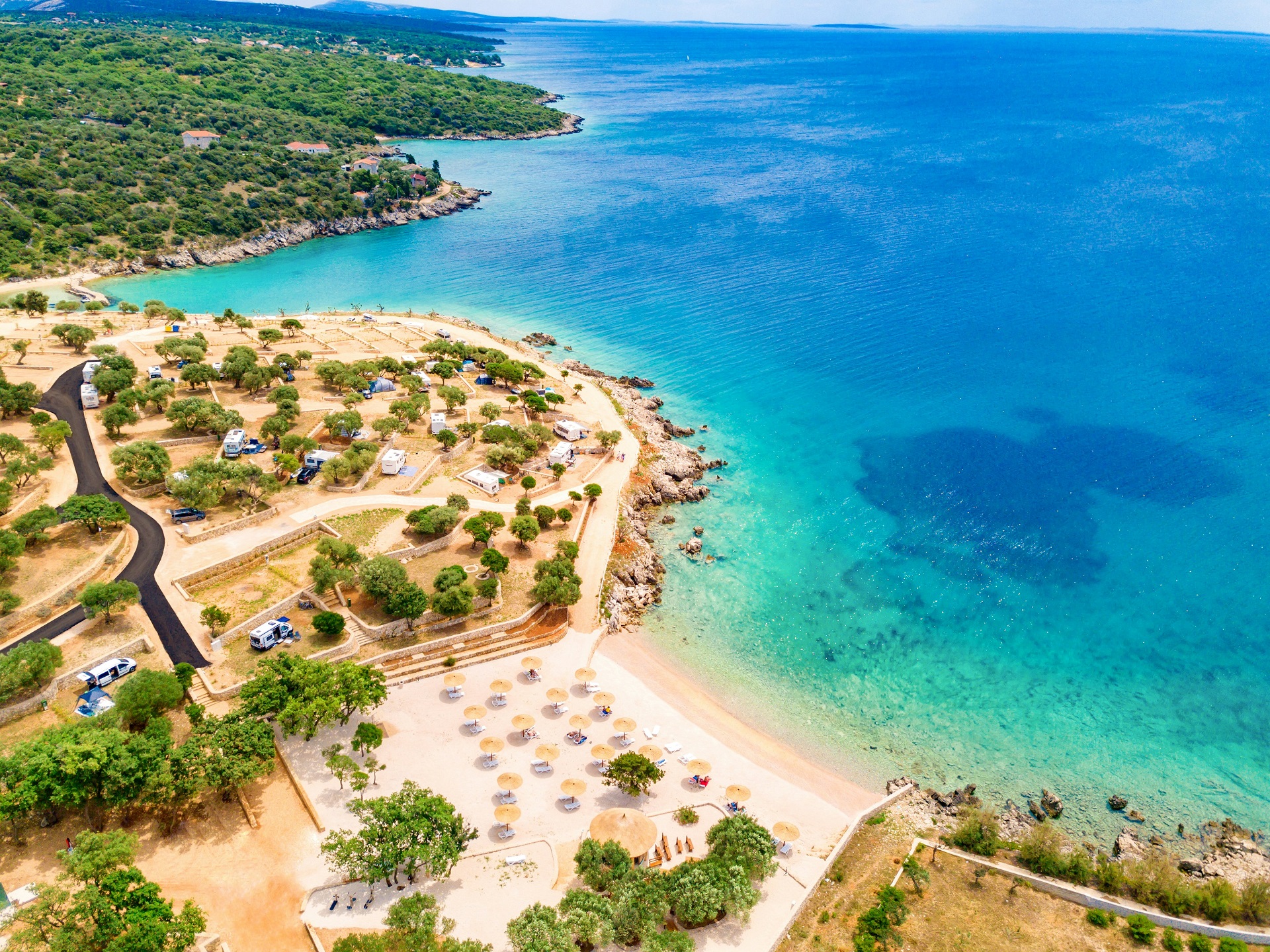
The southern coastline of Pag is particularly appealing in this regard. Here, the terrain gradually softens, and the harsh, lunar-like appearance of the island gives way to more sheltered formations and gently curved inlets. Long stretches of rocky shoreline are interrupted by occasional sandy pockets and shallow coves, many of which remain largely undeveloped and quiet even in peak summer. Anchoring in these areas often feels private and undisturbed, with minimal traffic and wide views of the surrounding Adriatic.
Further west, the sailing experience shifts again. The western side of Pag offers a noticeably more protected environment, where the island begins to show a softer and more traditional Mediterranean character. Olive groves extend inland from the coast, and small villages appear tucked discreetly into natural indentations along the shoreline. These settlements are often modest in scale, blending into the landscape rather than dominating it, and they provide occasional points of shelter, local interaction, and simple provisioning.
This western coastline is generally the preferred area for overnight anchoring. It offers better protection from the dominant wind systems that affect the region, particularly when conditions in the Velebit Channel become more active. When the Bora strengthens - descending from the nearby mountains toward the eastern side of the island - the western bays provide significantly calmer waters and safer holding. As a result, experienced sailors often plan their itineraries with flexibility, using this side of the island as a natural refuge when weather patterns shift.
The contrast between Pag’s exposed northern and eastern waters and its more sheltered southern and western anchorages is one of the defining characteristics of sailing here. The northern approaches, influenced by the open connection toward the Kvarner Gulf, tend to be more dynamic, with stronger winds and broader fetch. In contrast, the southern and western areas offer a more relaxed cruising environment, where shorter distances between anchorages and calmer sea states allow for slower, more exploratory sailing.
This variation creates a natural rhythm to navigation around the island. Rather than following a fixed route, sailors are encouraged to adapt daily plans based on real-time conditions. A morning departure might begin in a sheltered bay on the western coast, followed by a midday crossing to another anchorage depending on wind direction and strength. This flexibility becomes part of the experience itself, turning each passage into a small exercise in decision-making and observation.
What makes Pag particularly interesting from a route-planning perspective is how quickly conditions can change over relatively short distances. A sheltered bay can lie just a few nautical miles from a more exposed stretch of coastline, allowing for rapid adjustments without long detours. This density of options is especially valuable during transitional weather periods, when choosing the right anchorage can make a significant difference in comfort and safety.
In many ways, the hidden anchorages of Pag represent the island at its most authentic. Away from the busier marinas and well-known beaches, the coastline feels more elemental - shaped by wind, salt, and time. There are no large developments or structured tourism zones in these areas, only natural formations and the occasional stone structure or village that blends quietly into its surroundings.
For sailors, this creates a sense of discovery that is hard to replicate elsewhere. Each bay offers a slightly different perspective: some are wide and open with long views toward the horizon, while others are narrow and enclosed, offering complete shelter and stillness. Together, they form a network of possibilities that reward curiosity and careful navigation.
Ultimately, exploring the hidden anchorages and sailing routes around Pag transforms the island from a simple destination into a dynamic cruising ground. It is not just about visiting specific towns or beaches, but about reading the coastline, understanding the wind, and choosing your own path through a landscape that constantly shifts between exposure and protection.
SAILING CONDITIONS AROUND PAG
Sailing around Pag is defined less by distance and more by wind behavior. The island sits directly opposite the rugged Velebit Mountain, and this geographic relationship plays a decisive role in shaping local conditions. As a result, Pag offers a sailing environment that can shift quickly from calm and enjoyable to demanding and technical, often within the same day. For crews familiar with Adriatic wind systems, this variability is part of what makes the area engaging and rewarding.
The most influential local wind is the Bora, a cold, dry northeasterly that descends from the Velebit mountains toward the sea. When it funnels through gaps in the terrain, it accelerates and becomes particularly strong along Pag’s eastern coastline. These gusts can be sudden and forceful, creating sharp, short wave patterns and making exposed anchorages uncomfortable or unsafe. In Bora conditions, careful route planning becomes essential, and sailors naturally gravitate toward the island’s western side, where natural protection and orientation of the coastline provide significantly more shelter.
During active Bora periods, anchoring strategy is especially important. Bays that are open to the east or northeast should generally be avoided, while deeper western inlets offer more stable holding and reduced wind exposure. Even within short distances, conditions can vary considerably, so selecting the right anchorage often depends on a close reading of both forecast and local topography. This wind also tends to clear the sky and improve visibility, which can create striking sailing conditions despite the physical challenges at sea.
In contrast, the Maestral provides a far more predictable and enjoyable sailing experience. This steady northwest thermal wind typically develops during late morning and strengthens into the afternoon, offering ideal conditions for passage-making along Pag’s outer coastline. Under Maestral influence, the sea becomes more rhythmic and manageable, with consistent wind angles that suit relaxed cruising and longer coastal legs. For many sailors, these are the most pleasant hours of the day on the water, combining stability with enough energy to make sailing engaging without being demanding.
The Jugo, a southeasterly wind, introduces a different dynamic. Unlike the Bora, it builds more gradually and tends to bring a longer, more persistent swell across the Adriatic. While not as abrupt or gusty, it can make exposed anchorages less comfortable over time, particularly along Pag’s more open stretches. During Jugo conditions, sheltered bays - especially on the island’s western side - become the preferred choice, as they provide better protection from swell and wind direction.
What makes Pag particularly interesting from a sailing perspective is how these three wind systems interact with its geography. The island’s split character - exposed eastern shores facing the mainland and more protected western coves - means that no single strategy works in all conditions. Instead, successful navigation depends on adaptability. Sailors often adjust routes daily, choosing anchorages not just for scenery or convenience, but as a response to shifting atmospheric patterns.
This constant interplay between wind and coastline adds a strategic layer to sailing around Pag. It encourages awareness, planning, and flexibility, rewarding those who understand how regional systems behave rather than relying solely on fixed itineraries. At the same time, the island’s relatively short distances between anchorages mean that adjustments can be made quickly, without long or complex passages.
Despite its reputation for strong winds and exposed terrain, Pag remains highly accessible to experienced crews. When approached with respect for its conditions, it offers a wide range of sailing experiences - from fast, wind-driven passages along open coastlines to calm, sheltered nights in quiet bays. The key lies in reading the weather, understanding the island’s orientation, and using its natural divisions to your advantage.
In this sense, sailing around Pag is not just about reaching destinations, but about engaging with the environment itself. The wind is not a background factor - it is an active part of the journey, shaping decisions, routes, and experiences in real time. For sailors who appreciate this level of interaction, Pag offers one of the most dynamic and instructive cruising grounds in the northern Adriatic.
PAG CHEESE AND LOCAL GASTRONOMY
One of the strongest cultural identities of Pag is expressed through its food, and at the heart of it all is its most famous product - Pag cheese. This hard sheep’s milk cheese is far more than a local specialty; it is a direct reflection of the island’s environment, climate, and centuries-old pastoral way of life.
What makes Pag cheese so distinctive is not just the production process, but the landscape itself. The island is shaped by strong winds, salt carried from the sea, and sparse but highly aromatic vegetation. Sheep graze freely across rocky pastures covered in wild herbs such as sage, immortelle, and thyme, all of which are influenced by the salty air. This combination gives the milk - and therefore the cheese - a uniquely intense and slightly tangy flavor profile that cannot be replicated elsewhere. Even small changes in weather or grazing conditions subtly influence each batch, making the product deeply tied to the island’s natural cycles.
The tradition of cheesemaking on Pag dates back centuries, evolving alongside sheep farming as one of the island’s primary livelihoods. Production methods have been refined over generations, but they remain rooted in artisanal techniques rather than industrial processes. The result is a cheese that is firm, richly flavored, and often aged to develop even deeper complexity. It is widely regarded as one of Croatia’s most valuable culinary exports and is frequently found in high-end restaurants as well as local households across the region.
Beyond cheese, Pag’s gastronomy is strongly connected to the sea. Seafood plays a central role in daily cooking, reflecting the island’s long-standing maritime culture. In coastal konobas, it is common to find freshly caught fish grilled simply over open fire, seasoned with olive oil, garlic, and local herbs. Squid and cuttlefish are also staples, often prepared grilled or in traditional black risotto, where the natural ink gives the dish its deep color and rich, briny flavor. Shellfish, depending on availability, add further variety to the coastal menu, always served in a straightforward style that emphasizes freshness over complexity.
Inland, the culinary focus shifts toward land-based traditions, particularly lamb. The island’s rocky terrain and hardy vegetation have long supported sheep farming, making lamb one of the most important ingredients in local cuisine. It is commonly prepared in slow-cooked dishes, often roasted or baked under a traditional “peka” lid, where meat is cooked gently with potatoes, herbs, and olive oil until tender. The result is rich, aromatic, and deeply tied to the pastoral identity of the island.
Meals on Pag are typically accompanied by local wines from nearby Dalmatian vineyards, which balance the intensity of both seafood and lamb dishes. Homemade olive oil and rakija (fruit brandy) are also common elements of the dining experience, often produced in small family batches rather than large-scale operations.
What defines gastronomy on Pag overall is its simplicity and authenticity. There is little emphasis on elaborate presentation or fusion techniques; instead, the focus remains on high-quality ingredients shaped by a unique environment. Every dish feels connected to the island itself - whether it comes from the sea, the rocky inland pastures, or the centuries of tradition that have sustained local communities.
For sailors, this makes dining on Pag an extension of the sailing experience. Meals in waterfront konobas or small inland taverns often feel unhurried and grounded, mirroring the rhythm of the island’s landscapes and anchorages. It is a cuisine that does not try to impress through complexity, but rather through honesty, depth of flavor, and a strong sense of place.
SAILING CONNECTIONS AND ISLAND HOPPING
Pag’s position in the northern Adriatic makes it one of the most strategically useful sailing hubs for crews moving between two very different maritime regions. Sitting between the sheltered waters of northern Dalmatia and the broader expanse of the Kvarner Gulf, it naturally functions as a transition point - both geographically and in terms of sailing style. From here, itineraries can easily expand northward into the Kvarner islands or curve back south toward the well-known archipelagos around Zadar.
One of the most common onward routes from Pag leads toward Rab. Known for its distinctive sandy beaches and green interior compared to Pag’s more austere terrain, Rab offers a softer sailing experience and a gradual shift in landscape. The passage between the two islands is relatively open, with clear navigation routes and a mix of exposed and semi-sheltered waters depending on wind conditions. For many crews, this leg represents a natural continuation of a northbound journey, moving from Pag’s stark coastline into a more vegetated and traditionally Mediterranean environment.
Further north lies Lošinj, a longer but highly rewarding extension of the route. Lošinj is well known for its lush vegetation, clear waters, and well-developed yachting infrastructure. The sail toward Lošinj typically involves crossing more open sections of sea, where conditions can vary depending on the prevailing Bora or Maestral winds. This makes it a more dynamic passage, particularly suited for crews comfortable with longer legs and changing sea states. Once arrived, Lošinj offers excellent marinas and sheltered bays, making it a strong endpoint or turnaround point for northern Adriatic itineraries.
Heading south from Pag, sailors re-enter the familiar cruising grounds of the Zadar Archipelago. This route is often more sheltered, passing through a dense network of islands, channels, and anchorages that allow for flexible day-to-day planning. The transition from Pag into this region is noticeable: the coastline becomes more indented, vegetation increases, and the sailing rhythm shifts toward shorter, more frequent hops between islands.
From there, it is only a short continuation toward the Kornati Islands, one of the most iconic sailing areas in the Adriatic. This protected national park is a stark contrast to Pag’s mix of barren and settled landscapes, offering a maze-like archipelago of uninhabited islets, clear waters, and dramatic limestone formations. For many itineraries, combining Pag with the Kornati region creates a compelling balance between open-channel sailing and protected island exploration.
What makes Pag particularly valuable in this broader network is its flexibility. The island sits at a crossroads where multiple sailing styles converge: open-water passages to the north, protected island chains to the south, and a mix of both along its own coastline. This allows sailors to adjust their direction based on weather, time constraints, or preference without losing access to interesting destinations in any direction.
The combination of open channels, such as those influenced by the Velebit Channel winds, and more sheltered coastal routes along Pag’s western side means the island can accommodate both northbound and southbound itineraries equally well. Crews can choose to use it as a stopping point, a provisioning hub, or even a base for circular routes that include both Dalmatian and Kvarner highlights.
In practical terms, this makes Pag more than just another island on a map - it becomes a functional junction in the Adriatic sailing network. Whether continuing toward the green landscapes of Rab and Lošinj or returning south into the familiar waters of Zadar and Kornati, Pag offers a natural and logical stepping stone that connects some of the most diverse cruising grounds in Croatia.
WHY SAILORS ARE DRAWN TO PAG
Pag stands out in the Adriatic not because it fits neatly into a single category, but because it refuses to do so. It is an island defined by contrast - sometimes within the same day, sometimes within the same short sail. That variability is exactly what makes it so compelling for sailors who want more than predictable cruising conditions or uniform scenery.
The first impression many sailors have of Pag is its landscape. Approaching from the sea, especially from the direction of the Kvarner Gulf or the Velebit Channel, the island often appears stark and almost lunar. Long stretches of pale limestone, minimal vegetation, and an exposed coastline create a raw visual identity that feels different from the greener islands of central and southern Dalmatia. Yet this apparent simplicity is deceptive. As you move along the coast, the terrain shifts constantly - revealing sheltered coves, olive groves, sandy inlets, and small settlements that soften the initial impression.
This duality - harsh exterior and hidden softness - is mirrored in the sailing experience itself. On one side, Pag offers open, wind-exposed waters where conditions can be dynamic and engaging, particularly under the influence of the Bora descending from the Velebit Mountain. These areas reward attentive seamanship, offering fast passages and a sense of direct engagement with natural forces. On the other side, the island also provides calm, protected anchorages, especially along its western coastline, where bays are more sheltered and evenings at anchor can be completely still.
For sailors, this combination is rare: an island that delivers both challenge and comfort without requiring long repositioning sails. Within a relatively short distance, you can move from open-water cruising conditions to quiet, enclosed anchorages. This makes itinerary planning flexible and responsive, allowing crews to adjust daily routes based on weather, wind direction, or simply mood.
Pag also offers a surprisingly wide range of harbor experiences. Towns like Novalja bring energy, services, and modern marina infrastructure, while Pag Town provides a more historic and culturally grounded stop with strong ties to salt production and Venetian architecture. Between these larger centers lie smaller villages and anchorages that remain quieter and more traditional, offering a slower rhythm and closer connection to local life.
This variety extends beyond geography into atmosphere. One evening might be spent anchored in a remote bay with no visible development, surrounded only by rock and sea. The next might involve a lively waterfront dinner or a short walk through a historic stone town. The transitions are not gradual - they are immediate and distinct, which keeps the sailing experience dynamic and unpredictable in a positive sense.
What ultimately draws sailors to Pag is this sense of multiplicity within a single island. It is not just a destination to reach, but a place that continuously changes character depending on where you are and how you approach it. Safe harbors coexist with exposed passages. Quiet anchorages sit just a short sail away from lively coastal hubs. Rugged terrain gives way to softer landscapes without warning.
In practical terms, this means Pag accommodates a wide spectrum of sailing styles. Experienced crews appreciate its wind exposure and strategic navigation challenges, while more relaxed itineraries benefit from its accessible harbors and sheltered bays. Few islands in Croatia manage to balance these elements so effectively within such a compact sailing area.
Ultimately, sailors are drawn to Pag because it keeps the experience alive. It does not settle into a single mood or rhythm. Instead, it offers constant variation - visual, environmental, and experiential - making every passage, anchorage, and coastline feel distinct. In a region known for its beauty, Pag distinguishes itself through contrast, and that contrast is what makes it unforgettable.
FINAL THOUGHTS: PAG AS A SAILING EXPERIENCE
Pag is not an island that can be summarized in a single impression or reduced to one type of sailing experience. It is defined by contrast at every level - landscape, atmosphere, wind, and lifestyle - and it is precisely this diversity that makes it so memorable for sailors. Few places in the Adriatic shift so quickly between opposites: from exposed, wind-shaped coastlines to calm, sheltered bays; from lively waterfront towns to completely silent anchorages where the only movement is the water against the hull.
At sea level, these contrasts become even more pronounced. One day may begin with a steady passage under clear skies and consistent Maestral conditions, where sailing feels effortless and rhythmic. By evening, the scene can change entirely, with the boat anchored in a quiet bay where the coastline feels untouched and distant. On another day, the same island may present stronger winds channeled through the Velebit region, demanding sharper attention and more deliberate route choices. This constant variability ensures that no two days on Pag feel the same.
The human side of the island reflects this same duality. In Novalja, sailors find energy, modern infrastructure, and a lively summer atmosphere, where evenings can extend into vibrant coastal life just steps from the marina. In contrast, Pag Town offers a quieter, more historic experience shaped by stone streets, salt pans, and centuries of tradition. Moving between these two centers alone creates a sense of traveling through different versions of the island within a single itinerary.
Beyond the towns, the coastline opens into quieter territory - especially along the southern and western sides - where sailing becomes more reflective and immersive. Here, anchorages are less structured, villages are smaller and more dispersed, and the natural environment plays a stronger role in shaping the experience. These are the areas where sailors often slow down without planning to, simply because the surroundings encourage it.
What makes Pag particularly distinctive in the broader context of northern Adriatic sailing is how it fits into transition routes. Positioned between the Zadar Archipelago and the Kvarner Gulf, it naturally becomes part of longer journeys rather than an isolated destination. Yet despite this functional role, it rarely feels like just a stopover. Instead, it has enough depth, variation, and identity to stand as a destination in its own right.
For sailors moving through the region, Pag often becomes one of those places that quietly reshapes expectations. It is not defined by a single iconic beach or one famous harbor, but by the accumulation of many different experiences - some energetic, some quiet, some demanding, and some entirely peaceful. That blend creates a sense of richness that reveals itself gradually over time.
In the end, Pag is best understood not as a fixed image, but as a sequence of changing conditions and perspectives. It rewards flexibility, curiosity, and an openness to variation. Whether experienced as part of a longer northern Adriatic passage or as a focused exploration in its own right, it leaves behind something more lasting than a checklist of stops. It leaves a feeling of contrast - of having sailed through multiple worlds within a single island.