SAILING OLIB ISLAND: A QUIET ESCAPE IN THE OUTER ZADAR ARCHIPELAGO
Positioned on the outer edge of the northern Adriatic, Olib Island is one of those rare sailing destinations that still feels largely untouched by time. Positioned beyond the more frequented inner islands of the Zadar Archipelago, it offers a sense of distance - not just in geography, but in atmosphere. Small in scale, sparsely populated, and free from heavy development, Olib presents a quieter, more elemental version of the Adriatic sailing experience.
Compared to islands closer to Zadar, where marinas, waterfront promenades, and busy seasonal activity define the coastline, Olib feels deliberately understated. There are no large harbour complexes, no high-energy beach scenes, and no dense clusters of yachts competing for space. Instead, the island is defined by open horizons, low stone settlements, sandy paths, and a coastline that remains largely natural and unobstructed.
This simplicity shapes the way sailors experience the island from the moment they approach. The visual impression is softer and more dispersed - no dominant harbour entrance or urban skyline, but rather a gradual transition from open sea into quiet coastal space. Boats anchor at a distance, the shoreline remains calm, and the entire environment feels less structured and more fluid.
For sailors navigating the northern Dalmatian cruising grounds, Olib represents a clear shift in rhythm. Moving away from the busier routes closer to the mainland, the density of destinations begins to decrease slightly. Distances between islands become a bit longer, navigation points more spaced out, and the sense of open water more pronounced. This creates a feeling of gradual transition from a compact sailing network into a more expansive maritime landscape.
This shift is not extreme, but it is noticeable. The closer one moves toward Olib, the more the Adriatic begins to open up - both visually and experientially. The sea becomes a more dominant presence, with wider horizons and fewer interruptions. At the same time, traffic decreases, and anchorages become quieter, often shared by only a handful of boats even during the summer season.
Olib’s role within a sailing itinerary is therefore less about activity and more about contrast. It is not a destination that demands attention through attractions or infrastructure, but one that offers space and calm within a broader route. For crews coming from more active islands such as Ugljan Island or Vir Island, the difference is immediate and refreshing.
The island’s simplicity also allows for a more flexible style of sailing. Without the need to secure marina berths or navigate busy harbour systems, time becomes less structured. Days are shaped by weather conditions, personal pace, and the natural rhythm of the sea rather than schedules or availability of services.
In this way, Olib Island serves as an entry point into a quieter side of the Adriatic - one where sailing becomes less about movement between destinations and more about experiencing the space between them. It is a place where the journey slows, the environment opens, and the essence of coastal cruising becomes simpler, calmer, and more immersive.
WHY OLIB FEELS SO REMOTE AND PEACEFUL
What defines Olib Island most clearly is its simplicity. The island is small in scale, lightly populated, and largely untouched by the kind of modern development that has transformed many parts of the Adriatic coastline. There are no major road networks cutting across the landscape, no steady flow of traffic, and very little commercial expansion shaping the shoreline. Instead, Olib remains grounded in a traditional island structure - stone houses clustered in a modest settlement, sandy and unpaved paths connecting different parts of the island, and olive groves stretching quietly toward the sea.
This simplicity is not just visual; it defines how the island functions. Without large infrastructure or dense tourism, daily life unfolds slowly and predictably. There are no sudden surges of activity, no crowded waterfronts, and no pressure to accommodate high volumes of visitors. The result is an environment that feels stable and consistent, where the pace of life is set more by natural cycles than by external demand.
Compared to more accessible islands within the Zadar Archipelago, such as Ugljan Island, or more tourism-oriented destinations like Vir Island, Olib feels noticeably more remote - not necessarily because of extreme distance, but because of its lack of intensity. It is not structured around frequent ferry traffic, marina turnover, or large seasonal populations. Instead, it exists slightly outside the main flow of movement, which gives it a quieter and more self-contained character.
For sailors, this difference becomes most apparent on arrival. Approaching Olib, there is no sense of entering a busy nautical hub. The coastline appears open and calm, with only limited signs of activity. Anchorages are less crowded, and even in peak summer conditions, the number of boats remains relatively low compared to more central destinations.
This reduced traffic translates directly into a more relaxed anchoring experience. Boats are spaced further apart, noise levels are minimal, and there is a stronger sense of privacy. The absence of constant movement - both on land and at sea - creates a setting where sailors can settle into one place without the need to adjust continuously to surrounding activity.
Evenings on Olib Island highlight this sense of isolation most clearly. As the day winds down and any visiting boats or day-trippers depart, the island returns to a quiet, almost still state. The wind often drops, the sea surface becomes calmer, and the remaining boats sit quietly at anchor. With little artificial light and minimal background noise, the environment feels more connected to natural elements - sea, sky, and land - than to human activity.
This is where Olib’s character is most fully expressed. It is not defined by what it offers in terms of attractions or infrastructure, but by what it lacks: crowds, noise, and urgency. That absence creates space - for silence, for slower movement, and for a more immersive experience of the Adriatic environment.
In the broader context of sailing Croatia, Olib stands out precisely because it resists change. While many islands have evolved to meet increasing tourism demand, it has retained a more traditional and restrained identity. For sailors seeking a destination that feels genuinely removed from busy coastal patterns, Olib Island offers one of the clearest expressions of calm and simplicity in the northern Adriatic.
SAILING CONDITIONS AROUND OLIB
Sailing conditions around Olib Island are generally stable and rewarding throughout the main summer season, making the island a comfortable addition to northern Adriatic itineraries. Its position places it slightly further offshore than the inner islands of the Zadar Archipelago, which means it experiences a more open maritime environment, yet still benefits from partial protection created by surrounding island groups.
During the summer months, the dominant wind pattern is the Maestral, a reliable northwesterly breeze that typically builds in the early afternoon. Around Olib, this wind creates ideal conditions for smooth, predictable sailing. Mornings are often calm or lightly breezy, allowing for relaxed departures, swimming stops, or short repositioning sails. As the day progresses, the Maestral fills in steadily, providing enough wind for comfortable cruising without creating overly demanding sea states.
This pattern is particularly well suited for inter-island sailing in the area. Routes connecting Silba Island, Premuda Island, and Ilovik Island are typically short and manageable, often completed within a few hours under normal conditions. These distances allow sailors to move at a relaxed pace, without the need for long offshore legs or complex passage planning. Instead, the region lends itself to a sequence of short, scenic sails where each leg naturally flows into the next.
Despite its relatively open setting, the sea state around Olib remains manageable in stable weather. The surrounding islands help reduce the impact of long ocean swell, and wave development is usually moderate under typical Maestral conditions. This balance between openness and partial shelter gives the area a sense of space without introducing significant navigational difficulty.
However, the Bura wind can change this dynamic when it occurs. Blowing from the northeast, Bura is known for its strength, sudden gusts, and the ability to create short, steep waves in exposed areas. Around Olib Island, these effects can be more pronounced than in more enclosed island systems, particularly along coastlines that face directly into the wind. In such situations, anchorages that are comfortable in calm conditions may become less protected, requiring careful selection based on wind direction and intensity.
For this reason, weather awareness is important when planning overnight stops in the area. While Olib itself offers suitable anchoring options in stable conditions, sailors often keep nearby alternatives in mind within the surrounding island network, adjusting routes if stronger winds develop.
One of the advantages of sailing around Olib is the simplicity of navigation. The waters are relatively open, with good visibility and minimal underwater hazards compared to more intricate coastal regions. There are no narrow channels, heavily trafficked passages, or complex harbour approaches to manage. This makes the area accessible even to less experienced crews, provided they operate within suitable weather conditions and maintain basic navigational awareness.
Another defining feature of sailing here is the sense of openness. Compared to the more enclosed waters near islands such as Ugljan Island or Pašman Island, the horizon around Olib feels wider and less interrupted. This creates a different sailing atmosphere - one where the sea plays a more dominant role and distances between landmasses are slightly greater.
Overall, sailing conditions around Olib Island strike a balance between accessibility and exposure. Calm mornings, reliable afternoon winds, and straightforward navigation make it an easy and enjoyable area to sail, while its open position introduces just enough variation to keep the experience dynamic. For sailors seeking a relaxed but slightly more expansive Adriatic environment, Olib provides exactly that.
ANCHORAGES AND APPROACHES TO OLIB
Olib Island offers a small but characterful selection of anchoring options, shaped far more by natural conditions than by built infrastructure. There are no large marinas or heavily engineered harbours here, and that absence is central to the island’s appeal. Instead of navigating into structured berths, sailors approach Olib with a more traditional mindset - reading the wind, selecting position carefully, and settling into anchorages that feel open and unforced.
This low-impact nautical profile reinforces the island’s quiet identity. Without dense mooring fields or high turnover of boats, anchorages remain relatively uncrowded, even in the peak summer period. The experience is less about securing a spot within a harbour system and more about choosing the right place to anchor in relation to wind, depth, and seabed conditions.
The main village area provides the most practical point of access to shore. Here, sailors can approach by tender with relative ease in calm weather, making it possible to go ashore for a short walk, a meal, or basic provisions. In settled conditions, brief stays alongside the waterfront may be possible, but space is limited and there is little protection from changing winds. As a result, most crews treat this area as a landing point rather than a long-term mooring solution.
Because of this, Olib Island is best understood as an anchorage island. Boats typically remain offshore, using the coastline as a quiet visual backdrop rather than a functional docking zone. This creates a different kind of relationship between yacht and land - one that emphasizes distance, calm, and independence rather than direct integration with port infrastructure.
The seabed around the island is generally favourable for anchoring. It alternates between sand and seagrass, with sandy patches providing particularly reliable holding when anchors are set correctly. Seagrass areas require a bit more attention in placement, but in stable conditions they still offer adequate grip. Depths are manageable in common anchoring zones, allowing for comfortable positioning without complex manoeuvring.
As with many outer islands in the northern Adriatic, anchoring comfort is closely tied to weather stability. In calm summer conditions, Olib’s anchorages are peaceful and well protected, with minimal swell and only gentle boat movement. These are the conditions in which the island truly stands out - quiet surroundings, clear water, and a strong sense of space between vessels.
When wind conditions change, particularly with the arrival of stronger Bura from the northeast, the situation can shift. More exposed areas may become uncomfortable, and sailors need to adjust positioning or consider alternative anchorages within the surrounding island network. Nearby islands such as Silba Island or Premuda Island can offer different levels of protection depending on wind direction, making route flexibility an important part of planning.
Approaches to Olib are generally uncomplicated. The surrounding waters are open, visibility is good, and there are few navigational hazards compared to more intricate coastal zones. This simplicity allows for relaxed arrivals and departures, without the need for precise timing or complex manoeuvres.
Ultimately, anchoring around Olib Island reflects the island’s broader character - simple, quiet, and dependent on natural conditions rather than infrastructure. For sailors who value space, calm, and a more traditional anchoring experience, it offers one of the most authentic and undisturbed settings in the northern Adriatic.
OLIB VILLAGE AND ISLAND LIFE
The main settlement on Olib Island is small, compact, and unmistakably traditional in character. Built close to the shoreline, the village forms a tight cluster of stone houses connected by narrow paths that wind gently between homes, gardens, and small communal spaces. There is no formal urban layout or modern expansion pattern - just an organic structure that has developed gradually over centuries, shaped by practical needs and close ties to the sea.
This close relationship with the coastline defines everyday life. The sea is always nearby, both visually and functionally, influencing routines, livelihoods, and the overall pace of the settlement. Fishing remains part of daily activity, not on a large commercial scale, but as a continuation of long-standing local practice. Boats come and go quietly, and the rhythm of the harbour reflects weather conditions and time of day rather than schedules or traffic.
One of the most noticeable aspects of village life is the absence of modern pressure. There are no large construction zones, no expanding resort areas, and no visible push toward high-capacity tourism. Unlike more developed destinations in the Zadar Archipelago, Olib has retained a consistent scale, where residential life and small-scale visitor activity coexist without overwhelming each other.
The lack of cars and heavy infrastructure further reinforces this atmosphere. Movement through the village happens on foot, along quiet paths shaded by Mediterranean vegetation. Without road noise or constant motion, the environment feels stable and continuous, with very little interruption to the natural flow of daily life.
Seasonality does bring some change, but in a restrained way. During the summer months, the village becomes more active as visitors arrive, small businesses open more regularly, and the waterfront sees increased use. However, this increase in activity never shifts the island into a high-energy tourist destination. Even at its busiest, Olib remains calm, with a predominantly residential feel rather than a commercial one.
This balance is part of what makes the island so distinctive. While places like Vir Island transform significantly during peak season, becoming lively and densely populated, Olib maintains a steady identity. Activity rises slightly, but the overall tone remains quiet and grounded.
For sailors arriving from busier parts of the Adriatic, this contrast is immediate. After navigating more active anchorages or developed coastal towns, stepping ashore on Olib often feels like entering a different pace of life. There is less emphasis on movement, entertainment, or services, and more emphasis on presence - walking slowly through the village, observing daily routines, and experiencing the simplicity of an island that has not been reshaped by large-scale tourism.
In essence, village life on Olib Island is defined by continuity. It is not driven by rapid seasonal change or external demand, but by long-established patterns that remain visible in the layout of the settlement, the rhythm of daily activity, and the overall atmosphere. For sailors seeking a genuine and understated connection to Adriatic island life, Olib offers one of the clearest and most authentic expressions of that experience.
SWIMMING AND THE SEA AROUND OLIB
The sea surrounding Olib Island is typically clear, calm, and inviting, reflecting the island’s position away from major urban centres and heavily trafficked coastal zones. In stable summer conditions, visibility is often excellent, allowing swimmers to see the seabed clearly several meters below the surface. This clarity, combined with the island’s quiet surroundings, creates an environment that feels both clean and undisturbed.
The coastline of Olib offers a mix of rocky sections and sandy seabeds, giving swimmers a variety of simple but enjoyable conditions. Rocky edges tend to provide slightly deeper water and better visibility, while sandy areas allow for easier entry and a more gradual transition into the sea. Seagrass patches are also present in certain areas, contributing to a balanced marine environment and adding subtle variation to the underwater landscape.
Unlike more developed destinations in the Zadar Archipelago, swimming around Olib is not shaped by organized beach zones, marked swimming areas, or resort-style infrastructure. There are no large crowds gathering along the shoreline, and no designated recreational hubs dominating the coast. Instead, access to the sea is direct and unstructured - most commonly from a yacht at anchor or from a quiet stretch of shoreline reached on foot.
This lack of structure gives swimming around Olib Island a more natural and personal feel. Each anchorage becomes its own swimming area, and the experience is defined by the immediate surroundings rather than by external facilities. The absence of noise, traffic, and high-density activity allows swimmers to fully engage with the environment, often in near silence.
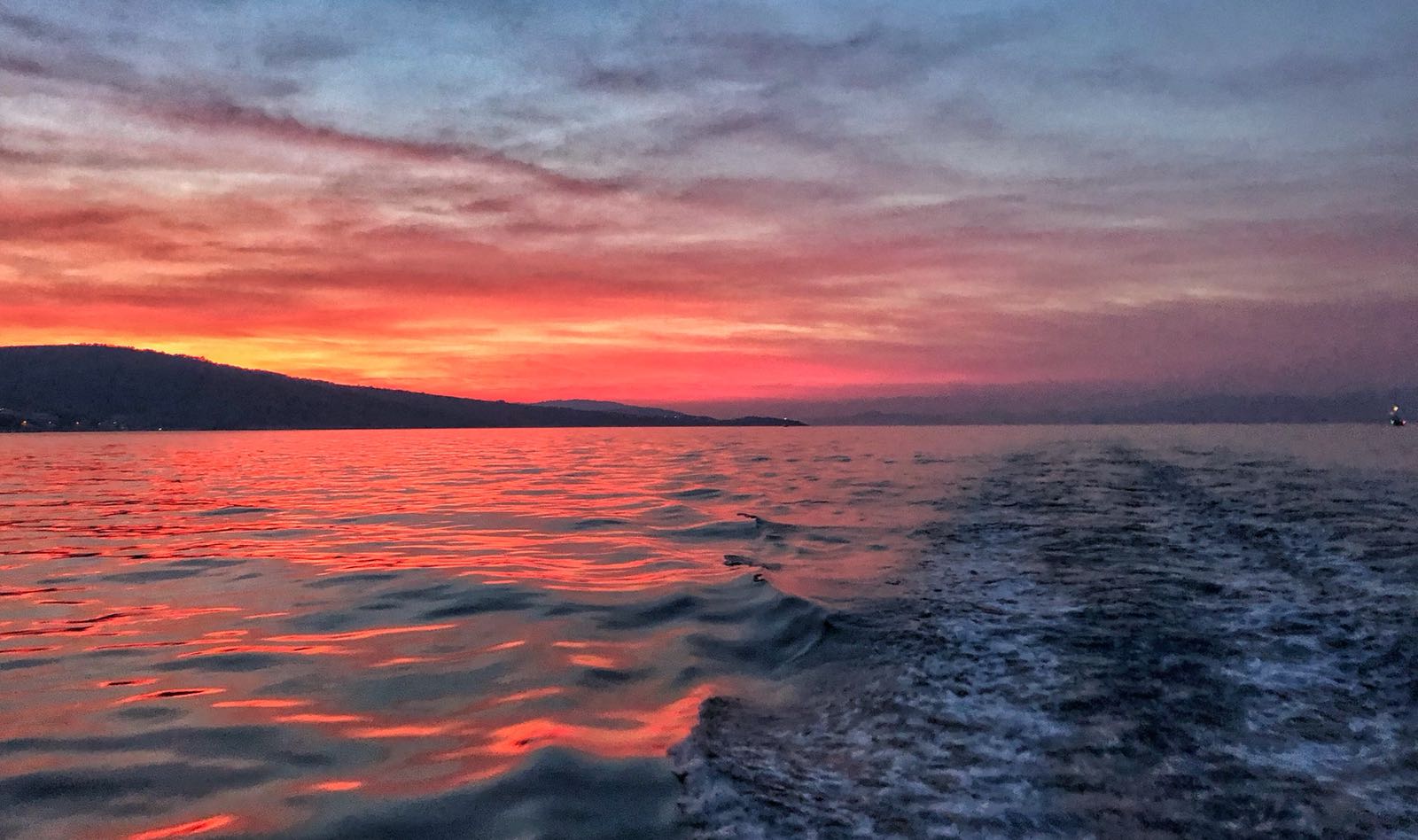
During calm weather, particularly in the early morning or late evening, the sea can become exceptionally smooth. Surface movement decreases, reflections sharpen, and the water takes on a glass-like quality that enhances both visibility and overall atmosphere. These moments are especially valued by sailors, as they transform routine swimming into a more immersive experience connected to light, stillness, and open space.
Snorkeling around Olib is simple but rewarding. While the island is not known for dramatic underwater formations or notable dive sites, the combination of clear water, varied seabed, and low disturbance allows for relaxed exploration. Small fish, seagrass ecosystems, and rocky formations provide enough visual interest to make time in the water engaging without requiring specialized equipment or planning.
Another defining aspect of swimming here is the pace at which it happens. Because Olib Island encourages longer stays at anchor and a slower daily rhythm, swimming becomes less of a short activity between sailing legs and more of a central part of the day. Boats remain in place longer, and the sea is revisited multiple times - morning, afternoon, and evening - each with slightly different conditions and atmosphere.
Compared to more active islands such as Vir Island, where beaches can be busy and structured around tourism, Olib offers a quieter alternative. Here, the focus is not on facilities or organized spaces, but on direct, uninterrupted access to the water.
In essence, swimming around Olib Island is defined by clarity, simplicity, and calm. It is an experience that aligns closely with the island’s broader character - uncomplicated, natural, and shaped by the rhythm of the sea rather than by external design.
PROXIMITY TO OTHER NORTHERN ADRIATIC ISLANDS
One of the key advantages of Olib Island is its position within a sailing corridor that is both well connected and noticeably less crowded than the inner Adriatic routes. While it sits slightly beyond the main concentration of islands closer to Zadar, it remains naturally integrated into a network of nearby destinations that are easily reached within short, manageable passages.
Immediately around Olib, several small islands form a loose chain that supports relaxed island-hopping. Destinations such as Silba Island, Premuda Island, and Ilovik Island are all within comfortable sailing distance under typical summer conditions. These routes are rarely demanding, and distances are short enough to allow flexible planning, making it easy to adapt daily movements based on weather, preference, or anchorage availability.
This local connectivity is one of Olib’s strongest practical features. It allows sailors to remain within a relatively compact area while still experiencing variety - moving between islands that each offer slightly different coastal features, anchoring conditions, and levels of activity. At the same time, the overall traffic density remains low compared to more central parts of the Adriatic, preserving a sense of space and calm even during peak season.
To the south, Olib connects gradually into the broader network of the Zadar Archipelago. As routes extend in this direction, the sailing environment becomes more structured, with shorter distances between islands, a higher concentration of anchorages, and more frequent opportunities for provisioning and shore access. This transition allows Olib to function as a link between two different cruising styles - one more open and spacious, the other more enclosed and varied.
Continuing further along this southern axis, sailing routes naturally lead toward destinations such as Kornati National Park and the island groups of central Dalmatia. While these areas are more widely known and often more heavily trafficked, Olib provides a quieter starting point or intermediate stop along the way, allowing crews to gradually re-enter busier sailing zones rather than moving directly into them.
Despite all of this connectivity, Olib Island retains a subtle sense of separation from the main sailing highways. It is close enough to be easily included in itineraries, yet far enough from major routes to avoid constant traffic and congestion. This balance is what gives the island its distinctive character: accessible without being busy, connected without being central.
For sailors, this means Olib can be used in multiple ways. It can serve as a quiet stop within a longer route, a transition point between different island systems, or a base for exploring nearby outer islands with minimal travel time. In all cases, its position supports flexibility while preserving the calm, low-density experience that defines sailing in this part of the Adriatic.
A SLOWER SAILING RHYTHM
Time on Olib Island moves with a noticeably different cadence than in the busier parts of the Adriatic. Without large marinas, dense tourism, or tightly scheduled harbour logistics, the usual pressures that shape a sailing itinerary begin to fade. What replaces them is a more fluid, responsive way of moving - one that is guided less by plans and more by conditions.
Anchorages around Olib are typically quieter, with fewer boats arriving and departing throughout the day. This stability changes the atmosphere on board. Instead of constantly adjusting position or preparing for the next leg, crews often settle into a single anchorage for longer periods. The boat becomes less of a transit point and more of a temporary base, gently aligned with wind direction, light, and sea movement.
Shore visits follow a similar pattern. Going ashore is simple and unhurried - often just a short tender ride to a quiet landing point, followed by a walk through the village or along open coastal paths. There are no dense commercial zones to navigate, no crowded promenades, and no sense of urgency to move quickly from one place to another. The experience remains informal and flexible, shaped by curiosity rather than structure.
This slower rhythm is also reflected in how time is used throughout the day. Mornings often begin in stillness, with calm seas and minimal wind, ideal for swimming or simply observing the surroundings. As the Maestral builds gently in the afternoon, it offers the option of a short sail - or just a subtle shift in how the boat sits at anchor. Evenings bring another transition, as the wind drops and the environment settles into quiet, with very little external activity to interrupt it.
In contrast to more active islands in the Zadar Archipelago, where itineraries are often shaped by marina reservations, provisioning stops, or popular anchorages, Olib allows for a more open-ended approach. Plans become adaptable rather than fixed, and movement becomes optional rather than necessary.
This makes Olib Island particularly well suited to itineraries that prioritize experience over distance. Instead of trying to cover as many locations as possible, sailors can focus on spending more time in fewer places, allowing each anchorage to be experienced more fully. The emphasis shifts from progression to presence - less about where to go next, and more about where to remain.
Ultimately, the slower sailing rhythm around Olib is not something imposed, but something that emerges naturally from the island’s environment. The absence of pressure, combined with open space and minimal traffic, creates conditions where slowing down feels like the most intuitive choice. For those willing to embrace it, this rhythm offers a deeper and more relaxed way of experiencing the Adriatic.
FINAL THOUGHTS: WHY OLIB BELONGS ON A SAILING ROUTE
Olib Island is not a destination that draws attention through scale, nightlife, or nautical infrastructure. There are no large marinas to organize your stay, no high-energy waterfronts, and no pressure to keep moving. Its value lies elsewhere - in space, in simplicity, and in a subtle but unmistakable sense of distance from the busier patterns that define much of the Adriatic coast.
Within the broader context of the Zadar Archipelago, Olib occupies a unique position. It is connected enough to be easily included in a sailing itinerary, yet far enough from the main routes to feel genuinely removed. This balance makes it particularly effective as a transition point - a place where the rhythm of a journey naturally slows, allowing crews to step out of a more structured cruising pattern.
For yacht charters exploring northern Dalmatia, Olib works best not as a central hub, but as a deliberate pause between more active destinations. After navigating islands with busier anchorages or more developed coastal zones, arriving here introduces a different kind of experience. Movement becomes optional, schedules loosen, and time begins to follow the conditions of the sea rather than predefined plans.
This is where the island’s character becomes most apparent. Anchorages are quieter, distances between boats are greater, and the overall environment feels more open and less mediated by infrastructure. Instead of focusing on logistics - berths, reservations, or services - sailors are free to engage more directly with their surroundings. The emphasis shifts toward longer stays, unhurried routines, and a deeper awareness of wind, light, and water.
Olib particularly rewards those who approach sailing with flexibility. It is not a place designed for tight itineraries or rapid progression from one stop to the next. Rather, it suits crews who are willing to slow down, remain in one anchorage for extended periods, and allow the experience to unfold without constant movement. In this sense, it represents a more traditional and less commercial interpretation of Adriatic cruising.
Compared to nearby islands such as Ugljan Island or Vir Island, which offer accessibility and a higher level of activity, Olib provides contrast. It does not compete with them - it complements them, adding depth and variation to a sailing route by offering something quieter and more restrained.
In a region known for its diversity, Olib Island stands out in a subtle but meaningful way. It is not defined by what it offers in terms of attractions, but by what it preserves: calm, space, and a connection to the sea that feels largely undisturbed. For sailors seeking a more authentic and reflective experience in the northern Adriatic, Olib earns its place not through prominence, but through quiet distinction.