IŽ ISLAND SAILING GUIDE: A QUIET KORNATI NEIGHBOR WITH AUTHENTIC DALMATIAN CHARACTER
Between the familiar sailing corridors of the Zadar Archipelago and the open, fragmented seascape of Kornati National Park lies Iž Island, a modestly sized Dalmatian island that rarely dominates itineraries but consistently enriches them. It is one of those places that sailors often pass “near,” only to later realize it deserves more time than originally planned. That understated presence is precisely where its character begins.
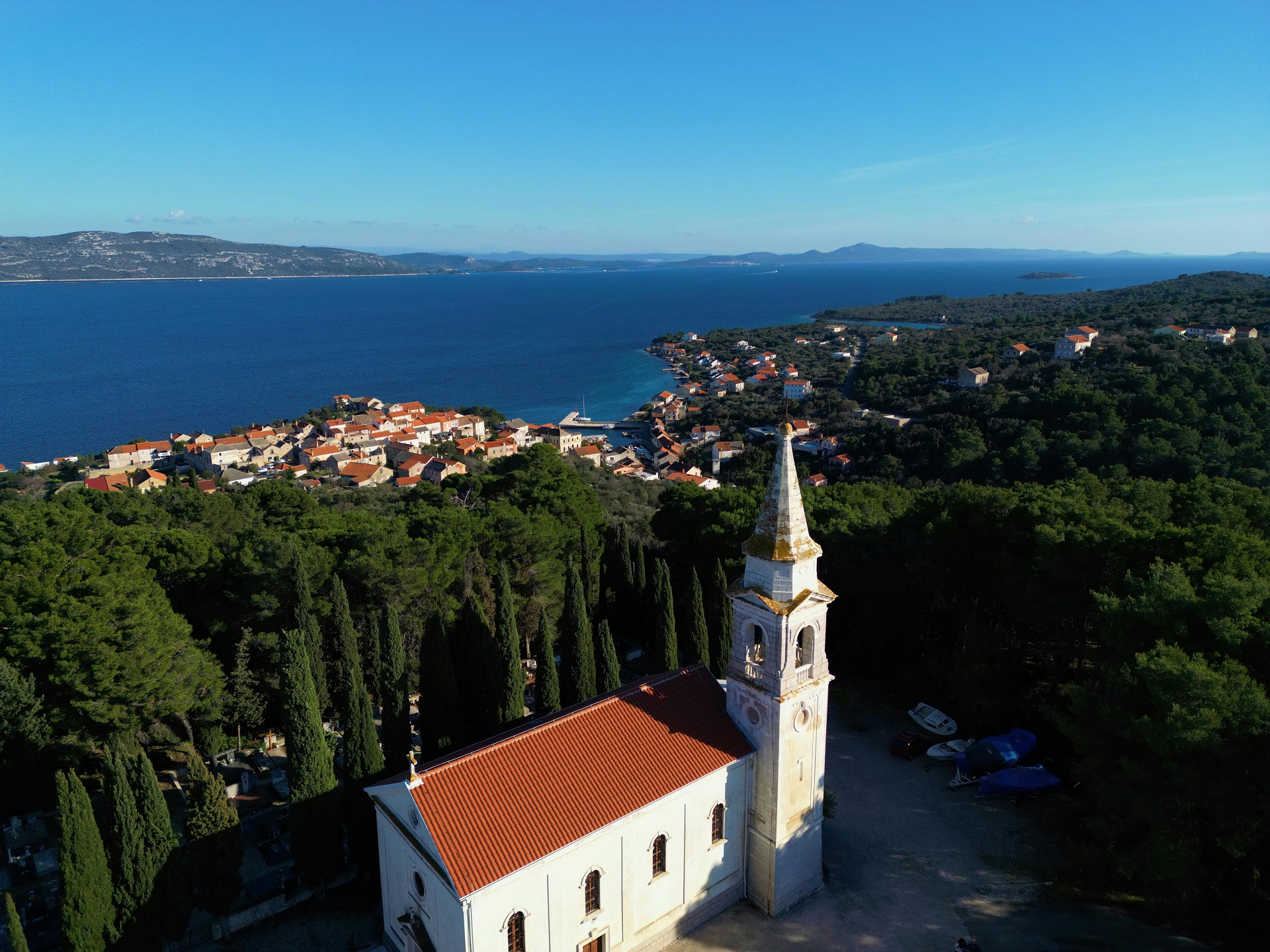
Approaching Iž by sea, there is no dramatic skyline or striking coastal landmark announcing arrival. Instead, the island reveals itself gradually - low hills covered in Mediterranean vegetation, olive groves descending toward small coves, and two main settlements gently anchored on opposite sides of the island. This quiet emergence sets the tone immediately: nothing here demands attention, yet everything feels grounded in place.
Unlike busier, mainland-adjacent islands such as Ugljan Island, where ferry traffic, day visitors, and urban proximity shape the sailing experience, Iž feels more self-contained. Life here is not oriented toward throughput or seasonal peaks but toward continuity. The island’s rhythm is shaped by fishing, agriculture, and long-standing family ties to the sea rather than by tourism cycles or maritime transit.
There is also a clear contrast with more exposed stopovers like Vir Island, which can feel open, wind-influenced, and heavily seasonal. Iž, by comparison, sits in a more protected position within the archipelago, giving it a softer maritime identity. The surrounding waters are calmer, passages are shorter, and the sailing experience feels more contained within the island network rather than oriented toward open exposure.
What defines Iž Island most strongly is not a single feature but a consistent sense of continuity. Olive trees dominate much of the landscape, shaped over generations into terraces and groves that follow the natural contours of the land. Stone villages blend into this environment rather than standing apart from it, creating a visual harmony between human settlement and natural terrain. Even the harbours feel less like infrastructure and more like extensions of the coastline, where boats and daily life coexist without urgency.
For sailors, this translates into a different kind of stop. Iž is not about spectacle, rapid movement, or high-density cruising activity. It is about pause. Anchorages are close to shore, distances between key points are short, and the overall sailing effort is minimal. This allows time onboard to expand rather than compress, shifting attention from navigation tasks to atmosphere, swimming, and simple presence.
Because of its location between major sailing routes, Iž naturally functions as a midpoint within itineraries that connect the mainland coast with deeper island systems. It sits comfortably within reach of departures from the Zadar region while also serving as a quiet stepping stone toward more remote cruising grounds. This makes it particularly valuable for itineraries that benefit from contrast - balancing active sailing days with calmer interludes.
In essence, Iž Island is not an island that interrupts a route, but one that softens it. It does not compete with more dramatic destinations nearby; instead, it offers a different layer of experience - slower, quieter, and more internally focused. For sailors moving through the Adriatic, it becomes a place where momentum naturally decreases, not because it must, but because it feels right to do so.
ARRIVAL BETWEEN STONE SHORES AND BLUE CORRIDORS
Approaching Iž Island by sea is an exercise in subtlety rather than spectacle. There is no dramatic cliffline, no narrow fjord-like entrance, and no sudden shift from open sea into enclosed harbour. Instead, the island emerges gradually from the blue corridors of the Zadar Archipelago - a low, green silhouette that slowly gains detail as pine forest, olive groves, and scattered stone settlements come into focus.
From a sailing perspective, this kind of arrival is immediately calming. The coastline is soft in outline and naturally irregular, shaped by small coves rather than steep geological formations. The sea remains relatively predictable in this area, and the approach is typically free of navigational complexity. There are no tight channels to thread or hazardous reefs to anticipate - just open, readable water that allows for relaxed final positioning into one of the island’s anchorages or harbours.
As you draw closer, the structure of the island becomes clearer, defined primarily by its two main settlements: Veli Iž and Mali Iž. Each sits on a different side of the island, offering a distinct character and approach route for arriving yachts.
Veli Iž, positioned on the northern side, is the more active and functionally developed harbour. It acts as the island’s main maritime gateway, where ferries, local fishing boats, and visiting yachts converge. The approach here is straightforward, with a naturally sheltered bay that makes entry and anchoring uncomplicated even in moderate summer winds. From the water, the settlement appears compact and orderly, with stone houses and waterfront activity concentrated around the small harbour basin.
In contrast, Mali Iž is more dispersed and understated. Located on the southern and southwestern side of the island, it is less structured as a maritime hub and more defined by scattered hamlets, small bays, and quiet coastal stretches. Approaching this side feels more exploratory, as the coastline opens into smaller indentations rather than a central harbour focus. Boats often anchor in nearby coves, using the village as a low-key shore reference point rather than a formal entry port.
What unites both approaches is simplicity. Navigation around Iž Island remains uncomplicated throughout. The surrounding waters are part of a naturally protected sailing environment within the broader Zadar island system, where landmasses provide partial shelter from open Adriatic conditions. This results in generally calm seas and predictable movement patterns during the summer season.
There are no demanding pilotage sections or complex tidal interactions to manage. Instead, arrival is shaped more by wind direction and personal choice of anchorage than by technical constraints. Whether entering Veli Iž for a short harbour stop or settling near Mali Iž for a quieter anchorage, the process remains fluid and intuitive.
This ease of access is part of what defines the island’s overall sailing identity. Arrival does not feel like a transition into a challenging or high-traffic zone, but rather a gentle continuation of the journey. The sea remains open yet controlled, the coastline legible and welcoming, and the entire experience aligned with the island’s broader character: quiet, balanced, and unhurried.
SAILING FEEL AND LOCAL WIND PATTERNS
The sailing environment around Iž Island is defined by balance and predictability rather than intensity. Positioned within the layered island structure of the Zadar Archipelago, the island benefits from natural protection on multiple sides, which significantly moderates sea state throughout most of the year. Larger surrounding landmasses and nearby islands help break up swell energy, meaning that even when conditions are active further offshore, the waters around Iž often remain comparatively calm and navigable.
This sheltered geography is one of the main reasons sailing here feels so consistent during the summer season. The sea rarely develops long, uncomfortable waves, and transitions between anchorages tend to be smooth. For sailors moving through this region, that predictability is particularly valuable, as it allows for flexible itinerary planning without constant concern over changing sea conditions.
The dominant seasonal influence is the Maestral wind, a familiar northwesterly breeze that shapes much of the Adriatic sailing experience. Around Iž, it typically begins to build in the late morning and strengthens through the afternoon, offering steady but manageable conditions for sailing. It is rarely extreme here, instead providing a comfortable level of wind that supports relaxed coastal movement and easy inter-island passages.
This consistency is especially noticeable when combined with the short distances between anchorages and neighbouring islands. Within this part of the archipelago, sailing legs are often brief, meaning the Maestral becomes less of a challenge and more of a natural rhythm driver. Boats can move steadily between locations without long offshore exposure, keeping the experience light and enjoyable rather than demanding.
Morning hours around Iž Island are often particularly calm. Wind levels tend to drop significantly overnight, leaving glassy or near-glassy sea surfaces that are ideal for quiet departures, swimming, or repositioning within sheltered bays. This stillness contributes to the island’s overall relaxed sailing identity, where the day often begins slowly and builds gradually rather than starting with immediate movement or pressure.
On occasion, the Bura wind can influence the area, arriving from the northeast with sharper gusts and a noticeable drop in temperature. While it can create more dynamic conditions, its impact around Iž is typically moderated by the surrounding island geography. That said, certain more exposed anchorages may become less comfortable during stronger Bura episodes, requiring crews to shift position or seek more sheltered bays on the opposite side of the island.
Fortunately, alternatives are rarely far away. One of the advantages of sailing in this part of the Zadar Archipelago is the density of nearby sheltered coves and protected waters. Even when conditions change, repositioning usually involves only short distances, allowing sailors to adapt quickly without major route adjustments.
Overall, sailing around Iž is not defined by technical difficulty or demanding conditions. Instead, it is shaped by rhythm and simplicity. Short passages, calm mornings, and predictable afternoon winds create an environment where planning remains flexible and sailing feels intuitive. There is little need for complex decision-making or long-range forecasting beyond standard weather awareness.
In this sense, Iž Island offers a sailing experience that is steady rather than stimulating, measured rather than intense. It allows sailors to focus less on managing conditions and more on enjoying them - moving at a pace set by wind, water, and the natural flow of the day.
ANCHOR POINTS, SMALL HARBOURS, AND BUOY FIELDS
One of the most practical yet understated aspects of sailing around Iž Island is the way anchoring and mooring are integrated into its coastline without overwhelming it. The island does not rely on large-scale marina development or heavily engineered waterfronts. Instead, it offers a modest but functional combination of small harbour facilities, natural anchorages, and a growing number of mooring buoys that together support a flexible and low-impact sailing experience within the Zadar Archipelago.
The primary nautical hub is located in Veli Iž. Here, a small marina and sheltered waterfront basin provide visiting yachts with a straightforward option for short stays, provisioning, or overnight stops. The approach is uncomplicated, and the harbour is naturally protected, making it suitable for most summer conditions. Rather than functioning as a busy transit port, it retains a local character where fishing boats and visiting yachts share a compact but orderly space along the waterfront.
Beyond the main harbour, the coastline of Iž opens into a series of small bays that serve as informal anchoring points. These locations are not structured as dedicated nautical zones, but they are widely used by sailors seeking quieter surroundings or more natural settings. The seabed in these areas is typically composed of sand interspersed with patches of seagrass, offering generally reliable holding when weather conditions are stable and wind shifts are minimal.
Anchoring here tends to feel straightforward and unforced. There are no complex depth transitions or heavily trafficked approaches to manage, and boats can position themselves comfortably within sheltered indentations along both sides of the island. This simplicity allows crews to focus more on conditions and comfort rather than technical anchoring challenges.
In recent years, selected bays around Iž Island have also introduced mooring buoy systems. These buoys provide an alternative to traditional anchoring, particularly in areas that experience higher seasonal usage or where seabed preservation is a priority. They are typically placed in naturally sheltered waters, allowing yachts to secure quickly while minimizing environmental impact on sensitive sandy or seagrass areas.
The presence of buoy fields adds a useful layer of flexibility to the island’s coastal experience. During peak summer periods, when anchorages may see slightly increased activity, buoys offer a convenient and efficient solution for short stays or swimming stops. They also help distribute boats more evenly across popular bays, reducing pressure on specific anchoring zones.
Despite these additions, Iž remains far from being a heavily infrastructured sailing hub. There are no expansive marina complexes, no dense network of commercial moorings, and no sense of industrialized nautical development. Instead, what exists is a balanced system that blends minimal infrastructure with abundant natural anchoring opportunities.
This equilibrium is key to the island’s identity. The combination of a small but functional harbour in Veli Iž, scattered natural anchorages, and discreet buoy fields ensures that sailors have enough support to operate comfortably without losing the feeling of being in a quiet, low-density environment.
In the context of the broader Zadar Archipelago, this makes Iž particularly versatile. It can function as a practical stop for services and provisioning, a calm overnight anchorage, or a flexible swimming base depending on weather and itinerary. Yet in all cases, it maintains the same underlying quality: a sailing environment shaped more by nature than by infrastructure, where simplicity remains the defining principle.
ATMOSPHERE AND ISLAND RHYTHM
The everyday life of Iž Island is shaped by a quiet duality, expressed through its two main settlements - Veli Iž and Mali Iž - each offering a different interpretation of island living, yet both tied to the same slow, coastal rhythm that defines the island as a whole.
In Veli Iž, life naturally gathers around the sheltered bay where the harbour meets the village. Stone houses cluster close to the water, forming a compact settlement that feels both functional and social at the same time. The waterfront promenade acts as the island’s informal centre of gravity, where daily activity unfolds in a relaxed, unhurried way. Small shops, cafés, and family-run eateries sit just steps from the mooring area, creating an easy flow between arrival, provisioning, and dining.
This is where most maritime activity is concentrated, not in a busy or industrial sense, but in a local, lived-in one. Fishing boats return with the day’s catch, visiting yachts tie up briefly or anchor nearby, and the harbour remains gently active without ever feeling congested. Even in peak summer months, the atmosphere stays measured, with movement spread across the day rather than concentrated into busy bursts.
Across the island, Mali Iž offers a noticeably different tone. Rather than a single harbour-focused village, it is a collection of smaller hamlets and scattered houses extending across gentle slopes and coves. The landscape here feels more rural and dispersed, with olive groves, stone walls, and narrow paths connecting small clusters of homes rather than a centralised waterfront settlement.
Because it is less tied to maritime traffic, Mali Iž often feels more removed from the immediate sailing flow. Boats do anchor nearby in suitable conditions, but the sense is less about arrival and departure and more about quiet presence. It is the part of the island where life feels closest to its agricultural and residential roots, with fewer external influences shaping its daily rhythm.
Across both sides of Iž Island, however, there is a shared continuity that defines the island’s identity. Fishing remains an important thread, not as a large-scale industry but as a daily practice that still connects people directly to the sea. Olive cultivation is equally central, shaping both the landscape and the local economy, with groves that have been tended for generations.
Seasonal tourism adds another layer, particularly in summer, but it integrates into the existing rhythm rather than replacing it. Visitors come and go, yachts anchor offshore or visit the harbour, and activity increases - but never to the point of overwhelming the island’s character. Even at its busiest, Iž retains a sense of space and calm that is increasingly rare along more developed parts of the Adriatic.
What emerges across both Veli Iž and Mali Iž is a consistent island tempo: steady, grounded, and unforced. Days are not structured around urgency but around simple, familiar patterns - sea, work, rest, and seasonal change. For sailors passing through, this creates a strong impression of continuity, where the island does not interrupt the journey but quietly absorbs it.
In this way, the village atmosphere of Iž Island is less about individual highlights and more about cohesion. It is a place where life remains closely aligned with its environment, and where the rhythm of the island continues largely unchanged, even as the sailing season brings a gentle flow of visitors to its shores.
SWIMMING SPOTS AND COASTAL CLARITY
The waters surrounding Iž Island are a clear expression of the central Adriatic’s natural transparency, where visibility often shifts dramatically depending on exposure and shelter. In open stretches between islands, the sea takes on a deeper blue tone, while within protected bays it becomes noticeably lighter, calmer, and more crystalline. This variation gives the coastline a subtle diversity that rewards slow exploration by yacht.
One of the defining characteristics of swimming around Iž is the balance between rocky and sandy seabeds. Rocky sections tend to appear closer to more exposed shoreline areas, where the water is slightly deeper and movement more dynamic. In contrast, sheltered coves and inner parts of bays often reveal soft sandy bottoms that gently slope into the sea. This combination creates straightforward and comfortable swimming conditions without requiring any special preparation or access points.
Unlike more developed coastal destinations in the Zadar Archipelago, there are no formal beach resorts, marked swimming zones, or heavily structured waterfront areas on Iž. The shoreline remains largely natural, shaped by traditional use rather than tourism infrastructure. This means that swimming is experienced in its simplest form - directly from the sea, from anchored yachts, or from small, unmarked inlets along the coast.
This informal access is part of what makes swimming here feel so integrated into sailing life. There is no separation between the boat and the water’s edge, nor between transit and recreation. Instead, the sea becomes an immediate extension of the vessel, and stopping for a swim feels like a natural pause rather than a planned activity.
For sailors, this creates a relaxed and unstructured daily rhythm. Mornings often begin with quiet swims from anchor, when the water is still and the light is soft. As the day develops, swimming becomes part of anchoring stops between short sails, offering breaks that are as much about rest as they are about recreation. By late afternoon, the sea often becomes a place to return to once again, just before sunset, when conditions calm and colours deepen across the horizon.
In this way, swimming around Iž Island is not confined to specific locations or designated beaches. Instead, it follows the natural flow of the sailing day. The sea is ever-present - something that is entered and exited continuously rather than visited once and left behind.
This seamless relationship between boat, water, and coastline reinforces the island’s broader identity. Just as its villages and anchorages operate without rigid structure, so too does its swimming environment. Everything remains fluid, accessible, and unforced, allowing sailors to engage with the sea in a way that feels both simple and deeply natural.
DINNER SPOTS AND LOCAL KONOBAS BY THE SEA
Food on Iž Island reflects the same qualities that define the island itself - simplicity, continuity, and a close relationship with the sea. Dining here is not built around fine-dining concepts or curated experiences, but around small, family-run konobas where recipes have been shaped by generations of fishing, farming, and seasonal living.
The most concentrated dining scene is found in Veli Iž, where the waterfront naturally becomes the island’s evening focal point. As the sun lowers and the harbour settles into a calmer rhythm, tables begin to fill along the stone quay, creating an easy flow between boats, sea, and shore. For sailors arriving by tender, the transition is seamless - anchored just offshore, stepping onto land, and immediately entering a relaxed coastal atmosphere where dinner feels like a continuation of the day rather than a separate event.
Along this waterfront, small konobas serve straightforward Dalmatian cuisine: freshly caught fish grilled simply over open flame, squid prepared with olive oil and herbs, and seasonal vegetables that reflect the surrounding landscape. There is little emphasis on complexity or presentation. Instead, the focus remains on freshness and timing, with dishes often depending on the day’s catch and local availability.
What makes dining in Veli Iž particularly memorable is its proximity to the sea. Tables are often positioned just meters from where fishing boats are moored, and the harbour itself becomes part of the dining backdrop. Conversations mix with the soft sounds of water against stone, and the movement of boats arriving or departing adds a quiet rhythm to the evening without disrupting it.
Beyond the main harbour, inland konobas across Iž Island offer a more secluded and traditional experience. These are often located in stone courtyards, surrounded by olive trees or tucked into small village lanes away from the waterfront. The atmosphere here is more rustic and grounded, with fewer tables and a stronger sense of privacy.
Menus in these inland settings tend to focus on deeply traditional Dalmatian cooking. Slow-prepared dishes such as peka - meat or octopus cooked under an iron bell - are common, along with homemade pasta dishes and simple plates built around seasonal ingredients. Meals are typically unhurried, often extending well into the evening, shaped more by conversation and company than by structure or timing.
Across both coastal and inland settings, dining on Iž is defined less by variety and more by authenticity. There is no attempt to adapt to international trends or large-scale tourism expectations. Instead, food remains closely tied to the island’s own resources and traditions, with menus that shift naturally with the sea, the land, and the seasons.
For sailors, this creates a dining experience that feels naturally integrated into the journey. Dinner is not a destination to be scheduled, but a continuation of the day’s sailing rhythm - anchoring offshore, arriving ashore without rush, and sharing a meal that reflects the island exactly as it is: simple, honest, and quietly connected to its surroundings.
CONNECTION TO WIDER SAILING ROUTES
Despite its calm and unassuming atmosphere, Iž Island is far from isolated in a navigational sense. Its position within the central part of the Zadar Archipelago places it directly within a well-established web of sailing routes that connect the mainland coast with some of the most iconic cruising grounds in the Adriatic.
To the north, Iž links naturally toward Ugljan Island and the wider Zadar coastline, where sailing traffic becomes slightly more active and services more concentrated. This direction is often used for logistical movement - returning toward marinas, provisioning points, or the urban facilities of Zadar. The passages are short and sheltered, making the transition between islands smooth and predictable even for relaxed itineraries.
To the south and west, the sailing character begins to shift. Routes from Iž lead toward more open and fragmented waters, gradually connecting into the island systems that form the gateway to Kornati National Park. Here, navigation becomes more visually complex and spatially expansive, with dozens of smaller islands, channels, and passages creating one of the most distinctive cruising environments in the Mediterranean.
This natural positioning gives Iž a strategic role within multi-day sailing itineraries. It sits at a point where routes can easily diverge or converge depending on weather, timing, or crew preference. Sailors can head north for convenience and services, or south and west for exploration and more dramatic island scenery, all without requiring long offshore legs or significant deviations.
Because of this flexibility, Iž Island often functions less as a destination in itself and more as a structural element within a broader sailing plan. It is a place where itineraries can be adjusted, paused, or rebalanced without disrupting the overall flow of a journey.
In practical terms, this makes it particularly valuable as an overnight anchorage on longer routes. After a day of sailing between more active or exposed segments, Iž offers a calm and sheltered environment where boats can stop comfortably, conditions can be reassessed, and plans for the next leg can be made without pressure.
It also works well as a provisioning or resting point within circular itineraries that include both northern Dalmatia and the Kornati region. Its small harbour facilities, combined with nearby natural anchorages, allow for efficient stops that do not require major detours or time-consuming docking procedures.
Ultimately, the strength of Iž Island within the wider sailing network lies in its adaptability. It does not anchor a route in the sense of being a fixed highlight, but rather supports it - quietly connecting different sailing zones while offering a stable, low-stress environment in between more dynamic passages.
A QUIET MIDDLE GROUND IN THE ADRIATIC
What ultimately defines Iž Island is its sense of equilibrium. It sits in a rare position within the Adriatic sailing landscape - neither remote enough to feel detached from the world, nor developed enough to lose its island identity. Instead, it occupies a comfortable middle ground where everything feels naturally proportioned: settlements are small but lived-in, anchorages are accessible but uncommercial, and sailing routes are simple without being monotonous.
This balance is most noticeable when viewed in contrast to its surroundings within the Zadar Archipelago. Nearby islands often lean in different directions: some are more exposed and lightly populated, others more connected and active with ferry and tourist traffic. Iž avoids both extremes. It does not push sailors toward isolation or demand constant movement through busy maritime corridors. Instead, it offers continuity - an environment where time can stretch without losing structure.
For sailors, this positioning is particularly valuable. It allows itineraries to slow down without becoming static. A stop at Iž does not interrupt a sailing route; it softens it. After more active passages or busier harbour stops such as those near Zadar, the island provides a natural pause where the pace of the journey can recalibrate. Boats remain active, but movement becomes optional rather than necessary.
At the same time, Iž adds variety without introducing complexity. The transition from surrounding islands into its waters does not require new navigational strategies or significant changes in sailing approach. Conditions remain familiar, distances manageable, and anchorages straightforward. This simplicity allows crews to shift focus away from planning and toward experience - swimming, dining, and simply remaining in place.
In this way, Iž Island functions less as a highlight and more as a stabilising presence within a route. It is not designed to dominate an itinerary or compete with more visually dramatic destinations such as Kornati National Park. Instead, it supports the journey by offering a consistent, unforced environment where sailing becomes less about movement and more about rhythm.
Over time, this quality becomes its defining strength. The island does not rely on spectacle or intensity to be memorable. It remains steady, understated, and coherent in its identity, allowing sailors to settle into its pace without adjustment or effort. Days unfold naturally, shaped by wind, water, and simple decisions rather than structured schedules.
In the broader context of Adriatic cruising, Iž represents a kind of midpoint not just geographically, but experientially. It bridges active sailing zones and quieter waters, structured routes and open exploration, movement and pause. For those willing to slow their expectations as much as their speed, it offers something increasingly rare: a place that does not ask to be remembered loudly, but quietly becomes part of the journey anyway.