ILOVIK YACHT CHARTER GUIDE: SAILING CROATIA’S PEACEFUL ISLAND BETWEEN LOŠINJ AND THE OPEN ADRIATIC
In the southern reaches of the Kvarner archipelago, just beyond the larger island of Lošinj, lies Ilovik - one of the Adriatic’s most peaceful and naturally protected sailing destinations. Small in scale but highly regarded among experienced sailors, Ilovik offers a different style of Croatian island cruising: slower, quieter, and deeply shaped by anchorage life rather than marina infrastructure.
Unlike larger yacht charter hubs where waterfront development dominates the coastline, Ilovik remains remarkably restrained in both scale and atmosphere. The island is defined by a compact village, low Mediterranean vegetation, calm inner channels, and a maritime landscape where movement still follows the rhythm of weather, sea conditions, and daily harbour life.
For yacht crews navigating through the northern Adriatic, Ilovik often represents an important transition point. Positioned near the southern entrance to the Lošinj island group, it lies directly along routes connecting the Kvarner region with the more open waters leading toward northern Dalmatia. Because of this, the island functions naturally as both a destination and a strategic overnight stop within longer Adriatic sailing itineraries.
Approaching Ilovik by yacht reveals one of the most recognisable natural harbour systems in the northern Adriatic. The island and the nearby islet of Sveti Petar create a long, narrow channel where vessels anchor or moor in highly protected conditions. This sheltered maritime corridor has served sailors for generations and continues to make Ilovik one of the most valued anchorage stops in Croatian island sailing.
What distinguishes the island most strongly is not dramatic geography or urban scale, but atmosphere. There are no large marinas, no extensive waterfront promenades, and no heavily commercialised coastal zones. Instead, Ilovik offers calm water, quiet evenings, clear swimming conditions, and a sailing environment where nature and navigation remain closely interconnected.
Historically, the island developed through fishing, local seafaring, and small-scale maritime trade. Even during the modern charter season, this traditional maritime identity remains visible. Local boats share the channel with visiting yachts, waterfront activity stays measured rather than intense, and the settlement itself retains a strong sense of continuity with older Adriatic coastal life.
For yacht charter guests exploring the Kvarner region, Ilovik provides a rare combination of accessibility and isolation. It is close enough to major sailing routes to fit naturally into multi-island itineraries, yet quiet enough to feel separated from the pace of larger Adriatic destinations.
This balance is ultimately what defines Ilovik as a sailing destination. It is not a place built around spectacle or high-density tourism, but around protected anchoring, gradual movement through island channels, and the experience of spending time in a calm maritime environment shaped primarily by sea, wind, and coastline.
A SMALL ADRIATIC ISLAND DEFINED BY SHELTER AND SIMPLICITY
The defining characteristic of Ilovik is its natural shelter. Unlike more exposed Adriatic islands where navigation is shaped by open-sea passages, strong wind exposure, and dramatic coastal terrain, Ilovik revolves around protected inner waters and one of the most stable anchorage environments in the northern Adriatic.
The island itself is relatively small, low in elevation, and gently formed compared to many surrounding islands in the Kvarner region. Mediterranean vegetation covers much of the landscape, while rocky shoreline sections alternate with smoother waterfront edges near the settlement and anchorage areas. Rather than presenting a visually dominant or rugged coastline, Ilovik appears calm and balanced from the sea, with its maritime identity shaped more by protected geography than dramatic topography.
At the centre of this identity is the narrow channel separating Ilovik from the neighbouring islet of Sveti Petar. This elongated waterway forms one of the safest and most naturally sheltered anchorage zones in the northern Adriatic, especially during stable summer weather conditions. Protected from much of the surrounding sea exposure, the channel creates calm inner waters where yachts can moor securely while remaining directly connected to the island settlement.
From a sailing perspective, this geographical structure changes the atmosphere almost immediately upon arrival. After navigating the more open waters of Kvarnerić, vessels entering the Ilovik channel experience a clear reduction in wind intensity and wave movement. The surrounding landforms soften the effects of open-sea conditions, creating a noticeable transition from offshore sailing into enclosed island protection.
This gradual movement into calmer water is one of the reasons why Ilovik has long been valued among sailors. The anchorage does not feel artificially constructed or heavily engineered; instead, the geography itself provides the protection. The result is a maritime environment that feels naturally stable, enclosed, and deeply connected to the landscape surrounding it.
The protected channel also shapes the visual character of the island. Boats line the calm inner waters rather than concentrating inside a large marina basin, while the settlement remains distributed gently along the waterfront rather than expanding into dense coastal development. This preserves a sense of openness even during the peak sailing season.
Unlike larger Croatian islands where towns spread across extensive promenades and commercial waterfront zones, the village on Ilovik remains compact and closely integrated with the harbour area itself. Stone houses, small piers, mooring points, and narrow pathways remain visually tied to the sea at every point. The relationship between settlement and water feels direct and continuous rather than separated by infrastructure.
This close integration reinforces the sense that maritime life still defines the island’s structure and rhythm. Fishing boats, local vessels, and visiting yachts all occupy the same protected channel, while daily movement across the island continues to revolve around harbour activity and sea access.
The simplicity of Ilovik is ultimately one of its greatest sailing strengths. Rather than competing with larger Adriatic destinations through entertainment density, nightlife, or marina scale, the island offers something increasingly rare within Croatian sailing routes: clarity and calmness.
Protected water, manageable distances, limited coastal development, and a naturally quiet atmosphere combine to create a sailing environment that supports slower Adriatic cruising rather than fast-paced itinerary movement. Sailors are encouraged to remain at anchor longer, move shorter distances, and experience the island gradually rather than treating it as a brief stop within a crowded route.
This slower rhythm defines much of Ilovik’s appeal. The island does not rely on spectacle to create value. Instead, it offers a form of Adriatic sailing centred around shelter, simplicity, and continuity with the natural pace of the sea itself.
SAILING APPROACH TO ILOVIK: PROTECTED CHANNELS AFTER OPEN KVARNER WATERS
Approaching Ilovik by yacht typically begins with navigation across the more open waters of the southern Kvarnerić region before gradually transitioning into the calmer island corridors surrounding Lošinj and the smaller islands positioned along the outer edge of the archipelago.
This contrast between exposure and protection is one of the defining elements of the sailing experience around Ilovik. Offshore conditions often feel broad and open, particularly during afternoon Maestral winds when the sea state becomes more active across the wider Kvarner passages. The surrounding horizon is expansive, distances between islands become more pronounced, and navigation takes on a distinctly offshore character compared to more enclosed coastal cruising zones further north.
Against this wider maritime setting, Ilovik appears modest and understated. From a distance, the island does not dominate the horizon through height or dramatic terrain. Instead, its low profile and compact shape create a softer and more horizontal outline than the steeper and more heavily forested islands nearby.
This visual simplicity contributes strongly to the island’s atmosphere. Rather than presenting itself as a dominant coastal landmark, Ilovik emerges gradually from the surrounding sea, reinforcing the sense that it belongs naturally to the maritime landscape rather than standing apart from it.
As vessels close in toward the island, the defining navigational feature quickly becomes clear: the protected channel between Ilovik and the neighbouring islet of Sveti Petar. This narrow maritime passage forms the centre of the island’s sailing identity and has historically provided shelter for generations of seafarers navigating through the northern Adriatic.
The entrance into the channel creates a particularly strong sense of transition. Sea movement begins to soften almost immediately, especially after crossing more exposed Kvarner waters. Wind intensity decreases, wave reflection becomes gentler, and the surrounding landforms gradually close inward around the waterway.
From a navigational perspective, the experience shifts noticeably at this point. Offshore passage-making gives way to slower harbour-style manoeuvring, where anchorage positioning, mooring lines, and protected water conditions become more important than open-water navigation strategy.
This progression into calm inner waters is one of the reasons why Ilovik is so highly valued within Adriatic yacht charter routes. The island does not simply provide a place to stop - it provides a genuine sense of maritime refuge after longer passages through exposed sea corridors.
During stable summer weather, the approach itself is generally straightforward and highly suitable for relaxed coastal cruising itineraries. Visibility is usually excellent, the coastline remains easy to interpret visually, and the natural shape of the surrounding geography intuitively guides vessels toward sheltered anchorage areas.
Unlike larger marina complexes where arrival is defined by breakwaters, fuel docks, and dense harbour infrastructure, arriving at Ilovik feels significantly more organic. The anchorage is integrated directly into the island landscape itself, allowing yachts to settle naturally within the protected channel rather than entering a heavily structured nautical facility.
Because the anchorage forms such a central part of the island’s identity, arrival at Ilovik often feels less like reaching a marina destination and more like entering a protected maritime environment where anchoring, swimming, village life, and navigation all coexist within a single connected space.
The visual rhythm of the approach reinforces this atmosphere. Mooring buoys line calm waters, small boats move slowly between the waterfront and nearby islands, and stone houses remain directly connected to the shoreline without extensive urban development interrupting the coastal view.
For many sailors, this gradual transition - from open Adriatic exposure into enclosed island protection - is precisely what makes Ilovik memorable. The island captures one of the essential experiences of Croatian sailing: the ability to move from broad open sea into calm natural shelter within a relatively short navigational distance.
Ultimately, the sailing approach to Ilovik is not simply functional. It is experiential. The geography itself shapes the emotional rhythm of arrival, creating a feeling of calmness, protection, and maritime continuity that defines the island long before the anchor is dropped.
SAILING CONDITIONS AROUND ILOVIK ISLAND
The sailing environment around Ilovik is defined by a continuous balance between open-sea exposure and natural island protection. Positioned along the outer edge of the Kvarnerić region, the island sits close enough to broad Adriatic passages to experience dynamic sailing conditions, while still benefiting from the shelter created by the surrounding network of islands and channels.
This combination makes the area particularly attractive for yacht charter itineraries that seek both active sailing and secure overnight anchoring within the same cruising zone. Around Ilovik, navigation can shift quickly from exposed offshore movement into calm inner waters, often within the course of a single passage.
During the summer sailing season, the Maestral remains the dominant wind pattern. Typically arriving from the northwest during the afternoon, it creates steady and highly navigable sailing conditions between nearby islands such as Lošinj, Silba, and Premuda. These winds support comfortable inter-island cruising and are particularly well suited to relaxed Adriatic passage-making during stable weather periods.
Around Ilovik itself, however, the interaction between islands, channels, and open water slightly modifies local wind behaviour. While offshore conditions may remain active, the geography surrounding the island often softens wind intensity once vessels move into more protected zones. The anchorage channel between Ilovik and Sveti Petar is especially sheltered, reducing wave development and creating noticeably calmer conditions than those found across the wider Kvarner passages.
This transition between open-water sailing and protected anchoring is one of the defining characteristics of the region. Sailors can spend the afternoon navigating in reliable Maestral conditions before returning to calm evening waters within the anchorage corridor.
Morning conditions are frequently very stable and quiet, particularly inside the protected inner channel. Early hours often bring smooth water surfaces and minimal wind activity, creating ideal conditions for departures, anchoring manoeuvres, provisioning transfers, swimming stops, and shorter coastal movements between nearby islands.
These calmer morning periods also contribute strongly to the atmosphere of sailing around Ilovik. The anchorage often feels almost enclosed from the wider Adriatic during the first part of the day, with minimal sea movement and highly reflective water conditions inside the channel.
The most significant stronger-weather influence in the area remains the Bura wind. Originating from the northeast, the Bura can accelerate through the wider Kvarner region with considerable force, particularly when pressure systems intensify along the mainland and Velebit mountain range.
When active, the Bura creates sharper sea states across exposed offshore passages and can significantly alter conditions in open-water sections south and east of the island network. Navigation between islands becomes more demanding, especially in areas without geographical protection from northeasterly gusts.
One of the major advantages of Ilovik during these periods is the immediate availability of nearby shelter. The protected anchorage channel and surrounding islands provide calmer alternatives when conditions become uncomfortable in open sea corridors. This flexibility allows sailors to adapt routes quickly without requiring major itinerary changes.
Because of this geographical structure, Ilovik functions particularly well within adaptable yacht charter routes where weather conditions may influence daily sailing decisions. Crews can remain inside protected channels during stronger conditions or move outward into more open Adriatic passages when weather stabilises.
The surrounding island network also contributes to navigational variety. Short sailing distances between protected bays, open channels, and neighbouring islands allow itineraries to remain flexible and highly responsive to both wind direction and crew preferences.
For experienced sailors, this variability creates an engaging northern Adriatic sailing environment where route planning involves continuous interaction between geography and weather. For less experienced crews, the proximity of shelter provides reassurance and practical safety advantages during changing conditions.
Ultimately, the sailing conditions around Ilovik reflect one of the core strengths of Croatian island cruising: the ability to experience open Adriatic navigation while remaining closely connected to naturally protected anchorages and sheltered maritime corridors.
This balance between movement and protection is what gives the area its enduring appeal. Ilovik does not isolate sailors from the dynamics of the sea - it allows them to experience those dynamics while always keeping calm water within reach.
ANCHORAGES, MOORINGS, AND PROTECTED OVERNIGHT STOPS
Anchoring lies at the heart of the sailing experience around Ilovik. Unlike many Adriatic destinations where marina infrastructure dominates the waterfront, Ilovik remains fundamentally shaped by natural shelter and traditional mooring patterns. The island functions less as a structured marina centre and more as a protected maritime anchorage integrated directly into the surrounding coastal landscape.
For sailors navigating through the southern Kvarner region, this distinction is immediately noticeable. Arrival at Ilovik is not defined by entering a dense harbour basin lined with breakwaters and extensive marina facilities. Instead, yachts settle gradually into calm inner waters where the geography itself provides the primary protection.
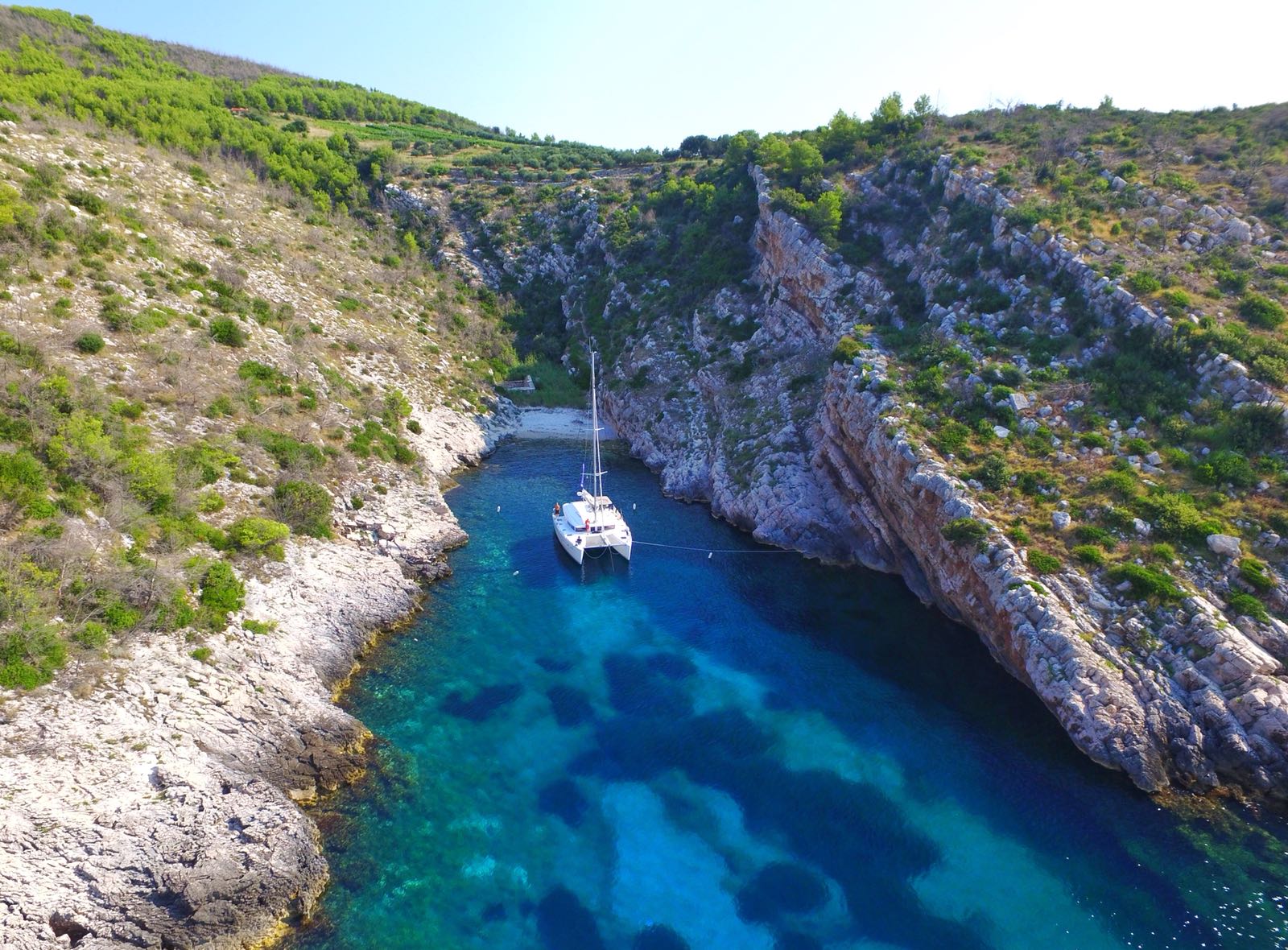
The central feature of this anchorage system is the elongated channel between Ilovik and the neighbouring islet of Sveti Petar. This narrow waterway forms one of the most naturally sheltered overnight stopping points in the northern Adriatic and has long served as a safe maritime refuge for vessels navigating the wider Kvarnerić region.
During the sailing season, visiting yachts commonly moor along this protected corridor, where calm water conditions and reduced wind exposure create highly comfortable overnight stays. Because the anchorage stretches linearly along the channel rather than concentrating boats into a single enclosed marina basin, vessels remain distributed throughout the waterway instead of gathering densely in one location.
This elongated structure plays a major role in shaping the atmosphere of the anchorage itself. Even during peak summer months, the area typically retains a sense of openness and visual balance. Boats align naturally with the contours of the coastline, and the spacing between moorings often feels less compressed than in larger commercial marina environments elsewhere in Croatia.
The geography of the channel also contributes to a strong sense of protection. Surrounding landforms shield the anchorage from much of the wider sea exposure, while the calm inner waters create ideal conditions for overnight stays, swimming, and relaxed evening routines aboard.
For many sailors, this calmer atmosphere is one of Ilovik’s defining advantages. Rather than functioning as a high-traffic nautical hub, the island offers a quieter and more measured style of Adriatic overnight cruising where anchoring remains closely connected to the natural environment.
The anchorage itself becomes part of the overall sailing experience rather than simply a logistical stopping point. Crews dine aboard while overlooking calm inner waters, move between yacht and shoreline by tender or small dinghy, and experience the island primarily through direct interaction with the sea rather than through marina infrastructure.
Beyond the main channel, the surrounding waters also provide numerous opportunities for shorter anchoring stops and daytime swimming breaks. Nearby coastal sections around Lošinj and the outer islands contain smaller bays and open-water anchorage zones where sailors can pause temporarily during inter-island passages.
This creates a highly flexible cruising rhythm throughout the region. Yachts frequently alternate between open-water sailing, protected swimming stops, and secure overnight moorings within relatively short navigational distances. Because islands remain closely connected geographically, route planning can remain adaptable rather than fixed around long daily passages.
The protected nature of the anchorage around Ilovik also makes it especially valuable during periods of stronger weather. When open Kvarner conditions become more active due to Maestral acceleration or northeasterly Bura influence, the channel provides a calm alternative where yachts can remain safely positioned without needing to seek larger marina systems further away.
This practical reliability has helped establish Ilovik as one of the Adriatic’s most respected small-island overnight stops among experienced sailors. Its value lies not in scale or luxury infrastructure, but in the quality of protection and atmosphere it consistently provides.
The visual identity of the anchorage reinforces this sense of simplicity. Small waterfront houses, mooring buoys, stone piers, and gently moving yachts remain visually integrated with the natural coastline rather than separated by commercial harbour expansion. Even during the busiest part of the charter season, the area retains a distinctly local and maritime character.
For many yacht crews, Ilovik represents the ideal overnight pause within longer Adriatic sailing routes - a place where calmness, navigational shelter, and island atmosphere take priority over marina density and urban waterfront activity.
Ultimately, the anchorage experience around Ilovik captures one of the defining qualities of Adriatic sailing: the seamless transition between open-sea navigation and calm natural shelter, where protected island channels and quiet coastal anchorages remain shaped far more by geography and maritime tradition than by large-scale development.
SWIMMING AROUND ILOVIK: CLEAR WATER AND CALM ISLAND BAYS
Swimming around Ilovik is deeply connected to the island’s protected geography, calm anchorage conditions, and relatively untouched coastline. Unlike destinations where beaches and waterfront tourism dominate the coastal experience, swimming here emerges naturally from the rhythm of sailing itself. The sea is not separated from navigation or anchoring - it remains central to every part of the island experience.
Inside the main anchorage channel between Ilovik and Sveti Petar, water conditions are often exceptionally calm during stable summer weather. The surrounding landforms shield the area from much of the open-sea movement typical of the wider Kvarnerić region, allowing the surface to remain smooth and lightly reflective for much of the day.
These calmer inner waters create ideal conditions for relaxed swimming directly from anchored yachts. During mornings, when wind activity is minimal, the channel often appears almost motionless, with sunlight reflecting softly across the protected anchorage. Evening conditions can be equally atmospheric, as reduced boat movement and fading light create a quieter and more enclosed maritime setting.
The water clarity around Ilovik is typically excellent, particularly away from the busiest mooring areas. In stable weather, visibility beneath the surface remains remarkably high, reinforcing the clean and open character of the surrounding sea. The combination of calm conditions and transparent water makes even short swimming stops feel immersive and restorative after longer sailing passages.
Outside the main anchorage corridor, the coastline gradually opens toward deeper blue waters facing the broader Kvarner region. Here, swimming conditions become slightly more exposed to wind and sea movement, particularly during afternoon Maestral conditions, but remain highly attractive due to the minimal coastal development and strong natural character of the island surroundings.
This transition from sheltered inner waters to more open Adriatic swimming zones adds variety to the sailing experience. Crews can choose between calm protected bays and slightly more active open-water environments within very short navigational distances.
The coastline itself contributes strongly to the atmosphere of swimming around the island. Rocky shoreline sections alternate with smoother sea-entry points, while Mediterranean vegetation extends close to the water across much of the coast. Pine trees, low shrubs, and natural stone formations remain visually dominant, reinforcing the sense that the island landscape has remained largely unchanged by intensive tourism infrastructure.
Unlike heavily urbanised Adriatic destinations where swimming is often concentrated around organised beaches and waterfront promenades, swimming around Ilovik feels informal and directly integrated into the sailing environment. There are few interruptions between yacht, coastline, and open water. Boats anchor temporarily in quiet coves, crews enter the sea directly from the deck, and the coastline functions more as a sequence of natural swimming environments than as a structured tourist zone.
This simplicity is one of the island’s defining strengths. Swimming stops are rarely scheduled as separate activities; instead, they become an organic extension of the navigation itself. A short coastal passage naturally leads into an anchorage pause, followed by time in the water before continuing onward through nearby island channels.
Because sailing distances between surrounding islands remain relatively short, itineraries around Ilovik encourage repeated movement between navigation and swimming throughout the day. Yachts often alternate between open-water passages, sheltered anchorages, and coastal swimming breaks without needing to follow rigid schedules or long-distance planning.
The surrounding island network further enhances this flexibility. Nearby coastal sections around Lošinj and neighbouring islands provide additional swimming bays where water colour, depth, and exposure vary subtly from one anchorage to the next. This creates a highly diverse coastal experience despite the relatively compact sailing area.
For many yacht crews, swimming around Ilovik becomes one of the most memorable aspects of the island precisely because of its understated nature. There are no large waterfront attractions competing for attention - only calm water, natural coastline, and the quiet continuity between sea and island life.
Ultimately, the swimming experience around Ilovik reflects the broader character of the island itself: protected, unhurried, and closely connected to the natural rhythm of Adriatic sailing.
EVENING ATMOSPHERE AND ISLAND RHYTHM
Evenings on Ilovik are defined by calmness rather than intensity. As the final sailing movements of the day begin to slow and the light softens across the southern Kvarner waters, the island gradually transitions into one of the quietest and most atmospheric harbour environments in the northern Adriatic.
The protected anchorage channel between Ilovik and Sveti Petar becomes increasingly still after sunset. Sea movement decreases, reflections sharpen across the calm inner waters, and the lights from anchored yachts begin to mirror softly along the surface of the channel. The combination of protected geography and minimal urban lighting gives the anchorage a distinctly enclosed and maritime atmosphere.
Unlike larger Adriatic marina centres where waterfront nightlife dominates the evening experience, Ilovik retains a far softer rhythm. The island never feels driven by crowds, music, or dense commercial activity. Instead, movement unfolds slowly and naturally around the harbour itself.
Restaurants and small waterfront terraces remain active throughout the summer season, but even at peak periods the atmosphere stays measured and relaxed. Dining areas overlook the anchorage directly, allowing crews to remain visually connected to their yachts and the surrounding sea throughout the evening. Conversations carry quietly across the waterfront, while small boats continue occasional movement through the channel long after sunset.
Because the settlement itself remains compact, the harbour never loses its sense of scale. There is activity, but it feels distributed rather than concentrated. The absence of large waterfront developments or extensive nightlife infrastructure prevents the area from becoming visually or acoustically overwhelming, even during the busiest charter weeks.
This balance is one of the defining strengths of Ilovik. The island remains socially alive without losing the calmness that sailors often seek after a full day of navigation through more open Adriatic waters.
The anchorage environment contributes strongly to this atmosphere. Evenings are frequently spent aboard yachts rather than entirely ashore, with crews dining on deck, observing the gradual reduction of harbour movement, or simply remaining within the protected stillness of the channel itself.
The soundscape reflects this slower pace. Instead of continuous nightlife noise, evenings are shaped by softer maritime elements: water moving lightly against hulls, distant voices from nearby terraces, occasional dinghy traffic, and the subtle movement of wind through surrounding vegetation.
The surrounding darkness of the open Adriatic further reinforces the sense of isolation and maritime immersion. Beyond the protected anchorage, the sea quickly disappears into shadow, while neighbouring islands remain only faint outlines against the horizon. This contrast between the illuminated inner channel and the dark open sea beyond gives evenings on Ilovik a particularly intimate and sheltered feeling.
Even during peak summer season, the island retains a strong connection to the natural environment rather than to urban coastal tourism. Artificial lighting remains limited, the harbour scale stays human and navigable, and much of the evening atmosphere continues to revolve around the water itself rather than land-based entertainment.
For sailors arriving from larger Adriatic destinations, this difference becomes immediately noticeable. Time slows considerably on Ilovik. There is less pressure to move, consume, or continue activity late into the night. Instead, the island encourages a quieter and more reflective rhythm aligned closely with the pace of sailing life itself.
This slower atmosphere also strengthens the feeling of continuity between day and night aboard. The transition from afternoon sailing to evening anchoring feels seamless rather than abrupt. Crews remain connected to the sea throughout the entire experience, whether swimming at sunset, dining near the harbour, or watching the anchorage settle into near-complete stillness later in the evening.
For many sailors, this understated atmosphere is precisely what makes Ilovik memorable. The island does not compete through spectacle, large-scale entertainment, or visual intensity. Its appeal lies in something increasingly rare within Adriatic yacht charter routes: calm protected waters, minimal interruption from urban development, and an evening rhythm that still feels genuinely connected to traditional island life.
Ultimately, evenings on Ilovik capture one of the essential qualities of small-island Adriatic sailing - a sense that the harbour, the anchorage, and the surrounding sea continue to function as one continuous living maritime environment rather than separate tourist spaces.
ILOVIK’S POSITION WITHIN ADRIATIC YACHT CHARTER ROUTES
Ilovik occupies a strategically important yet understated position within northern Adriatic yacht charter itineraries. Although small in scale, the island sits directly along several key sailing corridors connecting the protected island networks of the Kvarner region with the more open and dispersed cruising grounds further south along the Croatian coast.
This geographical placement gives Ilovik a unique role within Adriatic navigation. It is neither fully isolated nor heavily centralised. Instead, it functions as a natural transitional point where different sailing environments intersect: sheltered channels, open-sea passages, compact island cruising, and longer offshore route segments.
To the north, sailing routes reconnect naturally toward Lošinj, Cres, and the wider Kvarner sailing network. These northern waters are characterised by relatively structured inter-island navigation, shorter cruising distances, and a combination of protected channels and marina-supported harbour systems.
Within this regional framework, Ilovik often serves as the southern gateway to the Lošinj archipelago. Yacht crews moving southward frequently pass through or overnight here before continuing toward more exposed Adriatic routes.
To the south, navigation gradually opens toward islands such as Silba, Olib, and the outer northern Dalmatian island chains. In this direction, sailing distances become slightly longer, island formations more dispersed, and the overall maritime landscape increasingly open in character.
This gradual transition from the structured island environment of Kvarner toward the wider Adriatic cruising system is one of the defining navigational qualities of the region surrounding Ilovik. The island sits precisely at the point where many yacht itineraries shift from protected regional cruising toward broader multi-day Adriatic passages.
Because of this positioning, Ilovik functions naturally within both shorter and longer sailing routes. For regional charters based around Lošinj and Cres, it serves as a relaxed overnight anchorage and swimming destination. For extended Adriatic itineraries, it becomes an important transitional stop before continuing deeper into Dalmatian waters.
The island’s protected anchorage environment significantly strengthens this role. The calm channel between Ilovik and Sveti Petar provides a highly reliable overnight stopping point after open-water passages through the southern Kvarnerić region. Crews frequently use the island to rest, stabilise schedules, or wait for more favourable weather conditions before continuing onward across more exposed sea corridors.
This practical reliability is particularly valuable in northern Adriatic sailing, where wind conditions can shift rapidly between sheltered channels and open-water sections. The ability to access calm and naturally protected anchorage conditions without leaving major navigation routes makes Ilovik exceptionally useful within flexible yacht charter planning.
At the same time, the island never feels dominated by transit movement. Despite its strategic importance, Ilovik retains a strong sense of tranquillity and separation from larger Adriatic sailing hubs. Boats arrive and depart continuously during summer, yet the anchorage atmosphere remains measured and calm rather than crowded or commercially intense.
This balance between accessibility and quietness is increasingly rare within popular Croatian sailing routes. Many highly connected Adriatic destinations eventually become shaped primarily by marina density and waterfront infrastructure. Ilovik, by contrast, remains defined by natural geography and protected maritime space.
Its navigational role therefore extends beyond simple logistics. The island acts as a psychological transition point within many Adriatic itineraries - a place where open-water navigation softens into sheltered anchorage life, and where the pace of sailing naturally slows.
For yacht crews travelling northbound, Ilovik often represents the final calm island pause before re-entering the more structured sailing environment of Kvarner. For those heading south, it marks the beginning of broader Adriatic movement toward increasingly dispersed island chains and longer offshore passages.
Because the island remains fully integrated into wider Adriatic navigation corridors while still preserving highly sheltered and peaceful conditions, it offers one of the clearest examples of balanced island cruising in the northern Adriatic.
Ultimately, Ilovik occupies a unique position within Croatian yacht charter routes: accessible without feeling urbanised, strategically connected without losing isolation, and naturally protected while still remaining deeply linked to the open sea beyond its anchorage channel.
FINAL THOUGHTS: WHY ILOVIK BELONGS ON AN ADRIATIC SAILING ROUTE
Ilovik stands out in the Adriatic not through size, dramatic infrastructure, or large-scale marina development, but through simplicity, protection, and atmosphere. In a sailing region increasingly shaped by busy nautical centres and high seasonal traffic, Ilovik offers something quieter and more enduring: a maritime environment where geography still defines the rhythm of life at sea.
For sailors, the island’s greatest value lies in the quality of the anchorage experience itself. The protected channel between Ilovik and Sveti Petar creates exceptionally calm overnight conditions, while the surrounding coastline provides clear swimming water, natural shelter, and a strong sense of separation from more urbanised Adriatic destinations.
This combination gives the island a distinctive balance rarely found within popular yacht charter routes. It feels secure without becoming enclosed, peaceful without feeling remote, and active enough to remain connected to the wider sailing network without losing its local maritime identity.
Unlike destinations built around marina density, nightlife, or large waterfront promenades, Ilovik offers a slower and more integrated style of Adriatic yacht cruising. Here, navigation, anchoring, swimming, and island life remain closely connected to the sea itself rather than organised around large tourism infrastructure.
The experience of staying on Ilovik is shaped less by scheduled activity and more by natural movement through the day. Mornings begin in calm protected waters, afternoons revolve around short inter-island passages and swimming stops, while evenings settle gradually into quiet harbour reflections and subdued waterfront activity. This continuity between sailing and anchorage life creates a rhythm that feels distinctly Adriatic in its most traditional sense.
The island’s geography reinforces this atmosphere at every level. Protected channels soften open-sea exposure, nearby islands provide navigational flexibility, and the compact scale of the settlement prevents the waterfront from becoming visually overwhelming. Even during the peak charter season, the island retains a feeling of openness and calmness shaped primarily by sea and landscape rather than commercial intensity.
Within the wider Kvarner sailing region, Ilovik represents one of the clearest examples of authentic small-island cruising. It captures the essence of northern Adriatic sailing through shelter, navigational practicality, and strong continuity with traditional coastal life.
At the same time, the island functions naturally within broader Adriatic yacht charter itineraries. Its position between Lošinj, the outer Kvarner islands, and northern Dalmatian routes makes it both a strategic overnight stop and a destination in its own right. Sailors can use Ilovik as a protected anchorage before open-water crossings, a peaceful pause within longer itineraries, or a central point for slower island-based cruising.
What ultimately makes Ilovik memorable is the way it preserves the essential relationship between yacht, sea, and coastline. The island does not separate sailing from the environment - it allows sailors to remain immersed within it. Anchoring, swimming, navigation, and evenings aboard all unfold within the same connected maritime space.
In an Adriatic increasingly associated with larger marina systems and faster-paced charter routes, Ilovik continues to represent a different kind of sailing destination: calm without isolation, protected without confinement, and naturally aligned with the slower rhythm of multi-day island cruising through Croatia’s northern waters.
Ultimately, Ilovik belongs on an Adriatic sailing route because it captures one of the most enduring qualities of Croatian yacht cruising itself - the ability to move through open sea while always remaining connected to quiet, naturally sheltered island harbours shaped more by geography and maritime tradition than by modern development.