ROVINJ SAILING GUIDE: VENETIAN CHARM AND ONE OF THE ADRIATIC’S MOST PHOTOGENIC HARBOURS
On the western coast of Istria, where the coastline begins to curve gently into the northern Adriatic, lies Rovinj - one of Croatia’s most visually distinctive coastal towns and a standout stop for sailors exploring this part of the Mediterranean.
Unlike many sailing destinations built around marina capacity, charter logistics, or purely functional embarkation points, Rovinj feels like a place shaped first by geography and only later by navigation. The town rises directly from the sea on a compact peninsula, its stone-built old town tightly layered and vertically structured in a way that creates an immediate and unmistakable silhouette from offshore.
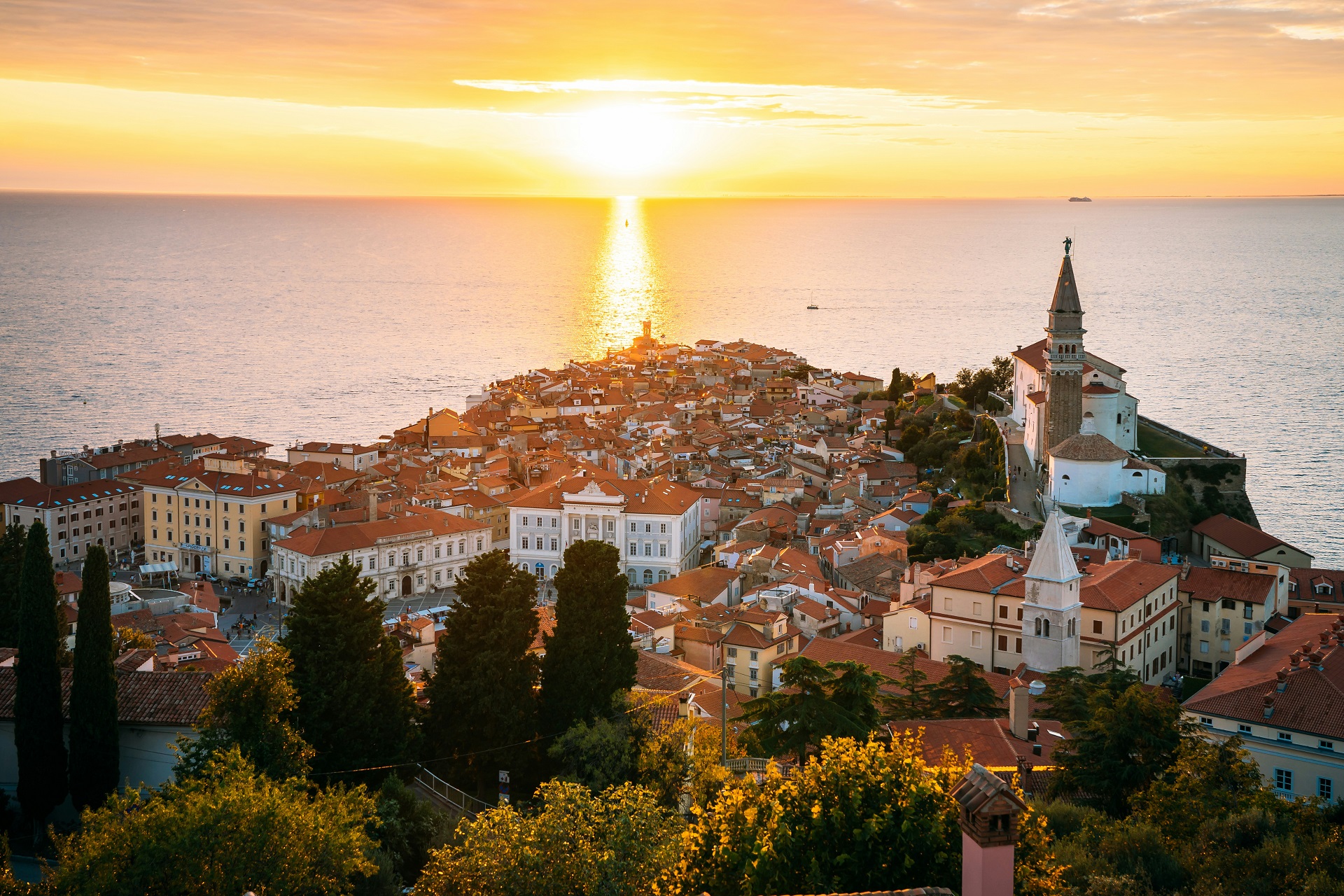
For sailors approaching from open water, this is often one of the first truly dramatic visual encounters of northern Adriatic cruising. The skyline is not flat or distant, but compact and almost sculpted - rooftops stacked above narrow streets, façades leaning toward the water, and a bell tower that anchors the entire composition of the town against the horizon.
This strong visual identity is part of what makes Rovinj feel different from many other coastal stops in the region. The transition from sea to land is immediate. There is no extended suburban shoreline or gradual industrial edge. Instead, the town appears as a complete form emerging directly from the coastline, as if built in response to the surrounding water rather than separate from it.
That relationship between land and sea defines the entire sailing experience here. Rovinj is not simply a harbour where boats stop to dock or resupply. It is a coastal environment where arrival itself becomes part of the destination. The approach by yacht is slow, visual, and increasingly detailed as the old town grows larger in perspective, revealing layers of stone architecture, narrow passages, and tightly packed urban form.
The maritime character of Rovinj is equally important. The waterfront remains active, with fishing boats, excursion vessels, and sailing yachts sharing the same protected harbour space. Yet despite this activity, the scale of the town keeps everything contained. Movement remains visible and organised rather than overwhelming, and the harbour retains a sense of structure even during the height of the summer season.
From offshore, the bell tower of the Church of St. Euphemia becomes the dominant landmark, rising above the dense cluster of rooftops and serving as a natural navigational reference for approaching sailors. Its presence reinforces the vertical character of the town and gives Rovinj a clear focal point that stands out against the lower, greener coastline of Istria.
What distinguishes Rovinj further is the way it blends historical continuity with a working maritime identity. The old town is not isolated from the sea - it is integrated into it. Stone quays run directly along the waterfront, streets narrow toward the harbour edge, and the entire peninsula feels oriented toward maritime movement rather than inland expansion.
This creates a sailing experience that is as much about observation as it is about navigation. The approach, the visual framing, and the gradual increase in architectural detail all contribute to a sense of arrival that unfolds in stages rather than all at once.
For many sailors, Rovinj becomes a defining memory of northern Adriatic cruising not because of technical sailing difficulty or isolated natural beauty, but because of its atmosphere. It represents a point where maritime approach and urban form merge seamlessly into a single experience.
In this sense, Rovinj is not just a stop along the Istrian coast. It is a moment of transition - where sailing, landscape, and historic architecture align to create one of the most recognisable and visually compelling harbour entries in the Adriatic.
A COASTAL TOWN THAT RISES DIRECTLY FROM THE SEA
The first impression of Rovinj is defined entirely by its peninsula setting. The old town is built on a compact promontory that pushes decisively into the Adriatic, forming a naturally enclosed harbour where sea and stone meet without interruption. There is no buffer zone between land and water here - no industrial edge, no extended marina district, no gradual suburban coastline. Instead, the town begins exactly where the sea ends.
From offshore, the structure of the old town becomes immediately legible. The settlement appears tightly bound to the contours of the peninsula, shaped by centuries of incremental construction rather than planned expansion. Narrow streets thread inward from the waterfront, while stone buildings rise directly from the shoreline, forming a dense architectural mass that feels almost sculpted by maritime life.
As a yacht approaches, the visual impact intensifies. The town reveals itself in vertical layers, with rooftops stacking above one another in a compact arrangement that follows the natural rise of the terrain. The façades are painted in warm Mediterranean tones - soft yellows, muted reds, and weathered pastels - that shift in appearance depending on sunlight, cloud cover, and the angle of approach from the sea.
This interaction between light and architecture is one of the defining visual characteristics of Rovinj. In bright midday conditions, the town appears vivid and high-contrast against the deep blue of the Adriatic. In softer evening light, the same buildings take on warmer, more subdued tones, blending gently into the horizon as the day fades.
At the highest point of the peninsula stands the Church of St. Euphemia, whose bell tower rises above the surrounding rooftops. This structure dominates the skyline and serves as a clear maritime landmark for sailors approaching from multiple directions. It functions not only as a visual focal point but also as a natural point of orientation, visible long before entering the inner harbour.
The town’s vertical composition is what gives it such strong presence from the sea. Unlike flatter coastal settlements where buildings extend horizontally along the shoreline, Rovinj’s architecture builds upward and inward simultaneously. This creates a layered sense of depth that becomes more pronounced as distance decreases, revealing increasing detail in stonework, windows, terraces, and narrow passages.
The transition from sea to land is therefore immediate and uninterrupted. There is no gradual suburban expansion or low-density waterfront strip separating the harbour from the historic core. The old town begins directly at the waterline, making arrival feel compressed in space but rich in visual information.
This direct connection between coastline and architecture is central to the town’s identity. The harbour is not something added to Rovinj - it is integrated into its structure. Fishing boats moor alongside stone quays that sit directly beneath residential buildings, and waterfront pathways flow naturally into the narrow streets of the historic centre.
For sailors, this creates one of the most atmospheric harbour entries in the entire Adriatic. The approach is not simply a navigation exercise but a visual progression through increasingly dense layers of maritime and architectural detail. Every metre closer to shore reveals more of the town’s structure, culminating in a complete immersion into its compact peninsula form.
It is this combination of vertical density, immediate shoreline integration, and uninterrupted historical continuity that makes Rovinj so distinctive from a nautical perspective. The town does not sit beside the sea - it rises directly from it, forming one of the most recognisable and visually powerful coastal silhouettes in the northern Adriatic.
SAILING APPROACH AND HARBOUR EXPERIENCE
Approaching Rovinj by yacht is widely considered one of the highlights of any sailing itinerary along Istria. The experience begins well before the harbour itself becomes visible, as the coastline leading toward the town unfolds in long, low stretches of green and gently undulating land.
From offshore, there is a gradual transformation in the landscape. The relatively subdued shoreline of western Istria slowly begins to change character, with vegetation and open coastal contours giving way to a denser, more vertical silhouette in the distance. This shift is subtle at first, but it becomes increasingly distinct as the outline of the Rovinj peninsula starts to separate itself from the horizon.
As the yacht closes in, the visual focus of navigation naturally shifts away from instruments and toward the town itself. The approach becomes intuitive. The bell tower of the Church of St. Euphemia rises above the clustered rooftops, forming a clear vertical reference point that anchors the entire composition of the old town. Below it, tightly packed stone buildings cascade toward the shoreline, while the curved waterfront defines the boundary between sea and settlement.
At this stage, Rovinj begins to dominate the field of view. The harbour is no longer just a destination - it becomes a structured visual guide that draws vessels inward. The geometry of the peninsula, combined with the layered architecture of the old town, creates a natural funnel toward the inner anchorage area.
The harbour itself is well sheltered, benefiting from the surrounding geography of Istria. The peninsula form provides protection from open-sea exposure, and the enclosed layout helps moderate wave action under most summer conditions. As a result, the approach is generally smooth, with reduced swell and predictable water movement inside the harbour basin.
This stability is one of the reasons Rovinj functions effectively as both a visitor stop and a working maritime hub. The harbour is not artificially constructed on a large industrial scale, but rather formed naturally around the old town peninsula. This creates a compact and highly readable navigational space, where movements remain clear even when traffic increases during peak season.
Within the harbour area, a mix of maritime activity reflects the town’s dual identity. Local fishing boats operate alongside excursion vessels, private yachts, and visiting sailing boats, all sharing a relatively contained water space. Despite this diversity of traffic, the overall scale of operations remains manageable, and the harbour retains a sense of order rather than congestion.
Navigation within this environment is largely straightforward. The enclosed nature of the harbour limits long-range exposure, and the clear visual structure of the town provides constant reference points during approach and manoeuvring. For visiting sailors, this reduces complexity and allows focus to remain on positioning rather than route uncertainty.
What makes the arrival particularly memorable, however, is not only the ease of navigation but the atmosphere of integration between sea and town. As the yacht enters the harbour, the transition from open water to urban space happens without interruption. There is no separation between maritime and residential zones - the waterfront, buildings, and harbour activity all exist within the same immediate visual field.
For many sailors, this creates a distinctive emotional impression. Arriving in Rovinj feels less like entering a designated marina and more like moving directly into a living coastal environment shaped around its maritime identity. The town does not sit beside the harbour; it surrounds it, rises from it, and actively participates in it.
This sense of continuity between sailing approach and urban experience is what sets Rovinj apart within the broader Adriatic context. The harbour is not simply a stopping point, but an extension of the town itself - one where navigation, architecture, and daily life converge into a single, coherent coastal experience.
SAILING CONDITIONS AROUND ROVINJ
The sailing conditions around Rovinj are generally stable throughout the main summer season, making this part of Istria one of the more predictable and approachable cruising areas in the northern Adriatic. The combination of sheltered coastal geometry, moderate wind patterns, and relatively short distances between destinations creates an environment well-suited to relaxed coastal navigation rather than demanding offshore passages.
One of the defining characteristics of this region is the consistency of seasonal wind behaviour. The Maestral, the dominant summer breeze across the Adriatic, typically develops in the afternoon from the northwest. Around Rovinj, this wind is usually moderate rather than strong, shaped by the proximity of the Istrian coastline and the partial shelter provided by nearby landmasses.
In practical sailing terms, this results in smooth, manageable conditions that are ideal for short passages along the coast. Boats departing from Rovinj can expect steady airflow that supports easy progress between anchorages and neighbouring coastal towns, without the need for complex sail handling or constant adjustment.
Morning conditions in this area tend to be particularly calm. Wind levels are often very light, and the sea surface can remain almost glassy, especially in protected bays or near the inner coastline. Visibility is usually excellent at this time of day, with clear horizons and soft light that make navigation visually intuitive even for crews planning relaxed itineraries.
These conditions make early departures from Rovinj especially enjoyable. The harbour is typically quiet in the morning hours, and the transition from marina or anchorage into open coastal waters feels gradual and unhurried. For many sailors, this is one of the most pleasant moments of the day - moving from the stillness of the harbour into the wider maritime landscape of Istria.
As the day progresses, the development of the Maestral introduces more consistent sailing wind, usually peaking in the afternoon. This predictable pattern allows crews to plan daily routes with confidence, often structuring itineraries around short hops between coastal destinations or sheltered anchorages.
Occasionally, the Bura wind can influence the wider northern Adriatic region, including the waters around Rovinj. When it occurs, it typically brings cooler air and stronger northeasterly gusts, which can create more dynamic sailing conditions, particularly in exposed areas. However, the local geography provides significant natural moderation.
The coastline of western Istria, combined with nearby islands and indentations along the shore, offers multiple sheltered positions where conditions remain manageable even during stronger wind periods. This allows sailors to adjust routes without major disruption, choosing protected bays or more enclosed anchorages when needed.
One of the advantages of sailing in this region is precisely this flexibility. The distances between key points along the coast are relatively short, and the density of available shelter means that itineraries can be adapted quickly in response to changing conditions. This makes the area particularly suitable for mixed-experience crews, from confident offshore sailors to those seeking more relaxed coastal cruising.
Overall, the sailing environment around Rovinj is defined by balance rather than extremes. Winds are generally predictable, waters are partially sheltered by the shape of Istria, and navigation remains visually clear throughout most of the season.
For sailors, this creates a comfortable and accessible cruising zone - one where conditions support both structured itineraries and spontaneous exploration, without introducing unnecessary complexity or offshore exposure.
ANCHORAGES AND COASTAL STOPS NEAR ROVINJ
While Rovinj itself provides a well-sheltered harbour and functional marina facilities, much of the sailing experience in this part of Istria unfolds outside the town - along a coastline defined by small inlets, offshore islands, and protected natural zones rather than dense nautical infrastructure.
One of the most significant nearby maritime areas is Brijuni National Park to the south. This protected archipelago offers a very different anchoring environment compared to typical Adriatic charter zones. Access is regulated, and navigation is intentionally controlled to preserve the natural and historical character of the islands. As a result, the waters around Brijuni feel unusually calm and undisturbed, with a strong emphasis on environmental preservation rather than high-traffic sailing activity.
For sailors departing from Rovinj, Brijuni often represents a natural extension of the itinerary - close enough for a short passage, yet distinct enough in atmosphere to feel like a separate cruising environment. The transition between the urban maritime setting of Rovinj and the protected waters of Brijuni highlights the diversity of sailing conditions along this stretch of the northern Adriatic.
Closer to Rovinj itself, the coastline of Istria offers a series of smaller bays and informal coastal anchorages. These are typically used in stable weather conditions when wind and swell remain moderate, allowing for comfortable anchoring close to shore. Unlike highly developed marina networks, these locations tend to feel more open and natural, often framed by low rocky coastline, pine vegetation, and gently sloping seabeds.
Such anchorages are commonly integrated into daily sailing routines rather than treated as final destinations. Crews often stop here for swimming breaks during the middle of the day, short lunch anchorages in calm conditions, or relaxed overnight stays when planning slow coastal itineraries. The short distances between anchoring points make it easy to adapt routes dynamically depending on weather, preference, or timing.
One of the most notable characteristics of this region is the improvement in water clarity as distance from urban areas increases. Near Rovinj and other coastal settlements, maritime activity is naturally more concentrated. However, as boats move into more sheltered bays or toward less developed stretches of coastline, visibility in the water increases significantly. The seabed - often composed of rock, sand, and seagrass - becomes clearly visible in calm conditions, particularly during mornings or in low wind periods.
This clarity contributes strongly to the overall sailing experience. Swimming stops feel more immersive, and anchoring becomes visually connected to the surrounding environment rather than separated from it. The sea in this region often feels unusually transparent compared to more densely trafficked southern charter zones.
Unlike heavily developed sailing corridors further down the Croatian coast, where large marina systems and high charter density define movement patterns, the waters around Istria remain comparatively open and loosely structured. This allows for a more flexible style of navigation, where sailors can adjust routes according to weather, mood, or spontaneous stops without relying on tightly scheduled itineraries.
The overall result is a cruising environment that encourages unhurried movement. Distances are short, conditions are generally manageable, and anchorage options are frequent enough to support a slow, exploratory sailing rhythm.
For crews sailing from Rovinj, this combination creates a particularly appealing balance: a well-equipped harbour town at the centre, surrounded by natural anchorages and protected waters that allow the sailing experience to unfold gradually and organically.
In this way, the coastline around Rovinj becomes less about fixed destinations and more about continuous coastal progression - where each anchorage, bay, or island stop forms part of a wider, fluid sailing landscape shaped by the northern Adriatic itself.
SWIMMING AND COASTAL ATMOSPHERE
Swimming around Rovinj reflects the broader character of the northern Adriatic: clean, clear, and closely connected to natural coastal formations rather than structured resort infrastructure. In this part of Istria, the sea is not framed by large beach complexes or heavily developed waterfront zones, but by a coastline that remains visually open, rocky in places, and shaped by centuries of gentle maritime use.
Outside the immediate harbour area, the shoreline around Rovinj transitions into a more natural coastal environment. Rocky outcrops, small coves, and low-lying inlets define much of the swimming landscape. These features create a setting where the sea feels immediately accessible, often just steps - or a short swim - from anchored boats.
In calm weather conditions, the water around this coastline can become exceptionally transparent. Early mornings are particularly striking, when wind levels are minimal and the sea surface settles into near stillness. At these times, visibility extends deep into the water, revealing seabeds composed of stone, sand, and patches of seagrass. The clarity enhances the sense of connection between the surface and the underwater environment, making even short swims feel immersive.
Because the coastline is relatively varied and not dominated by continuous sandy beaches, swimming in this region often happens in a more spontaneous and integrated way. Instead of relying on designated swimming zones or organised beach facilities, sailors typically anchor in quiet bays and enter the water directly from the boat. This creates a natural rhythm where navigation and swimming are closely linked throughout the day.
A typical sailing pattern might include a short morning passage along the coast of Istria, followed by an anchorage in a sheltered inlet where the sea is calm enough for swimming. Later in the day, additional stops may occur in other nearby coves, with swimming becoming an ongoing part of the journey rather than a separate planned activity.
This seamless integration is one of the defining qualities of swimming in the Rovinj region. There is no separation between sailing and water experience. Instead, the act of moving between anchorages naturally creates opportunities to enter the sea whenever conditions feel right.
Unlike heavily developed coastal destinations where swimming is often confined to structured beaches, marked zones, or resort areas, the environment around Rovinj encourages direct and unmediated contact with the sea. The absence of large-scale beach infrastructure means that swimmers engage with the natural coastline as it is, without artificial framing or restriction.
The result is a more fluid and continuous coastal experience. Swimming becomes part of the sailing rhythm - an extension of anchoring, navigation, and time spent at sea rather than a separate destination. Calm bays, clear water, and accessible shorelines combine to create a setting where the sea remains constantly present in daily movement.
Ultimately, the appeal of swimming around Rovinj lies in its simplicity. It is not defined by facilities or organisation, but by natural conditions: clarity of water, variation of coastline, and the ease of access from boat to sea. For sailors exploring this part of Istria, it offers a consistently direct and unfiltered way to experience the northern Adriatic at water level.
EVENINGS IN THE OLD TOWN
One of the most defining aspects of Rovinj is its evening atmosphere, which feels like a natural extension of both the sea and the historic town above it. As daylight begins to fade over Istria, the entire waterfront transitions into a softer rhythm where maritime activity and coastal life blend into a single, continuous scene.
The harbour becomes the focal point of this shift. Fishing boats return and settle into calm positions along the waterfront, while sailing yachts and small excursion vessels remain anchored or gently repositioned within the protected harbour basin. The water itself reflects the changing light, shifting from bright midday blue to deeper tones of gold, orange, and violet as the sun lowers toward the horizon.
Along the edge of the old town, restaurants and cafés gradually come to life. Tables extend toward the waterfront, and the sound of quiet conversation mixes with the subtle movement of boats in the harbour. Despite this increase in activity, the atmosphere never feels chaotic. Instead, it maintains a balanced tempo - lively enough to feel social, but restrained enough to preserve the calm maritime identity of the town.
Above the waterfront, the stone streets of Rovinj begin to fill slowly with evening movement. Narrow alleys, climbing pathways, and small squares connect the lower harbour to the upper parts of the old town, where visitors and locals move between viewpoints, restaurants, and residential spaces. The density of the architecture naturally guides movement upward, creating layered activity rather than concentrated crowds.
From the perspective of the sea, the transformation is even more pronounced. As sunset approaches, the silhouette of the town becomes the dominant visual element on the horizon. The bell tower of the Church of St. Euphemia rises clearly above the clustered rooftops, catching the last light of the day and standing as a vertical anchor against the fading sky.
Below it, the waterfront reflects the changing colours of the evening. The harbour surface becomes a shifting mirror of motion and light, with gentle ripples from passing boats and anchored vessels distorting reflections of stone façades, streetlights, and the deepening sky. This interplay between water and architecture is one of the most recognisable visual moments of Rovinj at dusk.
For sailors, evenings here often become an unstructured combination of experiences. Some choose to go ashore for coastal dining in one of the waterfront restaurants, where fresh seafood and local Istrian cuisine are served just steps from the sea. Others prefer to explore the narrow streets of the old town, moving slowly through stone passages that gradually lead upward toward viewpoints overlooking the Adriatic.
Many, however, remain close to the water, observing the harbour from the deck of their yacht. In these moments, Rovinj reveals a different side of its identity - less about movement and more about stillness. The harbour becomes a stage of quiet activity, where light, reflection, and sound interact gently without urgency.
As night settles over Istria, the town’s outline remains visible against the darkening sky, gradually defined more by light points than architectural detail. The bell tower, harbour lights, and softly illuminated streets create a layered composition that holds its form even as darkness increases.
In the end, evenings in Rovinj are not defined by intensity, but by continuity. The transition from day to night unfolds gradually, with the sea remaining present in every moment - reflecting, framing, and quietly connecting the maritime life below with the historic town above.
CONNECTION TO WIDER ISTRIAN SAILING ROUTES
Rovinj plays an important strategic and experiential role within broader sailing routes along the western coast of Istria. Its position on the central stretch of the peninsula makes it a natural reference point for coastal navigation, linking the more urban northern Istrian harbours with the increasingly natural and island-dense waters toward the south.
To the north, sailing itineraries from Rovinj typically continue along a coastline defined by a succession of historic maritime towns and smaller coastal settlements. Destinations such as Poreč introduce a different architectural rhythm, where Venetian-influenced old towns and structured waterfronts create a more evenly spaced network of stops along the shore. This northern route remains relatively sheltered and visually consistent, with short distances between harbours and a coastline that supports relaxed day sailing.
As sailors progress further along this northern direction, the character of the coastline gradually shifts. The density of settlements decreases in some stretches, and navigation becomes more about connecting a series of distinct coastal identities rather than moving through a single continuous urban zone. In this context, Rovinj often functions as a central pivot point - a place where crews decide whether to continue northward exploration or turn back toward the southern Istrian sailing environment.
To the south, the sailing landscape changes in both structure and atmosphere. Routes from Rovinj lead toward Brijuni National Park, one of the most distinctive protected maritime areas in the northern Adriatic. Here, navigation becomes more controlled and environmentally regulated, with calm waters, limited development, and a strong emphasis on preservation.
The transition from Rovinj to Brijuni is particularly notable because it represents a shift from a living historic town into a carefully managed natural and cultural landscape. While Rovinj is defined by its vertical urban density and active harbour life, Brijuni introduces a slower, more restricted sailing environment where movement is shaped by protected zones and natural balance.
Further south, itineraries can extend into the wider Kvarner sailing region, where the Adriatic opens more broadly and island chains become more prominent. This area introduces longer passages, more exposed waters, and a different type of cruising rhythm compared to the relatively compact sailing structure of Istria. In this sense, Rovinj sits at an important transitional point between two distinct northern Adriatic sailing systems.
Because of this positioning, Rovinj works particularly well within flexible coastal itineraries. It can serve as an overnight harbour for crews seeking a well-sheltered stop with strong atmospheric value, or as a provisioning and rest point between more nature-focused sailing areas such as Brijuni or quieter sections of the Istrian coastline.
At the same time, Rovinj functions effectively as a scenic pause within longer journeys. Its visual identity, harbour structure, and immediate integration with the sea make it a natural place to slow down, adjust plans, or simply experience a more urban expression of Istrian coastal life before continuing along the route.
What makes this role especially valuable is the balance it offers within an itinerary. The surrounding sailing region of Istria combines historic towns, protected natural areas, and open coastal stretches. Within this mix, Rovinj provides a concentrated maritime experience - compact, visually striking, and easy to integrate into both northbound and southbound sailing routes.
Ultimately, its importance is not only geographical but experiential. Rovinj connects different sailing moods within the same region: the structured rhythm of northern coastal towns, the protected stillness of Brijuni, and the broader open-water transitions toward Kvarner. For sailors, this makes it one of the most adaptable and meaningful stopovers in the northern Adriatic sailing network.
ROVINJ ON ADRIATIC SAILING ITINERARY
Rovinj stands out in the Adriatic not because of its scale or nautical complexity, but because of its immediate visual identity and deeply integrated maritime atmosphere. In a region as diverse as Istria, where sailors move between quiet natural anchorages, small fishing harbours, and protected island environments, Rovinj occupies a rare position: it is both a working coastal town and one of the most visually complete harbour landscapes in the northern Adriatic.
What makes it distinctive is the way everything is concentrated into a single, coherent peninsula form. The old town rises directly from the sea, without separation between waterfront, architecture, and daily life. Stone buildings, narrow streets, and the harbour edge exist within immediate proximity, creating a compact maritime environment where history and navigation intersect continuously. Few places in Croatia combine this level of historic density, natural coastal approach, and functional harbour integration within such a confined space.
For sailors exploring Istria, Rovinj provides an important contrast to the quieter, more nature-oriented anchorages found along the coast and within nearby protected areas such as Brijuni National Park. While those environments emphasize stillness, preservation, and minimal development, Rovinj introduces a more urban maritime experience - lively but contained, active yet visually balanced, and always closely connected to the sea.
This contrast is one of the reasons Rovinj works so well within broader sailing itineraries. It does not compete with natural anchorages or island landscapes; instead, it complements them. After time spent in quieter bays or open coastal waters, arriving in Rovinj reintroduces structure, architecture, and human scale without breaking the continuity of the sailing experience.
Even within its urban character, the town never loses its maritime focus. The harbour remains central to daily life, and the old town is consistently oriented toward the water. Fishing boats, sailing yachts, and local traffic share the same compact basin, reinforcing the sense that Rovinj has grown directly from its relationship with the Adriatic rather than evolving away from it.
In a wider regional context, this balance of visual intensity and navigational simplicity is what gives Rovinj its lasting appeal. It is immediately recognisable from offshore, easy to approach under most conditions, and rich in atmosphere once alongside. At the same time, it remains small enough to feel intimate, even during the peak of the sailing season.
For many sailors, Rovinj becomes one of the defining emotional highlights of a northern Adriatic itinerary. Not because it is remote or difficult to reach, but because it delivers a complete coastal experience in a single place: approach, arrival, harbour life, historic presence, and evening atmosphere all contained within a compact maritime setting.
Ultimately, Rovinj belongs on an Adriatic sailing route because it captures something essential about this coastline. It shows how deeply the sea and settlement can be intertwined, how history can remain visible without overwhelming the present, and how a harbour town can feel both alive and balanced at the same time.
In a sailing region defined by variety - quiet islands, protected natural zones, and long coastal stretches - Rovinj remains one of the most memorable points of arrival. It is a place where the coastline does not simply meet the sea, but rises directly from it, turning every approach into a moment that feels both navigational and deeply visual.