SAILING BRIJUNI ISLANDS: ADRIATIC NATURE, HISTORY, AND QUIET ANCHORAGES NEAR ISTRIA
Off the western coastline of Istria, directly across from the fishing and ferry town of Fažana, lies one of the Adriatic’s most distinctive sailing environments: Brijuni National Park. Unlike the exposed outer islands of Dalmatia or the highly trafficked charter corridors further south, the Brijuni archipelago offers a quieter and more contemplative form of Adriatic navigation - one shaped by protected landscapes, layered history, and controlled maritime access rather than mass nautical tourism.
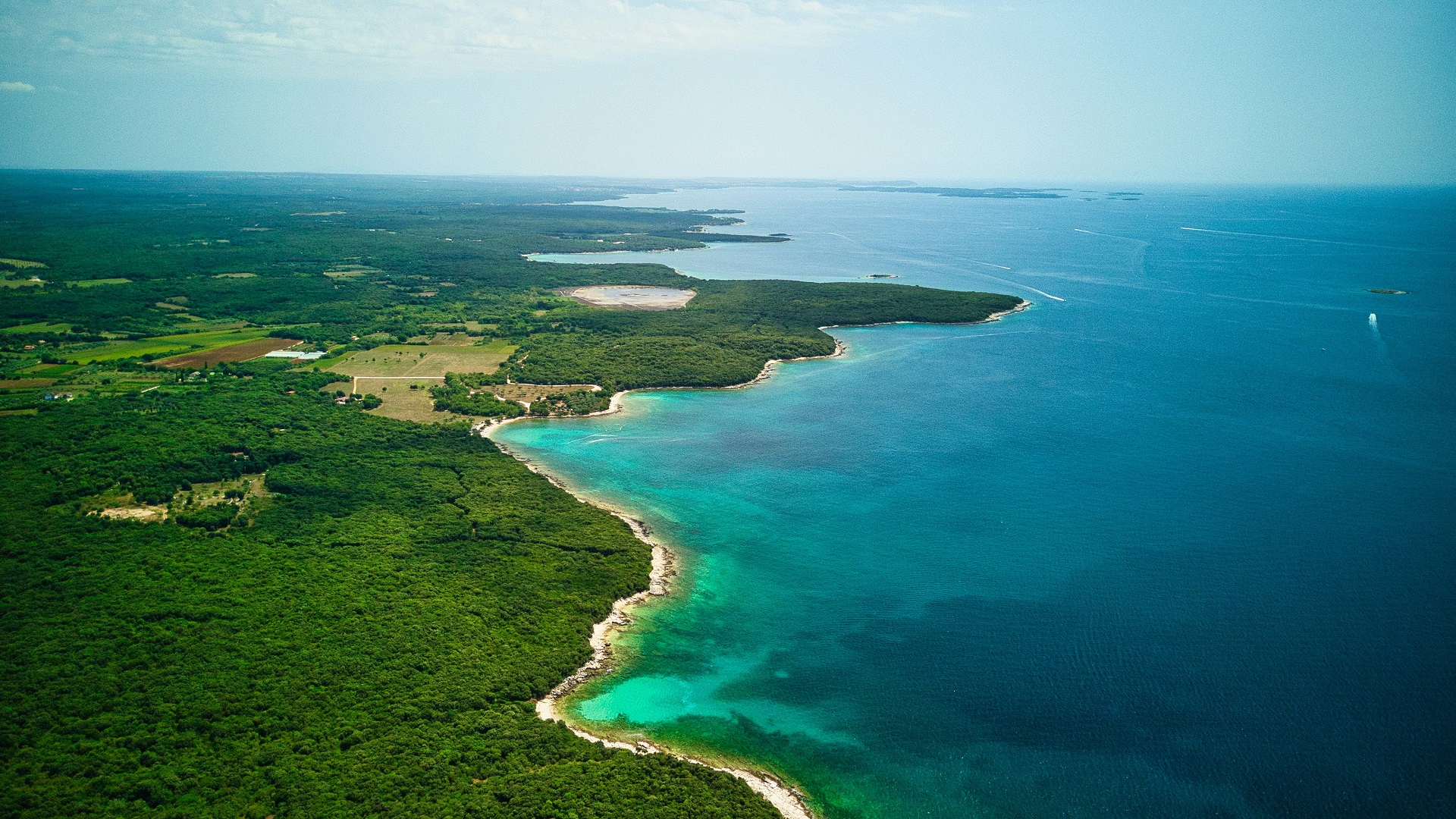
For sailors arriving from the central Adriatic, the first impression is often one of contrast. The atmosphere changes noticeably as the coastline softens and the open-sea character of the Adriatic gives way to calmer, more enclosed waters. The islands themselves rise gently from the sea, covered not by harsh rocky terrain but by pine forests, open meadows, olive groves, and carefully preserved natural landscapes that feel almost park-like in appearance.
This softer geography is one of the defining characteristics of the Brijuni Islands. Whereas many Croatian sailing destinations are shaped by dramatic limestone cliffs, barren ridges, and rugged anchorages, Brijuni National Park feels more restrained and balanced. The channels between the islands are calmer, the coastline less severe, and the overall visual identity greener and more structured by nature preservation.
The archipelago itself consists of a group of islands and islets positioned close to the mainland coast. This proximity to Istria significantly influences the sailing environment. Swell is reduced, navigation distances are shorter, and the waters remain comparatively sheltered even during changing conditions. As a result, sailing around Brijuni often feels more relaxed and controlled than routes further offshore.
Yet what truly separates Brijuni from many other Adriatic destinations is the atmosphere created by protection and limited development. Because the islands form part of a national park, maritime activity is more regulated, coastal construction remains restricted, and the natural environment dominates the experience. There are no extensive marina complexes, no dense waterfront tourism zones, and very little of the visual intensity associated with major charter hubs.
Instead of busy marina promenades or crowded harbour fronts, sailors encounter quiet bays, open green coastal edges, and a landscape where human presence feels secondary to the surrounding environment. Even during the main summer season, the islands rarely feel overwhelmed. Boat movement exists, but it is dispersed and moderated by the protected status of the archipelago.
This creates a very different rhythm of sailing life. Stops around Brijuni National Park are not primarily centred around nightlife, provisioning, or high-energy harbour activity. The experience is instead shaped by slower movement through protected waters, swimming in calm coves, walking through preserved landscapes, and observing the interaction between nature and maritime history.
Approaching the islands by yacht reinforces this sense of transition. Rather than dramatic entrances into narrow harbours or dense urban coastlines, arrival happens gradually through quiet channels and low coastal contours. The sea remains calm, visibility is typically excellent in summer conditions, and the islands reveal themselves slowly through layers of forest, shoreline, and open water.
The archipelago also carries a strong historical dimension that subtly shapes the sailing atmosphere. Roman traces, Austro-Hungarian influences, and twentieth-century political history all remain present within the landscape, adding cultural depth to what initially appears to be a purely natural environment. This coexistence of history and protected nature gives Brijuni a uniquely layered identity within the Croatian sailing world.
For sailors exploring northern Croatia, the Brijuni Islands therefore feel distinctly separate from the faster rhythms of the wider Adriatic. The sea is calmer, the coastline softer, and the atmosphere more reflective than performative. It is not a destination built around spectacle or nautical intensity, but around preservation, space, and the rare ability to move slowly through one of the Adriatic’s most carefully protected maritime landscapes.
A NATIONAL PARK DEFINED BY SEA AND LANDSCAPE
Brijuni National Park is formed by a compact archipelago of islands and smaller islets spread along the southwestern edge of Istria, where the mainland gradually dissolves into the northern Adriatic. Positioned close to the coast yet visually separated from it, the islands create a maritime landscape that feels protected, self-contained, and unusually balanced between natural preservation and historical presence.
The two best-known islands within the park are Veliki Brijun and Mali Brijun. Together, they form the core of the archipelago and represent the landscape most sailors associate with Brijuni itself. Both islands are defined by an uncommon combination of Mediterranean vegetation, historical remains, managed green areas, and carefully protected shoreline scenery that distinguishes them from most other Croatian sailing destinations.
What immediately sets the Brijuni Islands apart is the character of the terrain. Much of the Croatian coast is visually dominated by exposed limestone formations, steep rocky coastlines, and rugged island relief shaped by centuries of wind and salt erosion. Around Brijuni, however, the landscape appears noticeably softer and greener.
Dense pine forests extend close to the shoreline, while open meadows and cultivated olive groves interrupt the tree cover with lighter Mediterranean textures. The terrain rises gently rather than abruptly, and the coastal edges are generally lower and more accessible than the dramatic rocky shorelines found further south along the Dalmatian coast.
This softer geography creates a very different visual identity when viewed from the sea. Instead of sharp cliffs and barren ridges, sailors encounter layered green landscapes that resemble a maritime park environment more than a typical Adriatic island chain. The overall atmosphere feels composed and carefully preserved, almost as though the landscape itself has been intentionally slowed down.
The difference becomes especially noticeable during approach by yacht. As vessels move through the channels surrounding Brijuni National Park, the transition from open coastal navigation into protected island waters happens gradually and smoothly. The coastline does not dominate the horizon through scale or height. Instead, it unfolds gently through low contours, tree lines, and calm inlets.
Because the archipelago sits close to the Istrian mainland, the surrounding waters are relatively sheltered from larger Adriatic swell. Channels remain calmer than many outer-island routes, and navigation through the area feels measured rather than exposed. The sea itself often reflects this calmness, particularly in stable summer weather when the surface becomes smooth and highly reflective beneath the islands’ green coastline.
This protected maritime setting contributes significantly to the identity of Brijuni as a sailing destination. The experience is not built around dramatic offshore passages or challenging navigation, but around quiet movement through a carefully preserved coastal environment.
Another defining feature of Brijuni National Park is the strict limitation of development across the islands. Because the archipelago is protected as a national park, construction and tourism infrastructure remain tightly controlled. Large marina complexes, dense waterfront development, and high-capacity tourism facilities are largely absent.
This absence of intensive infrastructure has an enormous impact on the atmosphere experienced from the sea. Coastlines remain visually open, bays feel uncrowded, and the natural relationship between forest, shoreline, and water remains largely uninterrupted. Even areas with historical buildings or visitor facilities retain a low visual footprint compared to more commercial Adriatic destinations.
For sailors, this creates an increasingly rare sense of spatial clarity along the Croatian coast. There are few visual interruptions, little maritime congestion, and almost no feeling that the islands have been reshaped around nautical tourism. Instead, the archipelago preserves an atmosphere where navigation, landscape, and protected nature remain in balance.
Ultimately, what defines Brijuni National Park is not only the beauty of its coastline, but the consistency of its environment. Sea, vegetation, historical traces, and protected waters all operate together within a unified landscape that feels intentionally preserved rather than commercially adapted.
In a region where many sailing destinations are increasingly shaped by infrastructure and seasonal intensity, Brijuni remains defined by restraint - an Adriatic archipelago where the natural landscape still determines the rhythm of the sea around it.
SAILING CONDITIONS AROUND BRIJUNI
The sailing conditions around Brijuni National Park are among the calmer and more approachable in the northern Adriatic, particularly during the main summer season when weather patterns become stable and highly predictable. Unlike more exposed offshore routes along the outer Dalmatian islands, the Brijuni archipelago benefits from its close proximity to the western coast of Istria, which significantly moderates both swell and wind exposure.
This geographical positioning shapes the entire sailing environment. The islands lie within a naturally protected coastal zone where open Adriatic conditions are softened by nearby landmasses and the compact structure of the archipelago itself. As a result, wave development is usually limited, sea states remain relatively calm, and navigation feels controlled even during periods of increased wind activity elsewhere in the Adriatic.
For sailors, this creates an environment that is less about technical challenge and more about fluid, scenic movement through protected coastal waters. Distances between points of interest are short, navigation lines are visually clear, and the surrounding coastline remains continuously visible, contributing to a strong sense of orientation throughout the sailing day.
The dominant summer wind pattern in the region is the Maestral, the characteristic northwesterly thermal breeze that develops across much of the Adriatic during warmer months. Around Brijuni National Park, the Maestral typically begins forming late in the morning before strengthening gradually through the afternoon.
In this area, the wind usually arrives with moderate and manageable intensity, creating comfortable sailing conditions rather than aggressive open-sea pressure. Because the islands and mainland coastline partially shelter the sailing area, the breeze often feels smoother and more stable than on fully exposed offshore routes.
These conditions are particularly well suited to short passages along the western Istrian coastline. Sailing legs between nearby anchorages, coastal towns, and the islands themselves can be completed without long offshore transitions, allowing crews to move slowly and flexibly throughout the day. The rhythm of navigation tends to follow the natural progression of the wind: calm mornings, active afternoon sailing, and quiet evenings in sheltered waters.
Morning conditions around Brijuni are often exceptionally calm. The sea surface frequently becomes almost flat, with minimal wind disturbance and excellent visibility across the surrounding channels. Under these conditions, navigation through the archipelago feels highly relaxed, and the reflective water surface enhances the visual clarity of the green island landscape.
This calmness contributes significantly to the overall sailing experience. Rather than focusing on route management or weather adaptation, sailors are often able to slow their pace and engage more directly with the scenery itself. The movement between islands becomes part of the destination rather than simply transit between stopping points.
The Bura wind occasionally influences the region, especially outside the peak stability of midsummer. Originating from the northeast, the Bura can introduce sharper gusts and more variable conditions, particularly when cold air masses descend from the inland terrain toward the coast.
When active around Brijuni National Park, the Bura may create periods of stronger localised wind acceleration in open channels and exposed coastal sections. However, the sailing environment remains comparatively manageable because of the proximity of the mainland and the availability of sheltered positions around the islands.
The compact geography of the archipelago provides multiple opportunities to adjust course, reduce exposure, or seek calmer water without major route changes. This flexibility is one of the reasons Brijuni is considered suitable for relaxed coastal cruising rather than demanding offshore navigation.
Importantly, sailing here rarely feels isolated or exposed. Land remains constantly present on the horizon, navigation distances are short, and weather shifts can generally be managed through simple positional adjustments rather than complex rerouting.
Ultimately, the sailing conditions around Brijuni National Park reinforce the broader identity of the archipelago itself. The experience is not centred around speed, distance, or technical intensity, but around smooth movement through protected waters framed by nature, history, and calm coastal scenery.
In that sense, Brijuni represents a different interpretation of Adriatic sailing—one where the sea feels quieter, the routes feel gentler, and navigation becomes closely connected to the surrounding landscape rather than separated from it.
ARRIVAL BY SEA: QUIET CHANNELS AND CONTROLLED ACCESS
Approaching Brijuni National Park by yacht feels noticeably different from entering most Adriatic island destinations. The transition is subtle rather than dramatic. There are no dense harbour fronts, no crowded charter bases, and no long rows of marina infrastructure dominating the shoreline. Instead, the islands emerge gradually through a network of quiet channels, low green coastlines, and calm protected waters that immediately establish a slower maritime atmosphere.
From the moment a vessel leaves the western coast of Istria near Fažana, the sea begins to feel more enclosed and controlled. The mainland remains nearby, while the islands themselves create natural corridors of navigation where movement is smooth and visually oriented rather than exposed or offshore in character.
This gradual approach shapes the entire experience of arrival. Instead of sailing toward a clearly defined urban harbour, sailors move through layered coastal scenery where pine forests, low shoreline contours, and open water blend into a unified landscape. The islands reveal themselves slowly, without the visual intensity that often accompanies larger Adriatic destinations.
The calmness of the surrounding channels contributes significantly to this first impression. In stable summer weather, the sea surface around Brijuni National Park is often remarkably smooth, allowing for quiet and highly scenic navigation between islands and protected bays. Visibility is typically excellent, and the short distances between navigational points create a relaxed sense of progression through the archipelago.
One of the defining aspects of arrival by sea, however, is the awareness that Brijuni is not simply an open nautical zone - it is a protected national park environment. Access to specific areas of the archipelago is regulated, and sailors are expected to respect current navigation rules, visitor policies, and environmental protection measures before entering designated zones.
This controlled access is not restrictive in a negative sense; rather, it is one of the primary reasons the islands retain their unusually calm and uncrowded atmosphere today. By limiting uncontrolled development and regulating maritime activity, Brijuni National Park preserves a sense of spatial openness that has become increasingly rare along many popular Adriatic sailing routes.
As a result, the archipelago does not function like a conventional high-capacity charter destination. There are no large-scale marina complexes designed around rapid yacht turnover, and very little of the coastline has been adapted to support mass nautical tourism. Instead, Brijuni feels more like a protected maritime landscape that happens to be explored by boat rather than a destination engineered specifically for sailing traffic.
This distinction has a strong influence on the rhythm of navigation around the islands. Movement tends to be slower, quieter, and more observational. Sailors are encouraged - both practically and atmospherically - to engage with the environment rather than move quickly through it.
Anchorages around the archipelago generally reflect this same protected character. In stable weather conditions, many positions remain calm and comfortable, particularly within naturally sheltered coastal sections. The seabed varies between sand, rock, and seagrass, requiring careful anchoring technique and attention to holding conditions.
Because environmental preservation is central to the management of Brijuni National Park, anchoring restrictions may apply in certain zones, especially where sensitive marine habitats are present. Responsible navigation therefore becomes an important part of the sailing experience itself. Selecting appropriate anchoring positions, respecting protected areas, and minimising environmental impact are all essential aspects of visiting the archipelago by sea.
This sense of responsibility further reinforces the unique identity of Brijuni within the Adriatic sailing world. The islands are not presented as a place to consume rapidly or move through aggressively. Instead, they invite a more careful and deliberate relationship between boat, sea, and landscape.
Ultimately, arrival at Brijuni National Park is defined not by spectacle, but by transition. The sea becomes calmer, navigation becomes quieter, and the surrounding environment begins to dictate the rhythm of movement. For sailors accustomed to busier Adriatic routes, the experience can feel almost unexpectedly restrained - a protected maritime space where the journey itself slows naturally as the islands begin to close around the boat.
A DIFFERENT KIND OF ADRIATIC ISLAND ATMOSPHERE
One of the most distinctive qualities of Brijuni National Park is not a specific bay, landmark, or sailing route, but the atmosphere that surrounds the islands as a whole. In a region where many Adriatic destinations have gradually adapted to the intensity of seasonal tourism and large-scale charter activity, Brijuni remains unusually restrained, quiet, and spatially open.
For sailors arriving from busier sailing corridors further south, the difference becomes noticeable almost immediately. There are no crowded marina promenades filled with late-night activity, no tightly packed harbour fronts dominated by charter turnover, and no sense that the islands are operating at maximum seasonal capacity. Instead, the archipelago maintains a calm and measured identity shaped more by preservation than by tourism infrastructure.
This atmosphere is deeply connected to the protected status of Brijuni National Park itself. Much of the coastline remains undeveloped, allowing the natural relationship between sea, vegetation, and open land to remain visually uninterrupted. Pine forests extend close to the waterline, grassy clearings open unexpectedly behind the coast, and the built environment remains secondary to the surrounding landscape.
As a result, movement ashore feels dispersed rather than concentrated. There are no dense waterfront entertainment zones or highly commercialised coastal centres directing the rhythm of daily activity. Instead, the islands encourage slower exploration through quiet paths, shaded forest routes, and open Mediterranean terrain where the sea is never far from view.
Walking across the islands often feels less like moving through a tourist destination and more like crossing a preserved coastal landscape that happens to contain historical traces and maritime access points. Paths pass through pine forests scented by salt and resin, continue alongside open meadows, and occasionally reveal old stone structures or quiet coastal edges overlooking the Adriatic.
This environment creates a fundamentally different rhythm for sailors. Stops around Brijuni National Park are rarely centred around nightlife or organised marina culture. Instead, the focus shifts toward slower and quieter experiences: swimming from the boat in calm water, walking through protected landscapes, observing the coastline from anchor, or simply remaining stationary within a peaceful maritime setting.
Time itself feels slightly altered within the archipelago. Without the pressure of crowded harbours, reservation schedules, or high-density nautical traffic, itineraries tend to loosen naturally. Boats stay longer in place, shore visits become unhurried, and daily movement begins to follow weather, light, and personal rhythm rather than logistical necessity.
Even during the height of summer, the islands rarely feel overwhelmed compared to many major Adriatic sailing routes. Maritime traffic exists, but it remains dispersed across the channels and anchorages rather than concentrated into a few intense nautical hubs. The result is an unusual sense of calm for such a well-known location on the Croatian coast.
This quieter atmosphere also changes the sensory experience of sailing itself. Sounds carry differently across calmer waters. Evenings become defined by wind movement through pine trees, distant boat engines, and the subtle motion of water against the hull rather than by nightlife noise from crowded waterfronts.
For many sailors, this becomes the defining memory of Brijuni - not a single destination point, but the feeling of moving through an Adriatic landscape where nature still shapes the experience more strongly than infrastructure.
Ultimately, Brijuni National Park offers a different interpretation of island sailing in Croatia. It is not built around intensity, spectacle, or constant movement. Instead, it rewards stillness, observation, and a slower engagement with the sea itself.
In an Adriatic increasingly defined by popular routes and seasonal activity, Brijuni stands apart through atmosphere alone: quiet, preserved, and unusually balanced between maritime navigation and protected coastal life.
SWIMMING IN PROTECTED ADRIATIC WATERS
Swimming around Brijuni National Park reflects the same calm, protected, and carefully preserved atmosphere that defines the islands themselves. The experience is less about dramatic coastal spectacle and more about clarity, stillness, and the subtle pleasure of being surrounded by an unusually balanced maritime environment.
Because the archipelago is protected as a national park, coastal development remains limited and maritime activity is more regulated than along many major Adriatic sailing corridors. This has a direct effect on the quality of the surrounding sea. Waters around the islands are generally clean and highly transparent, especially during stable summer conditions when visibility increases significantly in sheltered bays and quieter channels.
Unlike heavily trafficked charter areas where constant boat movement can disturb the surface and reduce water clarity near popular anchorages, the sea around Brijuni National Park often feels remarkably calm. The reduced intensity of maritime traffic allows the natural character of the water to remain dominant, reinforcing the sense that the archipelago functions more as a protected coastal ecosystem than a conventional nautical tourism zone.
The coastline itself creates a varied but gentle swimming environment. Rocky coastal sections alternate with calmer inlets and shallow zones where the seabed becomes lighter and the sea shifts into softer turquoise tones under strong sunlight. In these areas, the water often appears almost luminous during midday hours, particularly when wind conditions remain stable and the surface becomes nearly flat.
Because the islands rise gradually from the sea and the surrounding channels are relatively sheltered, many swimming spots feel enclosed and peaceful rather than exposed. Small coves and protected shoreline sections allow swimmers to remain close to nature without the noise and movement typically associated with larger harbour areas or high-density anchorages.
This quieter environment significantly changes the experience of entering the water from a yacht. Swimming becomes less of a planned activity and more of a continuous extension of life on board. Morning swims before departure, midday breaks in calm bays, and evening swims beneath the fading Adriatic light naturally become part of the rhythm of navigation around the islands.
The sea around Brijuni is also defined by moderation rather than extremes. It is not known for dramatic underwater cliffs, deep cavern systems, or famous technical diving sites. Instead, its appeal lies in accessibility and atmosphere. The underwater environment feels calm and visually clear, shaped by rocky seabeds, patches of seagrass, and the soft movement of light through shallow coastal water.
For sailors, this creates a particularly relaxing swimming environment. Boats can remain quietly at anchor while swimmers move directly between deck and sea without needing designated beaches or organised coastal infrastructure. The surrounding landscape - pine forests, low green shorelines, and open Mediterranean sky - remains constantly visible from the water, reinforcing the sense of immersion within a protected natural setting.
Another important aspect of swimming around Brijuni National Park is the absence of urgency. Because the islands are not structured around crowded beach culture or fast-paced tourism, time in the water tends to unfold slowly. There is little pressure to move quickly between locations or compete for space within anchorages. Instead, the environment encourages lingering: floating near the boat, drifting along quiet rocky edges, or simply remaining still within calm protected water.
This slower rhythm aligns closely with the overall identity of the archipelago itself. Around Brijuni, swimming is not separated from sailing as a distinct activity. It becomes part of the same continuous experience of moving quietly through a protected maritime landscape.
Ultimately, the appeal of the sea around Brijuni National Park comes not from intensity or spectacle, but from balance. The water is clear, calm, and deeply connected to the preserved atmosphere of the islands surrounding it. For sailors exploring northern Croatia, it offers a version of Adriatic swimming that feels quieter, softer, and increasingly rare along the modern Mediterranean coast.
HISTORICAL LAYERS ACROSS THE ISLANDS
What separates Brijuni National Park from many other Croatian sailing destinations is the unusually strong historical presence woven directly into the landscape itself. Across the archipelago, traces of different civilizations and political eras remain visible among forests, meadows, and coastal paths, creating an atmosphere where maritime scenery and historical memory exist side by side.
For sailors approaching the islands by sea, this layered identity gradually reveals itself in subtle ways. A stretch of undeveloped coastline may suddenly give way to old stone structures hidden among pine trees. Open green landscapes are interrupted by historical villas, archaeological remnants, and carefully preserved architectural details that hint at the islands’ long and complex past.
The historical depth of Brijuni stretches back thousands of years. Archaeological remains discovered across the islands indicate ancient settlement and maritime activity dating to Roman times, when the northern Adriatic played an important role in trade and coastal development throughout the Mediterranean.
Roman traces remain among the islands today, integrated almost quietly into the surrounding environment. Ancient structures, fragments of villas, and old stone foundations appear not as isolated monuments but as part of the broader landscape itself. This integration creates a unique impression for visitors arriving by yacht: history here does not dominate the scenery, but instead emerges naturally from it.
Centuries later, the islands also became connected to the Austro-Hungarian period, which left its own visible influence on the character of the archipelago. During this era, Brijuni began developing into an exclusive coastal retreat known for its mild climate and carefully maintained natural environment. Elements of landscaped park design, coastal promenades, and elegant historical buildings still reflect this period of transformation.
Yet the twentieth century perhaps shaped the modern identity of Brijuni National Park more visibly than any earlier era. The islands became closely associated with the political and diplomatic history of former Yugoslavia, particularly during the leadership of Josip Broz Tito. During this time, Brijuni evolved into an internationally recognised political and cultural meeting place, hosting numerous state visits and diplomatic gatherings within the preserved island environment.
This historical layer remains subtly present throughout the archipelago today. Certain villas, landscaped areas, and institutional buildings still carry the visual atmosphere of that period, blending unexpectedly with the surrounding Mediterranean landscape. Unlike heavily curated historical sites elsewhere, these elements often feel understated and naturally absorbed into the islands themselves.
What makes the historical atmosphere of Brijuni particularly unusual is the way these different eras coexist without overwhelming the natural setting. Roman remains, Austro-Hungarian influences, and twentieth-century political history are all present, yet none dominate the islands completely. Instead, they form overlapping layers within a landscape still primarily defined by sea, vegetation, and open coastal space.
For sailors arriving from more purely nautical destinations, this combination adds unusual depth to the experience of the archipelago. Brijuni is not simply a sequence of anchorages or swimming stops. It is a maritime environment where navigation becomes connected to broader historical continuity across the Adriatic.
Even simple movement through the islands can feel historically charged in subtle ways. Passing quiet shoreline structures, approaching old stone quays, or walking through preserved coastal paths creates the sense that the sea routes around Brijuni have been active and culturally significant for centuries.
This historical presence also reinforces the calmer rhythm of the islands themselves. Because the archipelago is shaped as much by preservation as by tourism, historical spaces remain integrated into the landscape rather than transformed into crowded attractions. Exploration therefore feels slower, quieter, and more reflective than in many other coastal destinations.
Ultimately, the historical layers of Brijuni National Park are inseparable from the sailing experience itself. The islands are not defined only by scenery or navigation conditions, but by the rare coexistence of protected nature and visible Adriatic history within the same compact maritime landscape.
For sailors exploring northern Croatia, Brijuni offers something increasingly uncommon along the Mediterranean coast: a destination where the movement of the sea and the memory of past centuries remain deeply intertwined.
CONNECTION TO WIDER ISTRIAN SAILING ROUTES
Despite its calm and protected atmosphere, Brijuni National Park is not isolated from the broader sailing network of the northern Adriatic. On the contrary, its position along the western coast of Istria makes it one of the most strategically placed natural stopovers within regional sailing itineraries, connecting sheltered coastal navigation with longer exploratory routes further offshore.
For sailors cruising the Istrian coastline, Brijuni functions as both a destination in its own right and a natural transitional zone between different Adriatic sailing environments. Its location allows crews to move gradually between protected coastal waters, historic harbour towns, and the more open navigational spaces of the northern Adriatic without requiring demanding offshore passages.
To the north, sailing routes continue along the western coast of Istria toward historic maritime towns such as Rovinj. This section of coastline is defined by a distinctly different atmosphere from much of Dalmatia. Venetian architectural influence becomes increasingly visible, harbours feel compact and historic, and waterfronts rise directly from the sea in dense stone formations shaped by centuries of Adriatic maritime trade.
Approaching Rovinj by yacht is often considered one of the most visually distinctive sailing experiences in northern Croatia. The old town rises dramatically above the harbour, crowned by church towers and tightly clustered stone buildings that reflect strongly in calm evening waters. Compared to the greener and more dispersed atmosphere of Brijuni, Rovinj introduces a more urban and historically concentrated coastal identity.
Further north, additional Istrian coastal settlements continue this pattern of compact historic harbours and relatively short sailing distances, allowing crews to maintain flexible daily itineraries while remaining close to protected coastal navigation zones.
To the south of Brijuni National Park, the sailing landscape gradually begins to change. Routes extend toward the Kvarner region, where the Adriatic opens more fully and the coastline becomes increasingly connected to larger offshore island systems.
As sailors move away from the sheltered western Istrian coast, navigation can become more exposed and weather-dependent, particularly when crossing toward islands further offshore. This progression creates a natural transition from the calm, controlled atmosphere of Brijuni into more expansive northern Adriatic cruising grounds.
Because of this positioning, Brijuni often works exceptionally well as a balancing point within broader itineraries. It can serve as a peaceful pause before longer offshore passages, a protected stop between historic coastal towns, or a calm anchorage after more open-water navigation elsewhere in the region.
Its proximity to the mainland also makes the archipelago particularly accessible for shorter sailing itineraries based around Istria itself. Unlike destinations that require long crossings or extended time commitments, Brijuni can be integrated into routes with relatively little navigational pressure.
This accessibility is especially valuable for crews seeking relaxed coastal cruising rather than intensive offshore schedules. Short passages between anchorages, sheltered waters, and consistent visual orientation toward land allow route planning to remain highly flexible throughout changing weather conditions.
For sailors chartering in northern Croatia, this means that itineraries involving Brijuni National Park can adapt easily to different sailing styles. Some crews may focus on slow exploration of the Istrian coastline itself, while others may use Brijuni as a gateway point before continuing deeper into the northern Adriatic.
Another important advantage of the region is the continuity of navigation. Unlike areas where long open-water crossings separate major destinations, the western Istrian coast allows for progressive movement between multiple sailing environments without losing the sense of coastal connection. Harbours, anchorages, and protected bays remain relatively close together, supporting a relaxed and highly adjustable cruising rhythm.
Ultimately, the value of Brijuni National Park within wider Adriatic sailing routes lies in this balance between accessibility and atmosphere. The islands remain quiet and protected, yet never feel disconnected from the larger maritime geography surrounding them.
For sailors exploring northern Croatia, Brijuni therefore represents more than an isolated natural park. It becomes part of a wider coastal narrative linking historic Istrian towns, protected island landscapes, and the evolving sailing environments of the northern Adriatic Sea.
A SLOWER INTERPRETATION OF SAILING THE ADRIATIC
What ultimately defines sailing around Brijuni National Park is restraint. In an Adriatic increasingly shaped by fast-moving charter itineraries, crowded marina systems, and highly structured nautical tourism, the Brijuni Islands offer a noticeably different rhythm - one that feels quieter, slower, and more connected to the surrounding landscape than to the demands of movement itself.
For many sailors, this difference becomes apparent not through any single landmark or anchorage, but through the gradual shift in pace that occurs after entering the archipelago. Distances feel shorter, decisions feel less urgent, and the pressure to constantly progress from one destination to another begins to fade.
Unlike major sailing hubs further south along the Croatian coast, Brijuni is not organised around high-capacity marina culture or dense waterfront activity. There are no expansive nightlife districts built around charter traffic, no long rows of crowded harbour berths dominating the coastline, and very little of the visual or social intensity associated with peak Adriatic sailing corridors.
Instead, the islands remain remarkably open and understated. Large sections of coastline are left undeveloped, maritime traffic remains comparatively dispersed, and the overall atmosphere continues to be shaped primarily by protected nature and historical continuity rather than by seasonal tourism demand.
This absence of intensity changes the psychology of sailing itself. Around Brijuni National Park, navigation becomes less goal-oriented and more observational. The sea is not simply a route between destinations - it becomes part of the experience in its own right.
Sailors often find themselves moving more slowly through the channels, remaining longer at anchor, or altering plans simply because conditions invite stillness rather than movement. Calm water, protected bays, and soft coastal scenery naturally encourage a more relaxed style of cruising where the environment shapes the itinerary rather than the reverse.
The visual character of the archipelago reinforces this slower rhythm. Green coastlines, low shoreline contours, and quiet inlets create an environment that feels stable and composed rather than dramatic or demanding. Even the sea itself often appears calmer here, reflecting the surrounding forests and sky with minimal disturbance during stable weather conditions.
Without the constant presence of crowded marina infrastructure or highly commercial waterfront zones, attention shifts toward smaller details: the movement of light across the water, the silence within sheltered coves, the texture of pine forests near the shoreline, or the subtle historical traces hidden among the landscape.
Time aboard also changes in subtle ways. Mornings begin quietly in calm anchorages, afternoons unfold through short scenic passages, and evenings often end in near silence beneath open Adriatic skies rather than within busy harbour nightlife. The absence of pressure allows daily routines to become simpler and more fluid.
For many sailors accustomed to the faster tempo of Mediterranean charter routes, this slower pacing becomes unexpectedly memorable. Brijuni does not overwhelm through spectacle or intensity. Instead, it leaves an impression through continuity and atmosphere - the feeling of moving through a maritime landscape where little competes for attention, yet everything feels carefully balanced.
This balance also creates a stronger connection between sailing and the surrounding environment. Because the islands remain relatively protected from overdevelopment, the relationship between sea, vegetation, and coastline stays visually coherent throughout the archipelago. Boats never feel separated from nature by excessive infrastructure or urbanisation.
Importantly, the slower rhythm of Brijuni National Park is not a sign of inactivity or emptiness. The islands are alive with movement, history, and maritime presence. But the energy here unfolds quietly - through weather, light, tides, and landscape rather than through organised tourism intensity.
For sailors exploring northern Croatia, this creates a rare opportunity to experience the Adriatic in a more reflective way. The journey becomes less about maximising destinations and more about remaining present within the environment itself.
Ultimately, the Brijuni Islands offer a different interpretation of Adriatic sailing altogether. They suggest that the value of a route is not always measured by distance covered or harbours visited, but sometimes by the quality of stillness found between them.
For many who sail these waters, that slower rhythm becomes the defining memory of Brijuni itself: an Adriatic landscape where movement softens naturally, and where the sea feels calm enough to simply remain within it.
FINAL THOUGHTS: WHY BRIJUNI BELONGS ON AN ADRIATIC SAILING ROUTE
Brijuni National Park occupies a very specific and increasingly rare position within Croatia’s sailing landscape. It is not defined by scale, infrastructure, or high-intensity nautical activity, but by a careful balance of protected nature, layered history, and exceptionally calm coastal navigation. In a sea where many destinations compete for attention through marina development and seasonal energy, Brijuni stands apart through restraint.
What makes the archipelago particularly valuable for sailors is the way these elements coexist within a compact and easily accessible area of Istria. Within a short distance from the mainland, it is possible to move from coastal towns and active sailing corridors into a protected maritime environment where movement slows naturally and the visual intensity of development fades into green coastline and open water.
For yacht charters operating in northern Croatia, Brijuni serves as an important counterpoint to busier sailing routes. It offers a different type of stop—one that does not rely on harbour density, nightlife, or high-frequency itinerary movement, but instead on stillness, atmosphere, and continuity of landscape.
In practical terms, this contrast is what gives Brijuni its sailing value. It provides space within an itinerary. After navigating more active coastal towns or transitioning through busier marina hubs, entering the Brijuni archipelago feels like a shift in tempo. The sea becomes quieter, distances feel shorter, and daily movement becomes less structured.
Yet the experience is not empty or passive. Instead, it is shaped by subtle layers: historical remnants integrated into natural surroundings, calm anchorages framed by pine forests, and waters that remain largely undisturbed due to the protected status of the national park. The result is a sailing environment where attention naturally turns outward to the landscape rather than inward to logistics.
This balance between elements is what defines Brijuni National Park most clearly. Land and sea are closely intertwined, but neither dominates. Historical presence is visible but not overwhelming. Navigation is straightforward, yet intentionally unhurried. Nature is protected, yet still fully accessible through responsible sailing.
For crews exploring the northern Adriatic, this creates a distinct kind of sailing experience. Brijuni does not demand intensity or technical challenge. Instead, it rewards patience and awareness - offering a coastline where movement and stillness coexist in a way that feels increasingly uncommon along the modern Mediterranean.
In a region known for dramatic island chains, busy charter routes, and vibrant coastal culture, Brijuni stands quietly apart. Its value lies not in what it adds to a sailing itinerary in terms of action, but in what it removes: pressure, noise, and urgency.
What remains is a protected maritime landscape where sailing becomes slower by design, and where the Adriatic itself feels, for a moment, more balanced.